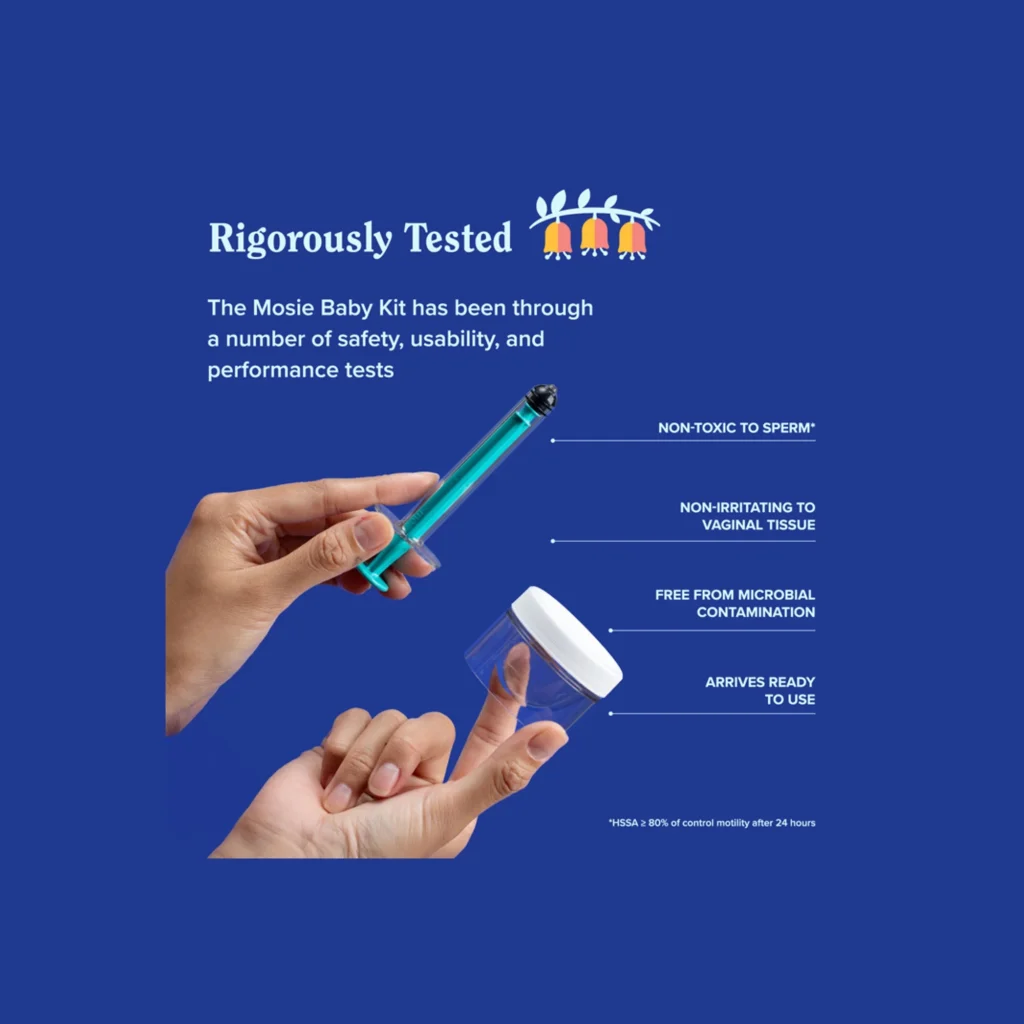
Struggling with fertility can be an incredibly difficult and emotional journey for many couples. The desire to start a family and have children is a natural and fundamental aspect of human life, and when this dream is met with challenges, it can take a toll on both the physical and emotional well-being of individuals. Fortunately, modern medical advancements have made it possible for couples to overcome fertility issues and fulfill their dream of parenthood. Non-invasive insemination, also known as intrauterine insemination (IUI), is one such solution that has been proven to be successful for many couples struggling with fertility.
Non-invasive insemination involves placing washed and concentrated sperm directly into the uterus, increasing the chances of fertilization. This method can be used for couples with a variety of fertility issues, including low sperm count, unexplained infertility, and ovulation disorders. In this blog post, we will discuss the process of non-invasive insemination and how it can be a viable option for couples struggling with fertility.
The first step in the non-invasive insemination process is to undergo a series of fertility tests to determine the cause of infertility. These tests may include blood work, ultrasound, and semen analysis. Based on the results, a personalized treatment plan will be developed by a fertility specialist. This plan may include fertility medication to stimulate ovulation and improve the chances of pregnancy.
Once the woman’s ovulation is closely monitored, the insemination process can begin. The male partner will provide a semen sample, which will then be washed and concentrated in a laboratory to remove any impurities and increase the sperm’s mobility. The concentrated sperm will then be placed into a thin catheter and inserted into the uterus through the cervix. This process is relatively painless and does not require anesthesia.
After the insemination, the woman will be asked to lie down for about 20-30 minutes to allow the sperm to swim towards the egg. The entire procedure takes about 15 minutes and can be done in the comfort of a fertility clinic. The success rate of non-invasive insemination varies depending on the individual’s fertility issues and age, but on average, it has a success rate of 10-15% per cycle.

and Struggling with Fertility? Non-Invasive Insemination Could be the Answer
One of the significant advantages of non-invasive insemination is that it is a minimally invasive and less expensive option compared to other fertility treatments such as in vitro fertilization (IVF). IVF involves retrieving eggs from the woman’s ovaries and fertilizing them with sperm in a laboratory before transferring the embryos into the uterus. IVF is a more complex and costly procedure, making non-invasive insemination a more accessible option for couples struggling with fertility.
Non-invasive insemination also has a lower risk of multiple pregnancies compared to IVF, where multiple embryos are often transferred to increase the chances of pregnancy. This reduces the risk of complications for both the mother and the babies.
In addition to being a less invasive and more affordable option, non-invasive insemination also allows couples to use donor sperm if needed. This can be beneficial for same-sex couples or couples where the male partner has a low sperm count or genetic conditions that may be passed on to the child. The use of donor sperm is a personal decision, and couples can choose to use an anonymous donor or someone they know.
It is essential to note that non-invasive insemination is not a one-time solution. Couples may need to undergo multiple insemination cycles before achieving a successful pregnancy. However, the success rate increases with each cycle, and couples are encouraged to remain patient and hopeful throughout the process.
In conclusion, struggling with fertility can be a challenging and overwhelming experience for couples. However, non-invasive insemination offers a viable solution for couples with various fertility issues. It is a minimally invasive, affordable, and accessible option that has helped many couples achieve their dream of parenthood. If you are struggling with fertility, do not lose hope – non-invasive insemination could be the answer you have been searching for.