Tag: Insemination

  • The Ultimate Guide to Creating an Insemination Made Easy Starter Pack

    The process of insemination, or artificially introducing sperm into the female reproductive tract, can be an overwhelming and nerve-wracking experience. For those considering or undergoing this procedure, it is important to have a thorough understanding of what it entails and how to make the process as easy as possible. That’s why we have created the Ultimate Guide to Creating an Insemination Made Easy Starter Pack – a comprehensive and practical resource for anyone embarking on this journey.

    In this blog post, we will provide an in-depth guide on how to prepare for insemination, what to expect during the procedure, and how to make the experience as comfortable and stress-free as possible. We will also discuss the various methods of insemination and provide tips for maximizing your chances of success. So let’s dive in and get you on your way to creating your very own insemination made easy starter pack!

    The first step in preparing for insemination is to consult with a healthcare provider. They will be able to assess your individual situation and recommend the best method of insemination for you. They will also discuss any potential risks and provide guidance on how to minimize them. It is important to be open and honest with your provider about your medical history and any concerns you may have.

    Once you have decided on the method of insemination, it is time to gather all the necessary supplies. This is where the insemination made easy starter pack comes into play. It should include all the essential items you will need for the procedure, such as sterile syringes, sperm collection cups, ovulation predictor kits, and cervical caps or cups. These items can typically be purchased online or at a fertility clinic.

    Next, you will need to track your ovulation. Insemination is most effective when done around the time of ovulation, so it is crucial to know when you are most fertile. There are several methods for tracking ovulation, including using ovulation predictor kits, tracking your basal body temperature, and monitoring changes in your cervical mucus. Your healthcare provider can help you determine which method is best for you.

    On the day of insemination, it is important to make sure you are relaxed and comfortable. This can help increase your chances of success by allowing your body to properly relax and open up. You may want to create a calm and soothing atmosphere in your room, play some relaxing music, and have your partner or a loved one present for support.

    Mosie Baby kit with two jars, a syringe, and a supportive message card inside a colorful box.

    The Ultimate Guide to Creating an Insemination Made Easy Starter Pack

    Before the procedure, it is essential to properly prepare the sperm. The sperm should be collected in a sterile cup and kept at body temperature until it is time for insemination. If using frozen sperm, it should be thawed according to the instructions provided by the sperm bank.

    Now it’s time for the actual insemination process. There are two main methods of insemination – intracervical and intrauterine. Intracervical insemination involves placing the sperm near the cervix, while intrauterine insemination involves placing the sperm directly into the uterus. Your healthcare provider will guide you on which method is best for you.

    During the procedure, it is important to remain calm and relaxed. You may experience some cramping or discomfort, but it should not be severe. Your healthcare provider will guide the sperm to the appropriate location and then you will need to remain lying down for about 15-20 minutes to allow the sperm to reach the egg.

    After the insemination, it is important to continue tracking your ovulation and following any instructions given by your healthcare provider. You may also want to engage in activities that can help increase your chances of conception, such as eating a healthy diet, exercising regularly, and avoiding alcohol and smoking.

    In terms of success rates, the chances of conception vary depending on factors such as age, overall health, and the method of insemination. It is important to have realistic expectations and be patient, as it may take multiple attempts before achieving a successful pregnancy.

    To summarize, creating an insemination made easy starter pack involves consulting with a healthcare provider, tracking ovulation, gathering necessary supplies, preparing for the procedure, and remaining relaxed and calm during the process. It is also important to continue tracking ovulation and engaging in healthy habits post-insemination. With the right preparation and mindset, insemination can be a successful and stress-free experience.

    In conclusion, the Ultimate Guide to Creating an Insemination Made Easy Starter Pack is a comprehensive resource for anyone considering or undergoing insemination. It provides practical tips and advice for preparing for the procedure, making the experience as comfortable as possible, and maximizing the chances of success. By following these guidelines and working closely with your healthcare provider, you can embark on this journey with confidence and ease.


  • Must-Have Items for Your Insemination Made Easy Starter Pack

    Blog Post Title: Must-Have Items for Your Insemination Made Easy Starter Pack

    Summary:

    Insemination can be a daunting process for couples trying to conceive. However, with the right tools and preparation, it can be made much easier and less stressful. In this blog post, we will discuss the must-have items for your insemination made easy starter pack.

    First and foremost, it is important to consult with a healthcare professional before attempting insemination. They can provide guidance and advice on the best approach for you and your partner. Once you have the green light, here are the essential items you will need for your insemination starter pack:

    1. Ovulation Predictor Kit (OPK)
    An OPK is a key tool for timing your insemination correctly. It detects the surge in luteinizing hormone (LH) in your urine, which indicates that ovulation is about to occur. This will help you determine the best time to have intercourse or perform insemination.

    2. Basal Body Thermometer
    Tracking your basal body temperature (BBT) can also help with timing your insemination. BBT rises slightly after ovulation, indicating that you have passed your fertile window. By tracking your BBT, you can confirm when you have ovulated and when it is safe to stop trying for the month.

    3. Pre-Seed Fertility-Friendly Lubricant
    Regular lubricants can be harmful to sperm, making it difficult for them to reach the egg. Pre-Seed is a fertility-friendly lubricant that mimics the body’s natural fluids and helps sperm reach the egg successfully. It is important to use a fertility-friendly lubricant during insemination to increase the chances of success.

    at-home insemination kit featuring a syringe and container for fresh or donor sperm conception

    Must-Have Items for Your Insemination Made Easy Starter Pack

    4. Soft Cups
    Soft cups are essential for keeping semen close to the cervix after insemination. They are soft, flexible cups that are inserted into the vagina and can be worn for up to 12 hours. This allows the sperm to stay in the optimal position for fertilization.

    5. Insemination Syringe or Cup
    An insemination syringe or cup is used to deposit the sperm near the cervix. This method is recommended for couples who are using a donor or for those who have a partner with a low sperm count. It allows for a more direct and targeted approach.

    6. Pregnancy Tests
    After insemination, the two-week wait can be stressful and filled with uncertainty. To ease your mind, it is recommended to have a few pregnancy tests on hand to take after your expected period. These will help confirm if you have successfully conceived.

    7. Thermacare Heat Wraps
    During the two-week wait, many women experience cramping and discomfort. Thermacare heat wraps can provide relief and help relax the muscles in the pelvic area. It is important to avoid any medication during this time, so heat wraps are a safe and effective alternative.

    8. Supportive Supplements
    There are several supplements that can aid in fertility and support a healthy pregnancy. These include folic acid, which helps prevent birth defects, and CoQ10, which can improve sperm quality. Consult with your healthcare professional to determine which supplements are right for you.

    9. Stress-Relieving Activities
    Insemination can be a stressful process, and stress can negatively impact fertility. It is important to incorporate stress-relieving activities into your daily routine. This can include yoga, meditation, or simply taking a walk in nature. Find what works for you and make it a regular part of your routine.

    10. Emotional Support
    Lastly, it is crucial to have emotional support during this journey. Whether it’s your partner, a close friend, or a support group, having someone to talk to and lean on can make all the difference. Remember, you are not alone in this process, and having a strong support system can make it much easier to handle.

    In conclusion, having the right tools and preparation can make insemination much easier and less stressful. By creating an insemination made easy starter pack with the items mentioned above, you can increase your chances of success and make the process more manageable. Remember to always consult with a healthcare professional and take care of your emotional well-being throughout the journey.

  • The Science of Insemination: Understanding At-Home Solution Sets

    Blog Post:

    Insemination, also known as artificial insemination, is a method of assisted reproduction that has been used for centuries to help individuals and couples conceive. While it was traditionally done in a medical setting, advancements in technology and understanding of the human body have made it possible for people to perform insemination at home. This has opened up a whole new world of possibilities for those struggling with fertility issues. In this blog post, we will explore the science behind at-home insemination solution sets and how they can help you on your journey to parenthood.

    Understanding Insemination:
    Before delving into the science behind at-home insemination solution sets, it is important to have a basic understanding of the insemination process. Insemination involves the insertion of sperm into the female reproductive tract to fertilize an egg. This can be done through various methods, including intrauterine insemination (IUI) and intracervical insemination (ICI).

    Traditional insemination methods require medical professionals to collect sperm from a donor or the male partner and then insert it into the female partner’s reproductive tract. However, at-home insemination solution sets offer a more convenient and cost-effective option for those who prefer to perform the procedure in the comfort of their own home.

    Science Behind At-Home Insemination Solution Sets:
    At-home insemination solution sets typically include everything needed for the insemination process, such as a syringe, collection cup, and instructions. The primary science behind these kits lies in the use of a syringe to insert the sperm into the female reproductive tract.

    The syringe is used to bypass the vaginal canal and cervix, ensuring that a higher concentration of sperm reaches the fallopian tubes where fertilization occurs. This method is particularly beneficial for couples who may have issues with sperm motility or cervical mucus, which can hinder the sperm’s journey to the egg.

    Informative card introducing the Mosie Baby Kit and its mission for at-home insemination.

    The Science of Insemination: Understanding At-Home Solution Sets

    Another important aspect of at-home insemination solution sets is the use of ovulation predictor kits. These kits help individuals and couples determine the most fertile days of the menstrual cycle by detecting the surge of luteinizing hormone (LH) that occurs just before ovulation. By timing the insemination process with ovulation, the chances of successful fertilization are greatly increased.

    Benefits of At-Home Insemination Solution Sets:
    Aside from the convenience and cost-effectiveness, at-home insemination solution sets offer several other benefits. One of the main advantages is the ability to have more control over the timing and process of insemination. Traditional methods of insemination in a medical setting may require multiple visits and appointments, whereas at-home insemination allows for a more intimate and comfortable experience.

    Moreover, at-home insemination solution sets can be used by same-sex couples and single individuals who may not have access to traditional insemination methods. This option gives them the opportunity to start a family and fulfill their dreams of parenthood.

    Considerations:
    While at-home insemination solution sets offer a promising option for those struggling with fertility issues, it is important to note that they may not be suitable for everyone. It is recommended to consult with a healthcare professional to determine if this method is right for you. Additionally, it is crucial to follow the instructions carefully and safely handle the sperm to avoid any potential risks or complications.

    In conclusion, the science behind at-home insemination solution sets is based on the use of a syringe to insert sperm directly into the reproductive tract, bypassing any potential barriers that may impede fertilization. This method offers a convenient, cost-effective, and intimate option for individuals and couples looking to start a family. However, it is essential to seek guidance from a healthcare professional and carefully follow instructions to ensure the safety and success of the procedure.

    Summary:
    Insemination, also known as artificial insemination, is a method of assisted reproduction that can now be performed at home with the help of at-home insemination solution sets. These sets are based on the use of a syringe to insert sperm directly into the reproductive tract, increasing the chances of fertilization. They offer a convenient, cost-effective, and intimate option for individuals and couples struggling with fertility issues. However, it is important to consult with a healthcare professional and follow instructions carefully for optimal results.

  • From the Comfort of Home: A Guide to Using Insemination Solution Sets

    From the Comfort of Home: A Guide to Using Insemination Solution Sets

    In today’s world, many couples struggle with fertility issues and may need assistance in conceiving a child. This is where insemination solution sets come into play. These sets provide a convenient and private way for couples to perform insemination in the comfort of their own home. In this blog post, we will dive into the details of these solution sets and how they can be used effectively.

    What is an Insemination Solution Set?

    An insemination solution set is a package that contains all the necessary tools and supplies for performing artificial insemination at home. It typically includes a syringe, sterile cups, and a tube containing the semen sample. These sets are designed to be easy to use and provide a less invasive option for couples who may be uncomfortable with other methods of assisted reproduction.

    Why Use an Insemination Solution Set?

    There are several reasons why couples may choose to use an insemination solution set. First and foremost, it provides a more affordable option compared to other fertility treatments. It also offers privacy and convenience, as couples can perform the insemination in the comfort of their own home, without the need for multiple doctor’s appointments.

    Additionally, using an insemination solution set allows couples to have more control over the process. They can choose the timing and frequency of insemination, as well as the donor sperm source. This can be particularly beneficial for same-sex couples or those with male factor infertility.

    How to Use an Insemination Solution Set

    Using an insemination solution set may seem intimidating at first, but with the right knowledge and preparation, it can be a simple and stress-free process. Here are the steps to follow when using an insemination solution set:

    Step 1: Gather Supplies

    The first step is to gather all the necessary supplies from the insemination solution set. This includes the syringe, sterile cups, and the tube containing the semen sample. It is important to read the instructions carefully and make sure all the supplies are sterile before use.

    Step 2: Prepare the Sperm Sample

    at-home insemination kit by Mosie Baby, featuring syringes and containers for comfort and convenience.

    From the Comfort of Home: A Guide to Using Insemination Solution Sets

    If using a fresh semen sample, the donor should ejaculate into the sterile cup provided in the set. The sample can then be transferred into the syringe using the tube provided. If using frozen sperm, follow the instructions provided by the sperm bank for thawing and transferring the sample into the syringe.

    Step 3: Prepare the Female Partner

    The female partner should lie down on her back with her hips slightly elevated. This will help the sperm reach the cervix more easily. It is important to be relaxed and comfortable during this process.

    Step 4: Insert the Syringe

    Once the sperm sample is in the syringe, carefully insert the syringe into the vagina and direct it towards the cervix. Slowly push the plunger to release the sperm into the cervix. It is recommended to keep the syringe in place for a few seconds to ensure all the sperm has been deposited.

    Step 5: Clean Up and Rest

    Once the insemination is complete, the syringe and any other used supplies should be disposed of properly. The female partner can then rest for 10-15 minutes with her hips elevated to help the sperm reach the cervix. After resting, she can resume normal activities.

    Things to Consider When Using an Insemination Solution Set

    While using an insemination solution set is a simple process, there are a few things to keep in mind to ensure the best chances of success:

    – Timing: It is crucial to time the insemination correctly according to the female partner’s ovulation cycle. This can be determined by using an ovulation predictor kit or tracking ovulation symptoms.
    – Sperm Quality: The quality of the sperm sample is important for successful insemination. It is recommended to obtain a fresh sample or use frozen sperm that has been properly tested and stored.
    – Patience: It may take several attempts before a successful pregnancy occurs. It is important to be patient and not get discouraged.

    Insemination solution sets are a great option for couples who want to try a less invasive and more affordable method of assisted reproduction. However, it is always recommended to consult with a healthcare professional before starting any fertility treatment.

    In conclusion, insemination solution sets provide a convenient and private way for couples to perform artificial insemination at home. With the right knowledge and preparation, it can be a simple and effective method for couples struggling with fertility issues. Always remember to consult with a healthcare professional and follow the instructions provided with the solution set for the best chances of success.

  • From Home to Hospital: When to Seek Medical Help with Insemination

    From Home to Hospital: When to Seek Medical Help with Insemination

    Insemination, or the process of introducing sperm into the female reproductive system, is a common method used by couples and individuals who are trying to conceive. While this technique can be done at home with the use of an insemination kit, there are certain situations where seeking medical help is necessary. In this blog post, we will discuss the different scenarios where seeking medical assistance for insemination is crucial and why it is important to do so.

    When to Seek Medical Help with Insemination

    1. Fertility Issues

    One of the most common reasons for seeking medical help with insemination is when there are underlying fertility issues. These issues can range from low sperm count or poor sperm quality in men to blocked fallopian tubes or ovulation disorders in women. In these cases, medical professionals such as fertility specialists or reproductive endocrinologists can help identify the root cause of the issue and provide appropriate treatment to increase the chances of successful insemination.

    2. Complications from Previous Insemination Attempts

    If you have attempted insemination at home multiple times without success, it is important to seek medical help. This could be an indication of underlying fertility issues or incorrect technique. A medical professional can assess your situation and provide guidance on the best approach for future insemination attempts.

    3. Age and Other Health Factors

    Age can also play a role in the success of insemination. Women over the age of 35 may have a harder time conceiving and may require medical assistance. Additionally, certain health conditions such as polycystic ovary syndrome (PCOS) or endometriosis can affect fertility and require medical intervention for successful insemination.

    4. Use of Donor Sperm or Surrogacy

    If you are using donor sperm or considering surrogacy, it is important to seek medical help. These methods require additional medical procedures and monitoring to ensure the success of insemination. A medical professional can guide you through the process and provide support throughout the journey.

    5. Insemination with Assisted Reproductive Technologies (ART)

    pregnancy test kit features labeled for comfort and confidence on a teal background

    From Home to Hospital: When to Seek Medical Help with Insemination

    In some cases, insemination may be done in conjunction with assisted reproductive technologies (ART) such as in vitro fertilization (IVF) or intrauterine insemination (IUI). These procedures are more complex and require medical expertise to ensure success. Seeking medical help in these situations is crucial to maximize the chances of successful conception.

    Why Seeking Medical Help is Important

    1. Identifying Underlying Issues

    As mentioned earlier, seeking medical help for insemination can help identify underlying fertility issues that may be hindering conception. Medical professionals have the necessary expertise and tools to diagnose these issues and provide appropriate treatment. Identifying and addressing these issues can significantly increase the chances of successful insemination.

    2. Proper Technique and Timing

    Insemination may seem like a simple process, but it requires proper technique and timing for success. Medical professionals can guide you through the process and provide you with the necessary tools and resources to ensure the best possible outcome. They can also monitor your progress and make adjustments as needed to increase the chances of successful insemination.

    3. Emotional Support

    Trying to conceive can be an emotional journey, and it is important to have the support of a medical professional during this time. They can provide guidance, answer any questions or concerns, and offer emotional support throughout the process. This can be especially helpful for individuals or couples who have been struggling with fertility issues and may be feeling overwhelmed or discouraged.

    4. Safety and Sanitation

    Insemination at home may seem convenient, but it also comes with potential risks such as infection. Medical professionals have the necessary training and equipment to ensure the safety and sanitation of the process. They can also provide you with information on how to properly handle and store sperm samples to avoid any potential health risks.

    Summary:

    Insemination is a common method used by couples and individuals who are trying to conceive. While it can be done at home with an insemination kit, there are certain situations where seeking medical help is necessary. These include fertility issues, complications from previous attempts, age and other health factors, use of donor sperm or surrogacy, and insemination with assisted reproductive technologies. Seeking medical help is important for identifying underlying issues, ensuring proper technique and timing, emotional support, and safety and sanitation measures.

  • Fertility at Home: A Beginner’s Guide to Insemination

    Blog Post: Fertility at Home: A Beginner’s Guide to Insemination

    The journey to starting a family can be a challenging one, especially for couples struggling with fertility issues. Insemination, also known as artificial insemination, is a popular fertility treatment that involves placing sperm directly into a woman’s cervix or uterus. While this procedure is commonly done in a medical setting, many couples are now opting for at-home insemination as a more convenient and affordable option. In this blog post, we will dive into the basics of fertility at home and provide a beginner’s guide to insemination.

    What is Insemination?

    Insemination is a fertility treatment that involves the placement of sperm into a woman’s reproductive tract to increase the chances of pregnancy. This can be done through various methods such as intrauterine insemination (IUI), intracervical insemination (ICI), or intravaginal insemination (IVI).

    IUI is the most common method and involves placing washed and prepared sperm into the uterus using a catheter. ICI and IVI are similar procedures that involve placing unwashed sperm into the cervix or vagina, respectively. These procedures can be done with fresh, frozen, or donor sperm, depending on the individual’s needs.

    Why Choose At-Home Insemination?

    At-home insemination is becoming a popular choice for couples for several reasons. Firstly, it provides a more comfortable and private setting for the procedure, which can be a less stressful experience for the individual undergoing insemination. Additionally, it is a more affordable option compared to undergoing insemination in a medical facility.

    At-home insemination also gives couples more control over the process, as they can choose their preferred method and timing for the procedure. This can be especially beneficial for same-sex couples or single individuals who may not have access to a sperm donor or a fertility clinic.

    Preparing for At-Home Insemination

    Before starting the insemination process, it’s essential to prepare both physically and emotionally. It’s crucial to track ovulation using methods such as ovulation predictor kits or monitoring basal body temperature to determine the most fertile days for insemination.

    It’s also essential to consult a doctor or fertility specialist before starting the process to ensure that there are no underlying fertility issues that could affect the success of at-home insemination. They can also provide guidance on the best type of insemination method and any necessary medications or supplements.

    Steps for At-Home Insemination

    Step 1: Collecting and Preparing Sperm

    The first step in at-home insemination is to collect the sperm. If using fresh sperm from a partner, it’s essential to collect it in a sterile container and keep it at room temperature until the procedure. If using frozen or donor sperm, follow the instructions provided by the sperm bank or fertility clinic.

    blue box with "mosie" logo, syringes, and informational pamphlet on a pink background

    Fertility at Home: A Beginner's Guide to Insemination

    Once the sperm is collected, it’s crucial to prepare it by washing it with a special solution to remove any impurities and increase the chances of conception. If using frozen sperm, it’s best to thaw it according to the instructions provided and then wash it.

    Step 2: Preparing the Body

    Before the insemination procedure, it’s essential to prepare the body by emptying the bladder and thoroughly washing the hands and genital area. It’s also recommended to use a sterile speculum to help visualize the cervix and a lubricant that is sperm-friendly to aid in the insertion of the sperm.

    Step 3: Placing the Sperm

    The next step is to place the prepared sperm into the cervix, uterus, or vagina, depending on the chosen method. This can be done with a syringe or a special device called an insemination cap. It’s essential to follow the instructions provided by the doctor or fertility specialist carefully.

    Step 4: Resting and Monitoring

    After the sperm has been placed, it’s recommended to rest for at least 30 minutes to allow the sperm to reach the egg. It’s also essential to avoid any strenuous activities or standing for long periods during this time. Additionally, tracking symptoms such as cramping or spotting can help determine if insemination was successful.

    Risks and Success Rates of At-Home Insemination

    At-home insemination carries some risks, such as infection and possible injury from improper insertion of devices. It’s crucial to follow all instructions carefully and consult a doctor if any concerns arise.

    The success rate of at-home insemination varies depending on factors such as the individual’s age, fertility history, and the chosen method. On average, the success rate of at-home insemination is between 10-15%, which is lower than the success rate of IUI done in a medical setting. However, with proper preparation and timing, at-home insemination can be a successful option for many couples.

    Conclusion

    At-home insemination is a convenient and affordable option for couples struggling with fertility issues. While it may not be suitable for everyone, it can be a successful method for many individuals. It’s crucial to consult a doctor and follow all instructions carefully to ensure the best chances of success. With proper preparation and timing, at-home insemination can be an effective way to start a family.

    Summary:

    Insemination is a popular fertility treatment that involves placing sperm directly into a woman’s cervix or uterus. At-home insemination is becoming a popular choice for couples due to its convenience, privacy, and affordability. Before starting the process, it’s essential to track ovulation, consult a doctor, and prepare both physically and emotionally. The steps for at-home insemination include collecting and preparing sperm, preparing the body, placing the sperm, and resting and monitoring. It’s crucial to follow all instructions carefully and consult a doctor if any concerns arise. The success rate of at-home insemination is lower than IUI done in a medical setting, but with proper preparation and timing, it can be a successful option for starting a family.

  • Bringing Home Baby: The Simple Way Through Insemination

    Bringing Home Baby: The Simple Way Through Insemination

    Congratulations, you and your partner have decided to start a family and are considering using insemination to bring home your baby. This can be a daunting and overwhelming process, but it doesn’t have to be. With the right information and support, you can navigate through insemination with ease and bring home your bundle of joy. In this blog post, we will discuss everything you need to know about insemination, from its types and success rates to the process and tips for making it a smooth and simple journey.

    Types of Insemination

    Before we dive into the process of insemination, it’s essential to understand the different types available. The two most common types of insemination are intrauterine insemination (IUI) and intracervical insemination (ICI). IUI involves placing sperm directly into the uterus, while ICI is the placement of sperm near the cervix. Both methods have their pros and cons, and it’s crucial to consult with your doctor to determine the best option for you and your partner.

    Success Rates of Insemination

    The success rates of insemination can vary depending on various factors, such as age, fertility issues, and the type of insemination used. According to the American Pregnancy Association, the success rate for IUI ranges from 5-20% per cycle, while ICI success rates can range from 5-10% per cycle. It’s essential to keep in mind that it may take multiple cycles of insemination to achieve a successful pregnancy, and it’s essential to stay patient and positive throughout the process.

    The Process of Insemination

    The process of insemination can seem complicated, but it’s a straightforward and painless procedure. Before insemination, your doctor will conduct a series of tests to determine your ovulation cycle and the best time for insemination. Then, during the actual procedure, the donor sperm is inserted into the uterus or near the cervix using a thin, flexible catheter. After the procedure, you may experience some mild cramping, but it should subside within a day or two. Your doctor will also likely recommend that you rest for a few minutes after the procedure to increase the chances of conception.

    Tips for Making Insemination a Smooth Journey

    hands using a blue syringe to extract contents from a clear container for a home insemination kit

    Bringing Home Baby: The Simple Way Through Insemination

    Insemination can be an emotional and stressful journey, but there are ways to make it a more comfortable and successful experience. Here are some tips to help you along the way:

    1. Stay informed: Knowledge is key when it comes to insemination. Do your research and ask your doctor any questions you may have. Knowing what to expect can help ease any anxieties and uncertainties you may have.

    2. Find a supportive community: It’s essential to have a support system throughout this process. Whether it’s friends, family, or online support groups, having people who understand and can offer support and advice can make a significant difference.

    3. Take care of your emotional and physical well-being: Insemination can be an emotional rollercoaster, so it’s crucial to take care of yourself. Make sure to get enough rest, eat well, and engage in activities that bring you joy and relaxation. It’s also essential to communicate with your partner and address any feelings or concerns openly.

    4. Don’t put pressure on yourself: It’s natural to want to conceive as soon as possible, but putting pressure on yourself can add unnecessary stress. Try to stay positive and trust that the process will happen when the time is right.

    5. Consider holistic approaches: Along with the medical aspect of insemination, there are also holistic approaches that can help increase your chances of success. These include acupuncture, yoga, and herbal supplements, which can aid in relaxation and promote a healthy reproductive system.

    Insemination can be a challenging journey, but with the right information, support, and mindset, it can also be a beautiful and fulfilling experience. Remember to stay positive, take care of yourself, and trust the process. Before you know it, you’ll be bringing home your little bundle of joy.

    Summary:

    Insemination is a popular method for couples to start a family, but it can be a daunting process. This blog post discusses the types and success rates of insemination, the process itself, and offers tips for making it a smoother journey. It also emphasizes the importance of staying informed, finding a supportive community, taking care of emotional and physical well-being, avoiding pressure, and considering holistic approaches. With the right information and support, insemination can be a beautiful and fulfilling experience that brings home your baby.

  • Inseminate at Home: A Step-by-Step Process

    Blog Post Title: Inseminate at Home: A Step-by-Step Process

    Summary:

    Inseminating at home has become a popular option for individuals and couples who are looking to start a family. It allows for more control and privacy in the process, and can also be more cost-effective. However, it is important to understand the steps involved in this process to ensure the best chances of success.

    Step 1: Understand the Basics of Insemination

    Before beginning the process, it is important to understand the basics of insemination. Insemination is the process of placing sperm into the reproductive tract of a female in order to increase the chances of pregnancy. This can be done through various methods such as artificial insemination (using a syringe), self-insemination (using a menstrual cup), or natural insemination (sexual intercourse).

    Step 2: Know Your Fertility Window

    In order for insemination to be successful, it is important to know when you are most fertile. This is typically around the time of ovulation, which is when an egg is released from the ovary. There are various methods for tracking ovulation, such as tracking basal body temperature, cervical mucus, and using ovulation predictor kits.

    Step 3: Collect and Prepare the Sperm

    If using a sperm donor, it is important to obtain the sperm from a reputable source such as a sperm bank. However, if using a known donor (such as a partner or friend), it is important to discuss and agree upon any potential risks or legalities beforehand. Once the sperm is obtained, it should be kept at room temperature and used within 1-2 hours for the best chances of success.

    Mosie Baby At-Home Insemination Kit instructions and storage guidelines on a blue background.

    Inseminate at Home: A Step-by-Step Process

    Step 4: Prepare the Insemination Device

    Depending on the chosen method of insemination, the device will need to be prepared. If using a syringe, it should be cleaned and sanitized before use. If using a menstrual cup, it should be sterilized in boiling water for 5-10 minutes before use.

    Step 5: Positioning and Insertion

    Proper positioning and insertion of the insemination device is crucial for successful insemination. If using a syringe, it should be inserted into the vagina and gently pushed towards the cervix. If using a menstrual cup, it should be inserted into the vagina and positioned close to the cervix.

    Step 6: Relax and Wait

    After insemination, it is important to relax and wait for at least 15-20 minutes to allow the sperm to reach the cervix and potentially fertilize an egg. It is recommended to lay down with hips elevated or use a pillow under the hips to help keep the sperm near the cervix.

    Step 7: Monitor and Test for Pregnancy

    The waiting game begins now, as it can take up to two weeks to know if the insemination was successful. It is important to monitor for any potential signs of pregnancy and take a pregnancy test when appropriate. If the test is positive, congratulations! If not, you may want to try the insemination process again during your next fertile window.

    Final Thoughts

    Inseminating at home can be an exciting and empowering experience, but it is important to understand the process and take necessary precautions to increase the chances of success. It is also recommended to consult with a healthcare provider or fertility specialist for any additional guidance or support.

  • Enhance Your Fertility Journey with a Syringe Kit

    Blog post: Enhance Your Fertility Journey with a Syringe Kit

    When it comes to starting a family, many couples face challenges and obstacles on their fertility journey. From tracking ovulation to undergoing fertility treatments, the process can be overwhelming and stressful. However, there is one tool that can help make the process a little easier and more effective – a syringe kit.

    A syringe kit is a simple and affordable device that can greatly enhance your fertility journey. In this blog post, we will explore the benefits of using a syringe kit and how it can help you on your path to parenthood.

    What is a Syringe Kit?

    A syringe kit is a combination of a syringe and a catheter that is used for insemination. The syringe is used to collect and transfer semen, while the catheter is used to deposit the semen into the cervix or uterus. This method is known as intrauterine insemination (IUI) and is commonly used in fertility treatments.

    Benefits of Using a Syringe Kit

    1. More Accurate Timing

    Timing is crucial when it comes to conception. Ovulation is the prime time for fertilization to occur, and using a syringe kit can help ensure that the semen is deposited at the right time. By using a syringe kit, you can control the timing of insemination and increase your chances of conception.

    2. Increased Sperm Count

    A syringe kit allows for a concentrated amount of semen to be deposited directly into the cervix or uterus. This can increase the sperm count and improve the chances of fertilization. It is especially beneficial for couples who have low sperm count or motility issues.

    3. Cost-Effective

    Fertility treatments can be expensive, and many couples may not be able to afford multiple rounds of treatments. Using a syringe kit is a cost-effective method, as it can be done at home without the need for expensive medical procedures. This can be a budget-friendly option for couples on a tight budget.

    4. Less Invasive

    Compared to other fertility treatments, using a syringe kit is a less invasive method. It does not require any medical procedures or drugs, making it a more natural option for couples who prefer a non-invasive approach to conception.

    5. Increased Privacy

    For some couples, the process of fertility treatments can be emotionally and physically taxing. Using a syringe kit at home can provide a level of privacy and comfort, as opposed to undergoing treatments at a clinic. This can help reduce stress and anxiety, which can have a positive impact on the fertility journey.

    How to Use a Syringe Kit

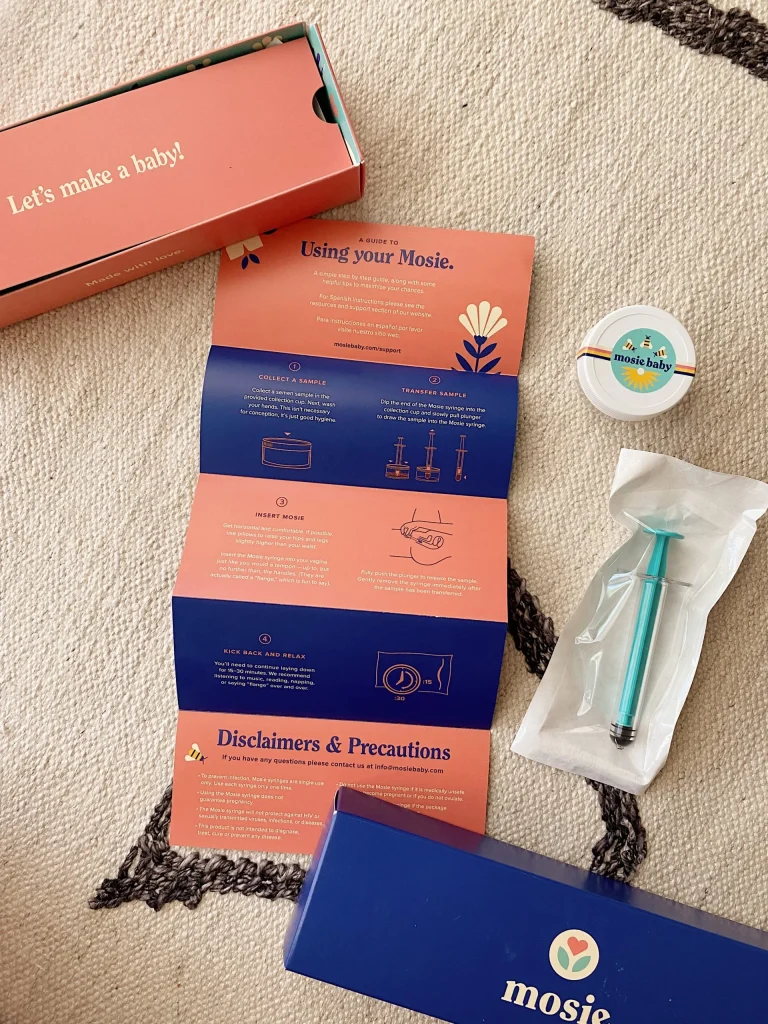
    guide and materials for using Mosie Baby fertility kit on a textured surface

    Enhance Your Fertility Journey with a Syringe Kit

    Using a syringe kit for insemination is a simple process and can be done at home. Here are the steps to follow:

    1. Collect the semen sample using the syringe provided in the kit.

    2. Attach the catheter to the syringe, ensuring that it is securely connected.

    3. Find a comfortable position, either lying down or sitting with your legs up against a wall.

    4. Gently insert the catheter into the vagina, aiming towards the cervix.

    5. Once the catheter is in place, push the plunger on the syringe to deposit the semen.

    6. Remove the catheter and dispose of it properly.

    7. Lie down for about 15-20 minutes to allow the semen to travel to the cervix.

    It is recommended to use a syringe kit within an hour of collecting the semen sample for maximum effectiveness.

    Tips for Using a Syringe Kit

    – Consult with your doctor before using a syringe kit to ensure it is the right method for you and your partner.

    – Make sure to follow the instructions provided in the kit carefully.

    – Keep the kit clean and sterile to avoid any risk of infection.

    – Consider using a lubricant to make the insertion process more comfortable.

    – Relax and stay positive during the process.

    In conclusion, a syringe kit is a valuable tool that can enhance your fertility journey. It offers many benefits, including accurate timing, increased sperm count, cost-effectiveness, less invasiveness, and increased privacy. With proper usage and the right mindset, a syringe kit can help increase your chances of conception and bring you one step closer to starting a family.

    Summary:

    Starting a family can be a challenging and overwhelming journey for many couples. However, using a syringe kit can greatly enhance the fertility process. A syringe kit is a combination of a syringe and a catheter used for insemination, and it offers several benefits such as accurate timing, increased sperm count, cost-effectiveness, less invasiveness, and increased privacy. The process of using a syringe kit is simple and can be done at home, making it a convenient and affordable option for couples on a tight budget. By following the tips and instructions provided, a syringe kit can help increase the chances of conception and bring you one step closer to starting a family.

  • Things You Didn’t Know About the On Your Own Terms Kit for Insemination

    Blog Post:

    Insemination is a method of assisted reproduction that has become increasingly popular in recent years. It involves the placement of sperm into the reproductive tract of a female in order to fertilize an egg. While it may seem like a simple process, there are many factors to consider when undergoing insemination. This is where the On Your Own Terms Kit comes in. This comprehensive kit offers everything you need to successfully inseminate at home, but there are also many things you may not know about it. In this blog post, we will explore the things you didn’t know about the On Your Own Terms Kit for insemination.

    1. It is designed for LGBTQ+ couples and single individuals

    One of the most unique aspects of the On Your Own Terms Kit is that it is specifically designed for LGBTQ+ couples and single individuals who are looking to start a family. Traditional insemination methods often cater to heterosexual couples, making it difficult for LGBTQ+ individuals to access the necessary tools and resources. This kit, however, is inclusive and provides the necessary materials for anyone who wishes to conceive at home.

    2. It includes a sperm collection device

    One of the most challenging aspects of at-home insemination is collecting sperm. The On Your Own Terms Kit includes a specially designed sperm collection device that makes the process much easier. This device is discreet and can be used in the privacy of your own home, eliminating the need for trips to a fertility clinic or sperm bank.

    3. It provides step-by-step instructions

    Insemination may seem like a straightforward process, but it is essential to follow the correct steps to increase your chances of success. The On Your Own Terms Kit comes with detailed and easy-to-follow instructions, ensuring that you have all the information you need to properly inseminate at home. This can help alleviate any anxiety or stress surrounding the process and give you the confidence you need to move forward.

    4. It includes fertility-friendly lubricant

    Many people do not realize that traditional lubricants can be harmful to sperm and decrease their motility. The On Your Own Terms Kit comes with a fertility-friendly lubricant that is specially designed to not harm sperm. This can increase your chances of successful insemination and help you avoid any potential issues.

    5. It offers multiple options for insemination

    logo of mosie baby featuring a heart and leaf design in blue, pink, and green colors

    Things You Didn't Know About the On Your Own Terms Kit for Insemination

    The On Your Own Terms Kit provides multiple options for insemination, allowing you to choose the method that works best for you. It includes a cervical cap, a soft cup, and a syringe, giving you the flexibility to choose the method that feels most comfortable and effective for your body.

    6. It is discreet and convenient

    For many people, the thought of going to a fertility clinic or sperm bank can be daunting and overwhelming. The On Your Own Terms Kit offers a discreet and convenient option for at-home insemination. It can be ordered online and delivered to your doorstep, allowing you to inseminate in the comfort and privacy of your own home.

    7. It saves you money

    Traditional insemination methods can be costly, with multiple trips to a fertility clinic or sperm bank. The On Your Own Terms Kit is a cost-effective option for at-home insemination. It includes all the necessary materials and instructions, eliminating the need for additional expenses.

    8. It has a support system in place

    The journey to starting a family can be emotionally taxing, and having a support system in place can make all the difference. The On Your Own Terms Kit offers a community of support through their online forums and social media platforms. This allows you to connect with others who are going through a similar experience, providing a sense of camaraderie and support.

    9. It offers a money-back guarantee

    The creators of the On Your Own Terms Kit are confident in its effectiveness and offer a money-back guarantee if you are not satisfied with the results. This gives you peace of mind and reassurance that you are investing in a quality product.

    In conclusion, the On Your Own Terms Kit for insemination offers a comprehensive and inclusive option for individuals and couples looking to start a family. It provides everything you need to successfully inseminate at home, along with many additional benefits that you may not have known about. From its inclusivity and convenience to its support system and money-back guarantee, this kit has become a go-to option for many people looking to conceive on their own terms.

    Summary:

    The On Your Own Terms Kit for insemination is a comprehensive and inclusive option for individuals and couples looking to start a family. It includes a sperm collection device, step-by-step instructions, fertility-friendly lubricant, and multiple options for insemination. It is discreet, convenient, and cost-effective, with a support system in place and a money-back guarantee. This kit is designed for LGBTQ+ couples and single individuals and offers a stress-free way to inseminate at home.