Tag: infertility

  • Advancing Reproductive Technology: The Syringe Insemination System and Beyond

    Advancing Reproductive Technology: The Syringe Insemination System and Beyond

    Reproductive technology has come a long way in the past few decades, opening up new possibilities for individuals and couples struggling with infertility. In the past, traditional methods of artificial insemination involved using a catheter to deposit sperm into the cervix or uterus. However, advancements in technology have led to the development of a more efficient and effective method known as the syringe insemination system. This system, along with other emerging technologies, has revolutionized the field of reproductive medicine and offers hope to many who dream of starting a family. In this blog post, we will explore the syringe insemination system and other advancements in reproductive technology that are changing the landscape of fertility treatment.

    The Syringe Insemination System: A Game-Changer in Reproductive Technology

    The syringe insemination system, also known as intrauterine insemination (IUI), involves placing washed and concentrated sperm directly into the uterus using a syringe. This method is less invasive and more affordable than traditional insemination techniques, making it a popular choice for couples seeking fertility treatment. The procedure is typically performed in a doctor’s office and does not require anesthesia, making it a quick and painless process.

    One of the main advantages of the syringe insemination system is that it bypasses the cervix, which can act as a barrier for sperm and make it difficult for them to reach the egg. By placing the sperm directly into the uterus, this method increases the chances of fertilization and pregnancy. It is also a more controlled process, as the sperm is carefully selected and prepared before being injected, reducing the risk of infection or other complications.

    The syringe insemination system is often used in conjunction with fertility drugs to stimulate ovulation and increase the number of eggs produced. This combination has shown great success in treating infertility caused by issues such as low sperm count, endometriosis, and ovulatory disorders. It is also a viable option for same-sex couples and single individuals who wish to become parents.

    Other Advancements in Reproductive Technology

    While the syringe insemination system has proved to be a game-changer in the field of reproductive technology, there are other advancements that are making a significant impact as well. Here are a few examples:

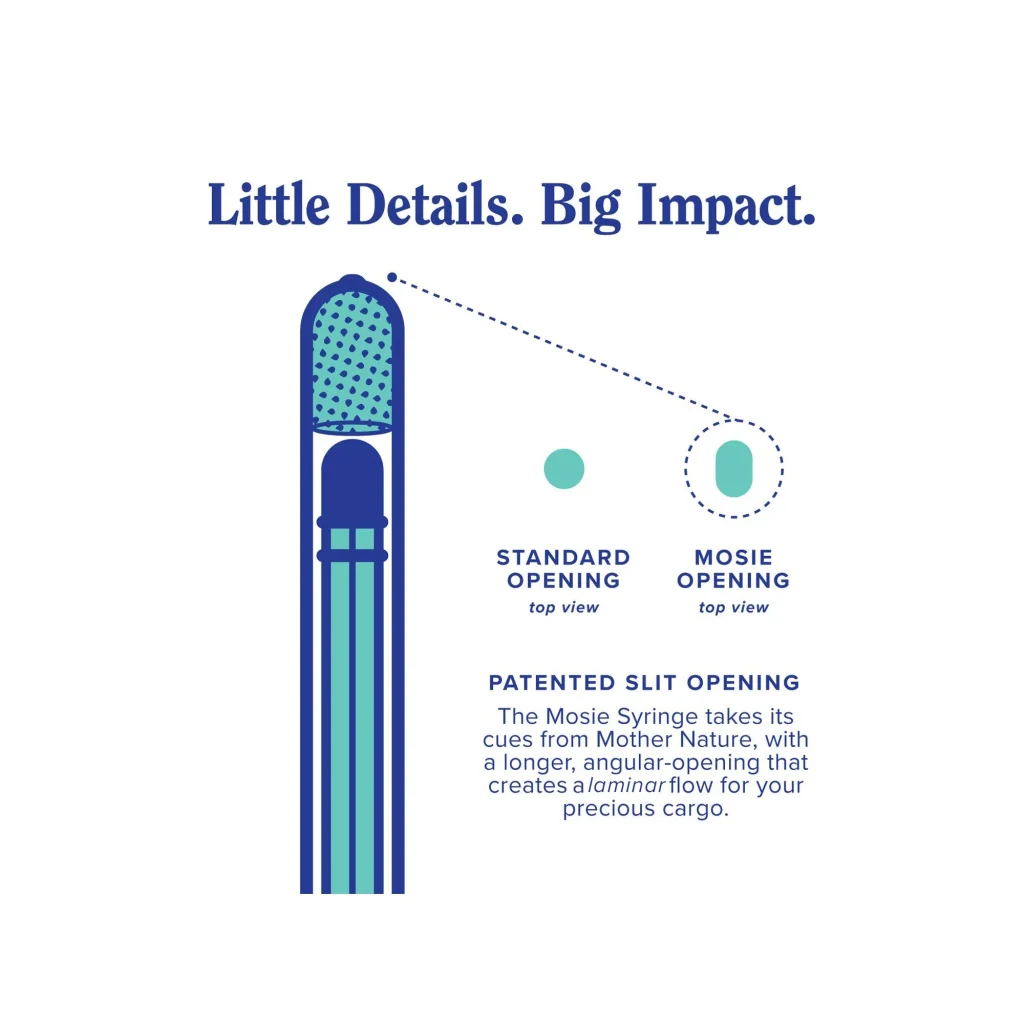
    comparison of Mosie syringe opening versus standard syringe opening with text highlighting benefits

    Advancing Reproductive Technology: The Syringe Insemination System and Beyond

    1. In Vitro Fertilization (IVF): IVF involves combining eggs and sperm in a laboratory and then transferring the resulting embryo into the uterus. This method is often used for couples with severe male factor infertility, blocked or damaged fallopian tubes, or unexplained infertility. IVF has a higher success rate than other fertility treatments and has helped many couples achieve their dream of having a child.

    2. Egg and Sperm Freezing: Egg and sperm freezing, also known as cryopreservation, is a process that involves preserving eggs or sperm for future use. This method is especially useful for individuals who wish to delay starting a family due to personal or medical reasons. It is also a great option for cancer patients who may become infertile due to chemotherapy or radiation treatment.

    3. Preimplantation Genetic Testing (PGT): PGT is a technique that allows for the screening of embryos for genetic disorders before they are implanted into the uterus. This method can help reduce the risk of passing on inherited diseases to the child and increase the chances of a successful pregnancy.

    The Future of Reproductive Technology

    As technology continues to advance, the possibilities for reproductive technology are endless. One area that is currently being explored is the use of artificial intelligence (AI) in fertility treatment. AI can analyze large amounts of data and help identify patterns that may improve fertility outcomes. It can also assist in embryo selection, making the process more efficient and accurate.

    Another potential advancement is the use of stem cells to create sperm and eggs for individuals who are unable to produce them on their own. This technology, known as in vitro gametogenesis (IVG), is still in its early stages, but has the potential to revolutionize the field of reproductive medicine in the future.

    Summary

    Advancements in reproductive technology, such as the syringe insemination system, have made it possible for many couples and individuals to overcome infertility and achieve their dream of starting a family. Along with other techniques like IVF, egg and sperm freezing, and PGT, these advancements have significantly improved the success rates of fertility treatments. As technology continues to progress, the future of reproductive technology looks even more promising, offering hope to those struggling with infertility.


  • The Syringe Insemination System and Surrogacy: A Cost-Effective Option

    The Syringe Insemination System and Surrogacy: A Cost-Effective Option

    The desire to have children is a natural and fundamental aspect of human life. However, for some individuals and couples, the journey to parenthood can be a difficult and costly one. Infertility affects approximately 10-15% of couples worldwide, and the emotional and financial toll of assisted reproductive technology (ART) can be overwhelming. In recent years, there has been a rise in the use of surrogacy as a means of achieving parenthood. And with advancements in technology, the Syringe Insemination System has emerged as a cost-effective option for those considering surrogacy.

    What is the Syringe Insemination System?

    The Syringe Insemination System (SIS) is a method of intrauterine insemination (IUI) that utilizes a special syringe designed specifically for this purpose. It allows for the direct transfer of sperm into the uterus, bypassing the cervix and increasing the chances of successful fertilization. This method is commonly used in fertility treatments, including surrogacy.

    How does Surrogacy Work?

    Surrogacy is an arrangement in which a woman carries and gives birth to a child for someone else. It can be an option for those who are unable to conceive or carry a pregnancy to term due to various reasons, such as medical conditions, same-sex couples, or single individuals. There are two main types of surrogacy: traditional and gestational.

    Traditional surrogacy involves the surrogate mother using her own eggs, which are fertilized with the sperm of the intended father or a donor through artificial insemination. This method is less common and can raise legal and ethical concerns, as the surrogate would have a genetic connection to the child.

    On the other hand, gestational surrogacy involves the implantation of an embryo created through in vitro fertilization (IVF) using the intended parent’s or donor’s eggs and sperm into the surrogate’s uterus. This method is more widely accepted and does not involve any genetic link between the surrogate and the child.

    The Cost of Surrogacy

    Surrogacy is a costly process, with the average cost ranging from $100,000 to $150,000. This includes the medical and legal fees, compensation for the surrogate, agency fees, and other expenses. The high cost of surrogacy can be a barrier for many individuals and couples who wish to start a family through this method.

    mosie baby logo featuring a heart and leaves in blue, pink, and green colors.

    The Syringe Insemination System and Surrogacy: A Cost-Effective Option

    How the Syringe Insemination System can make Surrogacy more Affordable

    The use of the Syringe Insemination System in surrogacy can significantly reduce the overall cost of the process. As mentioned earlier, the SIS allows for the direct transfer of sperm into the uterus, eliminating the need for expensive IVF procedures. This can save couples thousands of dollars in medical fees.

    In addition, the SIS also reduces the need for multiple cycles of insemination, which can further decrease the costs associated with surrogacy. With traditional surrogacy, multiple cycles of insemination may be necessary to achieve a pregnancy, whereas with the SIS, the chances of success are higher with fewer attempts.

    Furthermore, the use of the SIS eliminates the need for expensive fertility drugs, which are often used in traditional surrogacy to stimulate egg production in the surrogate mother. These drugs can have significant side effects and can add to the overall cost of the process.

    Benefits of the Syringe Insemination System and Surrogacy

    Aside from being a more affordable option, the SIS and surrogacy also offer several other benefits. For couples struggling with infertility, the SIS can increase the chances of successful fertilization and pregnancy, providing hope and a potential solution for starting a family.

    Surrogacy also allows for a genetic link between the intended parents and the child, which may be important for some families. Additionally, it offers a way for same-sex couples and single individuals to have biological children.

    Conclusion

    The journey to parenthood can be a challenging one, but thanks to advancements in reproductive technology, surrogacy has become a viable option for many individuals and couples. And with the use of the Syringe Insemination System, surrogacy can be a more affordable and accessible option for those seeking to start a family.

    In summary, surrogacy is a process in which a woman carries and gives birth to a child for someone else. The Syringe Insemination System is a cost-effective method of intrauterine insemination that can significantly reduce the overall cost of surrogacy. It eliminates the need for expensive IVF procedures, multiple cycles of insemination, and fertility drugs. With the SIS and surrogacy, individuals and couples struggling with infertility can have a chance at starting a family and fulfilling their dreams of parenthood.

  • Syringe Insemination System Success Stories: Inspiration and Hope

    In today’s world, many couples struggle with infertility and the inability to conceive a child naturally. This can be a devastating and emotional journey for those who long for a family. However, thanks to advancements in assisted reproductive technology, there is hope for those struggling with fertility issues. One such advancement is the Syringe Insemination System (SIS), which has proven to be a successful and cost-effective method for many couples. In this blog post, we will explore the inspiring success stories of those who have used the SIS and have finally achieved their dream of becoming parents.

    The Syringe Insemination System is a simple and efficient method of assisted reproduction that involves using a syringe to deposit sperm directly into the cervix or uterus. This method is often used by couples who have been diagnosed with unexplained infertility or for those who have difficulty with natural conception. The SIS is also a popular choice for same-sex couples and single women who wish to start a family.

    One of the biggest advantages of SIS is its affordability compared to other assisted reproductive methods such as in-vitro fertilization (IVF). The cost of one cycle of SIS is significantly lower than that of IVF, making it more accessible for couples who may not have the financial means for more expensive treatments. This has been a lifesaver for many couples who have exhausted their financial resources on unsuccessful fertility treatments.

    The success rate of SIS is also quite impressive, with some studies reporting success rates as high as 60%. This is due to the fact that the sperm is deposited directly into the uterus, bypassing any potential barriers and increasing the chances of fertilization. This has given many couples hope and has been a life-changing solution for those struggling with infertility.

    One of the most heartwarming success stories of SIS is that of Samantha and James, who had been trying to conceive for over three years with no success. After multiple failed attempts with other fertility treatments, they decided to give the SIS a try. To their delight, Samantha became pregnant after just one cycle of SIS and gave birth to a healthy baby boy. She credits the SIS for fulfilling their dream of becoming parents and is forever grateful for this simple yet effective method.

    At-home insemination kit with ovulation and pregnancy tests, promoting fertility and family planning.

    Syringe Insemination System Success Stories: Inspiration and Hope

    Another inspiring story is that of Sarah and David, a same-sex couple who had been together for over a decade and longed to start a family. After considering adoption and surrogacy, they came across the SIS and decided to give it a try. To their surprise, Sarah became pregnant on their first attempt, and they welcomed their daughter into the world nine months later. They are now proud parents and credit the SIS for making their dream of parenthood a reality.

    These are just two of the many success stories of the Syringe Insemination System. Each story is unique, but they all share a common theme – the SIS has brought hope and joy to couples struggling with infertility. This simple and affordable method has helped many couples achieve their dream of starting a family and has changed their lives in ways they never thought possible.

    In addition to its high success rates and affordability, the SIS also offers a less invasive and more natural approach to assisted reproduction. Unlike other methods that involve multiple doctor visits and medication, the SIS can be done at home with minimal discomfort. This has been a significant advantage for many couples who have found the process of fertility treatments to be overwhelming and emotionally taxing.

    Furthermore, the SIS has also helped to reduce the stigma surrounding infertility and assisted reproduction. Many couples who have used the SIS have shared their success stories openly, breaking the silence and bringing awareness to the struggles of infertility. This has given hope to others who may be going through a similar journey and has created a community of support and understanding.

    In conclusion, the Syringe Insemination System has been a game-changer for many couples struggling with infertility. Its high success rates, affordability, and less invasive approach have made it a popular choice for couples looking to start a family. The inspiring success stories of those who have used the SIS are a reminder that there is always hope, and with the right technology and support, dreams can come true.

    SEO metadata:

  • Breaking the Stigma: Talking About Infertility and the Syringe Insemination System

    Breaking the Stigma: Talking About Infertility and the Syringe Insemination System

    Infertility is a sensitive and often taboo topic that affects millions of individuals and couples worldwide. Despite its prevalence, there is still a significant stigma surrounding infertility, making it difficult for those struggling to conceive to seek support and treatment. This stigma is further compounded when discussing alternative methods of conception, such as the syringe insemination system. In this blog post, we will break the silence and debunk the myths surrounding infertility and the syringe insemination system, in an effort to open up a conversation and educate others about this important and often misunderstood topic.

    Understanding Infertility

    Infertility is defined as the inability to conceive after one year of trying for couples under the age of 35, and six months for couples over 35. It can be caused by a variety of factors, including hormonal imbalances, medical conditions, and lifestyle choices. This condition affects both men and women, and in many cases, the cause is unknown. Despite its prevalence, infertility is often shrouded in secrecy and shame, leading many to suffer in silence and isolation.

    Breaking the Silence

    The stigma surrounding infertility is deeply entrenched in society, with many believing that it is a personal failure or weakness. This can lead to feelings of guilt, shame, and inadequacy for those struggling to conceive. As a result, many individuals and couples are hesitant to talk about their experiences with infertility, even to close friends and family members. However, breaking the silence is crucial in reducing the stigma and creating a supportive and understanding community for those affected by infertility.

    various medical supplies and containers organized in a clear plastic box on a wooden surface

    Breaking the Stigma: Talking About Infertility and the Syringe Insemination System

    Debunking Myths

    One of the biggest myths surrounding infertility is that it is solely a female issue. In reality, male infertility accounts for 40-50% of all cases. Another common misconception is that infertility is a choice, and that individuals and couples struggling to conceive are not trying hard enough. This is simply not true, as infertility is a medical condition that requires proper diagnosis and treatment. Furthermore, there is a pervasive belief that alternative methods of conception, such as the syringe insemination system, are unnatural and should be avoided. However, these methods have helped countless individuals and couples achieve their dream of starting a family and should not be stigmatized.

    The Syringe Insemination System

    The syringe insemination system, also known as intrauterine insemination (IUI), is a fertility treatment that involves injecting sperm directly into a woman’s uterus. This method is often used for couples with unexplained infertility or for same-sex couples and single women who want to conceive. The procedure is relatively simple and painless, and it has a higher success rate than natural conception for certain fertility issues. However, the syringe insemination system is often met with skepticism and judgment due to its artificial nature. It is essential to understand that this method is a legitimate and effective way for individuals and couples to conceive and should not be stigmatized or shamed.

    Support and Education

    For those struggling with infertility, it is crucial to seek support from loved ones and medical professionals. There are also many support groups and online communities that offer a safe space for individuals to share their experiences and find comfort in knowing that they are not alone. Additionally, educating oneself and others about infertility and alternative methods of conception, such as the syringe insemination system, can help break the stigma and promote understanding and compassion.

    In conclusion, infertility and alternative methods of conception, such as the syringe insemination system, should not be stigmatized or shamed. It is essential to break the silence and debunk the myths surrounding this topic, in order to create a supportive and understanding community for those affected by infertility. By talking openly and educating ourselves and others, we can break the stigma and provide much-needed support for individuals and couples on their journey to starting a family.

  • The Syringe Insemination System and PCOS: A Promising Solution

    Blog post:

    Polycystic Ovary Syndrome (PCOS) is a common hormonal disorder that affects millions of women worldwide. It is characterized by irregular periods, excess androgen production, and multiple cysts on the ovaries. This condition can lead to infertility, making it difficult for women to conceive. In recent years, there has been a promising solution for women with PCOS who are trying to conceive – the Syringe Insemination System (SIS).

    The Syringe Insemination System, also known as the “turkey baster method,” is a simple, cost-effective, and non-invasive way to inseminate at home. It involves using a syringe to deposit semen directly into the cervix, allowing for a higher concentration of sperm to reach the egg compared to natural intercourse. This method has been used for decades by same-sex couples and single women trying to conceive, but it is now gaining popularity as a potential solution for women with PCOS.

    So, how does the Syringe Insemination System work for women with PCOS? Let’s dive deeper into the science behind it.

    PCOS and Infertility

    One of the defining characteristics of PCOS is anovulation, which means that the ovaries do not release an egg every month. This can make it difficult for women with PCOS to get pregnant naturally. In addition, the hormonal imbalances in PCOS can also affect the quality and quantity of cervical mucus, making it difficult for sperm to swim through to reach the egg.

    Furthermore, women with PCOS often have insulin resistance, which can lead to high levels of insulin in the body. This can cause the ovaries to produce excess androgen, which can disrupt ovulation and lead to the formation of multiple cysts. These factors combined can make it challenging for women with PCOS to conceive through natural intercourse.

    How SIS Can Help

    The Syringe Insemination System can help women with PCOS in several ways. Firstly, it bypasses the cervical mucus, allowing for a higher concentration of sperm to reach the egg. This is especially beneficial for women with PCOS who have thicker or hostile cervical mucus that can hinder sperm movement.

    Moreover, the SIS also allows for more precise timing of insemination. Women with PCOS often have irregular periods, making it difficult to track ovulation. With the SIS, women can use ovulation predictor kits or fertility monitors to determine the best time to inseminate, increasing their chances of conception.

    Another advantage of the SIS is that it can help to overcome the effects of insulin resistance on ovulation. By depositing semen directly into the cervix, the sperm can bypass the hormonal imbalances in the body and have a higher chance of reaching the egg.

    At-home insemination kit with syringes and collection cups on a teal background.

    The Syringe Insemination System and PCOS: A Promising Solution

    The SIS is also a more affordable option compared to other fertility treatments, making it accessible to more women. It can be done at home without the need for expensive medical procedures, making it a convenient and private choice for many women with PCOS.

    Success Stories

    There have been several success stories of women with PCOS who have used the Syringe Insemination System to conceive. One such story is that of Emily Johnson, who struggled with PCOS for years and was told she would need expensive fertility treatments to conceive. She decided to try the SIS method and successfully became pregnant after just a few months of trying.

    Similarly, Ashley Brown was diagnosed with PCOS at a young age and was told she would never be able to have children. She and her partner decided to try the SIS method and were thrilled when they conceived on their first try.

    These success stories, along with many others, highlight the potential of the Syringe Insemination System as a promising solution for women with PCOS who are trying to conceive.

    Things to Consider

    While the Syringe Insemination System can be a beneficial option for women with PCOS, it is essential to consult with a healthcare provider before trying it. They can provide guidance on the best timing and techniques for insemination and ensure that there are no underlying issues that may affect conception.

    It is also crucial to use clean and sterile equipment when performing the SIS to avoid any infections. Additionally, it may take a few cycles of insemination before successful conception occurs, so patience and consistency are key.

    In conclusion, the Syringe Insemination System has shown great promise as a solution for women with PCOS who are struggling to conceive. Its affordability, convenience, and effectiveness make it a viable option for many, and the success stories of women who have used it are inspiring. If you are a woman with PCOS trying to conceive, it may be worth considering the SIS as a potential solution.

    Summary:

    Polycystic Ovary Syndrome (PCOS) is a common hormonal disorder that can lead to infertility in women. The Syringe Insemination System (SIS) offers a promising solution for women with PCOS who are trying to conceive. This simple and cost-effective method involves using a syringe to deposit semen directly into the cervix, bypassing the cervical mucus and increasing the chances of conception. The SIS also allows for more precise timing of insemination and can help overcome the effects of insulin resistance on ovulation. Many success stories of women with PCOS who have used the SIS highlight its potential as a solution for infertility. However, it is essential to consult with a healthcare provider and use clean and sterile equipment when performing the SIS. With patience and consistency, the SIS may offer hope for women with PCOS who are trying to conceive.

  • Syringe Insemination System 101: Everything You Need to Know

    Blog Post:

    Syringe Insemination System 101: Everything You Need to Know

    For many couples struggling with infertility, artificial insemination is a common and effective method of conceiving a child. One type of artificial insemination that has gained popularity in recent years is the syringe insemination system. This method offers a more affordable and convenient option for those looking to get pregnant. In this blog post, we will discuss everything you need to know about syringe insemination, including what it is, how it works, and the potential benefits and risks.

    What is Syringe Insemination?

    Syringe insemination, also known as intracervical insemination (ICI), is a form of artificial insemination that involves the use of a syringe to deposit sperm into the cervix. This method can be done at home or in a fertility clinic and is often used by couples who have trouble conceiving due to issues such as low sperm count or motility, or by same-sex female couples.

    How does it Work?

    The process of syringe insemination is relatively simple and can be done in a few easy steps. First, a semen sample is collected either from a partner or a sperm donor. The sperm is then placed into a sterile syringe, which is inserted into the vagina and directed towards the cervix. The sperm is then released into the cervix, where it can travel towards the fallopian tubes to fertilize the egg.

    Benefits of Syringe Insemination

    One of the main benefits of syringe insemination is its affordability. Compared to other types of fertility treatments such as in vitro fertilization (IVF), syringe insemination is a much more budget-friendly option, making it accessible to a wider range of couples. Additionally, because it can be done at home, it eliminates the need for frequent visits to a fertility clinic, which can be both time-consuming and expensive.

    Another advantage of syringe insemination is that it is a less invasive procedure compared to other forms of artificial insemination. This can be appealing to couples who are uncomfortable with more invasive methods or who prefer to have more control over the insemination process.

    Risks and Considerations

    sperm-ready insemination kit with a syringe and container, featuring a screw top lid and non-tip safety wall

    Syringe Insemination System 101: Everything You Need to Know

    While syringe insemination may seem like a simple and easy option, it is important to understand that it is not without its risks. One of the main risks is the potential for infection. It is crucial to ensure that all equipment used in the process is sterile and that proper hygiene is maintained to avoid any potential infections.

    Another factor to consider is the success rate of syringe insemination. While it can be successful for some couples, it may not work for others. Factors such as age, overall health, and fertility issues can all impact the success of syringe insemination. It is essential to consult with a fertility specialist to determine if this method is the right option for you.

    In addition, syringe insemination may not be suitable for couples dealing with severe fertility issues, such as blocked fallopian tubes or severe sperm abnormalities. In these cases, other forms of fertility treatments may be more effective.

    Tips for Successful Syringe Insemination

    If you and your partner have decided to try syringe insemination, here are some tips to increase your chances of success:

    1. Consult with a fertility specialist: Before attempting syringe insemination, it is crucial to consult with a fertility specialist. They can evaluate your overall health and fertility issues and determine if this method is suitable for you.

    2. Track ovulation: Timing is crucial in syringe insemination. Be sure to track your ovulation using methods such as ovulation predictor kits or basal body temperature tracking to determine the most fertile days.

    3. Use sterile equipment: As mentioned earlier, using sterile equipment is essential to avoid any infections. Be sure to carefully follow the instructions for preparing and handling the syringe and sperm sample.

    4. Consider using fertility supplements: Some couples may choose to boost their chances of success by taking fertility supplements. These can include vitamins and minerals that support reproductive health.

    5. Stay relaxed: Stress can have a significant impact on fertility, so it is essential to stay relaxed during the insemination process. Consider practicing relaxation techniques such as meditation or deep breathing to help you stay calm.

    Summary:

    Syringe insemination, or intracervical insemination, is a form of artificial insemination that involves depositing sperm into the cervix using a sterile syringe. It is a more affordable and less invasive option compared to other fertility treatments and can be done at home or in a fertility clinic. However, it is crucial to consult with a fertility specialist and follow proper hygiene practices to avoid any potential risks. While syringe insemination may not be suitable for all couples, it can be a successful option for those dealing with certain fertility issues.

  • Personal Stories: Real People’s Experience with the Syringe Insemination System

    Blog Post: Personal Stories: Real People’s Experience with the Syringe Insemination System

    For many couples struggling with infertility, the process of conceiving a child can be emotionally and physically draining. In-vitro fertilization (IVF) and other assisted reproductive technologies can be costly and often come with a host of medical procedures. However, there is another option that many couples have turned to: the syringe insemination system.

    The syringe insemination system, also known as the “turkey baster method,” involves using a syringe to insert sperm into the vagina during a woman’s ovulation. This method has gained popularity due to its simplicity and affordability. But what do real people have to say about their experience with this method? In this blog post, we’ll share personal stories from individuals who have used the syringe insemination system in their journey to parenthood.

    The first story comes from Sarah, a 32-year-old woman who struggled with polycystic ovarian syndrome (PCOS) and endometriosis. After several failed attempts at IVF, Sarah and her husband decided to try the syringe insemination method. “We were feeling defeated after multiple rounds of IVF, and the cost was becoming a burden on us,” Sarah shared. “But with the syringe method, we were able to try at home and it felt less clinical and invasive.”

    Sarah and her husband purchased a syringe and sterile cup from their local pharmacy and followed the instructions they found online. “It was a bit awkward at first,” Sarah admitted, “but we got the hang of it after a couple of tries. And to our surprise, it worked! We now have a beautiful baby girl, and we couldn’t be happier.”

    Another couple, Mark and Emily, also had success with the syringe insemination system. After struggling with male factor infertility, they were hesitant to try IVF due to the high costs and invasive procedures. “We were looking for a more natural and affordable option,” Emily explained. “We researched the syringe method and decided to give it a try.”

    blue box with "mosie" logo, syringes, and informational pamphlet on a pink background

    Personal Stories: Real People's Experience with the Syringe Insemination System

    Mark and Emily also purchased a syringe and sterile cup from their local pharmacy and followed the instructions they found online. “The process was easy and relatively painless,” Mark shared. “And to our amazement, we conceived on our first try! We now have a beautiful baby boy, and we couldn’t be happier with our decision to try the syringe method.”

    However, not all stories have happy endings. Rachel and her partner, who identify as a same-sex couple, tried the syringe insemination method for over a year with no success. “We were hoping to conceive without the need for expensive medical procedures,” Rachel said. “But after numerous attempts, we decided to seek medical help and eventually turned to IVF, which was successful for us.”

    Despite not achieving success with the syringe method, Rachel and her partner still appreciate the simplicity and affordability of the process. “We know other couples who have had success with the syringe method, so we don’t discourage others from trying it,” Rachel shared. “It just didn’t work for us, but we are grateful for the option and the experiences we had with it.”

    It’s important to note that the syringe insemination system is not recommended by medical professionals as a first-line treatment for infertility. It may not be suitable for everyone, and it’s essential to consult with a doctor before attempting this method. However, for some couples, it has been a successful and affordable alternative to more invasive procedures.

    In addition to being a popular option for couples struggling with infertility, the syringe insemination method has also been used by those in the LGBTQ+ community. Maria, a transgender woman, shared her experience using the syringe method to conceive with her partner. “As a transgender woman, I knew that I wouldn’t be able to conceive naturally,” Maria said. “But with the syringe method, my partner and I were able to start our family without the need for expensive medical procedures.”

    Overall, the personal stories shared in this blog post highlight the varied experiences and outcomes of using the syringe insemination system. While it may not be the right choice for everyone, it has provided a more accessible and less invasive option for many couples and individuals struggling with infertility. It’s essential to do thorough research and consult with a medical professional before attempting this method, but for some, it has been a successful and life-changing journey to parenthood.

    In summary, the syringe insemination system has gained popularity as an affordable and less invasive option for couples struggling with infertility. Real people have shared their personal stories of using this method, with some experiencing success and others not. It’s essential to consult with a doctor before attempting this method, but for some, it has been a successful journey to parenthood.

  • Navigating the Emotional Journey of Infertility with the Syringe Insemination System

    Blog Post Title: Navigating the Emotional Journey of Infertility with the Syringe Insemination System

    Infertility is a difficult and emotional journey that affects many couples and individuals around the world. It can be a long and challenging road, filled with feelings of disappointment, frustration, and hopelessness. While there are various methods and treatments available, one option that has gained popularity in recent years is the Syringe Insemination System. This system allows for a more natural and less invasive approach to fertility treatment, but it also comes with its own set of emotional challenges. In this blog post, we will explore the emotional journey of infertility and how the Syringe Insemination System can help navigate these difficult waters.

    Understanding Infertility and Its Emotional Impact

    Infertility is defined as the inability to conceive after one year of trying for couples under 35, or after six months for couples over 35. It is a complex issue that can be caused by a variety of factors, including hormonal imbalances, structural issues, or medical conditions. For many individuals and couples, the inability to conceive can be a devastating blow. It can lead to feelings of grief, loss, and even shame. The emotional impact of infertility can be just as challenging as the physical aspect, and it is important to acknowledge and address these feelings throughout the journey.

    The Emotional Challenges of Traditional Fertility Treatments

    Traditional fertility treatments, such as in vitro fertilization (IVF), can be physically and emotionally draining. The process involves multiple injections, invasive procedures, and a high level of monitoring and testing. While these treatments have helped many couples achieve their dream of starting a family, they can also take a toll on one’s emotional well-being. The constant ups and downs of failed cycles and the pressure to succeed can cause immense stress and anxiety.

    Introducing the Syringe Insemination System

    The Syringe Insemination System, also known as the Softcup or Softdisc method, offers a more natural and gentler approach to fertility treatment. It involves using a soft, flexible cup to collect and deposit sperm into the vagina close to the cervix, increasing the chances of conception. This method can be done at home, making it a less invasive and more comfortable option for many couples. While the Syringe Insemination System may not be suitable for everyone, it has been successful for many couples and is worth considering for those looking for a less stressful alternative.

    Mosie Baby ovulation test kit with packaging and instructions on a pink background.

    Navigating the Emotional Journey of Infertility with the Syringe Insemination System

    The Emotional Benefits of the Syringe Insemination System

    One of the most significant emotional benefits of the Syringe Insemination System is the increased sense of control it provides for individuals and couples. Unlike traditional fertility treatments, the Syringe Insemination System can be done in the comfort and privacy of one’s home. It also allows for more intimate involvement between partners, which can help strengthen their bond and alleviate some of the stress and pressure associated with fertility treatments.

    Additionally, the Syringe Insemination System can help alleviate some of the negative emotions often associated with traditional fertility treatments. The lack of invasive procedures and constant monitoring can help reduce feelings of shame, embarrassment, and anxiety. This method also puts less strain on the body, allowing individuals to feel more in tune with their natural cycles and less like a science experiment.

    Navigating the Emotional Journey with the Syringe Insemination System

    Despite the potential benefits, it is essential to recognize that the Syringe Insemination System is not a guarantee for success. Just like any other fertility treatment, it can come with its own set of challenges and disappointments. It is crucial to manage expectations and have open and honest communication with your partner throughout the process.

    During the two-week wait, the time between the insemination and the pregnancy test, it is normal to experience a rollercoaster of emotions. The fear of another negative result can be overwhelming, but it is essential to stay positive and have a support system in place. Lean on your partner, friends, and family for emotional support and seek out counseling if needed.

    In conclusion, the Syringe Insemination System offers a unique and more natural approach to fertility treatment that can have significant emotional benefits for individuals and couples. It is essential to acknowledge and address the emotional impact of infertility and to explore all available options before making a decision. No matter what path you choose, remember to be kind to yourself and to have hope for the future.

    Summary:

    Infertility is a challenging and emotional journey, and the traditional fertility treatments can add to the stress and pressure. The Syringe Insemination System offers a less invasive and more natural option that can help alleviate some of the negative emotions associated with fertility treatments. It provides a sense of control, intimacy, and reduced strain on the body, making it a viable option for many couples. However, it is crucial to manage expectations and have a support system in place to navigate the emotional journey of infertility successfully.

  • From Infertility to Parenthood: How the Syringe Insemination System Can Help

    From Infertility to Parenthood: How the Syringe Insemination System Can Help

    Infertility is a challenging and emotional journey for many couples who are trying to conceive. The constant disappointment, stress, and financial burden can take a toll on their physical and emotional well-being. Thankfully, advancements in medical technology have made it possible for couples to overcome infertility and fulfill their dream of becoming parents. One such advancement is the syringe insemination system, a simple and effective method for achieving pregnancy. In this blog post, we will explore what the syringe insemination system is, how it works, and how it can help couples struggling with infertility on their journey to parenthood.

    Understanding the Syringe Insemination System

    The syringe insemination system is a method of artificial insemination that involves the use of a syringe to inject sperm into the cervix. It is a non-invasive and painless procedure that can be done at home or in a doctor’s office. Unlike other forms of assisted reproductive technology, such as in vitro fertilization (IVF), the syringe insemination system is a more affordable and less invasive option for couples trying to conceive.

    How Does It Work?

    The syringe insemination system involves the collection of semen from the male partner and the insertion of this semen into the female partner’s cervix using a syringe. The process can be done at home, but it is recommended to seek the help of a medical professional to ensure proper technique and hygiene. The male partner will need to ejaculate into a sterile container, and the semen will then be transferred into a syringe. The female partner will lie down with her hips elevated, and the semen will be injected into the cervix using the syringe. This process is repeated during the woman’s fertile window, increasing the chances of conception.

    Benefits of the Syringe Insemination System

    illustration comparing standard and Mosie syringe openings with text highlighting design benefits for home insemination

    From Infertility to Parenthood: How the Syringe Insemination System Can Help

    1. Cost-Effective: The syringe insemination system is a more affordable option compared to other assisted reproductive technologies, making it accessible to more couples.

    2. Non-Invasive: Unlike IVF, which involves invasive procedures, the syringe insemination system is a non-invasive method that does not require any surgery or anesthesia.

    3. Effective: The success rates of the syringe insemination system are comparable to other forms of assisted reproductive technology, with a success rate of 20-25% per cycle.

    4. Can Be Done at Home: The syringe insemination system can be performed at home, providing couples with more privacy and comfort during the process.

    5. No Side Effects: Unlike fertility drugs used in other forms of assisted reproductive technology, the syringe insemination system does not have any significant side effects.

    Who Can Benefit from the Syringe Insemination System?

    The syringe insemination system can benefit couples who are experiencing unexplained infertility, low sperm count, or issues with sperm motility. It can also be a helpful option for same-sex couples or single women who want to conceive. It is a particularly useful option for couples who have been trying to conceive for over a year without success.

    In conclusion, the syringe insemination system is a safe, affordable, and effective method for couples struggling with infertility. It offers hope to those who have been on a long and emotional journey towards parenthood. It is essential to consult with a medical professional to determine if this method is suitable for you and to ensure proper technique and hygiene. With the help of the syringe insemination system, couples can increase their chances of conceiving and take one step closer to fulfilling their dream of becoming parents.

  • Breaking the Silence: How Mosie Brand Insemination Combo is Destigmatizing Fertility Treatment

    Breaking the Silence: How Mosie Brand Insemination Combo is Destigmatizing Fertility Treatment

    Fertility issues and treatments are often considered a taboo topic, with many people feeling ashamed or embarrassed to discuss their struggles. This silence around infertility can lead to feelings of isolation and can prevent individuals from seeking the help they need to start a family. However, one company is working to break the silence and destigmatize fertility treatments – Mosie Brand Insemination Combo.

    In this blog post, we will explore the history of Mosie, the impact they are having on the fertility community, and the ways in which they are breaking the silence surrounding fertility treatments.

    History of Mosie Brand Insemination Combo

    Mosie was created by husband and wife team, Maureen and Marc Brown. After struggling with their own fertility journey, the couple decided to take matters into their own hands and create a product that could help others in their position. They noticed a gap in the market for a simple, at-home insemination kit that could be used by couples trying to conceive.

    Their product, the Mosie Brand Insemination Combo, is a syringe-like device that helps to deliver sperm directly to the cervix, increasing the chances of conception. The device is designed to be easy to use, discreet, and affordable, making it accessible to a wide range of individuals and couples.

    Breaking the Silence

    The founders of Mosie wanted to create more than just a product – they wanted to create a movement. They recognized the shame and stigma surrounding fertility treatments and wanted to break the silence and open up conversations about infertility.

    One of the main ways in which Mosie is breaking the silence is by sharing their own personal struggles with fertility. Maureen and Marc have been open and honest about their journey, from the initial diagnosis of unexplained infertility to the successful conception of their daughter using the Mosie Insemination Combo. By sharing their story, they are showing others that they are not alone and that there is no shame in seeking help when trying to conceive.

    at-home insemination kit with syringes, collection cups, and instructions on a pink background

    Breaking the Silence: How Mosie Brand Insemination Combo is Destigmatizing Fertility Treatment

    In addition, Mosie has created a community for individuals and couples struggling with fertility through their social media platforms and blog. They share inspirational stories, expert advice, and offer a safe space for people to share their own experiences and connect with others who are going through a similar journey. By creating this community, Mosie is breaking the isolation that many people feel when dealing with fertility issues.

    Destigmatizing Fertility Treatment

    Through their personal story and community-building efforts, Mosie is working to destigmatize fertility treatments. They are challenging the notion that fertility struggles are something to be ashamed of and are instead promoting a message of hope, support, and empowerment.

    The company has also partnered with leading fertility experts to provide educational resources and information to their community. This helps individuals and couples to better understand their options and feel more informed and confident when making decisions about their fertility journey. By normalizing the conversation around fertility treatments and providing access to accurate information, Mosie is helping to break down the barriers and misconceptions that contribute to the stigma surrounding fertility issues.

    In addition, Mosie is also making fertility treatments more accessible and affordable. Traditional methods of insemination, such as intrauterine insemination (IUI) and in vitro fertilization (IVF), can be costly and intimidating. With the Mosie Insemination Combo, individuals and couples have a more affordable and less invasive option that they can try at home. This removes some of the financial and emotional barriers that often prevent people from seeking fertility treatments.

    Final Thoughts

    Mosie Brand Insemination Combo is not just a product, but a movement towards destigmatizing fertility treatments and creating a supportive community for those struggling with fertility issues. By sharing their own personal story, creating a community, and providing educational resources, Mosie is breaking the silence and empowering individuals and couples to take control of their fertility journey.

    If you or someone you know is struggling with fertility, know that you are not alone. Mosie is here to break the silence and provide support and resources to help you on your journey to parenthood.

    Summary:

    Mosie Brand Insemination Combo, created by a couple who struggled with their own fertility journey, is working to break the silence and destigmatize fertility treatments. Through personal sharing, community-building efforts, and partnerships with fertility experts, Mosie is normalizing the conversation around fertility issues and making treatments more accessible and affordable. By creating a movement, Mosie is empowering individuals and couples to take control of their fertility journey and find support along the way.