Tag: perimenopause

  • Cervical Mucus Changes throughout Different Stages of Life

    Blog Post:

    Cervical mucus is a natural fluid produced by the cells in the cervix. It plays a crucial role in female reproductive health and is often used as an indicator of fertility. The consistency, texture, and volume of cervical mucus can change throughout a woman’s life, depending on various factors such as hormonal changes, age, and overall health. In this blog post, we will explore the different stages of life and how cervical mucus changes during each stage.

    Puberty:
    Puberty is the stage of life when a girl’s body goes through significant changes, preparing her for reproductive capabilities. During this stage, the cervix starts producing estrogen, which leads to the growth and development of the reproductive organs. As a result, cervical mucus starts to appear, but it may not be consistent at first. As the estrogen levels increase, the mucus becomes more abundant, thicker, and stickier. This type of mucus is called “egg white cervical mucus” (EWCM) and is a sign of ovulation. It helps sperm travel more easily through the cervix to fertilize an egg.

    Adolescence:
    Adolescence is a transitional stage between childhood and adulthood, typically starting around the ages of 11 to 14. During this stage, the body goes through various hormonal changes, including the menstrual cycle. As girls start to have their periods, they may notice changes in their cervical mucus. Before ovulation, the mucus may be thick and cloudy, but as ovulation approaches, it becomes clearer and more stretchy. This is the most fertile type of mucus, and it is essential for conception. It also helps protect the sperm from the acidic environment of the vagina, increasing their chances of survival.

    Reproductive Years:
    The reproductive years are from the onset of menstruation until menopause. During this stage, a woman’s body goes through monthly hormonal fluctuations, leading to changes in cervical mucus. As a woman approaches ovulation, the mucus becomes more abundant, watery, and slippery, resembling raw egg whites. This type of mucus allows sperm to swim easily through the cervix and into the fallopian tubes to fertilize an egg. After ovulation, the mucus becomes thicker and less stretchy, acting as a barrier to prevent sperm from entering the cervix.
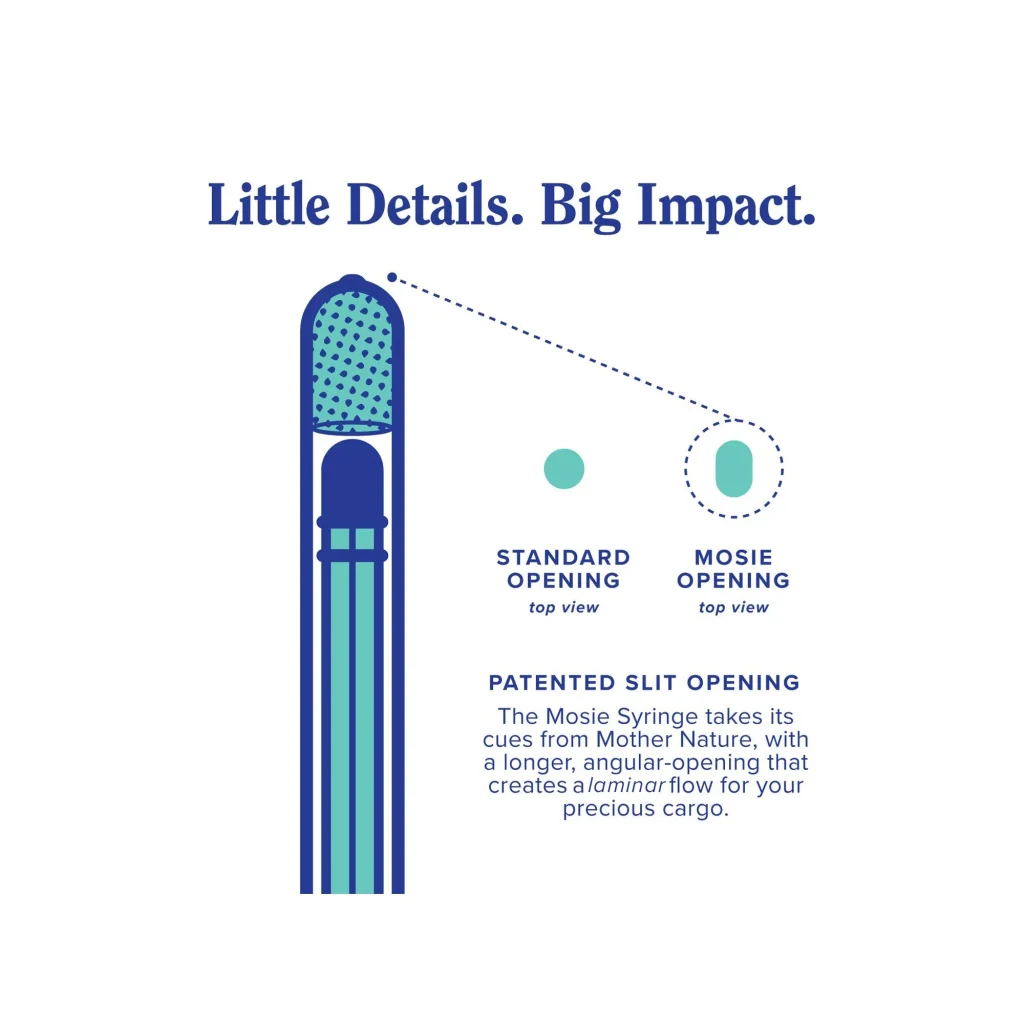
    illustration comparing standard and Mosie syringe openings with text highlighting design benefits for home insemination

    Cervical Mucus Changes throughout Different Stages of Life

    Pregnancy:
    During pregnancy, hormonal changes cause the cervix to produce a lot of mucus, forming a plug that seals the cervix and protects the growing baby. This mucus is thick, sticky, and may have a yellow or white tint to it. It also helps prevent bacteria and other harmful substances from entering the uterus and potentially harming the baby. Some women may also experience increased vaginal discharge during pregnancy, which is often normal. However, if the discharge has a foul odor or is accompanied by itching, it is essential to consult a doctor.

    Perimenopause:
    Perimenopause is the transitional phase leading up to menopause, typically starting in a woman’s late 40s or early 50s. During this stage, hormonal changes can cause irregular periods, and the production of estrogen decreases. This decrease in estrogen can cause changes in cervical mucus, leading to dryness, thinning, and a decrease in volume. As a result, some women may experience vaginal dryness and discomfort during intercourse. Using a lubricant can help alleviate these symptoms.

    Menopause:
    Menopause is the stage of life when a woman stops menstruating, usually around the age of 50. During this stage, estrogen levels drop significantly, causing the cervix to produce very little mucus. This can result in vaginal dryness, which can cause discomfort and pain during intercourse. It can also increase the risk of urinary tract infections and other vaginal infections. Using a water-based lubricant during intercourse can help ease these symptoms.

    In conclusion, cervical mucus plays a vital role in female reproductive health and changes throughout different stages of life. From puberty to menopause, hormonal fluctuations can affect the consistency, texture, and volume of cervical mucus. Understanding these changes can help women track their fertility and take necessary precautions to maintain vaginal health. If you have any concerns about your cervical mucus, it is always best to consult with your healthcare provider.

    Summary:

    Cervical mucus is a natural fluid produced by the cervix that changes throughout a woman’s life depending on various factors. During puberty, estrogen levels increase, leading to the production of cervical mucus. In adolescence, the menstrual cycle starts, and the consistency of mucus changes as ovulation approaches. During the reproductive years, estrogen levels fluctuate, causing changes in mucus that aid in conception. Pregnancy causes the cervix to produce a thick plug of mucus to protect the growing baby. In perimenopause, estrogen levels decrease, leading to dryness and vaginal discomfort, while in menopause, estrogen levels drop significantly, resulting in very little mucus production. It is essential to understand these changes and consult with a healthcare provider if there are any concerns.


  • The Impact of Age on Cervical Mucus and Cervical Position

    Blog Post Title: The Impact of Age on Cervical Mucus and Cervical Position

    Cervical mucus and cervical position are two important factors that can greatly affect a woman’s fertility and overall reproductive health. These two indicators are closely monitored by women who are trying to conceive or are practicing natural family planning methods. However, what many may not realize is that age can have a significant impact on both cervical mucus and cervical position. In this blog post, we will delve deeper into the changes that occur in these two factors as women age, and how it can affect their fertility and reproductive health.

    Cervical Mucus and Its Role in Fertility

    Cervical mucus is a fluid secreted by the cervix that plays a crucial role in fertility. It serves as a protective barrier for sperm, providing them with the best environment to survive and swim towards the egg for fertilization. The quality and quantity of cervical mucus can vary throughout a woman’s menstrual cycle, and these changes are influenced by hormones.

    In a normal and healthy menstrual cycle, cervical mucus typically changes from dry or sticky to creamy, watery, and finally, to a raw egg white-like consistency, also known as fertile cervical mucus. This fertile mucus is the most favorable for sperm survival and motility, making it the prime time for conception. After ovulation, cervical mucus typically becomes thicker and less hospitable to sperm, acting as a natural barrier to prevent any more sperm from entering the cervix.

    The Impact of Age on Cervical Mucus

    As women age, their bodies go through hormonal changes that can affect the quality and quantity of cervical mucus. One of the most significant changes occurs during perimenopause, which is the transition period before menopause. During this time, estrogen levels fluctuate, and the production of cervical mucus may decrease, making it more difficult for sperm to survive and reach the egg.

    Another factor that can affect cervical mucus as women age is the use of hormonal contraceptives. Birth control pills, patches, and hormonal IUDs work by suppressing ovulation and changing the quality of cervical mucus, making it less hospitable for sperm. This effect can last for a few months after discontinuing hormonal birth control, which can significantly impact a woman’s ability to conceive, especially as she gets older.

    Furthermore, age-related changes in cervical mucus can also be due to certain medical conditions such as polyps, fibroids, infections, and hormonal imbalances. These factors can affect the production and quality of cervical mucus, making it more difficult for sperm to reach the egg and increasing the risk of infertility.

    Cervical Position and Its Role in Fertility

    Two transparent syringes with teal accents positioned diagonally on a light gray background.

    The Impact of Age on Cervical Mucus and Cervical Position

    Aside from cervical mucus, cervical position is another crucial factor that can affect a woman’s fertility. The cervix is the lower part of the uterus that connects to the vagina, and its position changes throughout a woman’s menstrual cycle. During ovulation, the cervix rises, becomes softer, and opens slightly to allow sperm to enter. After ovulation, the cervix returns to its lower, firmer, and closed position, acting as a barrier to prevent sperm from entering.

    The Impact of Age on Cervical Position

    As women age, the position of the cervix also changes. As estrogen levels decrease, the cervix may become firmer and lower, making it more challenging for sperm to reach the egg. This can also be influenced by hormonal birth control use, which can cause the cervix to remain in a lower and firmer position for an extended period.

    Additionally, age-related changes in the cervix can also be due to medical conditions such as cervical stenosis, which is the narrowing of the cervix, or cervical incompetence, which is the inability of the cervix to stay closed during pregnancy. These conditions can increase the risk of infertility or pregnancy complications, especially for women in their late 30s and 40s.

    The Importance of Monitoring Cervical Mucus and Cervical Position

    For women who are trying to conceive or practicing natural family planning methods, monitoring cervical mucus and cervical position can provide valuable insights into their fertility and reproductive health. By paying attention to the changes in these two factors, women can better understand their menstrual cycle and identify the most fertile days for conception.

    Moreover, monitoring cervical mucus and cervical position can also help identify any potential issues or abnormalities that may be affecting fertility. If a woman consistently notices a lack of fertile cervical mucus or a lower and firmer cervix, it may be a sign of hormonal imbalances or other medical conditions that need to be addressed.

    In conclusion, age can have a significant impact on cervical mucus and cervical position, which are crucial factors in a woman’s fertility and reproductive health. As women age, hormonal changes and other factors can affect the production and quality of cervical mucus, as well as the position of the cervix, making it more challenging to conceive. By monitoring these two indicators and seeking medical attention if necessary, women can take control of their reproductive health and make informed decisions about their fertility.

    Summary:

    As women age, their bodies go through hormonal changes that can affect their fertility and reproductive health. Two crucial factors, cervical mucus and cervical position, are greatly impacted by age. Cervical mucus plays a crucial role in fertility by providing a hospitable environment for sperm to survive and reach the egg. Age-related changes, such as perimenopause, hormonal birth control use, and medical conditions, can affect the production and quality of cervical mucus, making it more challenging to conceive. Similarly, the position of the cervix also changes as women age, which can make it more difficult for sperm to enter. Monitoring cervical mucus and cervical position can provide valuable insights into a woman’s fertility and reproductive health, and help identify any potential issues that may need to be addressed.

  • Understanding Cervical Mucus Abnormalities in Different Stages of Life

    Understanding Cervical Mucus Abnormalities in Different Stages of Life

    Cervical mucus, also known as cervical fluid, plays a crucial role in female reproductive health. It is a fluid produced by the cervix that helps sperm reach the egg for fertilization. This mucus changes in consistency and appearance throughout a woman’s menstrual cycle and can also be affected by various factors such as age, hormonal changes, and underlying health conditions. Understanding cervical mucus abnormalities can help women track their fertility and identify potential issues with their reproductive health. In this blog post, we will delve deeper into the different stages of life and explore how cervical mucus can be affected.

    Adolescence (Puberty)

    During puberty, a girl’s body goes through many changes, including the start of her menstrual cycle. As a result, cervical mucus production also begins. In the early stages of puberty, cervical mucus may not be as noticeable or consistent, but as the body matures, the mucus becomes more prominent and can help girls track their menstrual cycle.

    In the first few years after the first period, it is normal for girls to experience irregularity in their menstrual cycle and changes in the consistency of cervical mucus. As the body adjusts to the hormonal changes, the mucus may be thicker and more opaque. However, if the mucus is consistently thick and cloudy, it could be a sign of an underlying infection or hormonal imbalance, and it is essential to seek medical advice.

    Reproductive Years

    During a woman’s reproductive years, cervical mucus plays a vital role in fertility and conception. The consistency and appearance of cervical mucus change throughout the menstrual cycle, reflecting the changes in hormone levels. Immediately after menstruation, the mucus may be dry or sticky, making it difficult for sperm to survive. As a woman approaches ovulation, the mucus becomes more abundant and has a stretchy, egg-white consistency, making it easier for sperm to swim through and reach the egg.

    This fertile mucus is also known as “egg white mucus” and is a clear indication that a woman is ovulating and at her most fertile. However, if a woman is not producing enough fertile cervical mucus, it can make it challenging to conceive. In some cases, hormonal imbalances or underlying health conditions may affect the production of fertile mucus, and it is essential to seek medical help if there are concerns.

    Perimenopause and Menopause

    As a woman enters perimenopause, which is the transition towards menopause, her body goes through significant hormonal changes. These changes can also affect the production and consistency of cervical mucus. In the early stages of perimenopause, a woman may experience an increase in the amount of mucus produced, while in later stages, the mucus may become thicker and more difficult for sperm to penetrate.

    During menopause, the ovaries stop producing estrogen, leading to a decrease in cervical mucus production. As a result, the mucus may become dry and sparse, making it challenging to track ovulation and conceive naturally. However, in some cases, women may experience an increase in cervical mucus production, which could be a sign of an underlying health issue, and it is vital to consult a healthcare provider.

    Pregnancy

    home insemination kit components: a syringe and a collection container against a blue background.

    Understanding Cervical Mucus Abnormalities in Different Stages of Life

    During pregnancy, cervical mucus takes on a different role. It forms a plug that seals the cervix to protect the growing baby and uterus from infections. This mucus plug is thick, sticky, and may have a pink or brown tint. Losing the mucus plug is a sign that labor may be imminent.

    However, if a woman experiences a sudden increase in the amount of mucus, it could be a sign of preterm labor and should be reported to a healthcare provider immediately. Additionally, if the mucus is accompanied by a foul odor or unusual color, it could be a sign of infection, and medical attention should be sought.

    Understanding Cervical Mucus Abnormalities

    While cervical mucus is a natural and vital part of a woman’s reproductive health, any changes in its consistency or appearance may signal an underlying issue. Here are some common cervical mucus abnormalities and their possible causes:

    1. Thick, cloudy or yellowish mucus – This could be a sign of an infection, such as bacterial vaginosis or a sexually transmitted infection.

    2. Watery or thin mucus – This may indicate hormonal imbalances, such as low levels of estrogen, or a side effect of certain medications.

    3. Blood-stained mucus – This could be a sign of implantation bleeding, ovulation, or cervical inflammation. However, if the bleeding is heavy or accompanied by pain, it is essential to seek medical attention.

    4. Absence of mucus – The absence of cervical mucus may be a sign of hormonal imbalances or underlying health conditions.

    5. Excessively stretchy mucus – This could be a sign of high estrogen levels or ovulation. However, if it is accompanied by a fishy odor or unusual color, it could be a sign of an infection.

    It is essential to track any changes in cervical mucus and discuss them with a healthcare provider to identify the cause and receive appropriate treatment if necessary.

    In conclusion, cervical mucus is a crucial aspect of a woman’s reproductive health and can provide valuable insights into her fertility and overall well-being. Changes in cervical mucus throughout different stages of life can be influenced by various factors and may indicate underlying issues that require medical attention. By understanding these cervical mucus abnormalities, women can take charge of their reproductive health and seek necessary help if needed.

    Summary:

    Cervical mucus, also known as cervical fluid, is a vital aspect of female reproductive health. It changes in consistency and appearance throughout a woman’s menstrual cycle and can also be affected by various factors such as age, hormonal changes, and underlying health conditions. In adolescence, cervical mucus production begins, and irregularities may indicate an underlying issue. During reproductive years, fertile mucus aids in conception, and changes in mucus can signal hormonal imbalances or infections. In perimenopause and menopause, changes in mucus production occur due to hormonal changes. During pregnancy, mucus forms a plug to protect the growing baby. Any abnormalities in cervical mucus should be discussed with a healthcare provider to identify the cause and receive appropriate treatment.

  • The Impact of Age on Cervical Mucus and Fertility

    The Impact of Age on Cervical Mucus and Fertility

    As women, our bodies go through many changes throughout our lifetime. From puberty to menopause, our reproductive system plays a crucial role in our overall health and well-being. One key aspect of our reproductive health is cervical mucus, also known as cervical fluid. This fluid plays a vital role in fertility and can be affected by various factors, including age. In this blog post, we will delve into the impact of age on cervical mucus and fertility and what women can expect as they go through different stages of their reproductive life.

    Cervical mucus is a fluid produced by the cervix, the lower part of the uterus, and it plays a crucial role in the process of conception. Its main function is to help sperm navigate through the female reproductive system and reach the egg for fertilization. Additionally, cervical mucus provides the ideal environment for sperm, protecting and nourishing them on their journey. Without enough or the right type of cervical mucus, it can be challenging for sperm to survive and reach the egg, leading to difficulties in conceiving.

    The quality and quantity of cervical mucus can vary throughout a woman’s menstrual cycle, which is divided into different phases: the menstrual phase, the follicular phase, and the luteal phase. During the menstrual phase, which is the first few days of the cycle, the body sheds the uterine lining and starts preparing for ovulation. During this phase, cervical mucus is usually thicker and may have a reddish or brownish color due to the shedding of blood.

    As a woman moves into the follicular phase, which is the time leading up to ovulation, her body starts producing more estrogen. This increase in estrogen leads to a change in cervical mucus, making it thinner, clearer, and more stretchy. This type of cervical mucus, also known as fertile cervical mucus, is considered the most conducive to sperm survival and transport. It helps sperm swim easier and can stay alive in the female reproductive tract for up to five days, increasing the chances of fertilization.

    After ovulation, the body enters the luteal phase, which is when the uterus prepares for a potential pregnancy. During this phase, cervical mucus becomes less fertile, thicker, and less abundant. The decrease in estrogen and the rise in progesterone levels cause this change in cervical mucus. If fertilization does not occur, the body will shed the uterine lining, and the cycle starts again.

    mosie baby logo featuring a heart and leaves in blue, pink, and green colors.

    The Impact of Age on Cervical Mucus and Fertility

    Now, how does age impact cervical mucus and fertility? As women age, their reproductive system goes through changes that can affect the production and quality of cervical mucus. In general, women are most fertile in their 20s and early 30s, and as they approach their mid-30s, their fertility starts to decline. This decline is due to a decrease in the number and quality of eggs in the ovaries, which can also impact the hormonal changes that occur during the menstrual cycle.

    One significant change that occurs with age is a decrease in the amount of fertile cervical mucus produced. As women get older, they produce less estrogen, which can lead to less fertile cervical mucus. This decrease in mucus can make it harder for sperm to reach the egg and can decrease the chances of fertilization. Additionally, the quality of cervical mucus may also be affected, becoming thicker and less stretchy, making it more difficult for sperm to swim through.

    Another factor to consider is the changes in the cervix itself. As women age, the cervix becomes less receptive to sperm due to changes in its structure and the production of cervical mucus. This can make it harder for sperm to enter the uterus and reach the egg. Additionally, the cervical mucus may also become more acidic with age, making it less hospitable to sperm.

    Moreover, as women enter perimenopause and menopause, the production of cervical mucus decreases even further, and the quality of the mucus may also be affected. This can make it extremely challenging for women to conceive naturally during this stage of their reproductive life. However, it is still possible to get pregnant during perimenopause and menopause, but it may require the help of assisted reproductive technologies.

    In conclusion, age can have a significant impact on cervical mucus and fertility. As women age, their reproductive system goes through changes that can affect the production and quality of cervical mucus. This can make it more challenging to conceive naturally, and women may need to seek medical assistance if they are struggling to get pregnant. As always, it is essential to consult a healthcare provider if you have concerns about your fertility and reproductive health.

    In summary, the impact of age on cervical mucus and fertility is significant. As women age, the quality and quantity of cervical mucus can decrease, making it more challenging to conceive. It is essential to understand the changes that occur in our bodies as we age and to seek medical assistance if needed to achieve a healthy and successful pregnancy.

  • The Evolution of Cervical Mucus: How It Changes as You Age

    The Evolution of Cervical Mucus: How It Changes as You Age

    Cervical mucus, also known as cervical fluid, is a vital part of a woman’s reproductive system. It plays a crucial role in fertility, as it helps sperm to travel through the cervix and into the uterus towards the egg. But what many women may not know is that cervical mucus changes in consistency and appearance as they age. In this blog post, we will explore the evolution of cervical mucus and how it changes throughout a woman’s life.

    Puberty and Adolescence

    The journey of cervical mucus begins during puberty, when a girl’s body starts to produce hormones that prepare her for fertility. During this stage, cervical mucus is typically thick, sticky, and may have a milky or cloudy appearance. This type of mucus helps to protect the cervix from bacteria and other harmful substances.

    As a girl enters adolescence, her cervical mucus continues to change. This is when the body starts to produce estrogen, which helps to thicken the cervical mucus. The mucus also becomes more elastic and stretchy, resembling the consistency of egg whites. This type of mucus is known as “fertile mucus” and is a sign that ovulation is approaching.

    Reproductive Years

    Once a woman reaches her reproductive years, her cervical mucus continues to change in response to her menstrual cycle. Before ovulation, the cervix produces more estrogen, causing the mucus to become even more stretchy and transparent. This type of mucus is ideal for sperm to travel through and helps to nourish and protect them on their journey to the egg.

    Instructions for reading pregnancy test results with visual indicators for "Not Pregnant," "Pregnant," and "Invalid.

    The Evolution of Cervical Mucus: How It Changes as You Age

    During ovulation, cervical mucus is at its peak in terms of quantity and quality. It is clear, slippery, and has a consistency similar to raw egg whites. This type of mucus is designed to provide an optimal environment for sperm to swim through and reach the egg. It also helps to filter out weaker sperm, ensuring that only the strongest ones can make it to the egg.

    After ovulation, cervical mucus starts to change again. The body produces less estrogen and more progesterone, causing the mucus to become thicker and stickier. This type of mucus is known as “infertile mucus” as it creates a barrier that makes it difficult for sperm to travel through. This helps to prevent pregnancy from occurring during this time.

    Perimenopause and Menopause

    As a woman enters her late 30s and early 40s, her body starts to produce less estrogen, which can have an impact on cervical mucus. This can lead to a decrease in the amount of fertile mucus produced, making it more difficult for sperm to reach the egg. As a result, this may make it more challenging for women to get pregnant naturally during this stage.

    During perimenopause, which typically occurs in a woman’s late 40s, cervical mucus continues to change. Estrogen levels fluctuate, causing the mucus to become inconsistent in its appearance and quantity. Some women may experience dryness, while others may have an increase in discharge. This stage can last for several years until menopause, which marks the end of a woman’s reproductive years.

    Summary:

    Cervical mucus plays a crucial role in fertility and changes throughout a woman’s life. During puberty and adolescence, it is thick and sticky, protecting the cervix. In the reproductive years, it becomes more stretchy and transparent, aiding sperm in their journey to the egg. After ovulation, it becomes thicker and less conducive to sperm, preventing pregnancy. During perimenopause and menopause, it becomes more inconsistent and can impact fertility. Understanding these changes can help women track their fertility and plan for pregnancy.

  • Debunking the Myths: Hormonal Birth Control and Cervical Mucus Changes in Menopause

    Summary:

    Hormonal birth control has been a popular and effective method of preventing pregnancy for decades. However, there are many myths surrounding its use, especially in relation to menopause and changes in cervical mucus. In this blog post, we will debunk these myths and provide evidence-based information about the effects of hormonal birth control on cervical mucus in menopause.

    Firstly, it is important to understand the role of cervical mucus in the menstrual cycle. Cervical mucus is a fluid produced by the cervix that helps sperm to travel through the reproductive tract and fertilize an egg. It also plays a crucial role in preventing infections in the reproductive organs. During menopause, the production of cervical mucus decreases due to the decline in hormone levels, leading to changes in its consistency and volume.

    One of the most common myths about hormonal birth control and menopause is that it can cause changes in cervical mucus. Some believe that birth control pills can dry up cervical mucus, making it difficult for sperm to reach the egg. However, research has shown that hormonal birth control does not affect the production or quality of cervical mucus in menopausal women. In fact, studies have found that women on birth control pills have similar levels of cervical mucus as women who are not taking any form of contraception.

    hand holding a pregnancy test with instructions on a colorful background

    Debunking the Myths: Hormonal Birth Control and Cervical Mucus Changes in Menopause

    Another myth is that hormonal birth control can increase the risk of infections in menopausal women by altering the pH balance of the vagina. While it is true that hormonal birth control can slightly change the pH of the vagina, it does not increase the risk of infections. In fact, birth control pills have been found to lower the risk of bacterial vaginosis, a common vaginal infection, in menopausal women.

    Some also believe that hormonal birth control can worsen menopausal symptoms, such as hot flashes and mood swings. However, studies have shown that birth control pills can actually improve these symptoms in menopausal women. This is because birth control pills contain hormones that can help regulate hormone levels and alleviate menopausal symptoms. Additionally, hormonal birth control can also help prevent osteoporosis, a common condition in menopause, by maintaining bone density.

    It is also a common misconception that women in menopause do not need birth control since they are no longer fertile. However, menopause is a gradual process and women can still become pregnant during perimenopause, the stage leading up to menopause. Additionally, hormonal birth control has other benefits for menopausal women, such as reducing the risk of certain cancers, including ovarian and endometrial cancers.

    Lastly, there is a myth that women who have been on birth control for a long time may have difficulty conceiving after stopping it. However, research has shown that hormonal birth control does not have a long-term effect on fertility. Studies have found that women who have been on birth control pills for many years are just as likely to get pregnant as women who have never used birth control.

    In conclusion, there are many myths surrounding the use of hormonal birth control in menopause, particularly its effects on cervical mucus. However, these myths have been debunked by scientific evidence. Hormonal birth control does not dry up cervical mucus, increase the risk of infections, worsen menopausal symptoms, or have long-term effects on fertility. In fact, it can have numerous benefits for menopausal women, including preventing pregnancy and reducing the risk of certain health conditions.

  • Cervical Mucus and Age: How It Changes as You Get Older

    Cervical mucus is a natural fluid produced by the cervix that plays an important role in fertility and overall reproductive health. It serves as a protective barrier for the reproductive organs and helps to facilitate the movement of sperm towards the egg. However, as women age, the composition and quantity of cervical mucus can change, which can have a significant impact on their ability to conceive and maintain a healthy pregnancy. In this blog post, we will explore how cervical mucus changes as a woman gets older, and what implications these changes may have on fertility and overall reproductive health.

    Cervical mucus is produced by the cells lining the cervix and is influenced by hormones, particularly estrogen and progesterone. The consistency, color, and amount of cervical mucus can vary throughout a woman’s menstrual cycle, and these changes are closely linked to fertility. In general, cervical mucus can be classified into four main types: dry, sticky, creamy, and egg white.

    In the early stages of a woman’s reproductive years, typically from puberty to her late 20s, cervical mucus is usually abundant, thin, and stretchy, resembling raw egg whites. This type of mucus is known as fertile cervical mucus and is considered optimal for sperm survival and movement. It also helps to create a favorable environment for fertilization by providing the sperm with a pathway to reach the egg.

    As a woman enters her 30s and 40s, her fertility begins to decline, and this is reflected in changes in cervical mucus. The levels of estrogen and progesterone decline, leading to less fertile mucus. This is because the cervix produces less mucus during this time, and the quality of mucus changes. It may become thicker, stickier, and less stretchy, making it difficult for sperm to survive and reach the egg.

    Furthermore, as women enter perimenopause and eventually menopause, the production of cervical mucus decreases significantly. This is due to a decline in estrogen levels, which is a natural part of the aging process. As a result, women in this stage may experience a dry or sticky sensation in the vaginal area, and there may be little to no cervical mucus present.

    at-home insemination kit by Mosie Baby, featuring syringes, collection cups, and instructions on a pink background.

    Cervical Mucus and Age: How It Changes as You Get Older

    These changes in cervical mucus can have a significant impact on a woman’s fertility. Fertile cervical mucus is crucial for conception as it helps to keep sperm alive and facilitate their journey to the egg. Without this fertile mucus, the chances of sperm survival and fertilization decrease. Therefore, as a woman ages and enters perimenopause and menopause, her fertility declines due in part to changes in cervical mucus.

    In addition to fertility, cervical mucus also plays a role in overall reproductive health. It serves as a protective barrier against bacteria and infections, and its consistency can provide valuable insights into a woman’s menstrual cycle and health. Changes in cervical mucus, such as an increase in discharge or a foul odor, may indicate an underlying issue that requires medical attention.

    While it is natural for cervical mucus to change as a woman ages, there are ways to support and maintain healthy cervical mucus. Staying hydrated and maintaining a well-balanced diet can help to keep cervical mucus at optimal levels. Additionally, certain supplements, such as vitamin B6 and evening primrose oil, may also help to improve the quality and quantity of cervical mucus.

    In conclusion, cervical mucus is an essential aspect of a woman’s reproductive health that can change significantly as she ages. From the abundance of fertile mucus in her early reproductive years to the decline in production during perimenopause and menopause, these changes can have a significant impact on fertility and overall reproductive health. It is essential for women to be aware of these changes and take steps to support and maintain healthy cervical mucus as they age.

    Summary:

    Cervical mucus is a natural fluid produced by the cervix that plays a crucial role in fertility and overall reproductive health. As women age, the composition and quantity of cervical mucus can change, which can have a significant impact on their ability to conceive and maintain a healthy pregnancy. In the early reproductive years, cervical mucus is usually abundant, thin, and stretchy, but as a woman enters her 30s and 40s, the levels of estrogen and progesterone decline, leading to less fertile mucus. This decline continues into perimenopause and menopause, where the production of cervical mucus decreases significantly. These changes can have a significant impact on fertility and overall reproductive health, making it essential for women to be aware of these changes and take steps to support and maintain healthy cervical mucus as they age.