Tag: Insemination Syringe

  • A Step-by-Step Guide to Successfully Using an Insemination Syringe for Parenthood Prep

    Title: A Step-by-Step Guide to Successfully Using an Insemination Syringe for Parenthood Prep

    Parenthood is a wonderful journey that many people dream of, but it can also be a challenging one. For couples or individuals who are struggling with fertility, the journey to parenthood can feel even more daunting. In recent years, the use of an insemination syringe has become a popular method for those trying to conceive. This simple and affordable tool can be a game changer for those on their path to parenthood. In this blog post, we will provide a step-by-step guide for using an insemination syringe for parenthood prep.

    Step 1: Understanding the Basics of Insemination
    Before diving into the process of using an insemination syringe, it is important to understand the basics of insemination. Insemination is the process of placing sperm into the female reproductive tract in order to fertilize an egg. This can be done through natural intercourse or through assisted reproductive technologies such as intrauterine insemination (IUI) or in vitro fertilization (IVF). Insemination syringes are commonly used for at-home insemination, which is a more affordable and convenient option for many couples or individuals.

    Step 2: Choosing the Right Insemination Syringe
    When it comes to choosing the right insemination syringe, there are a few factors to consider. The first is the type of syringe – there are two main types: the oral syringe and the vaginal syringe. The oral syringe is typically used for administering medication, while the vaginal syringe is designed specifically for insemination. It is important to choose a vaginal syringe that is specifically labeled as an insemination syringe, as it will have a narrow and flexible tip that is ideal for this purpose. Additionally, make sure to choose a syringe that is disposable and sterile for safe and hygienic use.

    Step 3: Preparing the Sperm
    Before using an insemination syringe, it is important to prepare the sperm. If using fresh sperm from a partner or donor, it is best to collect it in a sterile container and keep it at room temperature. If using frozen sperm from a sperm bank, make sure to follow the instructions for thawing and preparing the sample. It is recommended to use sperm within an hour of collection or thawing, as it can lose its potency over time.

    Step 4: Finding the Right Position
    The position in which the insemination syringe is inserted can greatly affect the success of the procedure. The most effective position is to lie down with the hips elevated, as this allows gravity to assist in the sperm’s journey to the cervix. Alternatively, some people choose to use a pillow or cushion to elevate the hips while seated. Make sure to find a comfortable position that allows for easy access to the vaginal area.

    pregnancy test kit with instructions, test device, and packaging on a white background

    A Step-by-Step Guide to Successfully Using an Insemination Syringe for Parenthood Prep

    Step 5: Preparing the Insemination Syringe
    Once the sperm and position are ready, it is time to prepare the insemination syringe. First, remove the syringe from its packaging and attach the plunger to the end. Next, draw the sperm into the syringe by pulling back on the plunger. Make sure to leave a small amount of air in the syringe, as this will help create pressure and push the sperm out during the insemination process.

    Step 6: Inserting the Insemination Syringe
    Now that everything is prepared, it is time to insert the insemination syringe. Gently insert the syringe into the vagina, aiming towards the cervix. When the syringe is in place, slowly push the plunger to release the sperm. It is important to do this slowly and steadily, rather than all at once, in order to give the sperm time to travel through the cervix. Once all of the sperm has been released, slowly remove the syringe and stay in the elevated position for about 15 minutes to allow the sperm to travel towards the egg.

    Step 7: After the Procedure
    After the insemination procedure, it is important to relax and avoid any strenuous activity for the next 24 hours. Some people may experience mild cramping or spotting, which is normal. It is recommended to wait at least two weeks before taking a pregnancy test to allow enough time for the fertilized egg to implant in the uterus.

    In conclusion, using an insemination syringe for parenthood prep can be a simple and effective method for those trying to conceive. By following these steps and preparing properly, you can increase your chances of success and make the journey to parenthood a little easier. Remember to consult with a healthcare professional for any specific questions or concerns about the process.

    Summary:

    Using an insemination syringe for parenthood prep is a popular and affordable option for those trying to conceive. This step-by-step guide covers the basics of insemination, choosing the right syringe, preparing the sperm, finding the right position, preparing the syringe, inserting the syringe, and aftercare. By following these steps, you can increase your chances of success and make the journey to parenthood a little easier. Remember to consult with a healthcare professional for any specific questions or concerns about the process.

  • Overcoming Fertility Challenges: An In-Depth Look at Insemination Syringe Solutions

    Blog Post Title: Overcoming Fertility Challenges: An In-Depth Look at Insemination Syringe Solutions

    Introduction:

    Fertility challenges can be a difficult and emotional journey for couples who are trying to conceive. It can be a frustrating and overwhelming experience, with many factors contributing to the difficulty in achieving pregnancy. One potential solution that has gained popularity in recent years is the use of an insemination syringe. In this blog post, we will take an in-depth look at insemination syringe solutions and how they can help couples overcome fertility challenges.

    What is an Insemination Syringe?

    An insemination syringe, also known as a fertility syringe, is a medical device used to assist in the process of artificial insemination. It is a thin and flexible tube with a plunger at one end and a rounded tip at the other. The syringe is used to inject sperm into the cervix or uterus, bypassing the need for sperm to travel through the vagina and into the cervix.

    Types of Insemination Syringes:

    There are two main types of insemination syringes: the traditional syringe and the soft catheter syringe. The traditional syringe is a basic design, with a straight tube and a rounded tip. The soft catheter syringe, on the other hand, has a bendable tip that allows for easier insertion into the cervix. Both types of syringes have their advantages and are effective in their own ways. It is important to consult with a medical professional to determine which type of syringe is best for your specific situation.

    Advantages of Insemination Syringe Solutions:

    1. Increased Chances of Pregnancy: Insemination syringe solutions can significantly increase the chances of pregnancy for couples who are struggling with fertility challenges. By injecting sperm directly into the cervix or uterus, the sperm has a shorter distance to travel, increasing the chances of fertilization.

    2. No Need for Medical Assistance: Unlike other fertility treatments such as in vitro fertilization (IVF), insemination syringe solutions can be done at home without the need for medical assistance. This can be a more cost-effective and convenient option for couples who are trying to conceive.

    3. Non-Invasive: Insemination syringes are a non-invasive procedure, making it a more comfortable option for couples. It does not require any surgical procedures or anesthesia, reducing the risks and discomfort associated with other fertility treatments.

    Instructions for reading pregnancy test results with visual indicators for "Not Pregnant," "Pregnant," and "Invalid.

    Overcoming Fertility Challenges: An In-Depth Look at Insemination Syringe Solutions

    4. Easy to Use: Insemination syringes are relatively easy to use, and couples can learn how to use them with proper guidance from a medical professional. This allows couples to have more control over the timing of the insemination and can be a less stressful process compared to other fertility treatments.

    5. Can Be Used with Donor Sperm: Insemination syringe solutions can be used with donor sperm, making it a viable option for same-sex couples or single women who are trying to conceive. This provides a wider range of options for couples who are facing fertility challenges.

    Tips for Using an Insemination Syringe:

    1. Timing is Key: It is important to time the insemination correctly to increase the chances of pregnancy. This is typically done around the time of ovulation, which can be determined through ovulation predictor kits or by tracking your menstrual cycle.

    2. Proper Preparation: Before using an insemination syringe, it is essential to make sure that everything is properly sanitized and that you are using a fresh, unexpired syringe. It is also recommended to use a sperm-friendly lubricant to make the process more comfortable.

    3. Relaxation Techniques: Insemination can be a nerve-wracking experience, but it is important to remain relaxed during the process. Practicing relaxation techniques such as deep breathing or meditation can help ease any tension or anxiety.

    4. Follow Instructions: It is crucial to follow the instructions provided by your healthcare provider when using an insemination syringe. This will ensure that the process is done correctly and increase the chances of a successful pregnancy.

    Conclusion:

    Fertility challenges can be a difficult and emotional journey, but with the advancements in medical technology, there are now more options available to couples who are struggling to conceive. Insemination syringe solutions offer a non-invasive, cost-effective, and convenient option for couples, increasing their chances of achieving pregnancy. By understanding the different types of syringes, their advantages, and following proper usage techniques, couples can take control of their fertility journey and overcome any challenges they may face.

    Summary:

    Insemination syringe solutions are a popular option for couples who are facing fertility challenges. These medical devices offer a non-invasive, cost-effective, and convenient way to increase the chances of pregnancy. With two main types of syringes available and various advantages, it is essential to understand and choose the right syringe for your specific situation. By following proper usage techniques and timing, insemination syringes can help couples take control of their fertility journey and overcome any challenges they may face.

  • The Dos and Don’ts of Using an Insemination Syringe for Parenthood Prep

    Parenting Prep: The Dos and Don’ts of Using an Insemination Syringe

    Parenthood is a journey that many people dream of, and for some, conceiving a child may require some extra help. Insemination syringes are a popular method for at-home insemination, but it’s important to use them correctly to increase the chances of success. In this blog post, we will discuss the dos and don’ts of using an insemination syringe for parenting prep.

    Dos:

    1. Do research and consult with a healthcare professional: Before using an insemination syringe, it’s crucial to do your research and understand the process. Talk to your doctor or a fertility specialist to ensure that this method is suitable for you and your partner. They can also provide guidance on how to properly use the syringe and answer any questions you may have.

    2. Do choose the right syringe: There are various types of insemination syringes available in the market, so it’s essential to choose the right one for your needs. Some syringes have a wider and shorter tip, while others have a narrow and longer tip. The size of the syringe will depend on the thickness of the semen and the length of your vaginal canal. It’s best to consult with a healthcare professional to determine the best option for you.

    3. Do prepare the syringe and semen correctly: Before using the insemination syringe, make sure to read the instructions carefully. The syringe should be sterile and free of any contaminants. It’s also crucial to prepare the semen correctly, as any bacteria or debris can decrease the chances of successful insemination. Follow the recommended steps for collecting and storing the semen to ensure its quality.

    4. Do use a lubricant: Using a lubricant can make the insemination process more comfortable and increase the chances of success. However, it’s essential to choose a sperm-friendly lubricant that won’t harm the sperm or decrease its motility. Avoid using petroleum-based products as they can damage the sperm.

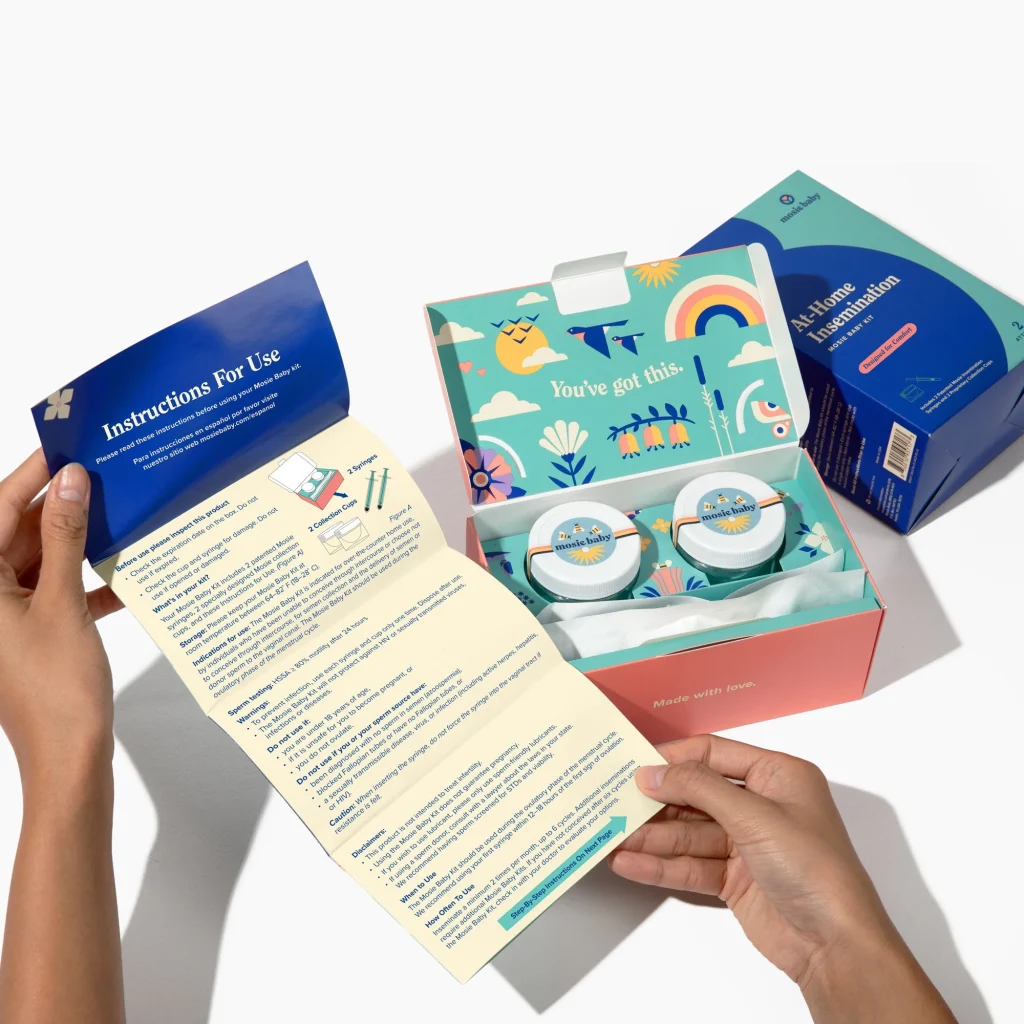
    Home insemination kit by Mosie Baby with instructions and colorful packaging.

    The Dos and Don'ts of Using an Insemination Syringe for Parenthood Prep

    5. Do use the syringe at the right time: Timing is crucial when using an insemination syringe. It’s best to use the syringe within 30 minutes of collecting the semen to ensure its freshness. Additionally, make sure to track your ovulation cycle and use the syringe during your most fertile days. Using the syringe at the right time can significantly increase the chances of successful insemination.

    Don’ts:

    1. Don’t reuse the syringe: It may be tempting to reuse the syringe to save money, but it’s essential to use a new, sterile syringe for each insemination attempt. Reusing a syringe can introduce bacteria and contaminants, decreasing the chances of success. It’s also crucial to dispose of the syringe properly after use.

    2. Don’t rush the process: Insemination is a delicate process and should not be rushed. Take your time to prepare the syringe and semen correctly, and make sure to follow the recommended steps carefully. Rushing the process can lead to mistakes and decrease the chances of successful insemination.

    3. Don’t stress: Trying to conceive can be a stressful and emotional journey, but it’s crucial to keep stress levels in check. Stress can affect fertility and decrease the chances of successful insemination. Take the time to relax and stay positive throughout the process.

    4. Don’t rely solely on an insemination syringe: While insemination syringes can be an effective method for at-home insemination, it’s essential to keep in mind that it may not work for everyone. If after a few attempts, you are not successful, consider consulting with a fertility specialist for alternative options.

    5. Don’t forget about your partner: Insemination can be a physically and emotionally draining process for both partners. It’s crucial to communicate and support each other throughout the journey. Make sure to involve your partner in the process and seek their support and understanding.

    In summary, using an insemination syringe for parenting prep can be a useful method for couples trying to conceive. However, it’s important to do proper research, choose the right syringe, and prepare it and the semen correctly. Timing, using a sperm-friendly lubricant, and avoiding common mistakes can significantly increase the chances of successful insemination. Remember to consult with a healthcare professional and involve your partner in the process for the best results.

  • Insemination Syringe vs. Traditional Methods: Which Is Best for Parenthood Prep?

    Blog Post:

    Parenthood is a major milestone in many people’s lives, and for those who are struggling to conceive naturally, there are various methods available to assist in the process. Insemination is a popular choice for couples or individuals looking to start a family, and there are two main methods to consider: traditional methods and using an insemination syringe. While both options have their pros and cons, it’s important to understand the differences between the two and which may be the best for parenthood preparation.

    Traditional methods of insemination involve the use of a male partner’s sperm being transferred into the female’s reproductive tract via intercourse. This method has been used for centuries and is the most commonly known way of conceiving a child. However, as technology and medical advancements have developed, insemination has evolved into a more controlled and precise process.

    In contrast, using an insemination syringe involves the direct insertion of sperm into the female’s reproductive tract, bypassing the need for intercourse. This method can be done either at home or in a medical setting, and the sperm can come from a donor or the male partner. The insemination syringe is a device that resembles a large medical syringe and is used to deposit the sperm into the cervix or uterus.

    One of the main advantages of using an insemination syringe is that it allows for more control and accuracy in the timing and placement of the sperm. Traditional methods rely on the female’s ovulation cycle and the timing of intercourse, which can be unpredictable. With an insemination syringe, the sperm can be placed directly into the reproductive tract at a specific time, increasing the chances of conception.

    Additionally, using an insemination syringe can also be a more comfortable and less invasive option for both partners. Traditional methods may not be suitable for couples with certain medical conditions or for individuals who may have difficulty with intercourse. Insemination with a syringe eliminates the need for penetration and can be a more comfortable alternative.

    hands using a blue syringe to extract contents from a clear container for a home insemination kit

    Insemination Syringe vs. Traditional Methods: Which Is Best for Parenthood Prep?

    Another benefit of using an insemination syringe is that it allows for the use of donor sperm. This can be beneficial for same-sex couples or for individuals who may have fertility issues with their partner’s sperm. Donor sperm can be screened for genetic diseases and other health concerns, providing peace of mind for the potential parents.

    However, using an insemination syringe also has its drawbacks. The process can be costly, especially if done in a medical setting. It may also require multiple attempts before conception occurs, adding to the overall cost. In contrast, traditional methods are typically free and can be done at home without any medical assistance.

    Another disadvantage of using an insemination syringe is the potential for incorrect placement of the sperm. If not done correctly, the sperm may not reach the cervix or uterus, reducing the chances of conception. This is where professional medical assistance can be beneficial, as a doctor or fertility specialist can ensure proper placement of the sperm.

    On the other hand, traditional methods have a higher success rate as the sperm is deposited directly into the cervix and uterus during intercourse. This method also allows for natural fertilization to occur, which some people may prefer over the use of an insemination syringe.

    Ultimately, the best method for parenthood preparation will vary for each individual or couple depending on their specific needs and preferences. It’s important to consult with a doctor or fertility specialist to discuss the options and determine the best course of action.

    In summary, when considering parenthood preparation, there are two main methods of insemination to consider: traditional methods and using an insemination syringe. Traditional methods involve intercourse, while an insemination syringe allows for more control and accuracy in the timing and placement of sperm. Using an insemination syringe also allows for the use of donor sperm and may be a more comfortable and less invasive option. However, it can be more costly and may require multiple attempts before conception occurs. Traditional methods, on the other hand, are typically free, have a higher success rate, and allow for natural fertilization to occur.

    In the end, the decision between traditional methods and using an insemination syringe will depend on individual circumstances and preferences. It’s important to weigh the pros and cons of each option and consult with a medical professional before making a decision. Parenthood is a significant journey, and choosing the right method for insemination can greatly impact the experience.

  • Breaking Down the Process of Using an Insemination Syringe for Parenthood Prep

    Blog Post Title: Breaking Down the Process of Using an Insemination Syringe for Parenthood Prep

    Parenthood is one of the most exciting and life-changing journeys that a person can embark on. For couples or individuals who are looking to start a family, there are various methods available to aid in the process of conception. One such method is using an insemination syringe, also known as an artificial insemination kit. This method is becoming increasingly popular among those who are trying to conceive, and it offers a less invasive and more affordable option compared to other fertility treatments. In this blog post, we will break down the process of using an insemination syringe for parenthood prep, providing a detailed understanding of what to expect and how to go about it.

    Step 1: Understanding the Purpose of an Insemination Syringe

    Before diving into the process, it is essential to understand the purpose of an insemination syringe. This tool is used to inject semen or sperm into the cervix or vagina, bypassing the need for intercourse. It is a simple and efficient method that can be done in the comfort of your own home, making it a popular choice for couples trying to conceive.

    Step 2: Gathering the Necessary Supplies

    To begin the process of using an insemination syringe, you will need to gather the necessary supplies. These include an insemination syringe, which can be purchased at most drugstores or online, and a sterile cup to collect the semen or sperm. It is crucial to have a clean and sterile environment to avoid any potential complications or infections.

    Step 3: Preparing the Semen or Sperm

    Once you have the necessary supplies, the next step is to prepare the semen or sperm. If you are using a fresh sample, it is essential to collect it in a sterile cup and allow it to liquefy for about 20 minutes before proceeding. If you are using frozen sperm, follow the instructions provided by your fertility clinic for thawing and preparing the sample.

    Step 4: Loading the Syringe

    After preparing the semen or sperm, it is time to load the syringe. Most insemination syringes come with a plunger that allows you to draw the semen or sperm into the syringe. Make sure to remove any air bubbles by tapping the syringe and pushing the plunger slightly to release the air. It is crucial to handle the syringe carefully to avoid any contamination.

    Baby wearing a blue shirt with "made with Love" text, surrounded by colorful floral and butterfly designs.

    Breaking Down the Process of Using an Insemination Syringe for Parenthood Prep

    Step 5: Finding a Comfortable Position

    Before inserting the syringe, it is essential to find a comfortable position. This can be lying down on your back with your legs raised or propping up your hips with a pillow. Make sure to relax and take deep breaths to prepare your body for the insemination process.

    Step 6: Inserting the Syringe

    Once you are in a comfortable position, it is time to insert the syringe. Gently insert the syringe into the vagina, aiming towards the cervix. It is essential to be gentle and avoid any force to prevent any damage to the delicate tissues.

    Step 7: Releasing the Semen or Sperm

    Slowly push the plunger to release the semen or sperm into the cervix. Make sure to empty the syringe completely to ensure the entire sample is deposited. Once done, gently remove the syringe and remain in the same position for about 20-30 minutes to allow the sperm to reach the uterus.

    Step 8: Post-Insemination Care

    After the insemination process, it is crucial to take care of yourself to increase the chances of conception. This includes avoiding any strenuous activities, staying hydrated, and maintaining a healthy diet. It is also recommended to lie down for at least 20 minutes after the insemination to allow the sperm to reach its destination.

    In conclusion, using an insemination syringe for parenthood prep is a simple and efficient method that can be done at home. By following these steps and taking necessary precautions, you can increase your chances of conception and start your parenthood journey. However, if you do not achieve success after a few tries, it is best to consult a fertility specialist for further guidance and assistance.

    Summary:

    Insemination syringes, also known as artificial insemination kits, are becoming a popular choice for couples trying to conceive. This method offers a less invasive and more affordable option compared to other fertility treatments. The process involves understanding the purpose of an insemination syringe, gathering necessary supplies, preparing the semen or sperm, loading the syringe, finding a comfortable position, inserting the syringe, releasing the semen or sperm, and taking post-insemination care. By following these steps and taking necessary precautions, individuals or couples can increase their chances of conception and start their parenthood journey.

  • The Pros and Cons of Using an Insemination Syringe for Parenthood Prep

    Blog Post Title: The Pros and Cons of Using an Insemination Syringe for Parenthood Prep

    Parenthood is a life-changing journey that many individuals and couples dream of. However, for some, conceiving a child may not come as easily as they had hoped. This is where the use of an insemination syringe comes into play. An insemination syringe is a tool that is used to deposit sperm into the vagina or cervix, with the goal of increasing the chances of pregnancy. While it may seem like a simple and cost-effective option, there are both pros and cons to using an insemination syringe for parenthood prep. In this blog post, we will explore the various aspects of using an insemination syringe and help you determine if it is the right choice for you.

    Pros:

    1. Cost-Effective
    One of the main advantages of using an insemination syringe for parenthood prep is the cost. In comparison to other fertility treatments, such as intrauterine insemination (IUI) or in vitro fertilization (IVF), an insemination syringe is a much more affordable option. This makes it a viable choice for individuals or couples who may not have the financial means to pursue more expensive fertility treatments.

    2. Convenience
    Another benefit of using an insemination syringe is the convenience factor. Unlike other fertility treatments that require multiple visits to a doctor’s office, an insemination syringe can be used in the comfort and privacy of your own home. This can be especially appealing for those who may feel uncomfortable with the clinical setting of a doctor’s office or for those who have busy schedules.

    3. Simple Procedure
    Using an insemination syringe is a relatively simple procedure that can be done by the individual or couple themselves. The process involves collecting semen from a male partner or a sperm donor, loading it into the syringe, and then inserting it into the vagina or cervix. While it may take a few tries to get the hang of it, the process is not as intimidating as other fertility treatments.

    4. Increased Pregnancy Chances
    The main goal of using an insemination syringe is to increase the chances of pregnancy. This is especially true for couples who may be struggling with fertility issues. By directly depositing sperm into the vagina or cervix, the chances of conception are increased. This can be a huge relief for couples who have been trying to conceive for a long time.

    At-home insemination kit with syringes and collection cups on a teal background.

    The Pros and Cons of Using an Insemination Syringe for Parenthood Prep

    Cons:

    1. Lower Success Rates
    While using an insemination syringe may increase the chances of pregnancy, the success rates are much lower compared to other fertility treatments. In fact, the success rate for using an insemination syringe is only about 10-20%, whereas IVF has a success rate of 40-50%. This means that it may take multiple attempts before a pregnancy is achieved, which can be emotionally and financially draining.

    2. No Guarantee of Pregnancy
    Unfortunately, there is no guarantee that using an insemination syringe will result in pregnancy. This can be frustrating and disappointing for those who are eagerly trying to conceive. It is important to manage expectations and understand that it may take multiple attempts before a pregnancy is achieved.

    3. Risk of Infection
    Inserting any foreign object into the vagina or cervix can increase the risk of infection. While using a sterile insemination syringe can minimize this risk, it is still a possibility. It is important to follow proper hygiene practices and to consult with a healthcare professional if any symptoms of infection arise.

    4. Emotional Impact
    Trying to conceive can be a rollercoaster of emotions, and using an insemination syringe may only add to the stress and anxiety. The constant hope and disappointment with each attempt can take a toll on an individual or couple’s mental health. It is important to have a support system in place and to seek professional help if needed.

    In conclusion, using an insemination syringe for parenthood prep has its own set of pros and cons. It is a cost-effective and convenient option, with the potential to increase the chances of pregnancy. However, it also comes with lower success rates, no guarantee of pregnancy, and potential risks and emotional impact. It is important to carefully consider all factors and consult with a healthcare professional before making a decision.

    In summary, using an insemination syringe for parenthood prep can be a cost-effective and convenient option, with the potential to increase the chances of pregnancy. However, it also comes with lower success rates, no guarantee of pregnancy, and potential risks and emotional impact. It is important to carefully consider all factors and consult with a healthcare professional before making a decision.

  • From Conception to Parenthood: Using an Insemination Syringe for Success

    Blog Post:

    From Conception to Parenthood: Using an Insemination Syringe for Success

    Parenthood is a dream for many couples, and for some, conceiving a child may not be as straightforward as they had hoped. However, with advancements in technology and medical procedures, there are various options available to help couples achieve their dream of starting a family. One such option is using an insemination syringe, a simple and effective method for achieving conception. In this blog post, we will explore the process of using an insemination syringe, its benefits, and tips for success.

    What is an Insemination Syringe?

    An insemination syringe, also known as an artificial insemination syringe or a fertility syringe, is a medical device used to deliver sperm directly into the cervix or uterus of a woman. It is a simple and non-invasive method of fertility treatment that can be done at home or in a medical setting. The syringe is designed with a long and narrow nozzle, making it easier to reach the cervix and deposit the sperm.

    The Process of Using an Insemination Syringe

    Using an insemination syringe may seem daunting at first, but with proper preparation and guidance, it can be a straightforward process. Here are the steps involved in using an insemination syringe for conception:

    1. Preparation: Before using an insemination syringe, it is essential to prepare the sperm. If you are using sperm from a donor, make sure to get it from a reputable sperm bank. If you are using sperm from your partner, it should be collected in a clean and sterile container. It is also recommended to keep the sperm at room temperature for about 30 minutes before the insemination process.

    2. Positioning: The person receiving the sperm should lie on their back with their legs elevated and supported by pillows. This position allows for easier access to the cervix and helps the sperm reach its destination.

    3. Fill the syringe: Once the person is in the correct position, it is time to fill the syringe with the sperm. Remove the plunger from the syringe and carefully pour the sperm into the barrel, making sure not to spill any. Once the syringe is filled, reattach the plunger.

    4. Insert the syringe: Gently insert the syringe into the vagina, aiming towards the cervix. Slowly push the plunger to deposit the sperm into the cervix. Once the syringe is empty, remove it carefully.

    5. Rest: After the insemination, it is recommended to rest for 15-20 minutes with the legs still elevated. This will help the sperm reach the cervix and increase the chances of success.

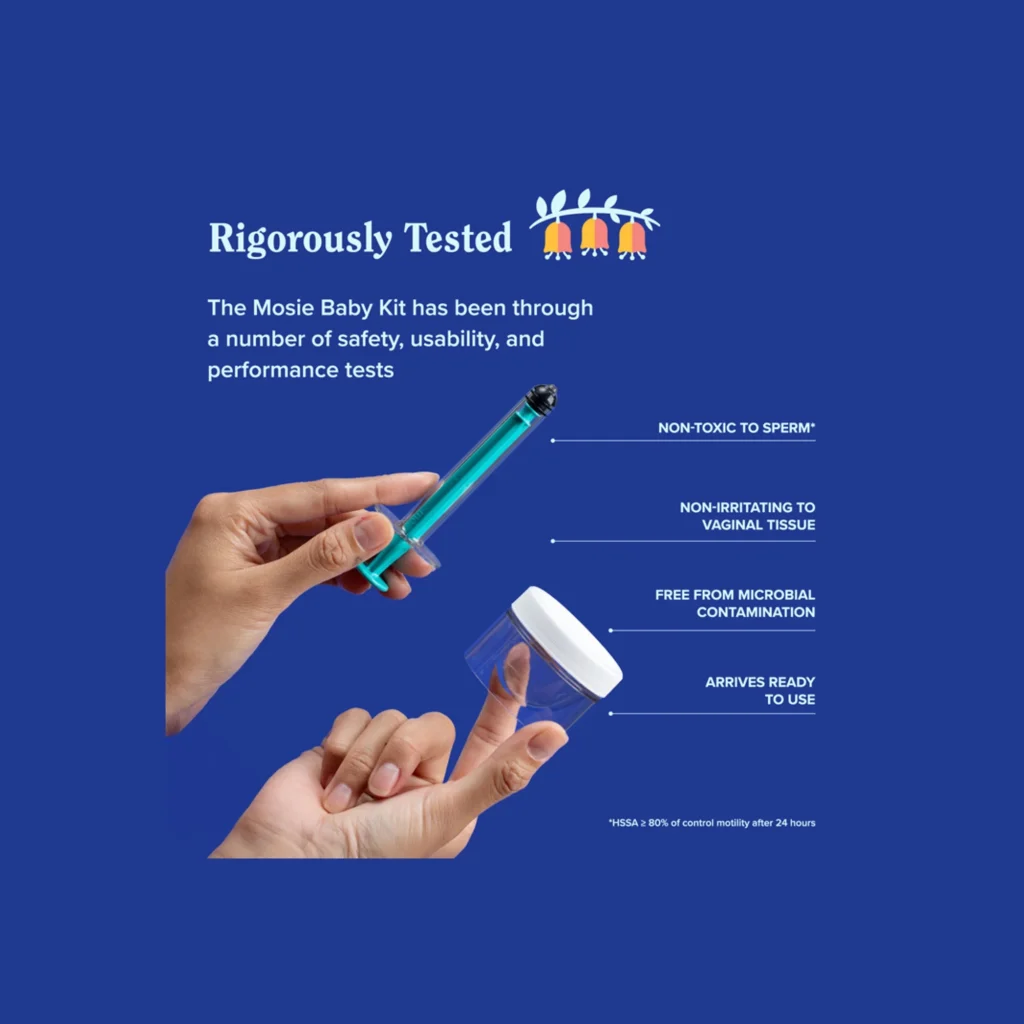
    Mosie Baby Kit features a syringe and container, highlighting safety and usability tests on a blue background.

    From Conception to Parenthood: Using an Insemination Syringe for Success

    Benefits of Using an Insemination Syringe

    1. Cost-effective: Insemination syringes are relatively inexpensive compared to other fertility treatments such as in vitro fertilization (IVF).

    2. Non-invasive: Unlike other fertility treatments, using an insemination syringe is a non-invasive procedure, making it a more comfortable experience for the person undergoing the process.

    3. Can be done at home: Insemination using a syringe can be done at home, eliminating the need for frequent visits to a medical facility.

    4. Increases chances of success: Directly depositing the sperm into the cervix or uterus increases the chance of fertilization, making it an effective method for achieving conception.

    Tips for Success

    1. Timing is crucial: Insemination should be done during the ovulation period, which is when the chances of fertilization are the highest.

    2. Use fresh sperm: Using fresh sperm is recommended for better success rates.

    3. Be patient: Conception may not happen on the first try, and it is essential to be patient and not get discouraged.

    4. Seek medical advice: If you have been trying for a while and have not been successful, it is advisable to seek medical advice to rule out any underlying fertility issues.

    In conclusion, using an insemination syringe can be a simple and effective method for achieving conception. With proper preparation, positioning, and timing, the chances of success are high. However, if you have been trying for a while without success, it is recommended to seek medical advice. Parenthood is a beautiful journey, and with the help of modern medical advancements, more and more couples are able to experience the joy of starting a family.

    Summary:

    Using an insemination syringe is a simple and non-invasive method of fertility treatment that can be done at home or in a medical setting. The process involves preparing the sperm, positioning the person receiving the sperm, filling the syringe, inserting it into the vagina, and resting for a few minutes. This method is cost-effective, non-invasive, and can increase the chances of success. However, timing, using fresh sperm, patience, and seeking medical advice are important factors to consider for success. Parenthood is a beautiful journey, and with the help of an insemination syringe, many couples are able to achieve their dream of starting a family.

  • The Ins and Outs of Using an Insemination Syringe for Parenthood Prep

    Blog Post:

    Parenthood is a journey that many individuals or couples aspire to embark on. However, for some, conceiving a child may not come easily. This is where insemination syringes come into play. Insemination syringes, also known as artificial insemination syringes, are a popular method for individuals or couples to prepare for parenthood. In this blog post, we will delve into the ins and outs of using an insemination syringe for parenthood prep.

    What is an Insemination Syringe?

    An insemination syringe is a medical device that is used to transfer semen into the cervix or uterus of a female in order to facilitate fertilization. It is a simple and cost-effective method for individuals or couples who are looking to conceive a child. Insemination syringes come in different sizes and designs, but they all serve the same purpose – to deliver sperm to the female reproductive system.

    Why Use an Insemination Syringe?

    There are various reasons why individuals or couples may choose to use an insemination syringe for parenthood prep. Some may have fertility issues and are unable to conceive naturally, while others may be in a same-sex relationship. Additionally, single individuals who desire to have a child may also opt for this method.

    Using an insemination syringe also gives individuals or couples more control over the process of conception. They can choose the time and place of insemination, as well as the method of sperm collection (from a partner or a donor). This can be particularly beneficial for those who have busy schedules or travel frequently.

    Preparing for Insemination

    Before using an insemination syringe, it is important to prepare both physically and mentally. For females, it is crucial to track ovulation in order to determine the most fertile days for insemination. This can be done through tracking basal body temperature, cervical mucus, or using an ovulation predictor kit.

    blue box with "mosie" logo, syringes, and informational pamphlet on a pink background

    The Ins and Outs of Using an Insemination Syringe for Parenthood Prep

    For males, it is important to ensure that the sperm is of good quality and quantity. This can be achieved through a healthy diet, regular exercise, and avoiding substances such as alcohol and tobacco that can affect sperm production.

    Using an Insemination Syringe

    Using an insemination syringe can be done at home or in a medical setting. If doing it at home, it is important to have a clean and sterile environment. Before insemination, the sperm needs to be collected and placed into the syringe. The female should then lie down with her hips elevated for 20-30 minutes to allow the sperm to travel towards the cervix and increase the chances of fertilization.

    It is recommended to repeat the process of insemination for a few days in a row to increase the chances of conception. However, it is important to not overdo it as this may decrease sperm quality and quantity.

    Potential Risks and Considerations

    While using an insemination syringe is a safe and simple method for parenthood prep, there are some risks and considerations to keep in mind. One potential risk is the introduction of infections into the reproductive system. It is important to ensure that the syringe and any other equipment used are clean and sterile.

    Individuals or couples should also consider the legal implications of using an insemination syringe. Depending on the country or state, laws may vary regarding parental rights and responsibilities in cases of using a donor. It is important to seek legal advice before proceeding with this method.

    In conclusion, using an insemination syringe is a popular method for parenthood prep for various reasons. It gives individuals or couples more control over the process of conception, is a cost-effective option, and can be done in the comfort of one’s home. However, it is important to prepare physically and mentally, and to be aware of potential risks and legal considerations. If done correctly, an insemination syringe can be a successful method for achieving parenthood.

    Summary:

    Insemination syringes are a popular method for individuals or couples to prepare for parenthood. They are medical devices used to transfer semen into the female reproductive system in order to facilitate fertilization. This method is chosen for various reasons, including fertility issues, same-sex relationships, and single individuals desiring to have a child. Before using an insemination syringe, it is important to prepare both physically and mentally. The process of using an insemination syringe involves collecting sperm, placing it into the syringe, and inserting it into the cervix or uterus. There are potential risks and legal considerations to keep in mind when using an insemination syringe. Overall, it is a safe and cost-effective method that can give individuals or couples more control over the process of conception.

  • The Financial Benefits of Using an Insemination Syringe Set for Parenthood

    Blog Post: The Financial Benefits of Using an Insemination Syringe Set for Parenthood

    Parenthood is a dream for many individuals and couples, but it can come with a hefty price tag. From fertility treatments to adoption fees, the expenses can add up quickly. However, there is a more affordable and accessible option for those looking to start a family – using an insemination syringe set.

    Insemination syringe sets, also known as at-home insemination kits, have become increasingly popular in recent years as a cost-effective and private way to conceive. These kits typically include everything needed to perform an at-home insemination, including a syringe, collection cup, and sometimes even ovulation prediction tools. While the emotional and physical benefits of using an insemination syringe set for parenthood are undeniable, there are also significant financial benefits that should be considered.

    1. Lower Cost Compared to Other Fertility Options

    One of the most significant financial benefits of using an insemination syringe set for parenthood is its affordability compared to other fertility options. The average cost of one cycle of in vitro fertilization (IVF) can range from $12,000 to $15,000, and the success rates are not guaranteed. Adoption costs can also be expensive, with the average cost for a domestic adoption in the United States ranging from $30,000 to $50,000. In contrast, an insemination syringe set can cost anywhere from $100 to $500, making it a much more affordable option for those on a budget.

    2. No Need for Expensive Medical Procedures

    Another significant expense associated with traditional fertility treatments is the cost of medical procedures. IVF, for example, requires multiple doctor visits, hormone injections, and retrieval procedures, all of which can add up quickly. With an insemination syringe set, there is no need for any medical procedures, as the insemination can be done at home. This not only saves money but also allows for privacy and a more comfortable experience.

    3. Avoid Travel Expenses

    For individuals or couples who do not live near a fertility clinic or adoption agency, travel expenses can be a significant added cost. Insemination syringe sets eliminate the need for travel since the insemination can be done in the comfort of one’s own home. This not only saves money on travel expenses but also eliminates the stress and time associated with traveling for fertility treatments.

    Home insemination kit by Mosie Baby with instructions and colorful packaging.

    The Financial Benefits of Using an Insemination Syringe Set for Parenthood

    4. Reusable for Multiple Cycles

    Unlike other fertility options that often require multiple cycles to achieve success, an insemination syringe set can be reused multiple times. This means that even if it takes a few cycles to conceive, the initial investment in the kit is the only expense. Additionally, some kits come with multiple syringes, making it possible to perform multiple inseminations in one cycle without having to purchase additional supplies.

    5. No Need for Expensive Medications

    Many fertility treatments, such as IVF, require expensive medications to stimulate ovulation and increase the chances of conception. These medications can cost thousands of dollars per cycle and are not always covered by insurance. With an insemination syringe set, there is no need for these medications, making it a much more cost-effective option for those on a budget.

    6. Can Be Done Without a Donor

    For same-sex couples or individuals who do not have access to a sperm donor, an insemination syringe set can be a more affordable option than using a fertility clinic or sperm bank. Instead of paying for donor sperm, the individual or couple can use fresh or frozen sperm from a known donor or a sperm bank, often at a lower cost than using a clinic.

    In conclusion, the financial benefits of using an insemination syringe set for parenthood are significant. From lower costs compared to other fertility options to the ability to reuse the kit for multiple cycles, this option provides a more accessible and affordable way to start a family. Additionally, the privacy and comfort of performing the insemination at home can be invaluable to those seeking parenthood. With the rising costs of traditional fertility treatments and adoption, an insemination syringe set offers a more financially feasible option for individuals and couples looking to become parents.

    Summary:

    Parenthood can be a costly journey, but using an insemination syringe set can provide significant financial benefits. With an average cost of $100 to $500, it is much more affordable than traditional fertility treatments and adoption. There is no need for expensive medical procedures, travel expenses, or medications, making it a cost-effective and private option for starting a family. The kit can also be reused for multiple cycles, and it can be done without a donor, making it a more accessible choice for same-sex couples or individuals without access to a sperm donor.

  • The Benefits of Insemination Syringe Sets for Same-Sex Couples Wanting a Family

    Blog Post:

    In recent years, there has been a significant increase in the number of same-sex couples who want to start a family. With advancements in reproductive technology, same-sex couples now have more options available to them than ever before. One such option is the use of insemination syringe sets, which have become increasingly popular among same-sex couples who want to conceive. In this blog post, we will explore the benefits of insemination syringe sets for same-sex couples wanting a family.

    First and foremost, insemination syringe sets offer a cost-effective and convenient method for same-sex couples to conceive. Traditional methods of assisted reproduction, such as intrauterine insemination (IUI) or in vitro fertilization (IVF), can be quite expensive and may not be covered by insurance. On the other hand, insemination syringe sets are more affordable and can be used in the comfort of your own home, eliminating the need for multiple expensive visits to a fertility clinic. This makes them a more accessible option for same-sex couples who may not have the financial means to pursue other methods of assisted reproduction.

    Another benefit of insemination syringe sets is that they allow same-sex couples to have a more hands-on experience in the conception process. With IUI or IVF, the sperm is usually inserted into the uterus by a medical professional. This can feel impersonal and may not give the couple a sense of control over the process. In contrast, using an insemination syringe set allows the couple to be actively involved in the insemination process, making it a more intimate and personal experience.

    Additionally, insemination syringe sets offer a sense of privacy for same-sex couples. Many couples may not feel comfortable discussing their fertility journey with others or having medical professionals involved in such an intimate process. With insemination syringe sets, the couple can conduct the insemination at home, providing a sense of privacy and control over the process. This can be especially beneficial for those who may have faced discrimination or stigma in seeking assisted reproduction.

    hand holding a syringe with a blue plunger against a solid blue background

    The Benefits of Insemination Syringe Sets for Same-Sex Couples Wanting a Family

    Furthermore, using insemination syringe sets can be a less invasive option for same-sex couples. IUI and IVF both involve invasive procedures, such as egg retrieval and sperm injection, which can be uncomfortable and even painful for some individuals. In contrast, insemination syringe sets only require the insertion of a thin needle into the vagina, making it a less invasive option for those who may have concerns about undergoing medical procedures.

    Aside from the practical benefits, insemination syringe sets also offer emotional benefits for same-sex couples. Conceiving a child can be a stressful and emotional journey for any couple, and same-sex couples may face additional challenges and hurdles. However, using an insemination syringe set can help alleviate some of this stress and anxiety by providing a more affordable and accessible option. It also allows the couple to have more control over the process, which can help them feel more connected and invested in the journey towards starting a family.

    Moreover, using insemination syringe sets can help same-sex couples build a stronger bond and facilitate communication. The process of choosing a donor and going through the insemination process can bring couples closer together and encourage open and honest communication about their desires and expectations for starting a family. This can ultimately strengthen their relationship and prepare them for the challenges and joys of parenthood.

    In conclusion, insemination syringe sets offer numerous benefits for same-sex couples who want to start a family. They are a cost-effective and convenient option that allows for a more intimate and personal experience. They also offer a sense of privacy, are less invasive, and can provide emotional benefits for the couple. With the increasing demand for more inclusive and accessible options for assisted reproduction, insemination syringe sets have become a valuable tool for same-sex couples wanting to conceive and start a family.

    Summary:

    Insemination syringe sets have become a popular option for same-sex couples wanting to start a family. They offer a cost-effective and convenient method, allowing for a more hands-on and intimate experience. They also provide a sense of privacy, are less invasive, and offer emotional benefits for the couple. Using insemination syringe sets can help strengthen the bond between partners and facilitate communication, making it a valuable tool for same-sex couples seeking assisted reproduction.