Tag: success rates

  • Syringe Insemination Myths vs. Facts: Separating Truth from Fiction

    Syringe Insemination Myths vs. Facts: Separating Truth from Fiction

    In recent years, there has been a growing interest in alternative methods of insemination, with syringe insemination being one of the most popular options. However, with this increased interest comes a lot of misinformation and myths surrounding the practice. In this blog post, we will explore some of the most common syringe insemination myths and separate them from the facts.

    Myth: Syringe insemination is only for same-sex couples or single women.
    Fact: While syringe insemination is a popular option for same-sex couples and single women, it is not limited to these groups. In fact, many heterosexual couples struggling with fertility issues have also turned to syringe insemination as a less invasive and more affordable option compared to other fertility treatments.

    Myth: Syringe insemination is not as effective as traditional methods of insemination.
    Fact: This is a common misconception, as syringe insemination has been found to have similar success rates as traditional methods of insemination. In fact, a study published in the Journal of Obstetrics and Gynaecology Canada found that syringe insemination had a success rate of 15% per cycle, which is comparable to intrauterine insemination (IUI) with a success rate of 16% per cycle.

    Myth: Syringe insemination is a painful and uncomfortable process.
    Fact: Syringe insemination is a relatively painless and minimally invasive procedure. It involves inserting a syringe into the vagina and depositing the sperm near the cervix. Many women report feeling little to no discomfort during the procedure, and any potential discomfort can be minimized by using a small syringe and a gentle insertion technique.

    Myth: Syringe insemination can only be done at a fertility clinic.
    Fact: While syringe insemination can be done at a fertility clinic, it can also be performed at home with the proper guidance and equipment. Many couples choose to do at-home insemination to increase privacy and comfort. However, it is important to note that at-home insemination should only be done after consulting with a healthcare professional and following proper guidelines to ensure safety and success.

    hands using a blue syringe to extract contents from a clear container for a home insemination kit

    Syringe Insemination Myths vs. Facts: Separating Truth from Fiction

    Myth: Syringe insemination is not a safe method of insemination.
    Fact: When done correctly and with proper precautions, syringe insemination is a safe and effective method of insemination. The sperm used in syringe insemination is either provided by a sperm donor or collected from the male partner and then screened and prepared for use. Additionally, the risk of infection is low as long as sterile equipment and proper hygiene are maintained.

    Myth: Syringe insemination can only be done with fresh sperm.
    Fact: While fresh sperm is often used in syringe insemination, it is not the only option. Frozen sperm can also be used and has been found to have similar success rates to fresh sperm. In fact, frozen sperm can be stored for longer periods, making it a convenient option for those who do not have access to fresh sperm.

    Myth: Syringe insemination guarantees pregnancy.
    Fact: Unfortunately, there is no method of insemination that guarantees pregnancy. Success rates may vary depending on various factors such as the age and health of the woman, the quality of sperm, and timing of insemination. It is important to manage expectations and understand that it may take multiple attempts for syringe insemination to result in pregnancy.

    Myth: Syringe insemination is only for women with fertility issues.
    Fact: While syringe insemination can be a great option for couples struggling with fertility issues, it is not limited to this group. In fact, many couples who are perfectly healthy and fertile choose syringe insemination as a more natural and affordable way to conceive. It can also be a great option for those who want to have a baby without a traditional sexual partner.

    Myth: Syringe insemination is not recognized by medical professionals.
    Fact: Syringe insemination is a recognized and accepted method of insemination by medical professionals. It is even recommended as a first-line treatment for certain fertility issues by organizations such as the American Society for Reproductive Medicine and the European Society of Human Reproduction and Embryology.

    Myth: Syringe insemination is only for women who cannot afford traditional fertility treatments.
    Fact: While syringe insemination may be a more affordable option for some couples, it is not limited to those who cannot afford traditional fertility treatments. In fact, many couples choose syringe insemination as a first-line treatment due to its lower cost and less invasive nature compared to other fertility treatments.

    In summary, syringe insemination is a safe, effective, and affordable method of insemination that is not limited to a specific group of people. It can be done at home or at a fertility clinic, and its success rates are comparable to traditional methods of insemination. It is important to separate the myths from the facts when considering syringe insemination as an option for conceiving a child.


  • Syringe Insemination for Single Women: A Viable Option for Motherhood

    Becoming a mother is one of the most fulfilling experiences in a woman’s life. However, for single women, the journey towards motherhood can be a challenging one. With traditional methods of conception limited to heterosexual couples, single women often feel left out of the conversation. But with advancements in reproductive technology, there is now an option for single women to become mothers through syringe insemination.

    Syringe insemination, also known as artificial insemination, is a fertility treatment that involves the direct placement of sperm into a woman’s uterus using a syringe. This procedure has been used for decades to help couples struggling with infertility, but it is now becoming a popular option for single women who want to start a family.

    In this blog post, we will discuss the process of syringe insemination, its success rates, and the pros and cons of this method for single women. We will also address some common concerns and misconceptions surrounding this option and provide resources for those interested in pursuing syringe insemination.

    The Process of Syringe Insemination

    The first step in the syringe insemination process is to consult with a reproductive specialist. The doctor will conduct a thorough examination and run tests to determine the woman’s fertility status. They will also discuss the woman’s medical history and any potential risks or complications that may arise from the procedure.

    Once the doctor confirms that the woman is a good candidate for syringe insemination, the next step is to choose a sperm donor. This can be done through a sperm bank, where potential donors are thoroughly screened for any genetic diseases or health issues. The woman can also choose to use a known donor, such as a friend or family member, but it is important to have a legal agreement in place to protect both parties.

    After selecting a donor, the woman will undergo hormonal treatment to stimulate ovulation. This is done to increase the chances of pregnancy by releasing multiple eggs. The sperm is then collected and washed to remove any impurities or non-motile sperm. The washed sperm is then inserted into the woman’s uterus using a syringe, either by the doctor or the woman herself.

    Success Rates of Syringe Insemination

    The success rates of syringe insemination vary depending on various factors such as the woman’s age, fertility status, and the quality of the sperm used. On average, the success rate for each cycle of syringe insemination ranges from 10-20%, with higher success rates in younger women and those with no fertility issues.

    It is important to note that syringe insemination is not a guarantee of pregnancy, and multiple cycles may be required before achieving a successful pregnancy. However, with proper monitoring and guidance from a reproductive specialist, the chances of success can be increased.

    hand holding a syringe with a blue plunger against a solid blue background

    Syringe Insemination for Single Women: A Viable Option for Motherhood

    Pros and Cons of Syringe Insemination for Single Women

    One of the main advantages of syringe insemination for single women is that it allows them to become mothers without the need for a partner. It also gives them control over the process and allows them to choose a sperm donor that aligns with their preferences and values. Moreover, the procedure is minimally invasive and does not require surgery or anesthesia.

    However, syringe insemination also has its drawbacks. The cost of the procedure can be a significant barrier for many single women, as it is not usually covered by insurance. It also requires a certain level of commitment and dedication, as the woman will need to undergo hormonal treatment and undergo multiple cycles before achieving a successful pregnancy.

    Addressing Concerns and Misconceptions

    One of the most common concerns surrounding syringe insemination is the risk of passing on genetic diseases or disorders to the child. However, with proper screening and selection of a sperm donor, this risk can be significantly reduced. It is crucial for single women to work closely with their doctor and choose a reputable sperm bank to ensure the health and well-being of their future child.

    Another misconception is that children born through syringe insemination will not have a father figure in their life. While this may be true for some cases, many single mothers have a strong support system and raise happy and healthy children. It is also worth noting that not all children born into traditional families have a father figure present in their lives.

    Resources for Women Interested in Syringe Insemination

    For women who are considering syringe insemination as an option for motherhood, there are several resources available to help guide them through the process. Fertility clinics and reproductive specialists can provide information and support, and there are also online communities and support groups for single women pursuing syringe insemination.

    Summary

    Syringe insemination is a viable option for single women who want to become mothers. It involves the direct placement of sperm into the uterus using a syringe and has a success rate of 10-20% per cycle. While it has its pros and cons, with proper guidance and support, many single women have successfully achieved their dream of motherhood through syringe insemination. It is essential to address concerns and misconceptions surrounding this option and to have open and honest communication with a reproductive specialist. With advancements in reproductive technology, single women now have the opportunity to embark on the journey of motherhood and experience the joys of raising a child.

  • Overcoming Infertility: How Syringe Insemination Can Help You Conceive

    Summary:

    Infertility is a heartbreaking struggle that affects millions of couples around the world. The inability to conceive a child can take a toll on a person’s mental, emotional, and physical well-being. However, thanks to advancements in medical technology, there are now various options available for couples who are struggling to conceive. One such option is syringe insemination, which has gained popularity in recent years due to its high success rates and affordable cost.

    Syringe insemination, also known as intrauterine insemination (IUI), is a fertility treatment that involves placing sperm directly into a woman’s uterus using a syringe. This process can help overcome certain barriers to conception, such as low sperm count, cervical issues, and ovulation problems. In this blog post, we will take a closer look at syringe insemination and how it can help you overcome infertility.

    Causes of Infertility:

    Infertility can be caused by various factors, both in men and women. In men, low sperm count, poor sperm motility, and abnormal sperm shape can make it difficult to fertilize an egg. Women may experience infertility due to ovulation disorders, blocked fallopian tubes, or hormonal imbalances. In some cases, the cause of infertility may be unexplained, making it even more frustrating for couples trying to conceive.

    How Syringe Insemination Works:

    Syringe insemination is a relatively simple and non-invasive procedure that can be performed in a doctor’s office. First, the woman will undergo a series of fertility tests to determine the best time for insemination. This is usually around the time of ovulation when the chances of conception are highest.

    Next, the male partner will provide a semen sample, which will be washed and prepared in a laboratory. The process of washing the sperm helps to remove any dead or damaged sperm, leaving behind only healthy and active ones. This concentrated sample is then placed into a syringe, which is then inserted into the woman’s uterus.

    The entire process takes only a few minutes and does not require any anesthesia. After the procedure, the woman may experience some cramping, but this usually subsides within a few hours. The woman can resume her normal activities immediately after the procedure.

    Mosie Baby Kit with a syringe and container, highlighting safety and usability features on a blue background.

    Overcoming Infertility: How Syringe Insemination Can Help You Conceive

    Benefits of Syringe Insemination:

    One of the main benefits of syringe insemination is that it can help overcome various barriers to conception. By placing the sperm directly into the uterus, it bypasses any potential issues with sperm motility or cervical mucus. This can significantly increase the chances of fertilization and conception.

    Moreover, syringe insemination is a less invasive and more affordable option compared to other fertility treatments such as in vitro fertilization (IVF). It also has a lower risk of multiple pregnancies, which can be a concern with other fertility treatments.

    Who Can Benefit from Syringe Insemination:

    Syringe insemination can benefit couples who are struggling with unexplained infertility, as well as those with specific fertility issues, such as low sperm count or cervical issues. It can also be a suitable option for single women and same-sex couples who want to conceive using donor sperm.

    Risks and Success Rates:

    As with any medical procedure, there are some risks associated with syringe insemination. These include infection, cramping, and spotting. However, the risk of complications is minimal, and the procedure is generally safe.

    The success rates of syringe insemination vary depending on various factors such as age, overall health, and the cause of infertility. On average, the success rate ranges from 10-20%, but this can increase with multiple cycles.

    Conclusion:

    Infertility can be a difficult journey, but with the help of modern medical techniques, it is possible to overcome it. Syringe insemination offers a simple, non-invasive, and affordable option for couples struggling to conceive. It has helped many couples fulfill their dream of starting a family, and with its high success rates, it is definitely worth considering for those facing infertility.

  • The Syringe Insemination System and IVF: A Complementary Approach

    Blog post:

    In the world of assisted reproductive technologies (ART), two methods have emerged as popular options for couples struggling with fertility issues: the Syringe Insemination System (SIS) and In Vitro Fertilization (IVF). While both methods have their own unique benefits and drawbacks, many experts suggest that using them together in a complementary approach can increase the chances of successful pregnancy. In this blog post, we will delve into the details of SIS and IVF and explore how combining them can offer a more holistic and effective approach to fertility treatments.

    The Syringe Insemination System, also known as the “turkey baster method,” is a relatively simple and non-invasive procedure that involves injecting a concentrated sperm sample directly into the uterus. This method is often used for couples with mild fertility issues or for single women and same-sex couples who are using donor sperm.

    One of the main advantages of SIS is that it is less expensive and less invasive than other ART methods, such as IVF. It also allows for the use of fresh, unprocessed sperm, which can be beneficial for couples with male factor infertility. Additionally, SIS can be performed in a doctor’s office without the need for anesthesia, making it a more convenient option for some patients.

    However, SIS does have some limitations. It is not suitable for couples with severe fertility issues, as it relies on the sperm’s ability to swim and fertilize the egg on its own. It also has a lower success rate compared to other ART methods, with only about a 10-15% chance of pregnancy per cycle.

    On the other hand, In Vitro Fertilization (IVF) is a more complex and invasive procedure that involves fertilizing the egg with sperm in a laboratory setting and then transferring the resulting embryo(s) into the uterus. This method is often used for couples with more severe fertility issues or for those who have not had success with other treatments.

    One of the main advantages of IVF is that it offers the highest success rates among all ART methods, with a success rate of around 40% per cycle. It also allows for the use of various sperm and egg sources, making it a suitable option for couples with a wide range of fertility issues.

    at-home insemination kit with syringes, collection cups, and instructions on a pink background

    The Syringe Insemination System and IVF: A Complementary Approach

    However, IVF also comes with a higher price tag and a more invasive process. It requires a significant amount of time, energy, and emotional investment from the couple, and it can also be physically taxing for the woman undergoing the procedure. There is also a risk of multiple pregnancies, which can lead to complications for both the mother and the babies.

    While SIS and IVF may seem like completely different approaches, they can actually complement each other and offer a more well-rounded treatment plan for couples struggling with fertility issues. Combining the two methods can help address the limitations of each and increase the chances of successful pregnancy.

    For couples with mild fertility issues, starting with SIS can be a less invasive and more cost-effective option. If SIS does not result in a successful pregnancy, they can then move on to IVF without having to repeat any steps or undergo additional tests. Additionally, using fresh sperm from SIS can potentially improve the quality of the sample used in IVF, resulting in a higher chance of success.

    For couples with more severe fertility issues, SIS can be used as a complementary procedure to increase the chances of successful embryo implantation. By using SIS to deliver the sperm directly into the uterus, the sperm does not have to travel as far to reach the egg, which can be beneficial for couples with sperm quality issues. This can also be a useful option for women with uterine abnormalities or cervical mucus problems, as it bypasses these potential barriers to fertilization.

    In some cases, SIS and IVF may be used together in the same cycle. This is known as “SIS-IVF” or “mini IVF,” and it involves using SIS to deliver the sperm to the uterus, followed by a low-dose IVF cycle. This approach can be beneficial for couples who want to minimize the risks and costs associated with traditional IVF while still increasing their chances of success.

    In conclusion, while SIS and IVF may seem like two different and competing methods, they can actually work together in a complementary way to offer a more holistic and effective approach to fertility treatments. By addressing the limitations of each method and combining their strengths, couples can increase their chances of successful pregnancy and bring their dream of starting a family to life.

    Summary:

    In this blog post, we discussed the Syringe Insemination System (SIS) and In Vitro Fertilization (IVF) as two popular methods for assisted reproductive technologies (ART). While each method has its own benefits and limitations, using them together in a complementary approach can increase the chances of successful pregnancy. SIS is a simple and less invasive method, while IVF offers higher success rates. Combining the two methods can address the limitations of each and increase the chances of successful pregnancy. This can be especially beneficial for couples with mild fertility issues, severe fertility issues, or those who want to minimize the risks and costs associated with traditional IVF. By working together, SIS and IVF offer a more holistic and effective approach to fertility treatments.

  • The Syringe Insemination System vs. Traditional Insemination: Pros and Cons

    Blog Post: The Syringe Insemination System vs. Traditional Insemination: Pros and Cons

    When it comes to fertility treatments, there are various methods available for couples who are struggling to conceive. One of the most common techniques is insemination, where sperm is placed directly into the woman’s uterus to increase the chances of fertilization. However, within the insemination method, there are two different approaches that can be taken: the traditional insemination method and the newer syringe insemination system. In this blog post, we will compare and contrast the pros and cons of these two methods to help you make an informed decision about which one may be right for you.

    Traditional Insemination:

    The traditional insemination method, also known as intrauterine insemination (IUI), involves placing washed and concentrated sperm into the woman’s uterus using a catheter. This method has been used for decades and has a relatively high success rate, making it a popular choice for couples seeking fertility assistance.

    Pros:

    1. Cost-effective: Traditional insemination is significantly less expensive compared to other fertility treatments such as in vitro fertilization (IVF). This makes it a more accessible option for couples who may not be able to afford more expensive treatments.

    2. Simple and non-invasive: The procedure for traditional insemination is relatively quick and straightforward. It does not require any anesthesia or incisions, making it a non-invasive option for couples.

    3. Can be done in a natural cycle: Traditional insemination can be done in a woman’s natural menstrual cycle, which means that she does not need to take any fertility drugs. This can be a more appealing option for those who prefer a more natural approach.

    Cons:

    1. Lower success rates: While traditional insemination does have a good success rate, it is not as high as other assisted reproductive techniques such as IVF. This can be a disadvantage for couples who have been trying to conceive for a long time and are looking for a more effective option.

    2. Limited control over timing: With traditional insemination, timing is crucial. The procedure needs to be done at the right time in a woman’s cycle to increase the chances of fertilization. However, this can be challenging to predict, and if the timing is off, it can significantly decrease the chances of success.

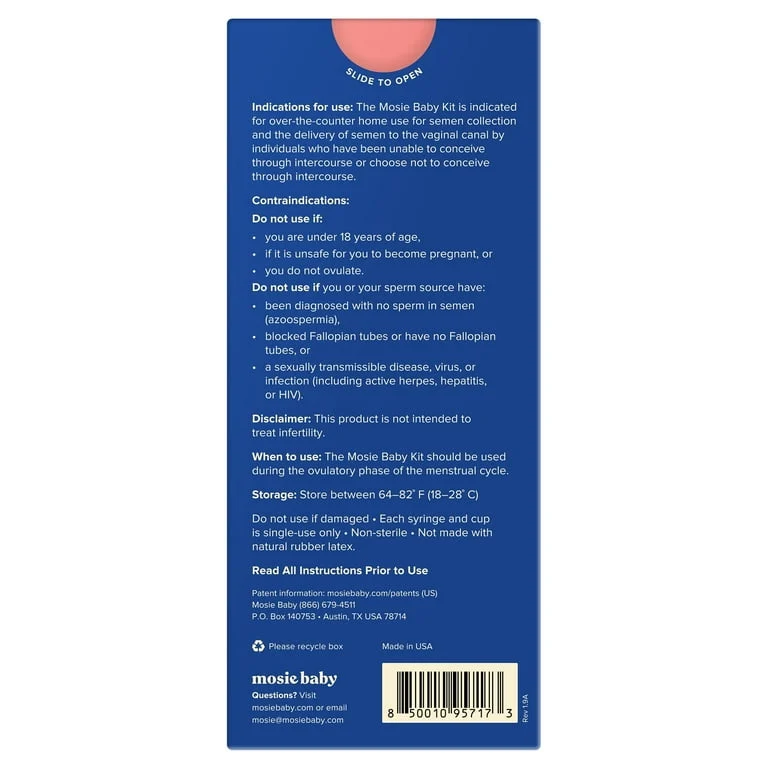
    Mosie Baby At-Home Insemination Kit instructions and storage guidelines on a blue background.

    The Syringe Insemination System vs. Traditional Insemination: Pros and Cons

    The Syringe Insemination System:

    The syringe insemination system is a newer technique that has been gaining popularity in recent years. It involves using a syringe to place washed sperm directly into the uterus, similar to traditional insemination. However, the main difference is that the syringe insemination system allows for more precise control over the timing and placement of the sperm.

    Pros:

    1. Higher success rates: The syringe insemination system has been shown to have higher success rates compared to traditional insemination. This is because it allows for more precise control over the timing and placement of the sperm, increasing the chances of fertilization.

    2. No catheter required: Unlike traditional insemination, the syringe insemination system does not require the use of a catheter. This can be a more comfortable option for women, as the insertion of a catheter can cause discomfort.

    3. More control over timing: With the syringe insemination system, the timing of the procedure can be more accurately controlled. This can be beneficial for couples who have struggled with timing issues in the past.

    Cons:

    1. More expensive: The syringe insemination system is more expensive compared to traditional insemination, making it a less accessible option for some couples.

    2. Requires fertility drugs: In most cases, the syringe insemination system requires the use of fertility drugs to stimulate ovulation. This can be a downside for those who prefer a more natural approach.

    3. Potentially more invasive: While the syringe insemination system does not require a catheter, the procedure may still be more invasive compared to traditional insemination. This is because a speculum is used to visualize the cervix, and the syringe must be inserted through the cervix into the uterus.

    In summary, both traditional insemination and the syringe insemination system have their own set of pros and cons. Traditional insemination may be a more cost-effective and non-invasive option, but it also has lower success rates and limited control over timing. On the other hand, the syringe insemination system offers higher success rates and more control over timing, but it can be more expensive and potentially more invasive. Ultimately, the best method for you will depend on your individual circumstances and preferences. It is essential to consult with a fertility specialist to determine which option is best for you.

  • Innovative and Convenient: The Syringe Insemination System for Home Use

    Innovative and Convenient: The Syringe Insemination System for Home Use

    For many couples struggling with fertility, the process of intrauterine insemination (IUI) can be daunting and expensive. The traditional method of IUI involves multiple visits to a fertility clinic, which can be time-consuming and costly. However, with advancements in technology, a new option has emerged – the syringe insemination system for home use. This innovative and convenient method is changing the game for couples trying to conceive.

    What is the Syringe Insemination System?

    The syringe insemination system is a simple and effective way to perform IUI at home. It consists of a syringe, a catheter, and a collection cup. The process involves collecting semen from the male partner in the cup, attaching the catheter to the syringe, and then inserting the catheter into the vagina and depositing the semen into the cervix. This can all be done in the comfort of one’s home, eliminating the need for multiple clinic visits.

    Advantages of the Syringe Insemination System

    1. Cost-effective: One of the most significant advantages of this system is its cost-effectiveness. Traditional IUI can cost thousands of dollars, whereas the syringe insemination system is affordable and can be reused for multiple cycles.

    2. Convenience: The ability to perform IUI at home eliminates the need for frequent visits to the clinic, saving time and reducing stress. This is especially beneficial for couples who live far from a fertility clinic or have busy schedules.

    3. Privacy: For many couples, fertility issues can be a sensitive and private matter. The syringe insemination system allows for privacy and discretion, as the procedure can be done at home without the need for medical professionals.

    4. Ease of use: The system is designed to be user-friendly, making it accessible to couples without any medical training. The instructions are simple and easy to follow, making the process less daunting and more manageable.

    5. Higher success rates: Studies have shown that IUI using the syringe insemination system has comparable success rates to traditional IUI performed at a clinic. This gives couples a better chance of conceiving in the comfort of their own home.

    6. Reduces risk of infection: With home insemination, there is no need to go to a medical facility, reducing the risk of exposure to harmful bacteria and viruses.

    Mosie Baby pregnancy test kit with two tests and packaging, featuring a mint green color scheme.

    Innovative and Convenient: The Syringe Insemination System for Home Use

    7. Inclusive for same-sex couples and single women: The syringe insemination system is a great option for same-sex couples and single women who want to start a family. It provides them with a safe and effective way to conceive without the need for a sperm donor or expensive medical procedures.

    How to Use the Syringe Insemination System

    Using the syringe insemination system is a simple process that can be done at home. Here are the steps to follow:

    1. Prepare the semen sample: The male partner will need to provide a semen sample through masturbation. The sample should be collected in a sterile collection cup.

    2. Attach the catheter to the syringe: Once the semen sample is collected, the catheter should be attached to the syringe. Make sure the catheter is securely attached to avoid any leakage.

    3. Insert the catheter into the vagina: The female partner should lie on her back with her knees bent and the syringe with the attached catheter inserted into the vagina. The catheter should be inserted into the cervix, and the plunger of the syringe should be pushed to deposit the semen.

    4. Dispose of the syringe and catheter: Once the semen is deposited, the syringe and catheter should be disposed of properly. Make sure to wash your hands thoroughly after handling the syringe and catheter.

    5. Rest for 15-20 minutes: After the procedure, the female partner should rest for 15-20 minutes with a pillow under her hips to help the semen reach the cervix.

    Is the Syringe Insemination System Right for You?

    While the syringe insemination system may not be suitable for everyone, it is a great option for couples who have been trying to conceive without success. It is also a great alternative for those who cannot afford traditional IUI or do not have access to a fertility clinic. However, it is always best to consult with a fertility specialist to determine the best course of action for your specific situation.

    In conclusion, the syringe insemination system for home use is an innovative and convenient option for couples struggling with fertility. It offers a cost-effective, private, and easy-to-use alternative to traditional IUI, with comparable success rates. With its many advantages, it is no surprise that more and more couples are turning to this method to help them start a family.

  • Breaking Barriers: Inclusive Fertility Solutions with Mosie Brand Insemination Combo

    Blog Post:

    Fertility struggles can be a difficult and emotional journey for many couples. While there are various options available for those looking to conceive, not all of them are inclusive or accessible to everyone. This is where Mosie Brand Insemination Combo comes in – breaking barriers and providing inclusive fertility solutions for all. In this blog post, we will dive into the world of Mosie and how this innovative product is changing the game for couples trying to start a family.

    Mosie Brand Insemination Combo was founded by Maureen and Marc Brown, a husband and wife team who struggled with infertility for over a decade. After trying various methods and facing numerous roadblocks, the couple decided to create their own solution – Mosie. Their goal was to provide a more accessible and inclusive option for couples struggling with fertility, regardless of their sexual orientation, gender identity, or physical ability.

    So, what exactly is Mosie? It is a simple, at-home insemination kit that allows couples to bypass the traditional and often expensive methods of fertility treatments. The kit includes a syringe and a cervical cap, both of which are designed to make the process of insemination as comfortable and easy as possible. The syringe is designed to be soft and pliable, making it less intimidating and more comfortable for those who may have had negative experiences with medical procedures in the past.

    One of the biggest barriers to fertility treatments is the cost. Many couples simply cannot afford the high prices of traditional methods such as IVF or IUI. Mosie, on the other hand, is much more affordable, making it a viable option for those on a budget. In addition, Mosie can be used in the comfort and privacy of one’s own home, eliminating the need for expensive doctor visits and procedures.

    Another significant barrier to traditional fertility treatments is the lack of inclusivity. Many treatments are designed with heterosexual couples in mind, leaving out same-sex couples and single individuals. Mosie is breaking this barrier by providing a solution that is inclusive and welcoming to all. It allows couples to conceive without any limitations based on their sexual orientation, gender identity, or relationship status.

    Furthermore, Mosie is also a great option for individuals or couples who may struggle with physical barriers. For example, those with disabilities or injuries that make it difficult to undergo traditional treatments can benefit from Mosie’s simple and non-invasive method. It also eliminates the need for invasive procedures such as sperm washing, making it a less intimidating option for those who may have had negative experiences with medical procedures in the past.

    mosie baby logo featuring a heart and leaves in blue, pink, and green colors.

    Breaking Barriers: Inclusive Fertility Solutions with Mosie Brand Insemination Combo

    Mosie has also revolutionized the way couples approach the process of trying to conceive. Instead of relying on ovulation tracking and timing, Mosie can be used at any time during a woman’s cycle. This takes the pressure off couples and allows them to focus on the intimate and emotional aspect of conception rather than the clinical side of it.

    One of the most significant benefits of Mosie is the success rates. While traditional fertility treatments can be effective, they also come with a risk of multiple pregnancies and complications. Mosie has a success rate of over 20%, making it a safe and effective option for couples. It also allows couples to try multiple cycles without breaking the bank, increasing their chances of success.

    Mosie is also committed to providing support and resources for couples on their journey to conceive. The company has a blog and social media presence where they share stories and tips from other Mosie families. They also have a private Facebook group where couples can connect with others who are going through similar experiences. This community aspect is a vital part of Mosie’s mission to break down barriers and make the journey to parenthood a little bit easier for everyone.

    In conclusion, Mosie Brand Insemination Combo is a game-changer in the world of fertility solutions. It is breaking barriers and providing inclusive options for couples struggling with fertility, regardless of their sexual orientation, gender identity, or physical ability. With its affordability, simplicity, and success rates, Mosie is a fantastic option for those looking to start or expand their family.

    Summary:

    Mosie Brand Insemination Combo is an at-home insemination kit created by a husband and wife team, Maureen and Marc Brown, who struggled with infertility for over a decade. It aims to provide a more accessible and inclusive option for couples trying to conceive, regardless of their sexual orientation, gender identity, or physical ability. Mosie is affordable, easy to use, and has a success rate of over 20%, making it a safe and effective option for couples. It also offers a supportive community for those on their fertility journey.

    SEO metadata:

  • The Role of Insemination Syringe Boxes in Non-Traditional Conception Methods

    Blog Post Title: The Role of Insemination Syringe Boxes in Non-Traditional Conception Methods

    Introduction:

    Insemination, also known as artificial insemination, is a method of fertilization that involves placing sperm directly into a woman’s reproductive tract in order to achieve pregnancy. This method can be used for a variety of reasons, such as male infertility, same-sex couples, or single women who want to start a family. In recent years, there has been a rise in non-traditional conception methods, and insemination has become a popular choice. One key element in this process is the use of insemination syringe boxes. In this blog post, we will explore the role of these boxes in non-traditional conception methods and their importance in the process.

    What are Insemination Syringe Boxes?

    Insemination syringe boxes are specially designed boxes that contain all the necessary equipment for the insemination process. These boxes typically include a sterile syringe, a catheter, and often a specimen cup for collecting the sperm. They are usually made from medical-grade materials and are sealed to ensure the safety and sterility of the equipment inside.

    The Importance of Insemination Syringe Boxes:

    1. Sterility and Safety:

    One of the main reasons insemination syringe boxes are crucial in non-traditional conception methods is their role in maintaining sterility and safety. When using donor sperm, it is essential to ensure that the equipment used is free from any contaminants that could cause harm to the mother or the baby. Insemination syringe boxes are specially designed to be sterile and airtight, reducing the risk of any bacteria or viruses entering the reproductive tract.

    2. Ease of Use:

    Insemination syringe boxes are designed to be user-friendly, making the process of insemination much more manageable for couples or individuals trying to conceive. The syringe and catheter are pre-assembled, and the instructions are usually included in the box, making the process less intimidating for first-timers. This ease of use also reduces the risk of errors in the insemination process, increasing the chances of success.

    hand holding a syringe with a blue plunger against a solid blue background

    The Role of Insemination Syringe Boxes in Non-Traditional Conception Methods

    3. Discretion:

    For many couples and individuals, privacy and discretion are crucial when it comes to non-traditional conception methods. Insemination syringe boxes are small and discreet, making it easy to transport and use without drawing unwanted attention. This can be especially important for same-sex couples or single women who may not want to disclose their fertility journey.

    4. Cost-Effective:

    Insemination syringe boxes are a cost-effective option for non-traditional conception methods. In comparison to other methods such as in vitro fertilization (IVF), insemination is a much more affordable option. The use of syringe boxes also eliminates the need for multiple visits to a fertility clinic, reducing the overall cost of the process.

    5. Increased Success Rates:

    Using insemination syringe boxes can also contribute to increased success rates in non-traditional conception methods. These boxes are designed to ensure the sperm is placed directly into the reproductive tract, increasing the chances of fertilization. Additionally, the use of sterile equipment reduces the risk of any complications or infections that could hinder the success of the process.

    Types of Insemination Syringe Boxes:

    There are several types of insemination syringe boxes available on the market, each with its own unique features and benefits. Some come with a needleless design, making it more comfortable for the mother during the insemination process. Others come with a temperature control feature, ensuring the sperm remains at an optimal temperature for fertilization. It is essential to discuss with a healthcare professional to determine which type of box is best suited for individual needs.

    Conclusion:

    Insemination syringe boxes play a crucial role in non-traditional conception methods, providing a safe, discreet, and cost-effective option for individuals and couples looking to start a family. These boxes are specially designed to ensure sterility and ease of use, contributing to increased success rates. With their many benefits, it is no wonder that insemination syringe boxes have become an essential component in the process of insemination.

    In summary, insemination syringe boxes are specially designed boxes that contain all the necessary equipment for the insemination process. They play a crucial role in non-traditional conception methods by providing sterility, ease of use, discretion, cost-effectiveness, and increased success rates. With different types available, it is essential to consult with a healthcare professional to determine the best option for individual needs.

  • Insemination Syringe Boxes: An Affordable Alternative to Expensive Fertility Treatments

    Blog Post Title: Insemination Syringe Boxes: An Affordable Alternative to Expensive Fertility Treatments

    Summary:

    For couples struggling with fertility, the cost of treatments like in vitro fertilization (IVF) or intrauterine insemination (IUI) can be a major barrier. These procedures can cost thousands of dollars and may not be covered by insurance. However, there is a more affordable alternative that is gaining popularity – insemination syringe boxes.

    Insemination syringe boxes contain all the necessary tools for at-home insemination, including sperm collection cups, syringes, and instructions. They are a cost-effective option for couples who want to try insemination at home before pursuing more expensive treatments. In this blog post, we will explore the benefits of using insemination syringe boxes and how they can be a game-changer for couples on a budget.

    Cost-Effective Solution:

    One of the main reasons why couples choose to go for insemination syringe boxes is the affordability factor. The average cost of an IVF cycle is around $12,000, while IUI can range from $500 to $4,000. In contrast, insemination syringe boxes usually cost between $50 to $200, making it a much more budget-friendly option.

    Furthermore, with insemination syringe boxes, you have the flexibility to try multiple times without worrying about the cost. In contrast, a single cycle of IVF or IUI can be financially draining, and many couples cannot afford to try more than once or twice.

    Convenience and Privacy:

    Another advantage of using insemination syringe boxes is the convenience factor. While IVF and IUI procedures require multiple visits to a fertility clinic, insemination can be done in the privacy of your own home. This can be especially beneficial for couples who live in remote areas or have busy schedules.

    Moreover, insemination syringe boxes come with detailed instructions, making the process easy and stress-free. You don’t have to worry about scheduling appointments or dealing with the anxiety of a medical procedure. You have full control of the process and can choose the time and place that works best for you.

    at-home insemination kit by Mosie Baby, featuring syringes and containers for comfort and convenience.

    Insemination Syringe Boxes: An Affordable Alternative to Expensive Fertility Treatments

    High Success Rates:

    Many people assume that at-home insemination is less effective than medical procedures. However, research has shown that when done correctly, the success rates of at-home insemination can be just as high as those of IVF or IUI. According to a study published in the Journal of Obstetrics and Gynaecology Canada, the success rate of at-home insemination was 22% for women under 35 and 17% for women aged 35-40.

    Insemination syringe boxes also come with sperm collection cups that have been approved for medical use. This ensures that the sperm is handled and stored correctly, increasing the chances of success. Additionally, couples using insemination syringe boxes have the advantage of trying multiple times, further increasing their chances of conception.

    Inclusivity:

    Another significant benefit of using insemination syringe boxes is the inclusivity factor. For same-sex couples or single women, traditional fertility treatments may not be an option. Insemination syringe boxes provide a more accessible and affordable method for these couples to start a family.

    Even for heterosexual couples, insemination syringe boxes can be a more inclusive and equal option. With traditional fertility treatments, women often bear the physical and emotional burden of the procedures, while with insemination syringe boxes, both partners can be equally involved in the process.

    Things to Consider:

    While insemination syringe boxes offer many advantages, there are a few things to consider before trying it. Firstly, you should consult with your doctor to ensure that at-home insemination is a safe option for you. Your doctor can also provide guidance on timing and other crucial factors for successful insemination.

    Additionally, insemination syringe boxes may not be suitable for couples with certain fertility issues, such as blocked fallopian tubes or severe male infertility. In such cases, medical procedures may be a better option.

    In conclusion, insemination syringe boxes are a game-changer for couples struggling with fertility. They offer a cost-effective, convenient, and inclusive alternative to expensive fertility treatments. With their high success rates and affordability, they provide hope for couples who may have thought that starting a family was out of their reach.

  • Taking Control of Your Fertility Journey: The Benefits of a Syringe Kit for Insemination

    Taking Control of Your Fertility Journey: The Benefits of a Syringe Kit for Insemination

    For many couples who are struggling to conceive, the journey to parenthood can be emotionally and physically draining. One of the most common methods used for fertility treatment is artificial insemination, which involves placing sperm directly into the uterus to increase the chances of conception. While this process may seem simple, it can be challenging and expensive to undergo at a fertility clinic. That’s why many couples are turning to at-home insemination using a syringe kit – a more affordable and convenient option that offers a sense of control in their fertility journey. In this blog post, we will explore the benefits of using a syringe kit for insemination and how it can help couples take control of their fertility journey.

    1. Affordability and Convenience

    One of the primary benefits of using a syringe kit for insemination is its affordability and convenience. Fertility treatments can be costly, and many couples have to go through multiple cycles before achieving a successful pregnancy. By opting for an at-home insemination method, couples can save a significant amount of money on clinic visits and medical procedures. Additionally, the syringe kit can be ordered online and delivered to your doorstep, making it a convenient and discreet option for couples who want to maintain their privacy.

    2. More Control Over the Process

    Insemination at a fertility clinic can be an overwhelming experience for some couples. They may feel like they have limited control over the process, as it is carried out by medical professionals. However, using a syringe kit for at-home insemination allows couples to take control of their fertility journey. They can choose the timing, location, and method of insemination that works best for them. This sense of control can be empowering and can help reduce anxiety and stress during the fertility journey.

    3. Increased Chances of Success

    Mosie Baby ovulation test kit with packaging and instructions on a pink background.

    Taking Control of Your Fertility Journey: The Benefits of a Syringe Kit for Insemination

    Studies have shown that using a syringe kit for at-home insemination can have similar success rates as clinical insemination. By following the instructions carefully and using the right timing, couples can increase their chances of conception. Additionally, at-home insemination allows couples to have multiple attempts at a lower cost compared to clinical insemination, which can increase their chances of success in the long run.

    4. A More Intimate Experience

    Trying to conceive can be a private and personal journey for many couples, and clinical insemination can feel intrusive and uncomfortable. On the other hand, using a syringe kit for at-home insemination allows couples to have a more intimate experience. They can choose a comfortable and familiar setting and involve their partner in the process, making it a more bonding and romantic experience.

    5. Can Be Used in Conjunction with Other Fertility Treatments

    For couples undergoing fertility treatments such as intrauterine insemination (IUI) or in vitro fertilization (IVF), using a syringe kit can be a useful addition to their treatment plan. It can be used to supplement these procedures or as an alternative method if clinical insemination is not possible for any reason. This flexibility can be beneficial for couples who are exploring multiple options to increase their chances of conception.

    6. Can Be Used by Same-Sex Couples and Single Women

    Insemination with a syringe kit is not limited to heterosexual couples. Same-sex couples and single women who want to conceive can also benefit from this method. It offers them a more affordable and accessible option for starting a family, giving them more control over the process and the ability to involve their partner or donor in the insemination process.

    In conclusion, using a syringe kit for at-home insemination offers numerous benefits for couples who are trying to conceive. From affordability and convenience to increased control and intimacy, this method can be a game-changer for couples struggling with fertility issues. It is essential to consult with a healthcare professional before starting any fertility treatment, including at-home insemination, to ensure that it is the right option for you. With the right guidance and support, using a syringe kit can be a positive and empowering experience for couples on their journey to parenthood.