Tag: syringe insemination

  • Fertility Treatment Options: Why the Syringe Insemination System Stands Out

    Blog Post: Fertility Treatment Options: Why the Syringe Insemination System Stands Out

    Fertility is a topic that affects many couples and individuals around the world. For some, becoming pregnant may come easily, while for others it can be a long and challenging journey. Fortunately, advancements in medical technology have provided various fertility treatment options for those struggling to conceive. One such option is the syringe insemination system, which has gained popularity in recent years for its effectiveness and convenience. In this blog post, we will explore the different fertility treatment options available and why the syringe insemination system stands out among the rest.

    Understanding Fertility Treatment Options

    Before we dive into the specifics of the syringe insemination system, it is important to have a basic understanding of the different fertility treatment options available. These include fertility drugs, intrauterine insemination (IUI), and in vitro fertilization (IVF). Each option is designed to help increase the chances of conception, but they vary in terms of process, cost, and success rates.

    Fertility drugs are typically the first line of treatment for couples struggling to conceive. These medications help stimulate ovulation and increase the chances of releasing multiple eggs, increasing the chances of pregnancy. However, these drugs can have side effects and may not be suitable for everyone.

    IUI involves placing washed and concentrated sperm directly into the uterus during the time of ovulation. This bypasses the need for sperm to travel through the cervix and increases the chances of fertilization. IUI is a relatively simple and non-invasive procedure, but it may not be as effective for those with certain fertility issues such as blocked fallopian tubes or severe male factor infertility.

    IVF, on the other hand, is a more complex and invasive procedure. It involves retrieving eggs from the ovaries, fertilizing them with sperm in a lab, and then transferring the resulting embryo(s) into the uterus. While IVF has higher success rates compared to other fertility treatments, it is also more expensive and requires more time and commitment from the couple.

    Introducing the Syringe Insemination System

    The syringe insemination system, also known as the “turkey baster method,” has been used for decades by couples trying to conceive at home. However, it has gained recognition in recent years as a safe and effective fertility treatment option offered by fertility clinics.

    Colorful promotional image for Mosie Baby, featuring home insemination kit and encouraging text.

    Fertility Treatment Options: Why the Syringe Insemination System Stands Out

    The process involves using a sterile syringe to collect the semen sample and then depositing it directly into the vagina or cervix during ovulation. This method eliminates the need for intercourse and allows for the sperm to have a better chance of reaching the egg. It is a simple and cost-effective procedure, making it a popular choice for couples who prefer a more natural approach to fertility treatment.

    Benefits of the Syringe Insemination System

    There are several reasons why the syringe insemination system stands out among other fertility treatment options. Firstly, it is a minimally invasive procedure that can be done in the comfort of one’s own home. This eliminates the need for multiple visits to the clinic and allows for a more relaxed and stress-free experience.

    Secondly, the syringe insemination system has a lower cost compared to other fertility treatments. With the rising costs of medical procedures, many couples may find it difficult to afford expensive fertility treatments such as IVF. The syringe insemination system offers a more affordable alternative without compromising its effectiveness.

    Another significant benefit is that the syringe insemination system allows for a more natural and intimate experience for the couple. It eliminates the pressure and stress that may come with timed intercourse or medical procedures. This can be particularly beneficial for couples who have been struggling to conceive for a long time and are looking for a less invasive approach.

    Effectiveness and Success Rates

    While the syringe insemination system may seem like a simple and straightforward process, its effectiveness and success rates prove otherwise. Studies have shown that the success rates of this method can range from 10% to 20% per cycle, which is comparable to IUI. However, the key to success lies in proper timing and technique, which is why it is recommended to seek guidance from a fertility specialist when considering this option.

    Additionally, the syringe insemination system has been found to be particularly effective for couples who have unexplained infertility or mild male factor infertility. It can also be a viable option for same-sex couples or single individuals looking to start a family.

    Summary

    Fertility treatment options can be overwhelming, and it is crucial to explore and understand all available options before making a decision. The syringe insemination system stands out as a safe, effective, and affordable option for couples looking to conceive. Its minimally invasive nature, intimate experience, and comparably high success rates make it a popular choice among couples and individuals struggling with fertility. If you are considering the syringe insemination system, be sure to consult with a fertility specialist to determine if it is the right option for you.


  • Syringe Insemination Myths Debunked: Separating Fact from Fiction

    Summary:

    Syringe insemination, also known as artificial insemination, is a medical procedure used to help couples conceive when natural methods are not working. Despite its widespread use and success rate, there are many myths and misconceptions surrounding this procedure. In this blog post, we will debunk some of the most common syringe insemination myths and separate fact from fiction.

    Myth #1: Syringe insemination is only for infertile couples.

    Fact: Syringe insemination can be used by any couple, regardless of their fertility status. This procedure is helpful for couples who are struggling to conceive due to various factors such as low sperm count, endometriosis, ovulation issues, or unexplained infertility. It can also be used by same-sex couples and single women who want to have a child.

    Myth #2: Syringe insemination is a painful procedure.

    Fact: Syringe insemination is a relatively painless procedure. The process involves inserting a thin catheter through the cervix into the uterus, followed by the injection of washed and prepared sperm. The discomfort is minimal and similar to menstrual cramps. Some women may experience mild cramping and spotting after the procedure, but it is temporary and easily manageable with over-the-counter pain relievers.

    Myth #3: Syringe insemination is not as effective as other fertility treatments.

    Fact: This myth is not entirely true. The effectiveness of syringe insemination depends on various factors, such as the age and overall health of the couple, as well as the quality of the sperm used. While in vitro fertilization (IVF) may have a higher success rate, syringe insemination is a less invasive and more affordable option for couples who do not require complex fertility treatments.

    Colorful promotional image for Mosie Baby, featuring home insemination kit and encouraging text.

    Syringe Insemination Myths Debunked: Separating Fact from Fiction

    Myth #4: Syringe insemination increases the chances of having a multiple pregnancy.

    Fact: This is another common misconception about syringe insemination. Unlike IVF, where multiple embryos are transferred into the uterus, syringe insemination involves the injection of a small amount of prepared sperm. This reduces the chances of having a multiple pregnancy, making it a safer option for couples who want to avoid the risks associated with carrying multiple babies.

    Myth #5: Syringe insemination is only done in a hospital setting.

    Fact: While some couples may choose to have syringe insemination done in a hospital, it can also be performed in a fertility clinic or even at home. Many couples prefer the comfort and privacy of their own home, and with proper instructions and guidance from a medical professional, syringe insemination can be safely done at home.

    Myth #6: Syringe insemination is not a natural way to conceive.

    Fact: Although syringe insemination is a medical procedure, it still involves the natural process of fertilization. The sperm used in this procedure is usually from the male partner or a donor, and it is inserted into the uterus during the woman’s ovulation period. This increases the chances of fertilization and conception, making it a natural way to conceive.

    Myth #7: Syringe insemination is only for young couples.

    Fact: Age is not a barrier for syringe insemination. As long as the woman has a healthy uterus and is ovulating, this procedure can be a viable option for couples of any age. In fact, many women over the age of 35 have successfully conceived through syringe insemination.

    In conclusion, syringe insemination is a safe and effective option for couples who are struggling to conceive. It is essential to get accurate information from a medical professional and not rely on myths and misconceptions when considering this procedure. By debunking these common syringe insemination myths, we hope to provide a better understanding of this fertility treatment and help couples make informed decisions about their journey to parenthood.

  • Syringe Insemination and Unexplained Infertility: What You Need to Know

    Blog Post Title: Syringe Insemination and Unexplained Infertility: What You Need to Know

    Summary:

    Infertility affects millions of couples around the world, with approximately 1 in 8 couples struggling to conceive. While there are various known causes of infertility, such as hormonal imbalances, blocked fallopian tubes, or low sperm count, there is a subset of couples that fall under the category of “unexplained infertility.” This means that all the standard fertility tests and examinations have shown no obvious cause for their inability to conceive.

    In recent years, a new technique called syringe insemination has emerged as a potential solution for couples with unexplained infertility. This method involves using a syringe to inject the sperm directly into the cervix, bypassing the need for natural fertilization.

    In this blog post, we will delve deeper into the concept of syringe insemination and its effectiveness in treating unexplained infertility. We will also discuss the potential risks and side effects, as well as alternative treatments for couples struggling with this type of infertility.

    What is Syringe Insemination?

    Syringe insemination, also known as intracervical insemination (ICI), is a fertility treatment that involves manually injecting sperm into the cervix using a syringe. It is a non-invasive procedure that can be performed at home or in a clinical setting.

    The process of syringe insemination is relatively simple. The sperm is collected through masturbation or a special collection condom and then washed and prepared in a laboratory to remove any impurities. Once the sperm is ready, it is drawn into a syringe and inserted into the vagina, with the tip of the syringe placed near the cervix. The sperm is then slowly injected into the cervix.

    Syringe insemination can be done at home by the couple themselves or with the help of a healthcare professional. In a clinical setting, the procedure is usually performed by a fertility specialist or nurse.

    How Effective is Syringe Insemination for Unexplained Infertility?

    The success rates of syringe insemination vary depending on several factors, such as the age of the woman, the quality of the sperm, and the timing of the insemination. Studies have shown that syringe insemination has a success rate of around 10-15% per cycle, which is lower than other fertility treatments such as in vitro fertilization (IVF) or intrauterine insemination (IUI).

    However, for couples with unexplained infertility, syringe insemination may be a viable option as it has been shown to improve their chances of conception significantly. This is because it bypasses any potential barriers or issues in the woman’s reproductive system, such as cervical mucus or hormonal imbalances.

    Risks and Side Effects of Syringe Insemination

    Mosie Baby Kit with a syringe and container, highlighting safety and usability features on a blue background.

    Syringe Insemination and Unexplained Infertility: What You Need to Know

    Syringe insemination is generally considered a safe and non-invasive procedure with minimal risks. However, as with any medical procedure, there are some potential risks and side effects to consider.

    The most common side effect of syringe insemination is cramping or discomfort during or after the procedure. Some women may also experience spotting or light bleeding, which is usually normal and should subside within a day or two.

    There is also a small risk of infection, although this is rare. To minimize this risk, it is essential to ensure that all equipment, including syringes and collection containers, is sterile and properly cleaned.

    Another risk to consider is the potential for an allergic reaction to the sperm or the lubricant used during the procedure. If you or your partner have any known allergies, it is essential to discuss this with your healthcare provider before undergoing syringe insemination.

    Alternative Treatments for Unexplained Infertility

    Syringe insemination is just one of the many fertility treatments available for couples with unexplained infertility. Depending on the underlying cause of your infertility, your doctor may recommend alternative treatments such as intrauterine insemination (IUI), in vitro fertilization (IVF), or fertility medications.

    IUI involves placing washed sperm directly into the uterus, which can increase the chances of fertilization. IVF, on the other hand, involves retrieving eggs from the woman’s ovaries and fertilizing them with sperm in a laboratory before transferring the resulting embryos into the uterus.

    Fertility medications, such as clomiphene or letrozole, can also be prescribed to stimulate ovulation in women or improve sperm count and motility in men.

    In some cases, lifestyle changes such as maintaining a healthy weight, quitting smoking, reducing alcohol intake, and managing stress can also improve fertility in couples with unexplained infertility.

    Conclusion

    Syringe insemination is a relatively new and promising treatment for couples with unexplained infertility. While it may not be as effective as other fertility treatments, it offers a non-invasive and affordable solution for couples who have not been able to conceive naturally.

    If you are considering syringe insemination, it is essential to consult with a fertility specialist to determine if it is the right option for you. They can also guide you through the process and answer any questions or concerns you may have.

    Remember, infertility can be a challenging and emotional journey, but with the right treatment and support, many couples can achieve their dream of starting a family.

    SEO metadata:

  • Conceiving with Confidence: How the Syringe Insemination System Can Help

    Summary:

    Conceiving a child can be a challenging and emotional journey for many couples. While some may be able to conceive naturally, others may require assistance in the form of artificial insemination. However, the traditional methods of artificial insemination, such as intrauterine insemination (IUI) and in vitro fertilization (IVF), can be expensive and invasive. This is where the syringe insemination system comes in as an alternative and more affordable option for couples struggling with fertility. In this blog post, we will explore how the syringe insemination system works and how it can help couples conceive with confidence.

    Firstly, let’s understand what the syringe insemination system is. It is a type of assisted reproductive technology that involves injecting sperm directly into the cervix or uterus using a syringe. This is done at the most fertile time of a woman’s cycle, usually around ovulation. The system consists of a sterile syringe, a catheter, and a speculum. The sperm is collected from the male partner and then inserted into the syringe, which is then connected to the catheter. The speculum is used to hold open the vaginal walls and provide a clear path for the catheter to reach the cervix or uterus.

    One of the major advantages of the syringe insemination system is its affordability. Compared to IUI and IVF, which can cost thousands of dollars, the syringe insemination system can cost as little as a couple hundred dollars. This makes it a more accessible option for couples who may not have the financial means to pursue other forms of assisted reproductive technology. Additionally, since it is a relatively simple and non-invasive procedure, it can also be performed at home with the guidance of a healthcare professional, further reducing the costs.

    Apart from cost, another benefit of the syringe insemination system is that it can be used by couples with various fertility issues. Whether the issue lies with the male or female partner, the system can be used to overcome common barriers to conception, such as low sperm count, hostile cervical mucus, and irregular ovulation. This makes it a versatile option for couples who may have been unsuccessful with other fertility treatments.

    At-home insemination kit with syringes and collection cups on a teal background.

    Conceiving with Confidence: How the Syringe Insemination System Can Help

    Another advantage of the syringe insemination system is that it allows couples to take control of their fertility journey. Unlike IUI and IVF, which require visits to a fertility clinic and reliance on medical professionals, the syringe insemination system can be done at home. This not only gives couples more privacy and control but also reduces the stress and strain of frequent visits to a clinic. Additionally, since the procedure can be done at home, it allows for more flexibility in terms of timing and can be easily incorporated into a couple’s daily routine.

    Moreover, the syringe insemination system can also be used as a way to involve the male partner in the conception process. In traditional artificial insemination methods, the sperm is collected and inserted into the female partner without the male partner’s active involvement. However, with the syringe insemination system, the male partner is responsible for collecting the sperm and directly participating in the insemination. This can help strengthen the bond between partners and make the conception journey a shared experience.

    Of course, as with any fertility treatment, success rates may vary for each couple. However, studies have shown that the syringe insemination system can have a success rate of up to 40%, which is comparable to the success rates of IUI and IVF. Additionally, since the system is less invasive, it also reduces the risk of complications, making it a safer option for couples.

    In conclusion, the syringe insemination system is a cost-effective, versatile, and empowering option for couples struggling with fertility. It provides an alternative to traditional artificial insemination methods and allows couples to take control of their fertility journey. With its high success rates and minimal risks, it is definitely worth considering for couples who are trying to conceive. With the syringe insemination system, couples can have the confidence to embark on their journey towards parenthood.

    Title: Conceiving with Confidence: How the Syringe Insemination System Can Help

    Meta Description: Are you struggling to conceive? Learn how the syringe insemination system can help you achieve your dream of parenthood with its affordability, versatility, and empowering approach.

  • Understanding the Syringe Insemination System: A Guide for Couples

    Understanding the Syringe Insemination System: A Guide for Couples

    For couples struggling with infertility, the process of trying to conceive can be overwhelming and stressful. In vitro fertilization (IVF) and intrauterine insemination (IUI) are often seen as the only options, but many couples are turning to a less invasive and more affordable method known as syringe insemination. This method involves using a syringe to deposit sperm directly into the cervix, bypassing the need for intercourse.

    In this blog post, we will delve into the details of the syringe insemination system, including its benefits, the steps involved, and tips for success.

    Benefits of Syringe Insemination

    Syringe insemination offers several advantages over traditional methods of conception. First and foremost, it is a less invasive procedure, making it a more comfortable and less stressful experience for both partners. It also eliminates the need for intercourse, which can be a source of anxiety or discomfort for some couples.

    Another benefit of syringe insemination is its affordability. Compared to IVF and IUI, which can cost thousands of dollars, syringe insemination can be done at home for a fraction of the cost. This makes it an appealing option for couples who may not be able to afford more expensive fertility treatments.

    Additionally, syringe insemination can be done at any time during a woman’s cycle, whereas IUI and IVF have specific timing requirements. This gives couples more flexibility and control over the process, making it less stressful and more convenient.

    Steps for Syringe Insemination

    Before beginning the syringe insemination process, it is important for couples to consult with a fertility specialist to determine if it is a suitable option for them. Once the decision has been made to proceed with syringe insemination, there are several steps that need to be followed.

    1. Ovulation Tracking: The first step is to track the woman’s ovulation cycle. This can be done using ovulation predictor kits or by monitoring changes in the cervical mucus.

    2. Collecting Sperm: The next step is to collect the sperm sample. This can be done by the male partner masturbating into a sterile cup or by purchasing donor sperm from a sperm bank.

    3. Preparing the Syringe: The syringe should be sterilized before use. It is recommended to use a 10ml syringe with a soft, flexible tip for easier insertion.

    Mosie Baby kit with two jars, a syringe, and a supportive message card inside a colorful box.

    Understanding the Syringe Insemination System: A Guide for Couples

    4. Inserting the Syringe: The woman should lie down with her hips elevated, and the syringe should be inserted into the cervix using gentle, circular motions.

    5. Deposition of Sperm: Slowly push the plunger of the syringe to deposit the sperm into the cervix. It is important to avoid pushing too hard, as this can cause discomfort.

    6. Resting: After the sperm has been deposited, the woman should lie down for 15-20 minutes to allow the sperm to travel to the fallopian tubes.

    Tips for Success

    While syringe insemination can be a simple and effective method of conception, there are some tips that can increase the chances of success.

    1. Timing: It is crucial to time the insemination correctly, based on the woman’s ovulation cycle. Ideally, it should be done within 24 hours of ovulation.

    2. Preparation: Both partners should be in good health before attempting syringe insemination. This includes maintaining a healthy diet, exercising regularly, and avoiding unhealthy habits such as smoking or excessive alcohol consumption.

    3. Relaxation: Stress can affect fertility, so it is important for both partners to stay relaxed and calm during the process. Consider using relaxation techniques such as deep breathing or meditation.

    4. Communication: Communication is key in any relationship, and this is especially true during the syringe insemination process. Make sure to discuss any concerns or fears with your partner and work together as a team.

    In conclusion, syringe insemination can be a viable option for couples looking to conceive. Its many benefits, affordability, and flexibility make it an attractive alternative to more invasive and expensive methods. By following the steps outlined in this guide and incorporating the tips for success, couples can increase their chances of achieving their dream of starting a family.

    Summary:

    Syringe insemination is a less invasive and more affordable method of conception compared to traditional methods. It involves using a syringe to deposit sperm directly into the cervix, eliminating the need for intercourse. Some benefits of this method include its affordability, flexibility, and reduced stress. The steps for syringe insemination include ovulation tracking, collecting sperm, preparing the syringe, inserting the syringe, depositing the sperm, and resting. Tips for success include timing, preparation, relaxation, and communication. By following these steps and tips, couples can increase their chances of success with syringe insemination.

  • Empowering Women to Take Control of Their Fertility with the Syringe Insemination System

    In today’s society, women are taking more control over their own bodies and reproductive choices. With the growing popularity of assisted reproductive technology (ART), women have more options than ever before when it comes to starting or expanding their families. One such option is the Syringe Insemination System, which allows women to take control of their fertility and inseminate themselves at home. In this blog post, we will explore the benefits of this system and how it empowers women in their reproductive journey.

    First, let’s discuss what the Syringe Insemination System is and how it works. This system is a type of at-home insemination method that involves using a syringe to deposit sperm directly into the cervix, similar to the process used in a doctor’s office. The kit typically includes a syringe, a catheter, and a collection cup for the sperm. This method is often used by lesbian couples, single women, and couples struggling with male infertility.

    One of the main benefits of the Syringe Insemination System is that it puts the power of insemination into the hands of the woman. This allows women to have more control over their fertility journey and eliminates the need for a partner or healthcare provider to be present during the insemination process. Women can choose when and where to inseminate, making it a more private and convenient option.

    Moreover, the Syringe Insemination System is a cost-effective option compared to other forms of ART. Insemination performed at a doctor’s office can cost thousands of dollars per cycle, whereas the syringe system can cost as little as $100 per cycle. This makes it a more accessible option for women who may not have the financial means for other forms of ART.

    Another benefit of this system is that it can be used in the comfort of one’s own home. Many women find the doctor’s office to be an intimidating and uncomfortable setting, and the Syringe Insemination System allows them to avoid this. By being able to inseminate at home, women can create a more relaxed and stress-free environment, which can increase the chances of success.

    Hands holding a syringe and a small container against a blue background.

    Empowering Women to Take Control of Their Fertility with the Syringe Insemination System

    Not only does the Syringe Insemination System provide women with more control and privacy, but it also gives them the opportunity to be more involved in the insemination process. This can be especially empowering for women who may feel excluded or disconnected from the process of conception. By being able to perform the insemination themselves, women can feel more connected to their bodies and the creation of their family.

    Furthermore, this system allows women to closely monitor their ovulation cycle and perform inseminations at the most optimal time. This can increase the chances of success and reduce the need for multiple cycles, which can be emotionally and financially taxing. Women can also track their cycles using fertility tracking apps, making it easier to plan and prepare for the insemination process.

    Using the Syringe Insemination System can also be a safer option for women. When performed at a doctor’s office, there is a risk of infection or injury from the catheter used in the insemination process. With the syringe system, women can use a new, sterile syringe for each insemination, reducing the risk of infection. Additionally, women can perform the insemination in a comfortable and familiar environment, reducing stress and anxiety, which can also contribute to a safer and more successful insemination.

    It’s essential to note that while the Syringe Insemination System is a viable option for many women, it may not be suitable for everyone. It’s crucial to consult with a healthcare provider before beginning any form of ART to ensure it’s the right choice for you and your specific situation.

    In conclusion, the Syringe Insemination System is an empowering option for women who want to take control of their fertility and start or expand their families. It provides women with privacy, control, and involvement in the insemination process, making it a more intimate and personal experience. It’s also a cost-effective and safe option, making it accessible to more women. By using this system, women can take charge of their reproductive health and make informed decisions about their family planning journey.

    In summary, the Syringe Insemination System is a form of at-home insemination that gives women more control over their fertility journey. It is a cost-effective, private, and empowering option that allows women to be more involved in the insemination process. By eliminating the need for a partner or healthcare provider, women can take charge of their reproductive health and make informed decisions about their family planning.

  • Breaking Down the Syringe Insemination Process: Step by Step Guide

    Blog Post:

    Insemination, also known as artificial insemination, is a method used to help couples or individuals conceive a child. It involves the process of placing sperm into a woman’s reproductive tract in order to fertilize an egg and achieve pregnancy. One of the most common methods of insemination is through the use of a syringe. This method, known as syringe insemination, is a simple and cost-effective way to help increase the chances of pregnancy. In this blog post, we will break down the syringe insemination process step by step, so you can have a better understanding of what to expect.

    Step 1: Preparation
    The first step in the syringe insemination process is preparation. Before you begin, make sure you have all the necessary supplies. These include a sterile syringe, sperm sample, sterile container, and a speculum. It is important to ensure that all supplies are clean and sterile to avoid any risk of infection. If you are using donor sperm, make sure it is obtained from a reputable sperm bank.

    Step 2: Timing
    Timing is crucial in the syringe insemination process. It is important to track your ovulation cycle and have intercourse during your most fertile days. This will increase the chances of the sperm reaching the egg and fertilizing it. You can use ovulation predictor kits or track your basal body temperature to determine your most fertile days.

    Step 3: Collecting the Sperm
    The next step is to collect the sperm sample. If using a donor, make sure to follow the instructions provided by the sperm bank. If using your partner’s sperm, they can ejaculate into a sterile container. It is important to keep the sperm sample at room temperature and use it within one hour of collection.

    Step 4: Preparing the Syringe
    Once you have the sperm sample, it is time to prepare the syringe. Remove the plunger from the syringe and draw up the sperm sample. Make sure to remove any air bubbles by gently tapping the syringe. Then, reattach the plunger and push it down to expel any excess air.

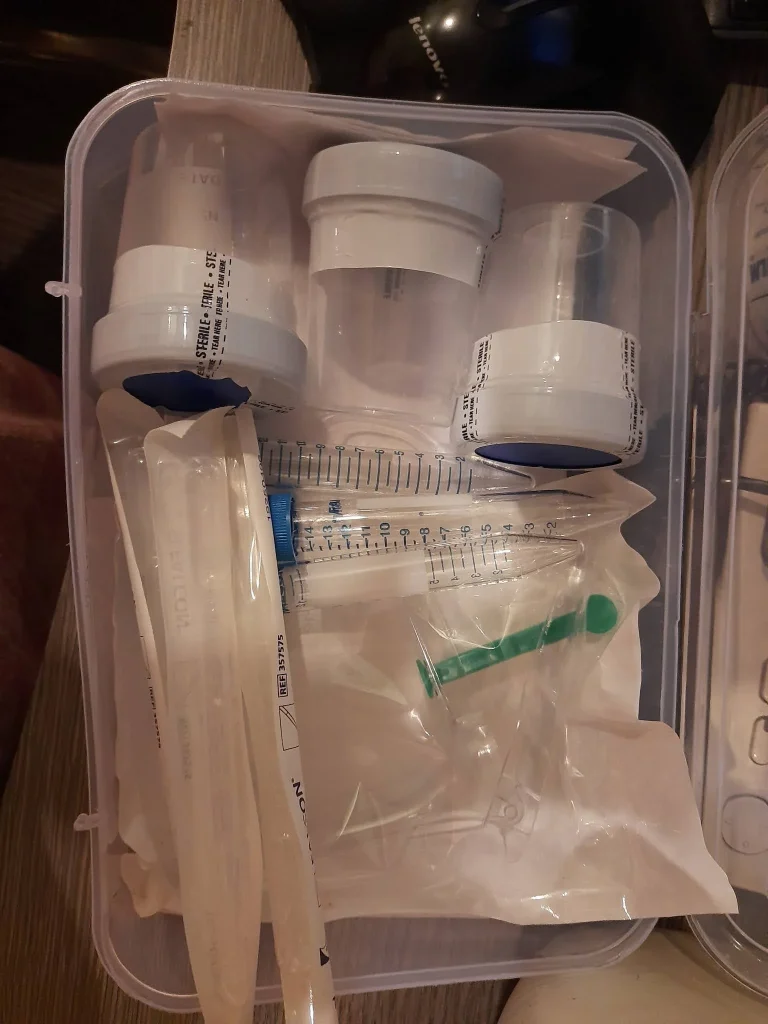
    various medical supplies and containers organized in a clear plastic box on a wooden surface

    Breaking Down the Syringe Insemination Process: Step by Step Guide

    Step 5: Preparing the Speculum
    The speculum is a medical device used to keep the vaginal walls open and allow access to the cervix. Before inserting the speculum, make sure to clean it with soap and water or use a sterilizing solution. It is important to use a water-based lubricant to help with the insertion of the speculum.

    Step 6: Inserting the Speculum
    Once the speculum is properly lubricated, it is time to insert it into the vagina. The speculum should be inserted gently and slowly, and once it is in place, it can be opened to expose the cervix. The speculum should not cause any discomfort, but if it does, you can ask your doctor to use a smaller size.

    Step 7: Inserting the Sperm
    Now that the cervix is visible, it is time to insert the sperm. The tip of the syringe should be placed against the cervix and the plunger should be pushed slowly and steadily to release the sperm. The syringe should then be removed gently, and the speculum can be taken out as well.

    Step 8: Resting
    After the sperm has been inserted, it is important to rest for about 15-20 minutes. This will allow the sperm to reach the fallopian tubes and increase the chances of fertilization. You can also place a pillow under your hips to help the sperm reach the cervix.

    Step 9: Follow-Up
    After the insemination process, it is important to follow up with your doctor to determine if ovulation has occurred. Your doctor may also recommend a blood test or ultrasound to check for pregnancy.

    Summary:

    Syringe insemination is a simple and cost-effective method of artificial insemination. It involves the process of placing sperm into a woman’s reproductive tract in order to achieve pregnancy. The process involves several steps, including preparation, timing, collecting the sperm, preparing the syringe, preparing the speculum, inserting the speculum, inserting the sperm, resting, and follow-up. It is important to track your ovulation cycle and have intercourse during your most fertile days to increase the chances of pregnancy. It is also crucial to use sterile supplies and follow proper hygiene to avoid any risk of infection. Following these steps, along with guidance from your doctor, can help increase the chances of a successful syringe insemination.

  • Maximizing Your Chances of Conceiving with the Syringe Insemination System

    Blog Post Title: Maximizing Your Chances of Conceiving with the Syringe Insemination System

    In today’s world, many couples struggle with infertility and the dream of starting a family can seem out of reach. Fortunately, advancements in reproductive technology have made it possible for couples to conceive through various treatments and procedures. One such procedure is syringe insemination, also known as artificial insemination or intrauterine insemination (IUI). This method involves injecting sperm directly into the uterus, bypassing any potential barriers that may prevent conception. If you and your partner have decided to try syringe insemination, here are some tips to maximize your chances of conceiving.

    1. Understand the Process

    Before embarking on any fertility treatment, it is crucial to understand the process thoroughly. Syringe insemination involves collecting sperm from the male partner or a donor and then using a syringe to inject it into the uterus. The timing of the procedure is essential, as it should be done during the woman’s ovulation period. It is recommended to consult with a fertility specialist who can guide you through the steps and provide you with all the necessary information.

    2. Know Your Fertility Window

    Timing is everything when it comes to syringe insemination. Understanding your fertility window is crucial for maximizing your chances of conceiving. The fertility window is the period when a woman is most likely to get pregnant, and it usually lasts for about six days. However, the most fertile days are the five days leading up to and including ovulation day. It is recommended to use ovulation predictor kits or fertility tracking apps to determine your fertility window accurately.

    3. Optimize Sperm Quality

    The quality of sperm plays a significant role in the success of syringe insemination. Therefore, it is essential to take steps to optimize sperm quality. Maintaining a healthy diet, exercising regularly, and avoiding unhealthy habits such as smoking and excessive alcohol consumption can all contribute to better sperm quality. It is also recommended to abstain from sexual activities for two to five days before the procedure to allow for an increase in sperm count.

    4. Prepare the Uterus

    two teal and clear syringes positioned on a white background

    Maximizing Your Chances of Conceiving with the Syringe Insemination System

    Preparing the uterus for syringe insemination can also increase the chances of conceiving. This can be done through a process called “uterine preparation,” which involves taking medications to thicken the lining of the uterus, making it more receptive to implantation. Your fertility specialist may also recommend a hysteroscopy, a procedure that involves examining the inside of the uterus to ensure there are no abnormalities or issues that may hinder conception.

    5. Consider Donor Sperm

    For couples who are unable to use the male partner’s sperm, donor sperm can be an excellent option for syringe insemination. Donor sperm is screened and tested for quality, making it a safe and reliable alternative. It is essential to choose a reputable sperm bank and follow all the necessary guidelines and procedures for using donor sperm.

    6. Stay Positive and Reduce Stress

    Trying to conceive can be a stressful and emotional journey for many couples. However, stress and negative emotions can have a significant impact on fertility. It is crucial to stay positive and reduce stress as much as possible. Engaging in relaxation techniques such as yoga, meditation, or acupuncture can be helpful. It is also essential to communicate openly with your partner and seek support from loved ones or a therapist if needed.

    7. Follow Post-Insemination Care

    After the syringe insemination procedure, it is crucial to follow all post-insemination care instructions provided by your fertility specialist. This may include avoiding strenuous activities, taking medications, and keeping track of any symptoms or side effects. It is also essential to wait for the recommended time before taking a pregnancy test to ensure accurate results.

    In conclusion, syringe insemination can be an effective and less invasive method of achieving pregnancy for couples struggling with fertility issues. By understanding the process, knowing your fertility window, optimizing sperm quality, preparing the uterus, considering donor sperm, staying positive, and following post-insemination care, you can maximize your chances of conceiving. Remember to consult with a fertility specialist for personalized advice and support throughout your journey.

    Summary:

    Infertility can be a challenging road for couples trying to conceive, but advancements in reproductive technology have made it possible to overcome these obstacles. Syringe insemination, also known as IUI, is a procedure that involves injecting sperm directly into the uterus to increase chances of conception. To maximize your chances of success with this method, it is crucial to understand the process, know your fertility window, optimize sperm quality, prepare the uterus, consider donor sperm, reduce stress, and follow post-insemination care. Seek guidance from a fertility specialist for personalized advice and support throughout the journey.

  • The Revolutionary Way to Conceive: Understanding Syringe Insemination

    Title: The Revolutionary Way to Conceive: Understanding Syringe Insemination

    Becoming pregnant and starting a family is a dream for many couples. However, for some, conceiving naturally may not be an option. In these cases, alternative methods such as in vitro fertilization (IVF) or intrauterine insemination (IUI) are often considered. But there is another method that has gained popularity in recent years – syringe insemination. This revolutionary way to conceive offers a more affordable and less invasive option for those struggling to conceive. In this blog post, we will discuss what syringe insemination is, how it works, and its benefits and drawbacks.

    What is Syringe Insemination?

    Syringe insemination, also known as intracervical insemination (ICI), is a method of artificial insemination that can be done at home or in a clinical setting. It involves inserting sperm into the cervix using a syringe, without the need for any special equipment or medical procedures.

    How Does it Work?

    Syringe insemination works by placing the sperm directly into the cervix, bringing it closer to the egg for fertilization. This is done during the woman’s most fertile window, which is typically around the time of ovulation. The sperm can come from a partner or a sperm donor, and it can be washed and prepared beforehand for better chances of success.

    The process starts by collecting the sperm sample and placing it into a sterile syringe. The woman then lays on her back with her hips elevated, and the sperm is gently inserted into the cervix using the syringe. The woman can then remain in that position for 10-15 minutes to increase the chances of the sperm reaching the cervix. Some couples may choose to repeat the process multiple times during the fertile window for better results.

    Benefits of Syringe Insemination

    1. Cost-Effective: One of the major benefits of syringe insemination is its affordability. Compared to other fertility treatments like IVF or IUI, syringe insemination is a much more cost-effective option.

    Baby wearing a blue shirt with "made with Love" text, surrounded by colorful floral and butterfly designs.

    The Revolutionary Way to Conceive: Understanding Syringe Insemination

    2. Less Invasive: Unlike other fertility treatments, syringe insemination does not require any medical procedures or equipment. This makes it a more comfortable and less invasive option for couples who may be uncomfortable with other methods.

    3. Can be done at Home: Syringe insemination can be done at home, giving couples more privacy and control over the process. This also eliminates the need for frequent doctor appointments, making it a more convenient option.

    4. Lower Risk of Complications: As syringe insemination does not involve any invasive procedures, the risk of complications is significantly lower. This makes it a safer option for couples who may have underlying health conditions or concerns.

    Drawbacks of Syringe Insemination

    1. Lower Success Rates: While syringe insemination can be successful, its success rates are lower compared to other fertility treatments like IVF or IUI. This may be because the sperm is not placed directly into the uterus, making it harder for fertilization to occur.

    2. Requires Accurate Timing: For syringe insemination to be successful, timing is crucial. The sperm needs to be inserted into the cervix during the woman’s most fertile window, which can be tricky to predict. This may require frequent testing and monitoring of ovulation.

    3. Not Suitable for All Couples: Syringe insemination may not be a suitable option for all couples. Women with certain health conditions such as blocked fallopian tubes or endometriosis may not benefit from this method, and may require more advanced fertility treatments.

    In conclusion, syringe insemination offers a more affordable and less invasive option for couples struggling to conceive. While it may not be suitable for everyone, it is definitely worth considering for those looking for a more natural and less complicated method of fertility treatment. With proper timing and preparation, syringe insemination can be a successful way to start a family.

    Summary:

    Syringe insemination, also known as intracervical insemination, is a revolutionary way to conceive that involves inserting sperm into the cervix using a syringe. It is a more affordable and less invasive option compared to other fertility treatments like IVF or IUI. However, it may have lower success rates and requires accurate timing. Syringe insemination can be done at home and has a lower risk of complications. It is not suitable for all couples and may not be as effective for women with certain health conditions.

  • Syringe Insemination and Single Parenthood: How It Empowers Individuals to Start a Family

    Syringe Insemination and Single Parenthood: How It Empowers Individuals to Start a Family

    Starting a family is a dream for many individuals, but it can also be a challenging and expensive process. Traditional methods of conceiving a child, such as natural conception or in-vitro fertilization (IVF), may not be accessible or affordable for everyone. This is where syringe insemination and single parenthood come into play – providing an alternative and empowering solution for individuals who want to start a family on their own terms.

    What is Syringe Insemination?

    Syringe insemination, also known as artificial insemination or intrauterine insemination (IUI), is a method of assisted reproductive technology (ART) that involves inserting sperm directly into the uterus using a syringe. This procedure can be done at home or in a clinical setting, making it a more accessible and affordable option compared to other forms of ART.

    Syringe insemination can be used with donor sperm, partner sperm, or self-collected sperm, giving individuals the flexibility to choose the best option for their situation. It is also a relatively simple and painless procedure, making it a popular choice for those who are uncomfortable with more invasive methods of conception.

    How Does it Empower Single Parenthood?

    Syringe insemination empowers single parenthood by providing individuals with a way to start a family on their own terms. It allows them to take control of their reproductive choices and have a biological child without the need for a partner. This is especially beneficial for those who may not have a suitable partner, or for members of the LGBTQ+ community who want to have a child without a traditional romantic relationship.

    Syringe insemination also eliminates the need for a male partner, removing the financial and emotional burden of finding a sperm donor or going through a legal adoption process. It gives individuals the freedom to choose and plan for their family without having to rely on anyone else.

    Furthermore, syringe insemination allows individuals to have a closer and more intimate connection to their child. The process of self-insemination, where the individual collects and inserts their own sperm, can be a powerful and bonding experience. This can also be a meaningful and empowering experience for single mothers who choose to use a sperm donor.

    Baby with blue eyes wearing a light blue onesie that says "made with Love" on a soft white background.

    Syringe Insemination and Single Parenthood: How It Empowers Individuals to Start a Family

    The Rise of Single Parenthood

    In recent years, there has been a significant increase in the number of single mothers and single-parent households. According to the US Census Bureau, in 2020, there were approximately 11 million single-parent families in the United States, with single mothers making up the majority. This shift towards single parenthood is not only due to the rise of syringe insemination and other forms of ART, but also societal changes and a shift in attitudes towards alternative family structures.

    Single parenthood is no longer seen as a taboo or a disadvantage, but rather as a valid and empowering choice for individuals who want to start a family. With advancements in reproductive technology and more support and resources available for single parents, the idea of a traditional nuclear family is evolving.

    Challenges and Considerations

    While syringe insemination and single parenthood may be empowering for many individuals, there are still challenges and considerations to keep in mind. The cost of sperm donation and the medical procedures involved may still be out of reach for some, making it important to consider the financial implications of this process.

    Additionally, the legal and emotional aspects of single parenthood should also be taken into account. Single parents may face discrimination or judgment from society, and it is essential to have a strong support system in place to navigate these challenges.

    However, with the rise of single parenthood, there is also an increase in resources and support for individuals who choose this path. From online communities to support groups and legal assistance, there are now more options available for single parents to connect and receive help.

    In conclusion, syringe insemination and single parenthood are empowering alternatives for individuals who want to start a family. It not only provides a way for individuals to have a biological child without a partner, but it also challenges traditional notions of family and gives individuals the freedom to create a family on their own terms. While there are still challenges and considerations, the rise of single parenthood is a testament to the changing landscape of parenthood and the increasing acceptance of alternative family structures.

    SEO metadata: