Tag: IVF

  • Syringe Insemination: A Natural Alternative to IVF

    Syringe Insemination: A Natural Alternative to IVF

    In vitro fertilization (IVF) has become a popular method for couples struggling with infertility to conceive a child. However, this process can be expensive, time-consuming, and emotionally draining. As a result, many couples are opting for more natural alternatives, one of which is syringe insemination. This method has been gaining traction in recent years as a more affordable and less invasive option for those seeking to start a family. In this blog post, we will dive into the world of syringe insemination and explore its benefits, process, and success rates.

    What is Syringe Insemination?

    Syringe insemination, also known as intrauterine insemination (IUI), is a fertility treatment that involves placing sperm directly into a woman’s uterus using a syringe. This method is often used when couples have trouble conceiving due to male factor infertility, cervical issues, or unexplained infertility.

    How Does Syringe Insemination Work?

    The first step in syringe insemination is for the male partner to provide a semen sample. The sample is then washed and prepared in a laboratory to remove any dead or abnormal sperm. This process also concentrates the healthy sperm, increasing the chances of successful fertilization.

    Meanwhile, the female partner undergoes ovarian stimulation to encourage the production of multiple eggs. This is usually done through the use of fertility medications. The goal is to produce multiple eggs to increase the chances of fertilization and pregnancy.

    Once the eggs are mature, a doctor will perform an ultrasound to determine the best time for insemination. During the procedure, a thin catheter is inserted into the cervix, and the prepared sperm is injected into the uterus using a syringe. This process is painless and takes only a few minutes to complete.

    Benefits of Syringe Insemination

    at-home insemination kit by Mosie Baby, featuring syringes, collection cups, and instructions on a pink background.

    Syringe Insemination: A Natural Alternative to IVF

    1. Cost-effective: Compared to IVF, syringe insemination is a more affordable option for couples struggling with infertility. The cost of IVF can range from $12,000 to $20,000, while syringe insemination typically costs around $500-$1000 per cycle.

    2. Less invasive: Unlike IVF, syringe insemination is a minimally invasive procedure. There is no need for surgery or anesthesia, and the process is relatively quick and painless.

    3. Fewer side effects: Since syringe insemination does not involve the use of fertility drugs, there are fewer side effects compared to IVF. Fertility medications can cause bloating, mood swings, and other uncomfortable symptoms.

    4. Increased chances of success: Studies have shown that syringe insemination has a success rate of 10-20% per cycle, which is comparable to IVF. This method also has a higher success rate for couples with unexplained infertility and male factor infertility.

    5. Natural approach: Syringe insemination is a more natural approach to fertility treatment. It allows for the natural fertilization of eggs and sperm, rather than the fertilization taking place in a laboratory.

    Is Syringe Insemination Right for You?

    Syringe insemination may not be suitable for everyone. It is often recommended for couples with certain fertility issues, such as male factor infertility, low sperm count, or cervical problems. It is also a viable option for single women or same-sex couples who want to start a family.

    However, it is essential to consult with a fertility specialist to determine if syringe insemination is the right option for you. They will evaluate your medical history and perform necessary tests to determine the best course of treatment.

    In conclusion, syringe insemination is a natural and more affordable alternative to IVF. It has a good success rate and is less invasive, making it a popular choice among couples struggling with infertility. If you are considering this method, be sure to consult with a fertility specialist to determine if it is the right option for you.

    SEO Metadata:

  • The Insemination Syringe Set: A Key Tool in Your Fertility Journey

    Blog Post:

    Deciding to start a family is a big decision and can be an exciting and emotional journey. For many couples, the process of getting pregnant may not be as straightforward as they had hoped. This is where fertility treatments come into play, and one key tool in these treatments is the insemination syringe set.

    The insemination syringe set, also known as an insemination kit, is a crucial tool in the fertility process. It is used to insert sperm into the cervix or uterus, making it easier for the sperm to reach the egg and increase the chances of conception. In this blog post, we will discuss everything you need to know about the insemination syringe set and how it can help in your fertility journey.

    Understanding the Insemination Syringe Set

    The insemination syringe set is a medical device that is used to deliver sperm directly into the cervix or uterus. It consists of a syringe, a catheter, and a collection cup. The syringe is used to collect the sperm, which is then inserted into the catheter. The catheter, a thin tube, is then inserted into the vagina and guided towards the cervix or uterus, where the sperm is released. The collection cup is used to store the sperm before it is placed into the syringe.

    The insemination syringe set is specifically designed for fertility treatments and is different from regular medical syringes. It has a larger capacity to hold the sperm and a longer and thinner catheter for easier insertion. It also has a soft and flexible tip to prevent any discomfort during the procedure.

    How Does the Insemination Syringe Set Work?

    The insemination syringe set is used in intrauterine insemination (IUI) and intracervical insemination (ICI) procedures. These procedures involve placing the sperm directly into the reproductive tract, bypassing any potential barriers and increasing the chances of conception.

    In IUI, the sperm is inserted into the uterus, while in ICI, it is placed in the cervix. The insemination syringe set is used in both procedures to deliver the sperm to the desired location.

    The use of the insemination syringe set is often combined with fertility medications to stimulate ovulation and increase the chances of conception. It can also be used in conjunction with other fertility treatments, such as in vitro fertilization (IVF) and donor insemination.

    Benefits of Using the Insemination Syringe Set

    There are several benefits of using the insemination syringe set in your fertility journey. Here are a few of them:

    Mosie Baby pregnancy test kit with two tests and packaging, featuring a mint green color scheme.

    The Insemination Syringe Set: A Key Tool in Your Fertility Journey

    1. Increased Chances of Conception: The insemination syringe set is specifically designed to deliver sperm to the reproductive tract, making it easier for the sperm to reach the egg. It increases the chances of conception, especially for couples who may have difficulties with natural conception.

    2. Less Invasive: Compared to other fertility treatments, such as IVF, insemination is a less invasive procedure. It does not require any surgical procedures, which can be stressful and costly.

    3. Cost-Effective: Insemination is a more cost-effective fertility treatment compared to other options, such as IVF. The insemination syringe set is a one-time purchase, making it a more affordable option for couples looking to start a family.

    4. More Control: With the insemination syringe set, the sperm is placed directly into the reproductive tract, giving you more control over the timing of conception. This can be especially helpful for couples with busy schedules or those who want to time their conception with ovulation.

    Choosing the Right Insemination Syringe Set

    When it comes to choosing an insemination syringe set, there are a few things to consider. Firstly, it is essential to purchase a set that is specifically designed for fertility treatments and not regular medical syringes. This ensures that the set is safe and effective for use in fertility procedures.

    You should also consider the size of the syringe and catheter. A larger syringe will hold more sperm and make the process more efficient. The catheter should also be long enough to reach the desired location without causing any discomfort.

    It is also important to purchase your insemination syringe set from a reputable source, such as a fertility clinic or a trusted online retailer. This ensures that you are getting a high-quality product that has been properly sterilized and is safe for use.

    In Summary

    The insemination syringe set is a crucial tool in fertility treatments, such as IUI and ICI. It is designed to deliver sperm directly into the reproductive tract, increasing the chances of conception. Using this set, along with fertility medications, can help couples struggling with conception to achieve their dream of starting a family. When choosing an insemination syringe set, it is important to consider the size, quality, and source of the product to ensure safe and effective use.

    In conclusion, the insemination syringe set is a key tool in your fertility journey and can greatly increase your chances of conception. With its many benefits and ease of use, it is no wonder that this set has become a vital part of fertility treatments for many couples.

    SEO metadata:

  • The Mosie Brand Insemination Box: Your Partner on the Parenthood Journey

    The Mosie Brand Insemination Box: Your Partner on the Parenthood Journey

    Becoming a parent is one of the most fulfilling and life-changing experiences a person can go through. However, for many couples, the journey to parenthood can be a difficult and emotionally taxing one. In vitro fertilization (IVF) and other fertility treatments can be expensive and invasive, leaving couples feeling overwhelmed and exhausted.

    Fortunately, there is a new and innovative solution for those struggling with conception – the Mosie Brand Insemination Box. This revolutionary product is designed to make the process of at-home insemination simple, effective, and comfortable for couples who are trying to conceive. In this blog post, we will explore the benefits of the Mosie Brand Insemination Box and how it can be your partner on the parenthood journey.

    What is the Mosie Brand Insemination Box?

    The Mosie Brand Insemination Box is a fertility aid that includes all the necessary tools and instructions for at-home insemination. It was created by Maureen Brown, a fertility specialist, and Marc Brown, a medical device engineer, who struggled with their own fertility journey. After realizing that the available fertility aids on the market were not effective or comfortable, they decided to design their own solution – the Mosie Brand Insemination Box.

    The box includes two medical-grade syringes that are specifically designed for at-home insemination, a detailed instruction manual, and a collection cup. The syringes are pre-sterilized and individually packaged, making them safe and convenient to use. The collection cup is made from medical-grade silicone and is designed to be comfortable and easy to clean.

    How Does the Mosie Brand Insemination Box Work?

    The Mosie Brand Insemination Box is designed to mimic the natural process of intercourse, making it an effective and comfortable option for at-home insemination. The process is simple and can be done in the privacy of your own home.

    First, you will collect semen from the male partner using the provided collection cup. The cup is designed to be inserted into the vagina, making it easy to collect semen without making a mess. Next, you will use the syringe to transfer the semen into the vagina. The syringe is designed with a rounded and soft tip, making it comfortable and gentle for insertion.

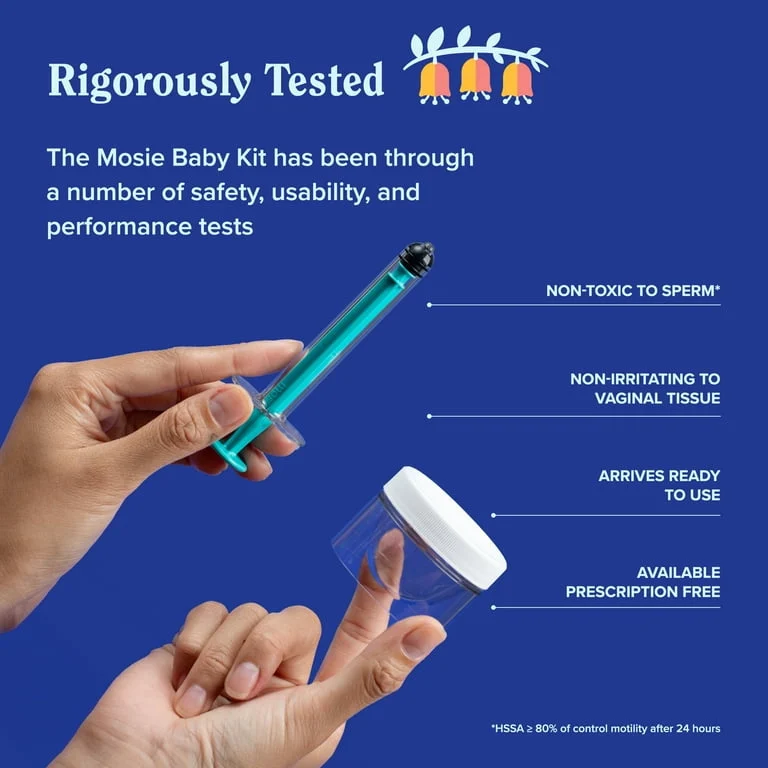
    Mosie Baby Kit with a syringe and container, highlighting safety and usability features on a blue background.

    The Mosie Brand Insemination Box: Your Partner on the Parenthood Journey

    The Mosie Brand Insemination Box is also designed to work for a variety of fertility needs, including low sperm count, hostile cervical mucus, and unexplained infertility. The detailed instruction manual provides step-by-step guidance on how to use the product effectively for specific fertility concerns.

    Why Choose the Mosie Brand Insemination Box?

    There are many benefits to choosing the Mosie Brand Insemination Box for your at-home insemination needs.

    First and foremost, the Mosie Brand Insemination Box is designed and recommended by fertility specialists. Maureen Brown, the co-founder of Mosie, is a certified and experienced fertility specialist who has helped many couples conceive. With her professional knowledge and experience, you can trust that the product is safe and effective.

    Additionally, the Mosie Brand Insemination Box is designed to be comfortable and easy to use. Unlike other fertility aids, the Mosie syringes have a rounded and soft tip, making them gentle and non-invasive for insertion. The collection cup is also designed to be comfortable and easy to clean, ensuring a stress-free experience for both partners.

    The Mosie Brand Insemination Box is also a cost-effective option for couples. IVF and other fertility treatments can cost thousands of dollars, making it unattainable for many. The Mosie Brand Insemination Box is an affordable option that can be used in the comfort of your own home, saving you time, money, and stress.

    Join the Mosie Community

    In addition to providing an effective and comfortable solution for at-home insemination, the Mosie Brand Insemination Box also offers a supportive and understanding community for couples struggling with fertility. The Mosie website offers resources, tips, and a forum for couples to connect with others going through a similar journey. Maureen and Marc Brown are also actively involved in the community, providing support and guidance to those in need.

    Summary

    The Mosie Brand Insemination Box is a revolutionary product designed to make the process of at-home insemination simple, effective, and comfortable for couples trying to conceive. It includes all the necessary tools and instructions for at-home insemination and is recommended by fertility specialists. The product is designed to be comfortable, affordable, and can be used in the privacy of your own home. Additionally, the Mosie community offers support and resources for couples struggling with fertility.

  • Syringe Insemination for Women with Low Ovarian Reserve: A Viable Option?

    Summary:

    For women struggling with low ovarian reserve, the journey to conceive a child can be filled with frustration and disappointment. As the number of viable eggs decreases, the chances of natural conception also decrease. In vitro fertilization (IVF) has long been the go-to treatment option for low ovarian reserve, but it is expensive and not always successful. However, there is a lesser-known fertility treatment option that has shown promising results for women with low ovarian reserve – syringe insemination.

    Syringe insemination, also known as intrauterine insemination (IUI), involves placing washed and concentrated sperm directly into the uterus using a syringe. This method is less invasive and less expensive than IVF, making it a viable option for women with low ovarian reserve. But is it truly effective? In this blog post, we will explore the benefits and drawbacks of syringe insemination for women with low ovarian reserve.

    Benefits of Syringe Insemination:
    1. Cost-effective: The cost of syringe insemination is significantly lower than IVF, making it a more accessible option for women with low ovarian reserve.
    2. Less invasive: Unlike IVF, syringe insemination does not require surgery or extensive medication. This makes it a less invasive option for women who may not be able to undergo more intensive treatments.
    3. Increases chances of natural conception: Syringe insemination places the sperm directly into the uterus, increasing the chances of fertilization. This makes it a more natural and less artificial method of conception.

    logo featuring a pink heart above two teal leaves on a blue circular background

    Syringe Insemination for Women with Low Ovarian Reserve: A Viable Option?

    Drawbacks of Syringe Insemination:
    1. Lower success rates: While IVF has a success rate of up to 40%, the success rate for syringe insemination is lower, ranging from 10-20%. This is due to the fact that the number of viable eggs in women with low ovarian reserve is already low, and the sperm may not always reach and fertilize an egg.
    2. Multiple cycles may be needed: Due to the lower success rates, multiple cycles of syringe insemination may be needed to achieve pregnancy, leading to increased costs and emotional stress.
    3. Risk of multiple pregnancies: As with any fertility treatment, there is a risk of multiple pregnancies with syringe insemination. This can lead to complications during pregnancy and childbirth.

    Factors to Consider Before Opting for Syringe Insemination:
    1. Age: Age plays a significant role in the success of syringe insemination. Women under 35 have a higher chance of success, while women over 40 may not benefit as much from this treatment.
    2. Ovarian reserve: The success of syringe insemination depends on the number and quality of eggs a woman has. Women with low ovarian reserve may not respond well to this treatment.
    3. Partner’s sperm quality: The sperm used in syringe insemination must be of good quality and motility to increase the chances of fertilization.

    In conclusion, syringe insemination can be a viable option for women with low ovarian reserve. It is a cost-effective, less invasive, and more natural method of conception. However, it is essential to consider factors such as age, ovarian reserve, and sperm quality before opting for this treatment. Consulting with a fertility specialist is crucial in determining if syringe insemination is the right option for you.

    SEO metadata:

  • Preparing for the Emotional Journey of Syringe Insemination for Infertility

    Summary:

    Infertility can be a difficult and emotional journey for couples who are trying to conceive. For those who have been unsuccessful with natural conception, syringe insemination may be recommended as a form of assisted reproductive technology. This process involves injecting sperm directly into the uterus using a syringe, bypassing any potential barriers to fertilization. While it can be an effective treatment option for infertility, it is important to prepare for the emotional journey that comes with it. In this blog post, we will discuss the different emotions that may arise during the process of syringe insemination and offer tips on how to cope with them.

    The first step in preparing for syringe insemination is to educate yourself about the process. This can help alleviate any fears or anxieties and give you a better understanding of what to expect. It is also important to have open and honest communication with your partner. Infertility can put a strain on a relationship, so it is crucial to have a strong support system and work together as a team.

    During the process of syringe insemination, it is normal to experience a range of emotions including hope, anxiety, disappointment, and sadness. The hope of finally becoming pregnant can be exciting, but the constant waiting and uncertainty can also cause anxiety. It is important to acknowledge and validate these emotions, but also to find healthy ways to cope with them. Some suggestions include talking to a therapist, joining a support group, or engaging in stress-reducing activities such as yoga or meditation.

    One of the biggest challenges of syringe insemination is the potential for disappointment and sadness if the procedure does not result in pregnancy. It is important to remember that it is not a reflection of your worth as a person or a failure on your part. It is also helpful to have a plan in place for coping with a negative outcome, such as taking a break from fertility treatments or seeking alternative options like adoption.

    guide and materials for using Mosie Baby fertility kit on a textured surface

    Preparing for the Emotional Journey of Syringe Insemination for Infertility

    Another aspect of the emotional journey of syringe insemination is the financial strain it can put on couples. Fertility treatments can be expensive and may not always be covered by insurance. It is important to discuss and plan for the financial aspect of syringe insemination before starting the process. This can help alleviate some of the stress and uncertainty that comes with it.

    It is also important to take care of your physical and mental health during the process of syringe insemination. Eating a healthy diet, exercising regularly, and getting enough rest can help improve your overall well-being and increase your chances of success. Additionally, seeking support from your partner, loved ones, or a therapist can help you navigate the emotional ups and downs of the journey.

    Lastly, it is important to remember that syringe insemination is just one option in the journey towards parenthood. There are many other options available such as in vitro fertilization (IVF) or adoption. It is important to explore all options and make the best decision for you and your partner.

    In conclusion, preparing for the emotional journey of syringe insemination for infertility involves educating yourself about the process, having open communication with your partner, and acknowledging and coping with a range of emotions. It also involves taking care of your physical and mental health and being open to exploring alternative options. Remember, you are not alone in this journey and there is support available to help you through it.

    SEO metadata:

  • Exploring Alternative Fertility Methods: Syringe Insemination vs IVF

    Blog post:

    Fertility is a deeply personal and emotional topic for many individuals and couples. For those struggling to conceive, the journey can often be filled with stress, disappointment, and financial strain. As traditional methods of conception may not always be successful, many individuals turn to alternative fertility methods to fulfill their dreams of parenthood. In this blog post, we will be exploring two of the most commonly used alternative fertility methods – syringe insemination and in vitro fertilization (IVF).

    Syringe insemination, also known as artificial insemination, is a simple and less invasive fertility method compared to IVF. It involves placing sperm directly into the uterus using a syringe, bypassing the need for sexual intercourse. This method is commonly used for couples facing male fertility issues, single individuals or same-sex couples, and those with unexplained infertility.

    One of the main advantages of syringe insemination is its affordability. It is significantly cheaper than IVF, making it a more accessible option for many individuals. It also requires less medical intervention, which can be appealing to those who prefer a more natural approach. The procedure can be done in the comfort of a doctor’s office and does not require any anesthesia, making it a relatively painless and quick process.

    However, syringe insemination does have its limitations. It has a lower success rate compared to IVF, with only a 10-20% chance of pregnancy per cycle. This means that multiple attempts may be needed, which can add up in terms of cost. Additionally, this method relies heavily on the quality of the sperm, so it may not be suitable for couples with severe male infertility issues.

    Hands holding a syringe and a small container against a blue background.

    Exploring Alternative Fertility Methods: Syringe Insemination vs IVF

    On the other hand, IVF is a more complex and invasive fertility treatment that involves extracting eggs from the ovaries and combining them with sperm in a laboratory. The fertilized eggs are then transferred to the uterus, with the hope of implantation and pregnancy. This method is often recommended for couples with severe fertility issues, such as blocked fallopian tubes, advanced maternal age, or low sperm count.

    One of the main advantages of IVF is its higher success rate. With a success rate of 40%, IVF offers a better chance of pregnancy compared to syringe insemination. It also allows for the selection of the healthiest embryos, increasing the chances of a successful pregnancy. Additionally, IVF can be combined with other assisted reproductive techniques, such as intracytoplasmic sperm injection (ICSI) or preimplantation genetic testing, to further improve the chances of a successful pregnancy.

    However, IVF also comes with its own set of challenges. It is a more expensive option compared to syringe insemination, with costs ranging from $12,000 to $15,000 per cycle. The procedure itself is more involved and can be physically and emotionally taxing for the individual or couple. It also carries a higher risk of multiple pregnancies, which can lead to complications for both the mother and babies.

    In conclusion, both syringe insemination and IVF are effective alternative fertility methods, each with its own pros and cons. Ultimately, the choice between the two will depend on individual circumstances, preferences, and budget. It is important to consult with a fertility specialist to determine the best course of action for each individual or couple.

    Summary:

    Fertility struggles can be emotionally and financially draining, leading many individuals and couples to explore alternative fertility methods. This blog post delves into two commonly used methods – syringe insemination and IVF. Syringe insemination is a simple and affordable option, while IVF offers a higher success rate but at a higher cost and more invasive procedure. The choice between the two depends on individual circumstances and should be discussed with a fertility specialist.

  • Mosie Insemination Solution: A Safe and Effective Alternative to IVF

    Mosie Insemination Solution: A Safe and Effective Alternative to IVF

    Infertility is a common struggle for many couples around the world. In fact, according to the World Health Organization, approximately 10% of couples worldwide experience some form of infertility. In the past, in vitro fertilization (IVF) was seen as the only option for couples struggling to conceive. However, this expensive and invasive procedure may not be the best choice for everyone. Fortunately, there is a safe and effective alternative to IVF – Mosie Insemination Solution.

    What is Mosie Insemination Solution?

    Mosie Insemination Solution is a patented, at-home insemination kit that helps couples conceive without the need for expensive and invasive procedures like IVF. Developed by a husband and wife team, Maureen and Marc Brown, Mosie is a simple, safe, and effective method for conceiving at home. The kit includes a syringe and a cervical cap, both designed to make the insemination process easier and more comfortable.

    How does it work?

    Mosie Insemination Solution works by allowing the sperm to bypass the acidity of the vagina and directly enter the cervix, increasing the chances of fertilization. The kit includes a syringe that is designed to deposit sperm into the cervix, while the cervical cap is used to hold the sperm in place for a longer period of time. This method is similar to the process used in fertility clinics, but can be done in the comfort and privacy of one’s own home.

    Why is it a safe and effective alternative to IVF?

    One of the main concerns with IVF is the use of fertility drugs, which can have harmful side effects. Mosie Insemination Solution does not require the use of any drugs, making it a safer option for couples. Additionally, IVF carries a higher risk of multiple pregnancies, which can lead to complications for both the mother and the babies. Mosie Insemination Solution only allows for one sperm to be deposited at a time, reducing the risk of multiple pregnancies.

    blue box with "mosie" logo, syringes, and informational pamphlet on a pink background

    Mosie Insemination Solution: A Safe and Effective Alternative to IVF

    Another concern with IVF is the invasive nature of the procedure. Mosie Insemination Solution, on the other hand, is a non-invasive method that can be done in the comfort and privacy of one’s own home. This can help reduce stress and anxiety, which can have a negative impact on fertility.

    Who can benefit from using Mosie Insemination Solution?

    Mosie Insemination Solution can benefit a wide range of couples, including those who have been trying to conceive for a long time, those with unexplained infertility, same-sex couples, and single women. It can also be a great option for couples who are not ready to pursue more invasive and expensive fertility treatments like IVF.

    Success stories with Mosie Insemination Solution

    Many couples have successfully used Mosie Insemination Solution to conceive. One such couple is Maureen and Marc Brown, the creators of Mosie. After trying to conceive for over a year, they decided to try insemination at home using a turkey baster. This method was uncomfortable and unsuccessful, so they came up with the idea of Mosie. After using it for just two months, they were able to conceive their first child, and later their second child. Since then, they have helped many other couples achieve their dreams of starting a family.

    Conclusion

    Mosie Insemination Solution is a safe, effective, and affordable alternative to IVF for couples struggling with infertility. It is a non-invasive method that can be done in the comfort of one’s own home, without the use of any drugs. With its high success rate and numerous success stories, Mosie is a promising option for couples looking to start a family.

    In summary, Mosie Insemination Solution is a safe and effective alternative to IVF that can help couples struggling with infertility to conceive at home. It is a non-invasive method that can be used by a wide range of couples, and has a high success rate. With its affordable price and numerous success stories, Mosie is a promising solution for those looking to start a family.

  • Insemination Syringe Systems and IVF: Exploring Your Options

    Blog Post:

    In today’s world, there are various fertility treatments available for couples struggling to conceive. Insemination syringe systems and IVF (in vitro fertilization) are two popular methods used to help couples achieve their dream of starting a family. While both methods have the same goal, they differ in the process and success rates. In this blog post, we will explore the options of insemination syringe systems and IVF, and help you understand which one may be the best fit for you.

    Insemination Syringe Systems:

    Insemination syringe systems, also known as artificial insemination, is a process that involves placing sperm directly into the female reproductive tract. This method can be done at home or in a medical setting, and is often used by couples with low sperm count or poor sperm motility.

    There are two types of insemination syringe systems – intracervical insemination (ICI) and intrauterine insemination (IUI). ICI involves inserting the sperm into the cervix, while IUI involves placing the sperm directly into the uterus. IUI is considered to be more effective than ICI, as it bypasses the cervix and places the sperm closer to the fallopian tubes where fertilization occurs.

    One of the main advantages of insemination syringe systems is that it is a non-invasive and relatively simple procedure. It also has a lower cost compared to other fertility treatments, making it a more affordable option for many couples. However, the success rates of insemination syringe systems can vary, with some studies showing a success rate of around 10-20% per cycle.

    IVF:

    In vitro fertilization, or IVF, is a more complex and invasive procedure compared to insemination syringe systems. It involves retrieving eggs from the woman’s ovaries and fertilizing them with sperm in a laboratory. The embryos are then transferred back into the woman’s uterus, where they have the potential to implant and grow into a pregnancy.

    Instructions for reading pregnancy test results with visual indicators for "Not Pregnant," "Pregnant," and "Invalid.

    Insemination Syringe Systems and IVF: Exploring Your Options

    IVF is often recommended for couples with fertility issues such as blocked fallopian tubes, endometriosis, or male factor infertility. It also has a higher success rate compared to insemination syringe systems, with an average success rate of 40% per cycle for women under 35 years old. However, IVF can be a costly and emotionally demanding process, as it involves multiple injections, monitoring appointments, and procedures.

    Exploring Your Options:

    When considering your options for fertility treatment, it is important to consult with a fertility specialist to understand which method may be the best fit for you and your partner. Factors such as age, overall health, and fertility issues can all play a role in determining the most effective treatment.

    Insemination syringe systems may be a good option for couples with mild fertility issues, as it is less invasive and more affordable. However, for couples with more complex fertility issues, IVF may be the recommended option. It is also important to consider the emotional and financial aspects of each treatment, as they can impact the overall experience and success rates.

    It is also worth noting that insemination syringe systems and IVF can be used together. In cases where insemination syringe systems have not been successful, IVF may be recommended as the next step. This combined approach is often called intrauterine insemination with controlled ovarian stimulation (IUI-COS).

    In conclusion, insemination syringe systems and IVF are two options available for couples struggling with fertility issues. Both methods have their own advantages and challenges, and it is important to consult with a fertility specialist to determine the best treatment for you. Whether you choose insemination syringe systems, IVF, or a combination of both, the ultimate goal is to help you achieve your dream of starting a family.

    Summary:

    Insemination syringe systems and IVF are two popular methods used to help couples achieve their dream of starting a family. Insemination syringe systems are a non-invasive and affordable option, while IVF is a more complex and invasive procedure with a higher success rate. Factors such as age, overall health, and fertility issues should be considered when choosing the best method. Consulting with a fertility specialist can help determine the most effective treatment for each individual or couple.

  • Mosie Brand Insemination Collection vs. IVF: Comparing Success Rates and Cost

    Mosie Brand Insemination Collection vs. IVF: Comparing Success Rates and Cost

    When it comes to starting a family, many couples face challenges and difficulties in conceiving. In the past, traditional methods of conceiving relied solely on natural intercourse. However, with the advancements in medical technology, there are now more options available for couples struggling to conceive. Two popular methods are Mosie Brand Insemination Collection and IVF (In Vitro Fertilization). In this blog post, we will be comparing the success rates and costs of these two methods to help couples make an informed decision about which option is best for them.

    Before we dive into the comparison, let’s first understand what Mosie Brand Insemination Collection and IVF are.

    Mosie Brand Insemination Collection is a home insemination kit that allows couples to perform insemination in the comfort of their own home. The kit includes pre-filled syringes and a lubricant designed for conception. The process involves collecting sperm from the male partner, placing it into the syringe, and inserting it into the female partner’s cervix. This method is often used by couples who have trouble conceiving through traditional intercourse or for single individuals who want to become parents.

    On the other hand, IVF is a medical procedure that involves retrieving eggs from the female partner and fertilizing them with sperm in a laboratory setting. The fertilized eggs are then transferred back into the female partner’s uterus. This method is usually recommended for couples who have been trying to conceive for a long time or for those who have certain fertility issues.

    Now, let’s compare the success rates of Mosie Brand Insemination Collection and IVF.

    According to a study published in the Journal of Assisted Reproduction and Genetics, the success rate of Mosie Brand Insemination Collection is around 25%. This means that out of 100 couples using this method, 25 of them will successfully conceive. However, it is important to note that this success rate can vary depending on the individual’s fertility and other factors.

    On the other hand, the success rate of IVF is higher, at around 40% for women under 35 years old. This percentage decreases as the woman’s age increases, with a success rate of only 3% for women over 44 years old. Additionally, the success rate of IVF can also be affected by factors such as the quality of eggs and sperm, as well as the experience of the fertility clinic.

    sperm-ready insemination kit with a syringe and container, featuring a screw top lid and non-tip safety wall

    Mosie Brand Insemination Collection vs. IVF: Comparing Success Rates and Cost

    Next, let’s talk about the cost of these two methods.

    The cost of Mosie Brand Insemination Collection is significantly lower compared to IVF. The kit itself costs around $89, and it can be used for multiple cycles. However, the total cost can increase if additional medical assistance is needed, such as fertility medications or fertility clinic visits.

    On the other hand, the cost of IVF can range from $12,000 to $15,000 per cycle. This includes the cost of medications, laboratory fees, and doctor’s fees. The cost can increase depending on the individual’s specific needs and the location of the fertility clinic.

    Now that we have compared the success rates and costs of Mosie Brand Insemination Collection and IVF, let’s discuss some other important factors that couples should consider.

    One factor to consider is the level of involvement of medical professionals. With Mosie Brand Insemination Collection, couples can perform the insemination at home without the need for medical assistance. This can be appealing for those who prefer a more private and intimate experience. However, IVF involves more medical procedures and monitoring, and some couples may find this to be a more stressful and invasive process.

    Another factor to consider is the emotional and physical toll of these methods. Both Mosie Brand Insemination Collection and IVF can be emotionally and physically draining for couples. The disappointment of unsuccessful attempts can be difficult to handle, and the hormonal changes from medications can also cause mood swings and other side effects.

    In conclusion, both Mosie Brand Insemination Collection and IVF can be effective options for couples who are struggling to conceive. However, they have different success rates, costs, and levels of involvement of medical professionals. It is essential for couples to carefully consider their individual needs and preferences before deciding which method to pursue.

    Summary:

    – Mosie Brand Insemination Collection is a home insemination kit, while IVF is a medical procedure performed in a fertility clinic.
    – The success rate of Mosie Brand Insemination Collection is around 25%, while the success rate of IVF is around 40% for women under 35 years old.
    – Mosie Brand Insemination Collection is significantly cheaper than IVF, with a cost of around $89, while IVF can cost up to $15,000 per cycle.
    – Couples should also consider other factors such as the level of involvement of medical professionals and the emotional and physical toll of each method.

  • The Syringe Kit: Your Partner in the Journey to Conception

    Summary:

    Conceiving a child can be a challenging and emotional journey for many couples. In addition to the physical and emotional toll, it can also be financially draining. This is where the syringe kit comes in as a valuable tool for couples trying to conceive. In this blog post, we will discuss the various benefits of using a syringe kit, how it works, and how it can improve your chances of conception.

    The Syringe Kit: Your Partner in the Journey to Conception

    Infertility affects millions of couples worldwide, with about 1 in 8 couples struggling to conceive. Many couples turn to assisted reproductive techniques like intrauterine insemination (IUI) or in vitro fertilization (IVF) to increase their chances of pregnancy. However, these methods can be expensive and may not be accessible to everyone. This is where the syringe kit comes in as an affordable and effective option for couples trying to conceive.

    What is a Syringe Kit?

    A syringe kit is a simple and easy-to-use medical device that consists of a syringe and a soft, pliable catheter. It is designed to assist with the process of insemination, which involves the placement of sperm directly into the uterus or cervix. The syringe kit is a popular alternative to traditional methods of insemination, such as the use of a turkey baster or a needleless syringe, as it offers more control and precision.

    How Does it Work?

    Using a syringe kit for insemination is a relatively straightforward process that can be done at home or in a medical setting. First, the male partner collects a semen sample and deposits it into the syringe. Then, the female partner lies on her back with her legs elevated, and the syringe is gently inserted into the cervix or uterus. The sperm is then released from the syringe, and the catheter is removed. The process takes only a few minutes and can be repeated multiple times during the woman’s fertile window.

    Benefits of Using a Syringe Kit

    1. Cost-Effective

    logo featuring a pink heart above two teal leaves on a blue circular background

    The Syringe Kit: Your Partner in the Journey to Conception

    The syringe kit is significantly more affordable than other assisted reproductive techniques, making it a viable option for couples on a budget. Traditional methods of insemination can cost hundreds or even thousands of dollars, while a syringe kit can be purchased for a fraction of the price.

    2. Convenient and Discreet

    Unlike other methods of insemination, using a syringe kit can be done in the comfort of your own home. This can be particularly beneficial for couples who may feel uncomfortable or embarrassed about the process. It also eliminates the need for frequent visits to a medical facility, saving time and money.

    3. Increased Chances of Conception

    The syringe kit allows for more control and precision in the placement of sperm, increasing the chances of fertilization. It also eliminates the need for sperm to travel through the cervix, which can be a barrier for some couples.

    4. Safe and Sterile

    Syringe kits are designed to be used only once, ensuring a sterile environment for sperm placement. This reduces the risk of infection and increases the chances of a successful pregnancy.

    5. Can Be Used with Donor Sperm

    For couples using donor sperm, the syringe kit is a convenient and safe option. It allows for the easy transfer of sperm from the donor sample to the cervix or uterus, without the need for additional equipment or procedures.

    In conclusion, the syringe kit is a valuable tool for couples on their journey to conception. It offers an affordable, convenient, and effective option for those struggling with infertility. As with any assisted reproductive technique, it is essential to consult with a healthcare professional before using a syringe kit. With the help of this simple device, couples can increase their chances of conceiving and bring their dreams of starting a family to life.