Tag: fertility

  • The Importance of Accurately Tracking Cervical Mucus: Insights from the Billings Method

    Blog Summary:

    Cervical mucus is a natural and important bodily fluid that plays a crucial role in female reproductive health. The Billings Method, also known as the Ovulation Method, is a natural family planning method that utilizes the observation and tracking of cervical mucus to determine a woman’s fertility. In this blog post, we will discuss the importance of accurately tracking cervical mucus and how the Billings Method can provide valuable insights into a woman’s reproductive health.

    Firstly, understanding the role of cervical mucus is crucial in grasping the importance of tracking it. Cervical mucus changes in consistency and amount throughout a woman’s menstrual cycle, and these changes indicate her fertility status. During the fertile window, the mucus becomes clear, slippery, and stretchy, allowing sperm to easily travel through the cervix and fertilize an egg. Outside of the fertile window, the mucus becomes thicker and less conducive to sperm survival, making pregnancy less likely. By accurately tracking these changes, a woman can identify her fertile days and use this information to either achieve or avoid pregnancy.

    Accurately tracking cervical mucus is also essential for women who are trying to conceive. By monitoring the changes in their cervical mucus, women can pinpoint the most fertile days of their cycle and increase their chances of getting pregnant. Additionally, tracking cervical mucus can help identify any potential issues with fertility, such as low levels of estrogen or anovulation. This information can then be shared with a healthcare provider, leading to earlier diagnosis and treatment.

    Mosie Baby Kit with a syringe and container, highlighting safety and usability features on a blue background.

    The Importance of Accurately Tracking Cervical Mucus: Insights from the Billings Method

    The Billings Method, developed by Drs. John and Evelyn Billings in the 1950s, is a scientifically proven natural family planning method that relies on the observation and tracking of cervical mucus to determine fertility. It is based on the understanding that cervical mucus is a reflection of hormonal changes in a woman’s body and can be used to identify the fertile and infertile phases of her cycle. By tracking the changes in mucus on a daily basis, a woman can accurately determine her fertility status and make informed decisions about her reproductive health.

    One of the major benefits of the Billings Method is that it does not require the use of any external devices or contraceptives. This makes it a safe and natural option for women who prefer to avoid hormonal birth control or have concerns about the potential side effects of other methods. It is also relatively inexpensive and can be used by women of all ages and backgrounds.

    Furthermore, the Billings Method is not just about tracking cervical mucus for the purpose of family planning. It also provides valuable insights into a woman’s overall reproductive health. Changes in mucus patterns can indicate potential health issues, such as hormonal imbalances, infections, or problems with ovulation. By carefully observing and tracking these changes, women can detect any abnormalities and seek medical attention if necessary.

    In addition to being a reliable method of natural family planning and a tool for monitoring reproductive health, the Billings Method also helps women to understand and appreciate their bodies. By learning to observe and interpret the changes in their cervical mucus, women become more in tune with their menstrual cycle and gain a better understanding of their own fertility. This can also lead to a deeper appreciation of the natural and beautiful processes that occur within the female body.

    In conclusion, accurately tracking cervical mucus is crucial for women’s reproductive health, and the Billings Method is an effective way to do so. By understanding the role of cervical mucus, women can use this method to plan or prevent pregnancy, improve their chances of conceiving, and monitor their overall reproductive health. It is a natural, safe, and empowering approach to fertility management that can benefit women of all ages and backgrounds.


  • The Billings Ovulation Method and Its Connection to Hormonal Imbalance

    The Billings Ovulation Method has been used by women all over the world to track their fertility and aid in family planning. However, this method goes beyond just predicting ovulation and can also provide valuable insights into hormonal imbalances. In this blog post, we will explore the Billings Ovulation Method and its connection to hormonal imbalance, as well as how it can benefit women’s health.

    To understand the connection between the Billings Ovulation Method and hormonal imbalance, we must first understand what the method entails. Developed by Drs. John and Evelyn Billings in the 1950s, this method is based on the observation of changes in cervical mucus throughout a woman’s menstrual cycle. The presence and quality of cervical mucus can indicate when ovulation is approaching, and thus, when a woman is most fertile. By tracking these changes, women can identify their fertile window and use this information for pregnancy achievement or avoidance.

    But the Billings Ovulation Method goes beyond just predicting ovulation. By closely monitoring changes in cervical mucus, women can also gain insights into their hormonal balance. The quality and quantity of cervical mucus are directly influenced by estrogen and progesterone levels in the body. Therefore, any abnormalities in these hormones can be reflected in the cervical mucus, providing a clue to potential hormonal imbalances.

    One of the most common hormonal imbalances in women is estrogen dominance. This occurs when there is an excess of estrogen in the body compared to progesterone. Estrogen dominance can lead to a variety of symptoms, including irregular menstrual cycles, heavy or painful periods, weight gain, mood swings, and more. By tracking cervical mucus, women can identify changes in their estrogen levels and work towards rebalancing their hormones.

    at-home insemination kit with syringes, collection cups, and instructions on a pink background

    The Billings Ovulation Method and Its Connection to Hormonal Imbalance

    Another hormonal imbalance that can be detected through the Billings Ovulation Method is low progesterone. Progesterone is a crucial hormone for maintaining a healthy menstrual cycle and supporting pregnancy. Low levels of progesterone can lead to symptoms such as irregular periods, difficulty getting pregnant, and even early pregnancy loss. By tracking cervical mucus, women can identify any changes in their progesterone levels and seek treatment to balance their hormones.

    The Billings Ovulation Method can also be helpful in identifying Polycystic Ovary Syndrome (PCOS), a hormonal disorder that affects many women. PCOS is characterized by high levels of androgens (male hormones) and irregular periods. By tracking cervical mucus, women with PCOS can identify any changes in their hormones and seek appropriate treatment.

    In addition to aiding in the detection of hormonal imbalances, the Billings Ovulation Method can also help women with these imbalances to manage their symptoms. By tracking their fertile window, women can time intercourse to increase their chances of pregnancy. For women trying to avoid pregnancy, the method can help them identify their most fertile days and use a barrier method of contraception during this time.

    Moreover, the Billings Ovulation Method is a natural and non-invasive way to monitor hormonal imbalances. Unlike medications or hormonal birth control methods, this method does not introduce any artificial hormones into the body. It simply relies on the observation of changes in cervical mucus, making it a safe and natural option for women who prefer a more holistic approach to their health.

    In conclusion, the Billings Ovulation Method is not just a tool for predicting ovulation and aiding in family planning. It can also provide valuable insights into hormonal imbalances and help women manage their symptoms. By tracking changes in cervical mucus, women can identify any potential issues with their hormones and take steps towards rebalancing them. This method empowers women to take control of their reproductive health and make informed decisions about their fertility.

  • From Infertility to Conception: A Journey with the Billings Ovulation Method

    From Infertility to Conception: A Journey with the Billings Ovulation Method

    Infertility is a struggle that many couples face, and it can take a toll on both physical and emotional well-being. After months or even years of trying to conceive, it can feel like there is no solution in sight. In these desperate times, many couples turn to assisted reproductive technology or fertility treatments, which can be expensive and invasive. However, there is a natural and scientifically proven method that has helped thousands of couples overcome infertility and successfully conceive – the Billings Ovulation Method.

    What is the Billings Ovulation Method?

    The Billings Ovulation Method, also known as the Billings Method or the Ovulation Method, is a natural fertility awareness-based method (FABM) of family planning. It was developed by Drs. John and Evelyn Billings in the 1950s and has since been used by millions of women worldwide. This method is based on the observation of cervical mucus changes throughout a woman’s menstrual cycle. By tracking these changes, a woman can identify her fertile and infertile days, and use this information to either achieve or avoid pregnancy.

    How Does it Work?

    The Billings Ovulation Method works by teaching women to recognize and interpret the changes in cervical mucus throughout their cycle. Cervical mucus is a fluid secreted by the cervix, and its consistency and appearance change throughout the menstrual cycle due to hormonal fluctuations. In the first phase of the cycle, the mucus is thick and sticky, forming a barrier to prevent sperm from entering the uterus. As ovulation approaches, estrogen levels increase, causing the mucus to become thin, clear, and stretchy – similar to raw egg whites. This fertile mucus allows sperm to easily swim through the cervix and fertilize an egg. Once ovulation occurs, the mucus returns to its thick and sticky state, making it difficult for sperm to survive.

    By tracking the changes in cervical mucus, a woman can determine her fertile window – the days when she is most likely to conceive. This method works because sperm can survive in fertile cervical mucus for up to five days, whereas the egg only survives for 12-24 hours after ovulation. Therefore, by avoiding intercourse during the fertile window, a couple can effectively prevent pregnancy. On the other hand, if a couple is trying to conceive, they can have intercourse during the fertile window to increase their chances of pregnancy.

    Benefits of the Billings Ovulation Method

    illustration comparing standard and Mosie syringe openings with text highlighting design benefits for home insemination

    From Infertility to Conception: A Journey with the Billings Ovulation Method

    One of the main benefits of the Billings Ovulation Method is its effectiveness. According to studies, it has a 99.5% success rate in avoiding pregnancy when used correctly. It is also highly effective in achieving pregnancy, with a 78% success rate in the first cycle of trying and a 92% success rate within three cycles. Additionally, this method is completely natural and does not involve the use of any hormones or devices, making it safe and free from any side effects. It is also inexpensive and can be used by women of all ages and in any stage of their reproductive life.

    Another significant advantage of the Billings Method is its ability to help identify any underlying issues with fertility. By closely monitoring cervical mucus changes, women can detect any abnormalities in their cycle and seek medical help if needed. This method has been successfully used by many couples to overcome infertility issues and conceive naturally.

    The Journey with the Billings Ovulation Method

    For many couples, the journey to parenthood can be a long and challenging one. However, the Billings Ovulation Method offers a ray of hope for those struggling with infertility. The journey with this method begins with learning the basics and understanding the changes in cervical mucus. This is followed by charting and tracking the changes throughout the cycle. This process can be done either on paper or using various apps and online tools available.

    The next step is to interpret the mucus observations and determine the fertile window. This can be done with the help of a certified instructor who can guide and support the couple throughout the process. The instructor can also help identify any issues or concerns and provide personalized guidance. With practice, couples can become experts in using this method and effectively plan their families.

    The journey with the Billings Ovulation Method can be a transformative one. Not only does it help couples achieve their dream of parenthood, but it also brings a deeper understanding of their bodies and fertility. It empowers women to take control of their reproductive health and make informed choices about their family planning. It also fosters better communication and understanding between couples, leading to stronger relationships.

    In Conclusion

    Infertility can be a challenging journey, but with the Billings Ovulation Method, there is hope for couples looking to conceive naturally. This scientifically proven and natural method offers numerous benefits and has helped many couples overcome fertility issues. By tracking cervical mucus changes, couples can identify their fertile window and either achieve or avoid pregnancy. The journey with this method not only leads to successful conception but also fosters a deeper understanding of fertility and a stronger connection between couples.

    SEO metadata:

  • The Billings Ovulation Method: A Tool for Achieving Pregnancy or Avoiding It

    Blog Post:

    The decision to start a family or to prevent pregnancy is one that many couples face. With all the different birth control methods available, it can be overwhelming to decide which one is best for you. Some couples may prefer natural methods, while others may choose hormonal or barrier methods. One natural method that has been gaining popularity in recent years is the Billings Ovulation Method.

    The Billings Ovulation Method, also known as the Billings Method or the Ovulation Method, is a natural fertility awareness method that helps women track their menstrual cycle in order to achieve or avoid pregnancy. Unlike other methods that rely on devices or hormones, the Billings Method is based on observing and recording changes in cervical mucus to determine when a woman is fertile.

    Originating in the 1950s in Australia, the Billings Method was developed by Drs. John and Evelyn Billings. They noticed a correlation between a woman’s cervical mucus and her fertility, and began teaching women how to use this method to either achieve or avoid pregnancy. Since then, the method has been taught and used around the world by millions of women.

    How does the Billings Method work?

    The first step in using the Billings Method is to understand the menstrual cycle. A woman’s cycle is divided into two phases – the follicular phase and the luteal phase. The follicular phase starts on the first day of menstruation and ends with ovulation. The luteal phase begins after ovulation and ends with the start of the next period.

    During the follicular phase, the body produces estrogen, which helps to thicken the lining of the uterus in preparation for a potential pregnancy. As ovulation approaches, the body produces more estrogen, causing changes in cervical mucus. This mucus becomes thin, slippery, and stretchy – similar to raw egg whites – which helps sperm to travel through the cervix to fertilize an egg.

    The Billings Method teaches women to observe and record changes in their cervical mucus on a daily basis. By doing this, women can determine when they are fertile and when they are not. During the fertile phase, couples can choose to either try to conceive or use a barrier method of birth control. Once the woman has ovulated, her fertile window is closed, and she can no longer get pregnant until the start of her next cycle.

    Benefits of the Billings Method

    Mosie Baby Kit features a syringe and container, highlighting safety and usability tests on a blue background.

    The Billings Ovulation Method: A Tool for Achieving Pregnancy or Avoiding It

    One of the main benefits of the Billings Method is that it is a natural, hormone-free method of birth control. This can be appealing to women who are looking for alternatives to hormonal birth control, which can have side effects. The method is also free and can be used at any stage of a woman’s reproductive life, whether she is trying to conceive, breastfeeding, or approaching menopause.

    Another benefit of the Billings Method is that it can also help women understand their bodies and their menstrual cycle better. By observing and recording changes in cervical mucus, women can become more in tune with their fertility and understand when their body is functioning normally or when they may need to seek medical advice.

    The Billings Method can also be used to help couples achieve pregnancy. By tracking changes in cervical mucus, women can determine the best time to try to conceive. This can be especially helpful for couples who may have irregular cycles or are struggling with fertility issues.

    Challenges and Limitations

    As with any birth control method, the Billings Method has its challenges and limitations. One of the main challenges is that it requires a high level of commitment and diligence. Women must remember to observe and record changes in their cervical mucus every day, and any missed or incorrect observations can affect the effectiveness of the method.

    The Billings Method also relies on couples to abstain from sex or use a barrier method during the fertile phase. This can be difficult for some couples, especially if they have different levels of libido or are not comfortable with using barrier methods.

    Additionally, the Billings Method may not be suitable for all women. It may be less effective for those with irregular cycles or those who have difficulty distinguishing changes in cervical mucus. It also may not be recommended for women with certain health conditions, such as polycystic ovary syndrome (PCOS) or endometriosis.

    Conclusion

    The Billings Ovulation Method can be a useful tool for couples who are looking for a natural and hormone-free method of birth control or who are trying to conceive. It requires dedication and commitment, but it can also provide women with a better understanding of their bodies and fertility. As with any birth control method, it is important for couples to discuss their options and make an informed decision based on their individual needs and preferences.

    In summary, the Billings Ovulation Method is a natural fertility awareness method that helps women track their menstrual cycle by observing and recording changes in cervical mucus. It can be used to either achieve or avoid pregnancy and has benefits such as being hormone-free and helping women understand their bodies better. However, it also has its challenges and may not be suitable for everyone.

  • Understanding the Changes in Cervical Mucus Throughout the Menstrual Cycle

    Understanding the Changes in Cervical Mucus Throughout the Menstrual Cycle

    Cervical mucus, also known as cervical fluid, is a natural and important part of a woman’s reproductive system. It is produced by the cells lining the cervix and plays a crucial role in fertility and conception. Throughout the menstrual cycle, the amount, color, and consistency of cervical mucus undergo significant changes, which can provide valuable information about a woman’s reproductive health. In this blog post, we will explore the changes in cervical mucus throughout the menstrual cycle and what they can tell us about our bodies.

    Menstrual Cycle and Hormones

    Before diving into the changes in cervical mucus, it is essential to understand the menstrual cycle and the role of hormones in it. The menstrual cycle is the monthly process that prepares a woman’s body for pregnancy. It is controlled by a complex interplay of hormones, including estrogen, progesterone, follicle-stimulating hormone (FSH), and luteinizing hormone (LH).

    The menstrual cycle consists of three phases: the follicular phase, ovulation, and the luteal phase. The follicular phase begins on the first day of menstruation and lasts for about 14 days. During this phase, FSH and estrogen levels rise, stimulating the growth of a follicle in one of the ovaries. As the follicle grows, it produces estrogen, which causes the uterine lining to thicken in preparation for a potential pregnancy.

    Ovulation occurs around day 14 of the cycle, when the levels of LH surge, causing the follicle to burst and release an egg. If the egg is fertilized, it will implant in the thickened uterine lining. If not, the uterine lining will shed, and menstruation will occur.

    The luteal phase begins after ovulation and lasts for around 14 days. During this phase, the ruptured follicle turns into the corpus luteum, which produces progesterone. Progesterone helps to maintain the thickened uterine lining and prepares the body for pregnancy. If pregnancy does not occur, the corpus luteum will shrink, and progesterone levels will drop, leading to menstruation and the start of a new cycle.

    Changes in Cervical Mucus

    Now that we have a basic understanding of the menstrual cycle and hormones, let’s explore how they affect cervical mucus throughout each phase.

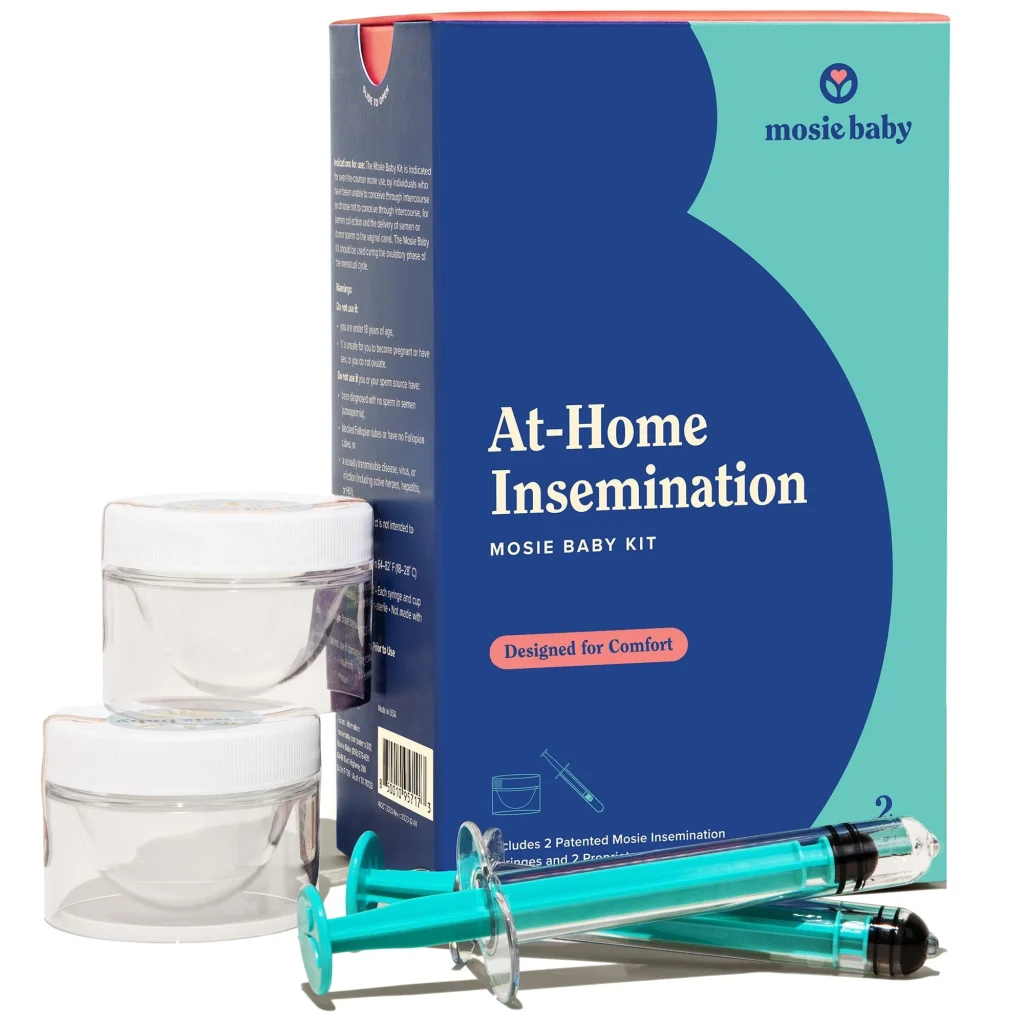
    at-home insemination kit by Mosie Baby, featuring syringes and containers for comfort and convenience.

    Understanding the Changes in Cervical Mucus Throughout the Menstrual Cycle

    Menstruation: During menstruation, the levels of estrogen and progesterone are low, and the uterine lining is shedding. This leads to a decrease in cervical mucus production, and the mucus may appear thick, sticky, and cloudy in color. This type of mucus is not suitable for sperm survival, and the cervix is typically closed to prevent any foreign substances from entering the uterus.

    Follicular Phase: As estrogen levels rise during the follicular phase, the cervical mucus becomes thinner, clearer, and more abundant. This type of mucus is known as “fertile” cervical mucus and is crucial for sperm survival and transport. It also helps the sperm to navigate through the cervix and into the uterus. As ovulation approaches, the cervical mucus will become stretchy, similar to egg whites, and allows sperm to swim freely.

    Ovulation: Ovulation is the most critical phase in the menstrual cycle for fertility. During this phase, the cervix opens slightly, and the cervical mucus becomes extremely stretchy and slippery, making it easier for sperm to reach the egg. This type of mucus is called “egg white cervical mucus” and is a clear sign of fertility. It is important to note that not all women will experience this type of mucus, so tracking other fertility signs, such as basal body temperature, can also be helpful.

    Luteal Phase: After ovulation, progesterone levels rise, causing the cervical mucus to become thicker and stickier once again. The cervix also closes to prevent any foreign substances from entering the uterus, making it difficult for sperm to survive. This type of mucus is known as “infertile” cervical mucus and is a sign that ovulation has occurred.

    Tracking Cervical Mucus for Fertility

    Understanding the changes in cervical mucus throughout the menstrual cycle can be helpful for women trying to conceive. By tracking the color, consistency, and amount of cervical mucus, women can determine when they are most fertile and increase their chances of conception. Additionally, tracking cervical mucus can also provide valuable information about hormonal imbalances or other reproductive issues.

    It is essential to note that every woman’s cervical mucus may vary, and it is essential to track patterns over a few cycles to determine what is “normal” for you. It is also crucial to pay attention to any changes in cervical mucus, such as a sudden increase or decrease in production, changes in color, or a foul odor, as these could be signs of an underlying issue that requires medical attention.

    In conclusion, cervical mucus plays a vital role in a woman’s fertility and overall reproductive health. By understanding the changes in cervical mucus throughout the menstrual cycle, women can gain insight into their bodies and make informed decisions about their reproductive health. By tracking cervical mucus, women can increase their chances of conception and detect any potential issues early on. So, pay attention to your cervical mucus and use it as a tool to better understand your body.

    Summary:

    Cervical mucus is a natural and important part of a woman’s reproductive system, produced by the cells lining the cervix. It undergoes significant changes throughout the menstrual cycle, which can provide valuable information about a woman’s reproductive health. The menstrual cycle consists of three phases: the follicular phase, ovulation, and the luteal phase, each with distinct changes in cervical mucus. Tracking cervical mucus can be helpful for women trying to conceive and can provide insights into hormonal imbalances or other reproductive issues. It is essential to track patterns and pay attention to any changes in cervical mucus for a better understanding of one’s body.

  • The Billings Ovulation Method: A Natural Alternative to Invasive Fertility Treatments

    Blog Post Title: The Billings Ovulation Method: A Natural Alternative to Invasive Fertility Treatments

    Introduction:
    In today’s world, many couples struggle with fertility issues and turn to invasive treatments such as IVF (in-vitro fertilization) and hormone injections. However, there is a natural and effective alternative that often goes overlooked – the Billings Ovulation Method. Developed by Drs. John and Evelyn Billings in the 1950s, this method has helped countless couples achieve pregnancy without the need for medical interventions. In this blog post, we will explore the Billings Ovulation Method and how it can be a game-changer for those struggling with fertility.

    What is the Billings Ovulation Method?
    The Billings Ovulation Method is a natural fertility awareness-based method (FABM) that helps women track their fertility by observing changes in cervical mucus. By tracking these changes, women can determine their fertile window and time intercourse accordingly to increase their chances of conception. This method is based on the fact that cervical mucus changes throughout a woman’s menstrual cycle, indicating the presence or absence of fertility.

    How does it work?
    The Billings Ovulation Method involves tracking the changes in cervical mucus throughout a woman’s menstrual cycle. In the initial phase of the cycle, after menstruation, the cervix is closed, and there is no mucus present. As the body prepares for ovulation, the cervix opens, and mucus is produced to help sperm reach the egg. The mucus is typically sticky and opaque, forming a barrier that prevents sperm from entering the uterus. As ovulation approaches, the mucus becomes more abundant, clear, and stretchy, creating a fertile environment for sperm to survive and reach the egg. After ovulation, the mucus decreases in quantity and becomes sticky again, indicating the end of the fertile window.

    Benefits of the Billings Ovulation Method:
    1. No side effects: Unlike hormonal and invasive fertility treatments, the Billings Ovulation Method has no side effects. It is entirely natural and does not involve any medication or medical procedures.
    2. Cost-effective: The Billings Ovulation Method is a one-time investment. Once a woman learns how to track her fertility using this method, she can continue to use it for as long as she wants without any additional costs.
    3. Empowering: The Billings Ovulation Method empowers women to take charge of their fertility and understand their bodies better. By tracking their mucus changes, women can gain a deeper understanding of their menstrual cycles and potential fertility issues.
    4. Can be used to achieve or avoid pregnancy: Unlike many other fertility tracking methods, the Billings Ovulation Method can be used both to achieve and avoid pregnancy. By accurately tracking the fertile window, couples can time intercourse to increase their chances of conception. On the other hand, if a couple is not ready for a pregnancy, they can avoid intercourse during the fertile window to prevent pregnancy.
    5. Can be used by women with irregular cycles: The Billings Ovulation Method can be particularly beneficial for women with irregular cycles. By tracking their mucus changes, they can determine when ovulation is likely to occur, which can help them plan for pregnancy or avoid it.

    pregnancy test kit features labeled for comfort and confidence on a teal background

    The Billings Ovulation Method: A Natural Alternative to Invasive Fertility Treatments

    Success rate:
    Studies have shown that the Billings Ovulation Method has a success rate of 78-81% in achieving pregnancy within the first six months of use. This success rate increases to 96-99% with correct use and the guidance of a certified Billings Ovulation Method teacher. These success rates are comparable to those of IVF and other invasive fertility treatments but without the risks and side effects.

    Common misconceptions:
    1. The Billings Ovulation Method is the same as the rhythm method: The rhythm method involves predicting ovulation based on past cycles, whereas the Billings Ovulation Method involves tracking changes in cervical mucus, which is a more accurate indicator of fertility.
    2. It is not effective: Some people believe that the Billings Ovulation Method is not effective as it is a natural method. However, studies have proven its effectiveness in achieving pregnancy.
    3. It is only for religious couples: While the Billings Ovulation Method is often promoted by religious organizations, it is a scientifically-based method that can be used by anyone, regardless of their beliefs.

    Challenges and considerations:
    Like any other fertility tracking method, the Billings Ovulation Method has its challenges and considerations. The most significant challenge is learning how to identify and track changes in cervical mucus accurately. This requires patience, practice, and guidance from a certified Billings Ovulation Method teacher. Additionally, this method may not be suitable for women with certain medical conditions, such as PCOS (polycystic ovary syndrome), which can affect the consistency of cervical mucus.

    Conclusion:
    The Billings Ovulation Method is a natural, effective, and empowering alternative to invasive fertility treatments. It allows couples to take control of their fertility and achieve pregnancy without the risks and side effects of medical interventions. By tracking changes in cervical mucus, women can better understand their bodies and potentially identify any fertility issues. While this method may not be suitable for everyone, it is worth considering for those looking for a natural and cost-effective way to achieve pregnancy.

    In summary, the Billings Ovulation Method is a natural fertility awareness-based method that helps women track their fertility by observing changes in cervical mucus. It is a one-time investment, has no side effects, and can be used to achieve or avoid pregnancy. Studies have shown a high success rate for this method, making it a viable alternative to invasive fertility treatments. However, it may not be suitable for everyone, and proper guidance from a certified teacher is essential for its effectiveness.

  • The Connection Between Cervical Mucus and Fertility: How the Billings Method Can Help

    Cervical mucus may not be a topic that many people are familiar with, but it plays a crucial role in a woman’s fertility. This slippery, fluid substance that is produced by the cervix is often overlooked but can actually provide valuable insights into a woman’s reproductive cycle. By learning how to track and interpret changes in cervical mucus, women can better understand their own fertility and improve their chances of conceiving. In this blog post, we will explore the connection between cervical mucus and fertility and how the Billings Method, a natural family planning technique, can help women track fertility and achieve their reproductive goals.

    Understanding Cervical Mucus
    Before we dive into the connection between cervical mucus and fertility, it’s important to understand what cervical mucus is and what purpose it serves. Cervical mucus is a fluid produced by the cervix, the lower part of the uterus that connects to the vagina. It plays a vital role in the reproductive process as it helps sperm travel through the cervix and into the uterus, where fertilization can occur.

    The consistency and amount of cervical mucus varies throughout a woman’s menstrual cycle. After menstruation, when estrogen levels are low, cervical mucus is usually thick and sticky, making it difficult for sperm to pass through. As ovulation approaches, estrogen levels rise, causing the mucus to become thinner and more stretchy, similar to the consistency of egg whites. This type of mucus is the most conducive to sperm survival and helps them make their way to the egg.

    The Connection Between Cervical Mucus and Fertility
    Now that we understand what cervical mucus is and how it changes throughout the menstrual cycle, we can explore its connection to fertility. As mentioned earlier, cervical mucus plays a crucial role in helping sperm reach the egg. Therefore, the presence of fertile cervical mucus is a good indicator that a woman is ovulating and is at her most fertile.

    Tracking changes in cervical mucus can also help women determine their fertile window, the time during which they are most likely to conceive. The fertile window typically spans a few days before ovulation and the day of ovulation itself. By tracking cervical mucus, women can pinpoint their most fertile days and increase their chances of pregnancy.

    How the Billings Method Can Help
    The Billings Method, also known as the Billings Ovulation Method or the Billings Ovulation Method of Natural Family Planning, is a natural family planning technique that utilizes changes in cervical mucus to track fertility. It was developed by Drs. John and Evelyn Billings in the 1950s and has since been used by millions of women worldwide to achieve or avoid pregnancy.

    Baby wearing a blue shirt with "made with Love" text, surrounded by colorful floral and butterfly designs.

    The Connection Between Cervical Mucus and Fertility: How the Billings Method Can Help

    The Billings Method works by teaching women to identify and classify their cervical mucus as either dry, sticky, creamy, or egg white-like. By tracking these changes, women can determine when they are approaching ovulation and when they are most fertile. The method also takes into account other signs of fertility, such as changes in basal body temperature and changes in the cervix, to provide a more accurate understanding of a woman’s reproductive cycle.

    Benefits of the Billings Method
    The Billings Method offers several benefits to women who are trying to conceive or avoid pregnancy. Firstly, it is a natural and non-invasive method of family planning that does not require the use of any hormones or devices. It is also inexpensive and can be used by women of all ages, regardless of their menstrual cycle regularity.

    Moreover, the Billings Method can also help women detect any potential fertility issues. Changes in cervical mucus can indicate hormonal imbalances or other underlying issues that may be affecting a woman’s ability to conceive. By tracking these changes, women can identify potential problems early on and seek medical treatment if necessary.

    In addition, the Billings Method can also be used to help women who are struggling with infertility. By tracking their cervical mucus, women can determine the best time for intercourse to increase their chances of conceiving. The method can also be used in conjunction with other fertility treatments to enhance their effectiveness.

    Conclusion
    Cervical mucus and fertility are closely intertwined, and understanding the changes in cervical mucus can help women better understand their reproductive cycle and improve their chances of pregnancy. The Billings Method provides a natural and effective way for women to track their fertility by monitoring changes in cervical mucus. This method offers a range of benefits, from helping women achieve pregnancy to detecting potential fertility issues. By incorporating the Billings Method into their reproductive health routine, women can take control of their fertility and achieve their reproductive goals.

    In summary, cervical mucus plays a crucial role in a woman’s fertility, and tracking changes in this fluid can help women determine their most fertile days. The Billings Method, a natural family planning technique, utilizes changes in cervical mucus to track fertility and offers a range of benefits for women trying to conceive or avoid pregnancy.

  • The Link Between Hormones and Cervical Mucus: A Look into the Billings Ovulation Method

    Blog Post Title: The Link Between Hormones and Cervical Mucus: A Look into the Billings Ovulation Method

    Summary:

    The female reproductive system is complex and intricate, with various hormones playing a crucial role in the monthly menstrual cycle. One of the key indicators of fertility is cervical mucus, which changes throughout the cycle due to hormonal fluctuations. The Billings Ovulation Method is a natural and scientifically-proven way to track fertility by observing changes in cervical mucus. In this blog post, we will delve into the link between hormones and cervical mucus and explore how the Billings Ovulation Method can help women understand their fertility better.

    The menstrual cycle is controlled by different hormones, such as estrogen, progesterone, luteinizing hormone (LH), and follicle-stimulating hormone (FSH). These hormones work together to prepare the body for ovulation and potential pregnancy. As the cycle progresses, the levels of these hormones fluctuate, causing changes in the cervix and cervical mucus.

    During the first half of the cycle, known as the follicular phase, estrogen levels rise, leading to the development of a fertile type of cervical mucus. This type of mucus is thin, watery, and stretchy, allowing sperm to swim through easily. As ovulation approaches, estrogen levels peak, and the cervix produces the most fertile type of mucus, known as “egg white” cervical mucus. This type of mucus is clear, slippery, and stretchy, resembling raw egg white.

    After ovulation, progesterone takes over and causes a shift in cervical mucus. The mucus becomes less fertile, thicker, and stickier, creating a barrier that prevents sperm from entering the uterus. This change in mucus is known as the “luteal phase” and helps protect the uterus from potential infections.

    hand holding a syringe with a blue plunger against a solid blue background

    The Link Between Hormones and Cervical Mucus: A Look into the Billings Ovulation Method

    The Billings Ovulation Method was developed by Drs. John and Evelyn Billings in the 1950s and has been used by millions of women worldwide to achieve or avoid pregnancy. The method relies on the observation of cervical mucus to determine when a woman is fertile. By understanding the changes in cervical mucus, women can identify their fertile and infertile days accurately.

    The Billings Ovulation Method is based on the scientific fact that sperm can only survive for a limited time in fertile cervical mucus. By avoiding intercourse on the fertile days, couples can effectively prevent pregnancy. On the other hand, by having intercourse on the fertile days, couples can increase their chances of conceiving.

    To use the Billings Ovulation Method, women need to learn how to observe and record changes in their cervical mucus throughout the cycle. This can be done by checking the mucus at the opening of the vagina, known as the introitus, every day. Women can also use their fingers to observe the consistency, color, and stretchiness of the mucus. By tracking these changes, women can identify their fertile and infertile days.

    The Billings Ovulation Method can also be used to help couples achieve pregnancy. By having intercourse on the fertile days, couples can maximize their chances of conceiving. Additionally, the method can also help identify any potential issues with fertility, such as low estrogen levels or insufficient cervical mucus production.

    One of the significant advantages of the Billings Ovulation Method is that it is entirely natural and does not require any devices, hormones, or invasive procedures. It is also affordable and can be used by women of all ages, regardless of their menstrual history. Additionally, the method is 99.5% effective when used correctly.

    In conclusion, the link between hormones and cervical mucus is undeniable, and the Billings Ovulation Method provides a simple yet effective way to understand this connection. By observing changes in cervical mucus, women can accurately track their fertility and use this knowledge to achieve or avoid pregnancy. Whether you are trying to conceive or want a natural method of birth control, the Billings Ovulation Method is a valuable tool that can help you take control of your reproductive health.

  • Using the Billings Ovulation Method for Natural Conception: A Success Story

    The journey to starting a family can be a long and emotional one for many couples. For some, it may come easily, but for others, it may require a little more effort and planning. This is where the Billings Ovulation Method for natural conception comes in. This method, also known as the Billings Method or the Ovulation Method, is a natural and scientifically proven way to help women track their fertility and increase their chances of getting pregnant. In this blog post, we will dive deep into the Billings Ovulation Method, how it works, and a success story from a couple who used it to conceive their first child.

    What is the Billings Ovulation Method?

    The Billings Ovulation Method is a natural fertility awareness method that was developed by Drs. John and Evelyn Billings in the 1950s. It is based on the observation of cervical mucus changes throughout a woman’s menstrual cycle. The method teaches women to identify the presence and quality of cervical mucus, which can help them determine their fertile and non-fertile days. This can be used both to achieve and avoid pregnancy, but in this blog post, we will focus on its role in natural conception.

    How does it work?

    The Billings Ovulation Method works by teaching women to recognize the different types of cervical mucus that their body produces throughout their menstrual cycle. The hormones that control a woman’s menstrual cycle also affect the type and amount of cervical mucus produced. During the non-fertile phase of the cycle, there is little to no cervical mucus present. As a woman approaches ovulation, her body produces more estrogen, which causes the cervical mucus to become more abundant, clear, and stretchy, resembling the consistency of raw egg whites. This type of mucus is necessary for sperm to survive and swim through the reproductive tract to reach the egg.

    By tracking the changes in cervical mucus, a woman can identify her fertile days. The Billings Ovulation Method teaches women to observe and record the characteristics of their cervical mucus daily and to interpret these observations to determine when they are fertile or non-fertile. This information can then be used to time intercourse during the fertile window, increasing the chances of natural conception.

    A Success Story: How the Billings Ovulation Method Helped a Couple Conceive

    For many couples, the journey to starting a family can be filled with frustration and disappointment, especially when they have been trying for a long time with no success. This was the case for Sarah and Mark, who had been trying to conceive for over two years with no luck. They had tried various methods and even consulted with fertility specialists, but nothing seemed to work.

    two teal and clear syringes positioned on a white background

    Using the Billings Ovulation Method for Natural Conception: A Success Story

    Feeling defeated and discouraged, Sarah stumbled upon the Billings Ovulation Method while researching natural fertility methods. She was intrigued by the simplicity of the method and decided to give it a try. She started tracking her cervical mucus and soon realized that she had been missing her fertile window each month. With the help of the Billings Ovulation Method, she was able to pinpoint her most fertile days and time intercourse accordingly.

    After only three months of using the Billings Ovulation Method, Sarah and Mark were overjoyed to find out they were expecting their first child. They were in disbelief and couldn’t believe that something as simple as tracking cervical mucus could make such a difference. Sarah credits the Billings Ovulation Method for helping them conceive and is grateful for its role in starting their family.

    Why choose the Billings Ovulation Method?

    The Billings Ovulation Method is a natural, safe, and effective way to track fertility and increase the chances of getting pregnant. It does not involve any medications, devices, or invasive procedures, making it a popular choice for couples who are looking for a natural and holistic approach to conception. It also empowers women to take control of their own fertility and understand their bodies better.

    Another benefit of the Billings Ovulation Method is its affordability. Unlike other fertility methods that may require costly medications and procedures, the Billings Method only requires a one-time cost for instruction and materials. This makes it accessible to couples of all economic backgrounds.

    In addition, the Billings Ovulation Method is also helpful for women who have irregular cycles. By tracking cervical mucus, women can determine their most fertile days regardless of the length of their cycle. This can be particularly beneficial for women with polycystic ovarian syndrome (PCOS) or other hormonal imbalances.

    In conclusion, the Billings Ovulation Method is a natural and effective way for couples to increase their chances of natural conception. It is a simple and affordable method that empowers women to take control of their fertility and understand their bodies better. As seen in Sarah and Mark’s success story, the Billings Ovulation Method can be a game-changer for couples struggling to conceive. So if you are trying to start a family, consider giving this method a try and see how it can help you on your journey to parenthood.

    SEO Metadata:

  • The Billings Ovulation Method and its Effectiveness in Regulating Cycles

    Blog Post:

    The menstrual cycle is a natural and important process for women, but for some, it can also be a source of discomfort and inconvenience. Irregular or painful periods can disrupt daily life and even indicate underlying health issues. As a result, many women seek ways to regulate their cycles and improve their overall reproductive health. One method that has gained popularity in recent years is the Billings Ovulation Method (BOM). In this blog post, we will explore what the BOM is, how it works, and its effectiveness in regulating cycles.

    The Billings Ovulation Method, also known as the Ovulation Method or the Billings Method, is a natural and scientifically-based method of fertility regulation. It was developed by Drs. John and Evelyn Billings in the 1950s and has since been used by millions of women worldwide. The method is based on the understanding that cervical mucus changes throughout the menstrual cycle, and these changes can be observed and used to determine a woman’s fertile and infertile days.

    The BOM works by tracking the changes in cervical mucus, which is the fluid produced by the cervix. The consistency and appearance of cervical mucus changes throughout the menstrual cycle due to hormonal fluctuations. In the beginning of the cycle, after a woman’s period ends, there is typically little to no mucus present. As the cycle progresses, estrogen levels rise, causing the cervical mucus to become more abundant, thin, and stretchy. This fertile mucus is essential for sperm survival and can indicate that a woman is approaching ovulation, the most fertile time in her cycle. After ovulation, progesterone levels rise, causing the mucus to become thick and sticky, creating a barrier for sperm.

    By tracking the changes in cervical mucus, a woman can identify her fertile and infertile days. To do this, she will observe and record the appearance and consistency of her mucus each day. The BOM has specific guidelines for categorizing the different types of mucus, such as dry, sticky, creamy, and egg-white. By following these guidelines, a woman can determine when she is most fertile and when she is not. This knowledge can be used for either achieving or avoiding pregnancy, depending on a woman’s reproductive goals.

    One of the main benefits of the BOM is its effectiveness in regulating cycles. While many contraceptive methods, such as the pill, suppress ovulation and create an artificial cycle, the BOM works with a woman’s natural cycle. This can be particularly beneficial for women who have irregular cycles or difficulty conceiving. By tracking her mucus, a woman can identify any abnormalities in her cycle and address them with her healthcare provider.

    Mosie Baby kit with two jars, a syringe, and a supportive message card inside a colorful box.

    The Billings Ovulation Method and its Effectiveness in Regulating Cycles

    Moreover, the BOM is a non-invasive and hormone-free method of fertility regulation. This means that there are no side effects or health risks associated with using the method. It is also a cost-effective option, as there are no ongoing expenses for birth control pills or devices. This makes it an attractive choice for women who prefer a natural approach to fertility and reproductive health.

    But how effective is the Billings Ovulation Method in regulating cycles? According to studies, the BOM has a 99.5% effectiveness rate in avoiding pregnancy when used correctly. This rate is comparable to other natural family planning methods and is even higher than some hormonal methods of birth control. However, it is essential to note that the effectiveness of the BOM relies heavily on the user’s commitment and accuracy in tracking and interpreting their cervical mucus. Improper use or inconsistent tracking can reduce its effectiveness.

    In addition to regulating cycles, the BOM has also been linked to improved overall reproductive health. By tracking their mucus, women can identify any potential issues, such as hormonal imbalances or infections, and seek treatment. This can help prevent future complications and promote a healthier reproductive system.

    In conclusion, the Billings Ovulation Method is a natural and effective way of regulating cycles. By tracking changes in cervical mucus, women can identify their fertile and infertile days, making it a useful tool for both achieving and avoiding pregnancy. It is a non-invasive and hormone-free option that can also improve overall reproductive health. However, like any fertility method, it is essential to use the BOM correctly and consistently for optimal effectiveness.

    Summary:

    The Billings Ovulation Method (BOM) is a natural and scientifically-based method of fertility regulation. It works by tracking changes in cervical mucus to determine a woman’s fertile and infertile days. The BOM is effective in regulating cycles, has no side effects, and is cost-effective. Studies have shown a 99.5% effectiveness rate in avoiding pregnancy when used correctly. Additionally, the BOM can improve overall reproductive health by identifying any potential issues. However, its effectiveness relies on proper use and consistent tracking.