Tag: Infertility treatment

  • The Science of Conception: How the Companion Solution Kit Can Help

    The process of conception, or the fertilization of an egg by a sperm, is a crucial step in the journey towards parenthood. For many couples, the road to conception can be a challenging one, with fertility issues and difficulties conceiving becoming increasingly common. In recent years, advancements in science and technology have provided new options for those struggling with fertility, including the introduction of the Companion Solution Kit. In this blog post, we will explore the science behind conception, the challenges couples may face, and how the Companion Solution Kit can help in the journey towards starting a family.

    Understanding the Science of Conception
    To understand how the Companion Solution Kit can aid in conception, it is essential to first understand the process itself. Conception occurs when a sperm successfully fertilizes an egg, resulting in the formation of an embryo. This process typically takes place in the fallopian tubes, where the egg travels from the ovaries after ovulation. Fertilization can only occur during a woman’s fertile window, which is typically around 5-6 days leading up to and including ovulation.

    The male partner’s sperm must travel through the vagina, cervix, and uterus to reach the egg and fertilize it. This journey can be a challenging one, with many factors affecting the sperm’s ability to reach the egg, such as sperm count, motility, and morphology. On the other hand, the egg must also be healthy and released from the ovaries in a timely manner for fertilization to occur.

    Challenges in Conception
    For some couples, conceiving a child may not happen as easily as expected. Factors such as age, medical conditions, and lifestyle choices can all play a role in fertility. According to the Centers for Disease Control and Prevention (CDC), about 10% of women in the United States have difficulty getting pregnant or staying pregnant.

    Infertility, defined as the inability to conceive after one year of unprotected intercourse, affects both men and women. In approximately one-third of cases, infertility is due to male factors, while female factors account for another one-third. The remaining cases are either a combination of male and female factors or are unexplained.

    Options for Assisted Reproduction
    With advancements in science and technology, there are now various options available for those struggling with fertility. These options, collectively known as assisted reproduction, can help couples achieve their dream of starting a family. Some of the most common assisted reproduction techniques include:

    1. Intrauterine Insemination (IUI): This procedure involves placing washed and concentrated sperm directly into a woman’s uterus around the time of ovulation.

    Home insemination kit by Mosie Baby with instructions and colorful packaging.

    The Science of Conception: How the Companion Solution Kit Can Help

    2. In vitro fertilization (IVF): This procedure involves fertilizing eggs with sperm in a laboratory and then transferring the resulting embryo(s) into the woman’s uterus.

    3. Intracytoplasmic Sperm Injection (ICSI): This procedure involves injecting a single sperm directly into an egg to aid fertilization.

    While these techniques have helped many couples achieve pregnancy, they can be costly and may not always be successful. This is where the Companion Solution Kit comes in.

    How the Companion Solution Kit Can Help
    The Companion Solution Kit is a revolutionary fertility aid that aims to optimize the chances of conception by addressing both male and female factors. The kit includes supplements for both the male and female partner, as well as an ovulation predictor kit to help track the woman’s fertile window.

    The male supplements contain essential vitamins and nutrients that have been shown to improve sperm quality, such as CoQ10, L-carnitine, and zinc. On the other hand, the female supplements contain key ingredients like folic acid, myo-inositol, and melatonin, which can improve egg quality and support a healthy pregnancy.

    Additionally, the ovulation predictor kit included in the Companion Solution Kit helps track a woman’s fertile window accurately, increasing the chances of conception. This is especially helpful for couples who may have irregular cycles or difficulty predicting ovulation.

    The Companion Solution Kit also offers a holistic approach to fertility, addressing both the physical and emotional aspects of conception. The kit includes a journal for couples to track their journey and communicate with each other, as well as access to a private community of other couples going through similar experiences.

    In Summary
    The journey towards conception can be a challenging one, with many factors affecting a couple’s ability to conceive. However, with advancements in science and technology, there are now more options available for those struggling with fertility. The Companion Solution Kit offers a holistic approach to fertility, combining essential supplements, an ovulation predictor kit, and emotional support to help couples on their journey towards starting a family. With the science of conception at the forefront, the Companion Solution Kit aims to optimize the chances of success and bring hope to those struggling with infertility.


  • The Syringe Method and IVF: A Winning Combination for Fertility

    Infertility affects millions of couples worldwide, and many turn to assisted reproductive technology (ART) to help them conceive. One of the most common forms of ART is in vitro fertilization (IVF), which involves fertilizing an egg with sperm in a laboratory and then transferring the resulting embryo into the uterus. IVF has helped countless couples achieve their dream of starting a family, but it can also be a lengthy and expensive process. However, there is a lesser-known technique called the Syringe Method that can be used in conjunction with IVF to improve success rates and make the process more affordable. In this blog post, we will explore the Syringe Method and how it can be a winning combination for fertility.

    What is the Syringe Method?

    The Syringe Method, also known as embryo flushing or embryo transfer, is a technique that involves flushing or injecting sperm into the uterus to help with fertilization. This method is often used in conjunction with IVF to increase the chances of successful implantation and pregnancy. The procedure involves inserting a catheter into the uterus and then using a syringe to inject the sperm directly into the uterine cavity. This allows for a more targeted and controlled delivery of sperm to the egg, increasing the chances of fertilization.

    How Does the Syringe Method Improve IVF Success Rates?

    The Syringe Method can improve IVF success rates in several ways. Firstly, it allows for a more precise delivery of sperm to the egg, reducing the distance that the sperm needs to travel. This can be especially beneficial for couples where the male partner has a low sperm count or poor sperm motility. By injecting the sperm directly into the uterus, it bypasses any potential barriers or obstacles that may be preventing the sperm from reaching the egg naturally.

    Secondly, the Syringe Method also helps to increase the number of sperm that reach the egg. During regular IVF, a large number of sperm are placed in a petri dish with the egg, and it is up to the sperm to swim to the egg and fertilize it. However, with the Syringe Method, the sperm are directly injected into the uterus, reducing the competition and increasing the chances of fertilization.

    Lastly, the Syringe Method can also improve IVF success rates by increasing the chances of implantation. The procedure helps to create a more favorable environment for the embryo to implant and grow. It also allows for the sperm to be deposited closer to the fallopian tubes, where fertilization usually occurs. This can significantly increase the chances of successful implantation and pregnancy.

    two teal and clear syringes positioned on a white background

    The Syringe Method and IVF: A Winning Combination for Fertility

    The Syringe Method: A Cost-Effective Alternative to IVF

    IVF can be a costly process, and many couples may not be able to afford multiple cycles. However, the Syringe Method offers a cost-effective alternative to IVF. The procedure is less expensive than traditional IVF and can be used in conjunction with less expensive fertility medications. This makes it a more affordable option for couples who may not have the financial resources to undergo multiple IVF cycles.

    Moreover, the Syringe Method can also reduce the need for multiple IVF cycles by improving success rates. This means that couples may be able to achieve pregnancy with a single IVF cycle, rather than having to undergo multiple cycles.

    Is the Syringe Method Right for You?

    The Syringe Method is a safe and effective technique that can be used in conjunction with IVF. However, it may not be suitable for everyone. It is essential to consult with a fertility specialist to determine if the Syringe Method is the right option for you. Factors such as age, medical history, and the cause of infertility will be taken into consideration when deciding on the best course of treatment.

    In conclusion, the Syringe Method and IVF can be a winning combination for fertility. The Syringe Method can improve IVF success rates by increasing the chances of fertilization, implantation, and pregnancy. It is also a more cost-effective alternative to traditional IVF, making it accessible to more couples. If you are struggling with infertility, it may be worth considering the Syringe Method as part of your treatment plan.

    SEO metadata:

  • Empowering Couples on Their Journey to Parenthood with the Catalyst Syringe Set

    Summary:

    Parenthood is a journey that many couples dream of embarking on, but for some, it can be a challenging and emotional process. The road to parenthood can be filled with ups and downs, especially for those who are struggling with fertility issues. In recent years, there has been an increase in the use of assisted reproductive technology (ART) to help couples conceive. One of the latest innovations in this field is the Catalyst Syringe Set, which is designed to empower couples on their journey to parenthood.

    The Catalyst Syringe Set is a revolutionary product that aims to make the process of intrauterine insemination (IUI) more comfortable, efficient, and empowering for couples. In this blog post, we will explore the benefits of using the Catalyst Syringe Set and how it can help couples on their journey to parenthood.

    Firstly, let’s understand what IUI is and why it is used. IUI is a fertility treatment that involves placing sperm directly into a woman’s uterus to increase the chances of fertilization. It is often used for couples who are struggling with male factor infertility, unexplained infertility, or other fertility issues. IUI is a less invasive and less expensive option compared to other ART procedures, such as in vitro fertilization (IVF).

    One of the key benefits of using the Catalyst Syringe Set is its precision and ease of use. The set includes two components – the Catalyst Syringe and the Insemination Catheter. The Catalyst Syringe is a pre-filled syringe that allows for accurate and controlled delivery of the sperm. The Insemination Catheter is a soft, flexible catheter that is gently inserted into the uterus for the transfer of the sperm. This combination allows for a more comfortable and efficient IUI procedure, reducing the stress and anxiety that couples may experience during the process.

    Instructions for reading pregnancy test results with visual indicators for "Not Pregnant," "Pregnant," and "Invalid.

    Empowering Couples on Their Journey to Parenthood with the Catalyst Syringe Set

    Moreover, the Catalyst Syringe Set is designed to be used at home, giving couples more control over their fertility journey. In traditional IUI procedures, couples have to visit a fertility clinic for the insemination process. This can be inconvenient and add to the already stressful and emotional experience. With the Catalyst Syringe Set, couples can perform the insemination procedure in the comfort and privacy of their own home. This not only saves time and money but also allows for a more intimate and personalized experience for the couple.

    Another significant advantage of using the Catalyst Syringe Set is its cost-effectiveness. As mentioned earlier, IUI is a more affordable option compared to other ART procedures. However, the cost of multiple clinic visits, medications, and other equipment can add up. The Catalyst Syringe Set is a one-time purchase that can be used for multiple IUI cycles, making it a more cost-effective option in the long run.

    One of the most empowering aspects of the Catalyst Syringe Set is its inclusivity and accessibility. Traditional IUI procedures require couples to have a specific sperm count and quality, which can exclude many couples from this treatment option. However, with the Catalyst Syringe Set, couples can use sperm from a donor or partner, making it a more inclusive option for same-sex couples and single individuals who want to start a family. Additionally, the set is designed to be used with a wide range of sperm concentrations, making it more accessible for couples who may have lower sperm counts.

    In conclusion, the Catalyst Syringe Set is a game-changer in the world of fertility treatments. It offers a more precise, comfortable, and cost-effective option for couples on their journey to parenthood. Its at-home use and inclusivity make it an empowering tool for couples who are struggling with fertility issues. With the Catalyst Syringe Set, couples can take control of their fertility journey and increase their chances of starting a family.

    SEO metadata:

  • Overcoming Obstacles: How Insemination Sets Can Help with Fertility Issues

    Overcoming Obstacles: How Insemination Sets Can Help with Fertility Issues

    Fertility issues can be a difficult and emotional struggle for many individuals and couples. From medical conditions to age-related decline, there are numerous obstacles that can make it challenging to conceive a child. However, advancements in medical technology have provided new options for those struggling with infertility. One such option is the use of insemination sets, which can help improve the chances of fertilization and increase the likelihood of a successful pregnancy.

    In this blog post, we will explore the benefits of using insemination sets and how they can help individuals and couples overcome fertility issues. We will also discuss the different types of insemination sets available, the process of using them, and the success rates associated with this method.

    Understanding Insemination Sets

    Insemination sets, also known as intrauterine insemination (IUI) sets, are medical devices that aid in the process of artificial insemination. They are designed to deliver sperm directly into the uterus, bypassing any potential obstacles in the reproductive system. This method is often recommended for couples with male factor infertility, unexplained infertility, or for individuals who are using donor sperm.

    The most common types of insemination sets include cervical caps, cervical diaphragms, and catheters. These devices are made of flexible materials and are inserted into the vagina to reach the cervix. The sperm is then introduced into the device and delivered into the uterus, increasing the chances of fertilization.

    How Insemination Sets Can Help with Fertility Issues

    One of the main benefits of using insemination sets is that they can help overcome common fertility issues. For couples with male factor infertility, the sperm can be directly introduced into the uterus, bypassing any potential blockages or abnormalities in the male reproductive system. This can significantly increase the chances of fertilization and pregnancy.

    Insemination sets can also be beneficial for individuals with unexplained infertility. In some cases, the cause of infertility cannot be determined, making it challenging to conceive. By using insemination sets, the sperm is placed closer to the egg, increasing the likelihood of fertilization.

    Furthermore, insemination sets can also be used for individuals using donor sperm. In this case, the sperm is introduced directly into the uterus, eliminating the need for the sperm to travel through the cervix and into the fallopian tubes. This can be especially helpful for individuals with cervical issues that may affect sperm movement.

    Types of Insemination Sets

    Home insemination kit by Mosie Baby with instructions and colorful packaging.

    Overcoming Obstacles: How Insemination Sets Can Help with Fertility Issues

    As mentioned earlier, there are three main types of insemination sets: cervical caps, cervical diaphragms, and catheters. Cervical caps and diaphragms are flexible devices that are placed over the cervix to collect sperm. They are then filled with the sperm and inserted into the uterus. These devices are beneficial for individuals with cervical issues or for those who prefer a non-invasive option.

    Catheters, on the other hand, are thin tubes that are inserted into the cervix and guided into the uterus. They are used to deliver the sperm directly into the uterus, making it a more precise method of insemination. Catheters are often used for individuals with male factor infertility or for those undergoing fertility treatments such as in vitro fertilization (IVF).

    Using Insemination Sets

    The process of using insemination sets is relatively simple and can be done at home or in a medical setting. Before using an insemination set, it is essential to consult with a healthcare provider to determine the best method for your specific situation. They will also provide instructions on how to use the device correctly.

    In most cases, the sperm is collected and inserted into the device using a syringe. The device is then inserted into the vagina and placed over the cervix. After a certain amount of time, the device is removed, and the individual is advised to rest for a short period to increase the chances of fertilization.

    Success Rates

    The success rates of insemination sets vary depending on the individual’s age, fertility issues, and other factors. However, studies have shown that insemination sets can significantly improve the chances of fertilization and pregnancy. According to the American Pregnancy Association, the success rates for IUI range from 10-20% per cycle for women under 35, and 5-10% for women over 35.

    Factors such as the quality of the sperm, timing of the insemination, and underlying fertility issues can also affect the success rates. It is essential to consult with a healthcare provider to determine the best course of action and increase the chances of a successful pregnancy.

    In Conclusion

    Infertility can be a challenging obstacle for individuals and couples trying to conceive. Fortunately, insemination sets offer a safe and effective method for overcoming fertility issues. By delivering sperm directly into the uterus, insemination sets can increase the chances of fertilization and ultimately lead to a successful pregnancy.

    If you are struggling with fertility issues, consider exploring the option of using insemination sets. Consult with a healthcare provider to determine the best method for your specific situation and increase the chances of starting or growing your family.

    SEO metadata:

  • The Role of Acupuncture in Conception: Benefits and Risks

    Blog Post:

    Acupuncture has been used for centuries as a traditional Chinese medicine treatment to address a variety of health conditions. In recent years, it has gained popularity in the Western world as a complementary therapy for fertility and conception. With infertility affecting about 1 in 8 couples, many are turning to alternative treatments like acupuncture to increase their chances of conceiving. In this blog post, we will explore the role of acupuncture in conception, its benefits, and potential risks.

    What is Acupuncture?

    Acupuncture is a form of traditional Chinese medicine that involves the insertion of thin needles into specific points on the body. These points, known as acupoints, are believed to be connected to pathways called meridians, which carry energy or “qi” throughout the body. By targeting these acupoints, acupuncture aims to balance the flow of energy and restore overall health.

    Acupuncture and Conception:

    Acupuncture has been used to treat infertility and improve fertility for centuries. In traditional Chinese medicine, infertility is believed to be caused by a disruption of the flow of energy in the body. By stimulating specific acupoints, acupuncture is thought to regulate the body’s energy and promote fertility.

    While there is limited scientific evidence to support the use of acupuncture for fertility, many studies have shown promising results. A 2018 review of 22 studies found that acupuncture may help improve the effectiveness of in vitro fertilization (IVF) by increasing the chances of embryo implantation. Another study found that women who received acupuncture before and after embryo transfer had higher pregnancy rates compared to those who did not receive acupuncture.

    Benefits of Acupuncture in Conception:

    1. Regulates Hormones: Acupuncture is believed to regulate hormones by stimulating the release of hormones such as beta-endorphin, which can help balance the menstrual cycle and improve ovulation.

    2. Reduces Stress: Trying to conceive can be a stressful and emotional experience for many couples. Acupuncture has been shown to reduce stress and anxiety levels, which can have a positive impact on fertility.

    at-home insemination kit by Mosie Baby, featuring syringes and containers for comfort and convenience.

    The Role of Acupuncture in Conception: Benefits and Risks

    3. Improves Blood Flow: Acupuncture can help improve blood flow to the reproductive organs, including the ovaries and uterus. This increased blood flow can improve the quality of eggs and the lining of the uterus, making it more conducive for implantation.

    4. Enhances Egg Quality: Studies have shown that acupuncture may improve egg quality by increasing the production of follicle-stimulating hormone (FSH) and improving ovarian function.

    5. No Side Effects: Unlike fertility medications, acupuncture has minimal side effects. It is a natural and non-invasive treatment that can be used alone or in combination with other fertility treatments.

    Potential Risks of Acupuncture in Conception:

    While acupuncture is generally considered safe, there are some potential risks that should be considered before starting treatment.

    1. Infection: If the needles used during acupuncture are not properly sterilized, there is a risk of infection. To avoid this, it is essential to choose a licensed and experienced acupuncturist who follows strict hygiene practices.

    2. Bruising or Bleeding: Some people may experience bruising or bleeding at the site of needle insertion. This is usually minimal and resolves on its own, but it is essential to inform your acupuncturist if you have a bleeding disorder.

    3. Miscarriage: There is a concern that acupuncture may cause contractions in the uterus and potentially lead to miscarriage. However, there is no evidence to support this claim, and many acupuncturists avoid using certain acupoints during pregnancy to minimize this risk.

    4. Interactions with Medications: Acupuncture may interact with certain medications, such as blood thinners or medications used during IVF. It is crucial to inform your acupuncturist about any medications or supplements you are taking to avoid potential interactions.

    In summary, acupuncture can be a beneficial treatment option for couples struggling with fertility. It can help regulate hormones, reduce stress, improve blood flow, and enhance egg quality without significant side effects. However, it is essential to consult with a licensed and experienced acupuncturist and be aware of potential risks before starting treatment.

  • From Conception to Birth: The Role of the 27 Syringe Kit in Fertility Support

    From Conception to Birth: The Role of the 27 Syringe Kit in Fertility Support

    For many couples, the journey towards parenthood can be a long and arduous one. Infertility affects approximately 1 in 8 couples, and the emotional toll of struggling to conceive can be overwhelming. Fortunately, advancements in assisted reproductive technology (ART) have provided hope for couples facing fertility challenges. One such advancement is the 27 syringe kit, a valuable tool in fertility support. In this blog post, we will explore the role of the 27 syringe kit in the journey from conception to birth.

    What is the 27 Syringe Kit?

    The 27 syringe kit is a specialized kit designed for assisted reproductive procedures such as intrauterine insemination (IUI) and in vitro fertilization (IVF). It consists of 27 individually packaged syringes, each containing 0.5 ml of medication. These syringes are specifically designed for the administration of fertility drugs and are sterile and disposable.

    The Role of the 27 Syringe Kit in Fertility Support

    The 27 syringe kit plays a crucial role in fertility support by providing a safe and effective means of administering fertility medications. Fertility drugs, such as follicle-stimulating hormone (FSH) and human chorionic gonadotropin (hCG), are commonly used in ART procedures to stimulate ovulation and increase the chances of conception. These medications need to be administered at precise times and in specific doses, and the 27 syringe kit simplifies this process for both patients and medical professionals.

    The Importance of Proper Medication Administration

    The success of ART procedures relies heavily on the proper administration of fertility medications. The 27 syringe kit helps ensure that medications are administered correctly and consistently, reducing the risk of errors and increasing the chances of success. The individually packaged syringes also eliminate the need for patients to measure out their medication, reducing the risk of dosage errors and ensuring the exact prescribed amount is administered.

    Convenience and Ease of Use

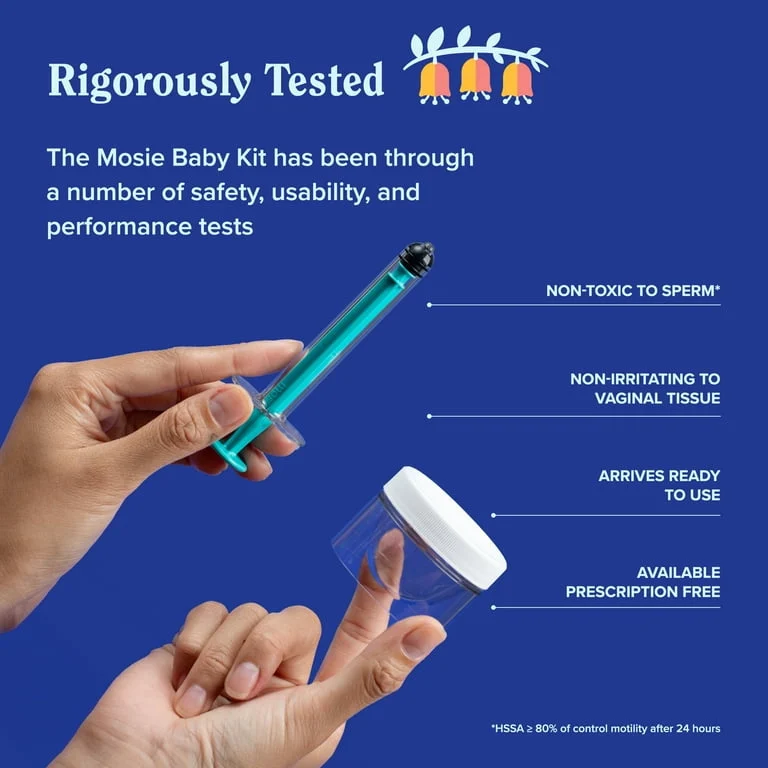
    Mosie Baby Kit with a syringe and container, highlighting safety and usability features on a blue background.

    From Conception to Birth: The Role of the 27 Syringe Kit in Fertility Support

    The 27 syringe kit is designed to make the medication administration process as convenient and easy as possible. The individually packaged syringes are compact and easy to transport, making it easier for patients to adhere to their treatment schedules, even when they are away from home. The syringes also have clear labeling and instructions, making them user-friendly for both patients and medical professionals.

    Reducing Stress and Anxiety

    The journey towards parenthood can be a stressful and emotionally taxing one. The 27 syringe kit helps alleviate some of the stress and anxiety associated with fertility treatments. The convenience and ease of use of the kit eliminate the need for patients to worry about measuring and administering their medication correctly, allowing them to focus on their emotional and physical well-being during this time.

    Cost-Effectiveness

    Fertility treatments can be expensive, and the 27 syringe kit offers a cost-effective solution for patients. The individually packaged syringes allow for more precise dosing, reducing the amount of medication wasted. This can result in cost savings for patients, making fertility treatments more affordable and accessible.

    The Impact of the 27 Syringe Kit on Fertility Support

    The 27 syringe kit has had a significant impact on fertility support and the success rates of ART procedures. By simplifying medication administration, reducing errors, and increasing convenience and cost-effectiveness, the kit has become an essential tool in the journey towards parenthood for many couples.

    In Conclusion

    The journey from conception to birth can be a challenging one, but the 27 syringe kit has proven to be a valuable tool in fertility support. Its role in properly and consistently administering fertility medications has contributed to the success of many ART procedures and has alleviated some of the stress and anxiety associated with fertility treatments. As technology continues to advance, we can only hope for even more effective and innovative tools to support those on their journey towards parenthood.

    In summary, the 27 syringe kit is a specialized kit designed for the administration of fertility medications in ART procedures. It plays a crucial role in fertility support by ensuring proper and consistent medication administration, reducing stress and anxiety, and offering cost-effective solutions. Its impact on the success rates of ART procedures has made it an essential tool in the journey from conception to birth.

  • Syringe Kit: The Must-Have Tool for Anyone Struggling with Fertility

    Blog Post Title: Syringe Kit: The Must-Have Tool for Anyone Struggling with Fertility

    Summary:

    Struggling with infertility can be a challenging and emotional journey for many individuals and couples. While there are various treatments and methods available, one tool that has proven to be helpful and accessible for those facing fertility issues is the syringe kit. This simple yet effective tool can make a significant difference in the fertility journey and is a must-have for anyone struggling with fertility. In this blog post, we will discuss what a syringe kit is, its benefits, and why it is essential for anyone facing fertility challenges.

    Introduction:

    Infertility affects millions of people worldwide, and the numbers are increasing every year. According to the World Health Organization, one in every four couples in developing countries is affected by infertility. It is a complex issue that can have a significant impact on a person’s emotional, physical, and financial well-being. While there are fertility treatments available, they can be expensive and not always successful. This is where the syringe kit comes in as a useful and cost-effective tool for those going through the fertility journey.

    What is a Syringe Kit?

    A syringe kit is a set of medical instruments that includes syringes, needles, and other accessories. These kits are commonly used in medical procedures, including fertility treatments. The syringe itself is a small plastic or glass tube with a plunger at one end and a hollow needle at the other. It is used to inject or draw fluids from the body, making it an essential tool in many medical procedures.

    Benefits of Using a Syringe Kit for Fertility:

    1. Accurate Dosage: When it comes to fertility treatments, precision is crucial. The right dosage of medication can make all the difference in the success of the treatment. With a syringe kit, the dosage can be accurately measured, ensuring that the patient receives the correct amount of medication.

    2. Cost-Effective: As mentioned earlier, fertility treatments can be expensive, and not everyone can afford to undergo them. A syringe kit is relatively inexpensive and can be used for multiple treatments, making it a cost-effective alternative for those facing financial constraints.

    Informative card introducing the Mosie Baby Kit and its mission for at-home insemination.

    Syringe Kit: The Must-Have Tool for Anyone Struggling with Fertility

    3. Easy to Use: Syringe kits are designed to be user-friendly and easy to use. They come with clear instructions, and with a little practice, anyone can learn how to use them correctly. This makes them an excellent tool for those who prefer to administer their medication at home.

    4. Sterile and Safe: Fertility treatments often involve the use of injectable medications, which need to be administered in a sterile environment to prevent infections. Syringe kits come pre-sterilized and sealed, ensuring that the medication is administered safely and without any risk of contamination.

    5. Convenient: Fertility treatments can be time-consuming, and frequent visits to the clinic can be challenging, especially for those with busy schedules. With a syringe kit, patients can administer their medication at home, saving them time and hassle.

    Why is a Syringe Kit Essential for Fertility?

    1. Helps with Self-Administered Medication: Many fertility treatments, such as intrauterine insemination (IUI) or subcutaneous injections, require self-administration of medication. With a syringe kit, patients can easily and safely administer their medication at home without having to visit the clinic frequently.

    2. Increases Privacy: The process of fertility treatment can be emotionally draining, and not everyone is comfortable discussing their struggles with others. A syringe kit allows patients to administer their medication discreetly, increasing their privacy and comfort.

    3. Ideal for Traveling: For those undergoing fertility treatments, traveling can be a challenge, especially when it comes to medication. With a syringe kit, patients can carry their medication with them and administer it whenever needed, without having to worry about missing a dose.

    4. Can Be Used for Various Treatments: Syringe kits are versatile and can be used for a wide range of fertility treatments, including intrauterine insemination, subcutaneous injections, and more, making it a valuable tool for anyone facing fertility issues.

    5. Boosts Confidence: Going through fertility treatments can be a rollercoaster of emotions, and patients may feel like they have little control over their bodies and the outcome. With a syringe kit, patients can take charge of their treatment, giving them a sense of control and boosting their confidence.

    Conclusion:

    The fertility journey can be challenging, but with the right tools and support, it can become a little easier. A syringe kit is a simple yet powerful tool that can make a significant difference in the fertility process. Its accuracy, affordability, convenience, and versatility make it a must-have for anyone struggling with fertility. If you or someone you know is facing fertility challenges, consider investing in a syringe kit to make the journey a little smoother.

  • The Syringe Method: A Cost-Effective Alternative to In-Vitro Fertilization

    In-Vitro Fertilization (IVF) has long been considered the go-to option for couples struggling with infertility. This highly advanced medical procedure involves combining an egg and sperm in a laboratory, and then transferring the resulting embryo into the uterus. However, IVF can be a costly and emotionally draining process, with success rates varying and no guarantee of a successful pregnancy. As a result, many couples are turning to alternative methods, such as the Syringe Method, in their quest for parenthood. In this blog post, we will explore the Syringe Method as a cost-effective and convenient alternative to IVF.

    What is the Syringe Method?

    The Syringe Method, also known as home insemination, is a technique where sperm is collected and directly inserted into the cervix using a syringe. This method can be done at home or with the assistance of a healthcare professional, making it a convenient and discreet option for couples. The process is similar to the intrauterine insemination (IUI) procedure done in fertility clinics, but without the use of a catheter.

    How does it work?

    The Syringe Method typically involves obtaining a semen sample from the male partner, which can be done through masturbation or using a specially designed collection device. The sample is then inserted into a sterile syringe and gently injected into the cervix, close to the entrance of the uterus. The timing of the insemination is crucial, and it is usually done around the time of ovulation to increase the chances of fertilization.

    Benefits of the Syringe Method

    One of the main advantages of the Syringe Method is its cost-effectiveness. Compared to IVF, which can cost thousands of dollars per cycle, the Syringe Method is significantly more affordable. It does not require expensive medications or lab procedures, making it a viable option for couples with limited financial resources.

    at-home insemination kit with syringes, collection cups, and instructions on a pink background

    The Syringe Method: A Cost-Effective Alternative to In-Vitro Fertilization

    The Syringe Method also offers a more natural and less invasive approach to fertility treatment. Unlike IVF, which involves hormone injections and egg retrieval, the Syringe Method relies on the body’s natural processes to achieve pregnancy. This can be appealing to couples who prefer a more holistic and less medicalized approach.

    Additionally, the Syringe Method can be done in the comfort and privacy of one’s home. This can be a significant advantage for couples who may feel uncomfortable or anxious about undergoing fertility treatments in a clinical setting. It also eliminates the need for frequent visits to a fertility clinic, saving time and reducing stress.

    Success rates and considerations

    While the Syringe Method may seem like a simple and low-cost alternative to IVF, it is essential to note that success rates can vary. The success of this method depends on various factors, such as the quality of the sperm, timing of insemination, and the woman’s fertility status. Couples should also consider any underlying fertility issues that may affect their chances of conception.

    It is recommended that couples consult with a healthcare professional before attempting the Syringe Method to ensure that it is a suitable option for their specific situation. They can also provide guidance on the correct techniques and timing for the procedure.

    In conclusion, the Syringe Method is a viable and cost-effective alternative to IVF for couples struggling with infertility. It offers a more natural and less invasive approach to fertility treatment, with the added convenience of being able to do it at home. While success rates may vary, the Syringe Method can be an excellent option for couples looking for a more affordable and less stressful way to start a family.

    In summary, the Syringe Method is a cost-effective and convenient alternative to In-Vitro Fertilization (IVF) for couples struggling with infertility. This method involves directly injecting sperm into the cervix using a syringe, and it can be done at home or with the assistance of a healthcare professional. The benefits of the Syringe Method include its affordability, natural approach, and privacy. However, success rates may vary, and it is essential to consult with a healthcare professional before attempting this method.

  • Understanding the Syringe Method for Fertility Support

    Blog Post: Understanding the Syringe Method for Fertility Support

    Infertility is a growing concern for many couples around the world. According to the World Health Organization, approximately 15% of couples worldwide are affected by infertility. This can be a challenging and emotional journey for those struggling to conceive. Fortunately, there are various fertility treatment options available, and one of them is the Syringe Method.

    The Syringe Method is a fertility support technique that has gained popularity in recent years. It involves using a syringe to introduce semen into the vagina during ovulation. This method is also known as the “turkey baster method” or “artificial insemination at home.” In this blog post, we will delve deeper into the Syringe Method and understand how it can help couples struggling with infertility.

    What is the Syringe Method?

    The Syringe Method is a simple and non-invasive fertility support technique that can be done at home. It involves using a syringe to introduce semen into the vagina during the woman’s fertile window. This method can be used for both artificial insemination with donated semen and for couples where the male partner has a low sperm count.

    How does it work?

    Before attempting the Syringe Method, it is essential to track the woman’s menstrual cycle to determine the fertile window accurately. This can be done by using ovulation predictor kits or tracking basal body temperature. The fertile window is the time when a woman is most likely to conceive, and it usually occurs around 12-16 days before the next period.

    Once the fertile window is identified, the next step is to collect semen from the male partner or use donated semen. The semen is then transferred into a sterile syringe, and the air is pushed out to avoid any air bubbles. The woman then lies down with her legs up, and the syringe is inserted into the vagina, aiming towards the cervix. The plunger is pushed slowly to release the semen into the vagina, and the syringe is removed after a few seconds.

    Why choose the Syringe Method?

    The Syringe Method is a popular choice for couples trying to conceive because it is relatively simple, cost-effective, and can be done at home. Unlike other fertility treatments, it does not involve any medical procedures or medications. It also allows couples to be actively involved in the conception process, which can be a significant emotional boost for many.

    Baby wearing a blue shirt with "made with Love" text, surrounded by colorful floral and butterfly designs.

    Understanding the Syringe Method for Fertility Support

    Additionally, the Syringe Method is a viable option for couples where the male partner has a low sperm count or has difficulty ejaculating during intercourse. It also eliminates the need for sperm to travel through the cervix, which can be a barrier for some couples.

    Precautions and tips for using the Syringe Method

    While the Syringe Method is generally considered safe, there are some precautions and tips to keep in mind:

    1. Use a sterile syringe: It is essential to use a new, sterile syringe for each attempt to avoid any risk of infection.

    2. Timing is crucial: It is crucial to time the insemination correctly during the fertile window to increase the chances of conception.

    3. Elevate hips: After insemination, it is recommended to elevate the hips for 15-20 minutes to allow the sperm to travel towards the cervix.

    4. Avoid lubricants: Lubricants can be harmful to sperm, so it is best to avoid using them during the Syringe Method.

    5. Seek medical advice: If you have been trying to conceive for more than a year without success, it is best to seek medical advice for further fertility support options.

    Summarizing the Syringe Method

    The Syringe Method is a simple and effective fertility support technique that can be done at home. It involves using a syringe to introduce semen into the vagina during the woman’s fertile window. This method is suitable for couples where the male partner has a low sperm count or difficulty ejaculating during intercourse. It is also a popular choice because it is non-invasive, cost-effective, and allows couples to be actively involved in the conception process.

    However, it is essential to keep in mind that the Syringe Method may not work for everyone, and seeking medical advice is recommended if you have been trying to conceive for more than a year. With that said, the Syringe Method has helped many couples achieve their dream of starting a family, and it may be the right choice for you.

  • Navigating the Emotional Journey of Trying to Conceive with the Non-Invasive Insemination Kit

    Summary:

    Trying to conceive can be an emotionally challenging journey for couples, especially when faced with fertility issues. In the past, the only option for those struggling with infertility was to undergo invasive and expensive procedures, but thanks to advancements in technology, there are now non-invasive options available, such as the Non-Invasive Insemination Kit. This kit allows couples to perform the insemination process in the comfort of their own home, but it also comes with its own set of emotional challenges. In this blog post, we will discuss the emotional journey of using the Non-Invasive Insemination Kit and offer tips on how to navigate this experience.

    The Emotional Rollercoaster of Trying to Conceive:

    For many couples, trying to conceive can be a long and difficult journey. It often starts with feelings of excitement and hope, but as months pass by with no positive pregnancy test, those emotions can quickly turn into frustration, disappointment, and even grief. For those using the Non-Invasive Insemination Kit, the emotional rollercoaster is no different. The process of tracking ovulation, preparing the kit, and waiting for the results can bring up a mix of emotions that can be overwhelming.

    Dealing with Negative Pregnancy Tests:

    One of the most challenging aspects of trying to conceive with the Non-Invasive Insemination Kit is dealing with negative pregnancy tests. It can be disheartening to put in the effort and go through the process, only to see a negative result. This can lead to feelings of failure, inadequacy, and even guilt. It’s important for couples to remember that the process of conceiving is not always straightforward and that it may take multiple attempts before seeing a positive result. It’s crucial to have open communication and support each other during this time.

    Managing Expectations:

    two teal and clear syringes positioned on a white background

    Navigating the Emotional Journey of Trying to Conceive with the Non-Invasive Insemination Kit

    Another emotional challenge of using the Non-Invasive Insemination Kit is managing expectations. When a couple decides to try to conceive, they often have high hopes and expectations of getting pregnant quickly. However, the reality is that it may take longer than expected, and this can be difficult to accept. It’s essential to have realistic expectations and to understand that every couple’s journey is different. Setting realistic goals and timelines can help manage expectations and reduce disappointment.

    Coping with the Waiting Period:

    The waiting period between the insemination and the pregnancy test can be one of the most emotionally challenging parts of the process. The two-week wait can feel like an eternity, and it’s natural for couples to experience a range of emotions during this time. It’s essential to find healthy ways to cope with these feelings, such as talking to a therapist or joining a support group. It’s also crucial to practice self-care and find activities that can help reduce stress and anxiety.

    Supporting Each Other:

    One of the most important things during this journey is to support each other. Both partners may experience different emotions and cope with them differently. It’s crucial to have open and honest communication and to listen to each other’s feelings and concerns. This is a journey that both partners are going through, and it’s essential to lean on each other for support and understanding.

    Tips for Navigating the Emotional Journey:

    1. Communicate openly and honestly with your partner about your feelings and concerns.
    2. Seek support from family, friends, or a therapist.
    3. Find healthy ways to cope with stress and anxiety, such as exercise, meditation, or journaling.
    4. Set realistic expectations and timelines.
    5. Practice self-care and find activities that bring joy and relaxation.
    6. Remember that this journey is a team effort, and both partners should support and lean on each other.

    In conclusion, trying to conceive with the Non-Invasive Insemination Kit can be an emotional rollercoaster for couples. It’s essential to recognize and acknowledge these emotions and find healthy ways to cope with them. With open communication, support from loved ones, and self-care, couples can navigate this journey and hopefully achieve their dream of starting a family.