Tag: 3D Printing

  • Fashion Designers Who Embraced Technology and Innovation in Their Designs

    Blog Post:

    In the world of fashion, creativity and innovation are key to staying ahead of the game. Over the years, fashion designers have embraced technology and incorporated it into their designs, creating unique and cutting-edge pieces that have revolutionized the industry. From 3D printing to smart fabrics, these designers have pushed the boundaries and redefined what it means to be fashionable. In this blog post, we will take a closer look at some of the fashion designers who have embraced technology and innovation in their designs.

    1. Iris van Herpen

    Dutch fashion designer Iris van Herpen is known for her avant-garde and futuristic designs. She has been at the forefront of incorporating technology into fashion, using techniques such as 3D printing and laser cutting to create intricate and otherworldly pieces. Her collections have been worn by celebrities like Lady Gaga and Björk, and have been featured in prestigious fashion shows like Paris Haute Couture Week. Van Herpen’s designs blur the lines between fashion, art, and technology, making her a pioneer in the industry.

    2. Anouk Wipprecht

    Anouk Wipprecht is a Dutch fashion designer who specializes in creating interactive and tech-driven garments. She has collaborated with companies like Intel and Google to incorporate technology into her designs, such as a dress that responds to the wearer’s emotions and a robotic dress that can defend the wearer’s personal space. Wipprecht’s designs challenge the traditional notions of fashion and push the boundaries of what is possible with technology.

    3. Hussein Chalayan

    Hussein Chalayan is a British/Turkish fashion designer known for his innovative and conceptual designs. He has been incorporating technology into his collections since the 1990s, using LED lights, motors, and even microchips to create interactive and transformative garments. Chalayan’s designs have been featured in exhibitions at the Metropolitan Museum of Art in New York and the Victoria and Albert Museum in London, solidifying his status as a pioneer in tech-driven fashion.

    4. Ying Gao

    Ying Gao is a Swiss fashion designer who combines fashion, art, and technology to create interactive and thought-provoking garments. Her designs use smart fabrics and sensors to respond to external stimuli, such as light or sound, creating a unique and ever-changing fashion experience. Gao’s work has been exhibited at prestigious art galleries and museums around the world, and she has collaborated with companies like Swarovski and Intel to push the boundaries of fashion and technology.

    at-home insemination kit by Mosie Baby, featuring syringes and containers for comfort and convenience.

    Fashion Designers Who Embraced Technology and Innovation in Their Designs

    5. Zac Posen

    American fashion designer Zac Posen has been incorporating technology into his designs in recent years, using 3D printing to create intricate and unique garments. His collection for the 2019 Met Gala featured a dress made entirely out of 3D-printed petals, showcasing the potential of technology in fashion. Posen’s designs have been worn by celebrities like Beyoncé and Rihanna, and he continues to push the boundaries of technology in fashion with his innovative designs.

    6. CuteCircuit

    CuteCircuit is a fashion label founded by Francesca Rosella and Ryan Genz that specializes in creating wearable technology. Their designs combine fashion with cutting-edge technology, such as LED lights, microchips, and sensors, to create interactive and futuristic garments. They have designed pieces for artists like Katy Perry and U2, and their work has been featured in exhibitions at the Museum of Science and Industry in Chicago and the Museum of Fine Arts in Boston.

    7. Ying Gao

    Canadian fashion designer Ying Gao has been incorporating technology into her designs since the early 2000s. Her collections often feature garments that respond to external stimuli, such as light and sound, creating a unique and ever-changing fashion experience. Gao’s work has been exhibited at prestigious art galleries and museums around the world, and she continues to push the boundaries of fashion and technology with her innovative designs.

    8. Michael Schmidt Studios

    Michael Schmidt Studios is a fashion label founded by Michael Schmidt that specializes in creating custom-made garments using 3D printing and laser cutting technology. Schmidt’s designs have been worn by celebrities like Lady Gaga, Rihanna, and Beyoncé, and have been featured in music videos and performances. He continues to push the boundaries of fashion and technology, creating unique and boundary-breaking designs.

    Summary:

    Fashion designers have been embracing technology and innovation in their designs, pushing the boundaries and redefining what is possible in the industry. From 3D printing to smart fabrics, these designers have incorporated cutting-edge technology into their collections, creating avant-garde, interactive, and thought-provoking pieces. Iris van Herpen, Anouk Wipprecht, Hussein Chalayan, Ying Gao, Zac Posen, CuteCircuit, and Michael Schmidt Studios are just some of the fashion designers who have made a mark in the industry by embracing technology and innovation in their designs.

  • From Tech to Healthcare: 14 Job Industries to Watch

    From Tech to Healthcare: 14 Job Industries to Watch

    In recent years, there has been a rapid increase in the integration of technology in the healthcare industry, resulting in new job opportunities and a shift in traditional job roles. With the rise of digital health, telemedicine, and data-driven healthcare, the lines between technology and healthcare have become increasingly blurred. As a result, many industries are emerging and evolving, creating a plethora of new job prospects. In this blog post, we will explore 14 job industries that are at the forefront of this tech-to-healthcare shift and are worth keeping an eye on.

    1. Health Informatics
    Health informatics is the use of technology and data analytics to improve healthcare delivery and patient outcomes. Professionals in this field are responsible for managing, analyzing, and interpreting healthcare data to support decision making and drive positive change. With the increasing demand for data-driven healthcare, the job opportunities in health informatics are expected to grow exponentially.

    2. Telemedicine
    Telemedicine, also known as telehealth, is the use of technology to provide healthcare services remotely. This industry has seen significant growth in recent years, especially with the rise of virtual consultations and remote patient monitoring. As more people turn to virtual care, the demand for telemedicine professionals such as telehealth coordinators, telehealth nurses, and telemedicine technicians is on the rise.

    3. Electronic Health Records (EHR)
    Electronic Health Records (EHR) are digital versions of a patient’s medical history, which can be accessed and shared by healthcare providers. As healthcare facilities transition from paper-based records to EHRs, there is a growing need for professionals who can manage and maintain these systems. EHR specialists and analysts are in high demand, making this a promising field to watch.

    4. Health IT Security
    With the increasing use of technology in healthcare, the need for cybersecurity professionals has also risen. Health IT security professionals are responsible for keeping patient data secure and protected from cyber threats. As cyber attacks in the healthcare industry continue to rise, this field is expected to see significant growth in the coming years.

    5. Artificial Intelligence (AI) in Healthcare
    Artificial Intelligence (AI) has the potential to revolutionize healthcare by improving diagnosis, treatment, and patient outcomes. AI-powered technologies such as chatbots, virtual assistants, and predictive analytics are being increasingly used in the healthcare industry. As a result, there is a growing demand for professionals who can develop, implement, and manage these technologies.

    6. Virtual Reality (VR) in Healthcare
    Virtual Reality (VR) is being used in healthcare to train medical professionals, treat mental health disorders, and reduce pain and anxiety in patients. As the potential of VR in healthcare continues to grow, so does the demand for professionals who have the skills to develop and implement VR applications in a healthcare setting.

    At-home insemination kit with syringes and collection cups on a teal background.

    From Tech to Healthcare: 14 Job Industries to Watch

    7. Health App Development
    With the increase in smartphone usage, there has been a surge in the number of health apps available in the market. These apps help users track their health, monitor chronic conditions, and access healthcare services remotely. As more people turn to health apps for their healthcare needs, the demand for professionals who can develop and maintain these apps is also on the rise.

    8. Digital Marketing in Healthcare
    Digital marketing has become an essential tool for healthcare facilities to reach and engage with their patients. With the rise of social media and online platforms, healthcare organizations are investing in digital marketing professionals to increase their online presence and improve patient engagement.

    9. Medical Robotics
    Medical robotics is the use of robots in healthcare to assist with surgeries, rehabilitation, and patient care. As technology continues to advance, the use of robots in healthcare is expected to increase, creating job opportunities for professionals who can operate and maintain these machines.

    10. 3D Printing in Healthcare
    3D printing has the potential to revolutionize the way medical devices, prosthetics, and even organs are created. As the technology becomes more advanced and accessible, the demand for professionals who can design and operate 3D printers in a healthcare setting is expected to grow.

    11. Wearable Technology
    Wearable technology such as fitness trackers, smartwatches, and health monitors has become increasingly popular in recent years. These devices can track steps, heart rate, sleep patterns, and more, providing valuable data for both patients and healthcare professionals. As the market for wearable technology continues to expand, there will be a growing need for professionals who can analyze and interpret the data collected by these devices.

    12. Precision Medicine
    Precision medicine is an approach to healthcare that takes into account individual variability in genes, environment, and lifestyle when diagnosing and treating diseases. With the advancements in genetic testing and personalized medicine, the demand for professionals who can analyze and interpret genetic data is expected to increase.

    13. Biotechnology
    Biotechnology is the use of living organisms or their derivatives to develop products and processes for healthcare, agriculture, and other industries. With the constant evolution of technology and the growing demand for sustainable and eco-friendly solutions, the biotechnology industry is expected to see significant growth, creating job opportunities for professionals in various fields.

    14. Data Science in Healthcare
    The use of data science in healthcare has the potential to improve patient outcomes, reduce costs, and increase efficiency. As healthcare organizations collect and analyze large amounts of data, the demand for professionals who can use data science techniques to derive insights and drive decision making is expected to grow.

    In conclusion, the integration of technology in the healthcare industry has created a wave of new job industries that are worth keeping an eye on. From health informatics and telemedicine to AI, VR, and wearable technology, there are plenty of opportunities for individuals with a background in technology to make a difference in the healthcare sector. As these industries continue to evolve and grow, there will be a high demand for professionals who can bridge the gap between technology and healthcare, making it an exciting time to explore these job prospects.

  • The Future of Parenthood Prep: Advancements in Insemination Syringe Technology

    Blog Post: The Future of Parenthood Prep: Advancements in Insemination Syringe Technology

    Parenthood is a dream for many individuals and couples. However, for some, conceiving a child naturally is not an option. This is where assisted reproductive technology (ART) comes into play. Insemination, the process of placing sperm into the reproductive tract, is a widely used method in ART. Insemination syringes have been the go-to tool for this procedure, but with advancements in technology, the future of parenthood prep is looking very different. In this blog post, we will dive into the latest advancements in insemination syringe technology and how they are shaping the future of parenthood.

    The Traditional Insemination Syringe

    Before we explore the future of insemination syringe technology, let’s first understand the traditional insemination syringe. It is a simple, manual device that is used to inject sperm directly into the cervix or uterus. This method has been used for decades and has helped many people achieve their dream of parenthood. However, it has its limitations.

    One of the main drawbacks of traditional insemination syringes is the lack of precision. The manual process can lead to variations in the amount of sperm injected and the location of the injection. This can affect the success rate of the procedure. Additionally, the traditional syringe does not offer any way to monitor the sperm quality, which is crucial for a successful insemination.

    Advancements in Insemination Syringe Technology

    With the advancement of technology, insemination syringes have undergone significant improvements to address the limitations of the traditional syringe. One of the most notable advancements is the development of electronic and digital insemination syringes.

    Electronic insemination syringes use a small electric motor to control the injection process. This allows for a more precise and consistent delivery of sperm. The motor can also be programmed to deliver the sperm at a specific time, which is crucial for those who are using donor sperm. This ensures that the sperm is injected at the optimal time for fertilization.

    On the other hand, digital insemination syringes have a built-in camera and screen, allowing for real-time monitoring of the sperm quality. This is a game-changer as it allows healthcare professionals to assess the sperm quality before and during the procedure. This can help increase the success rate of insemination by ensuring that only high-quality sperm is used.

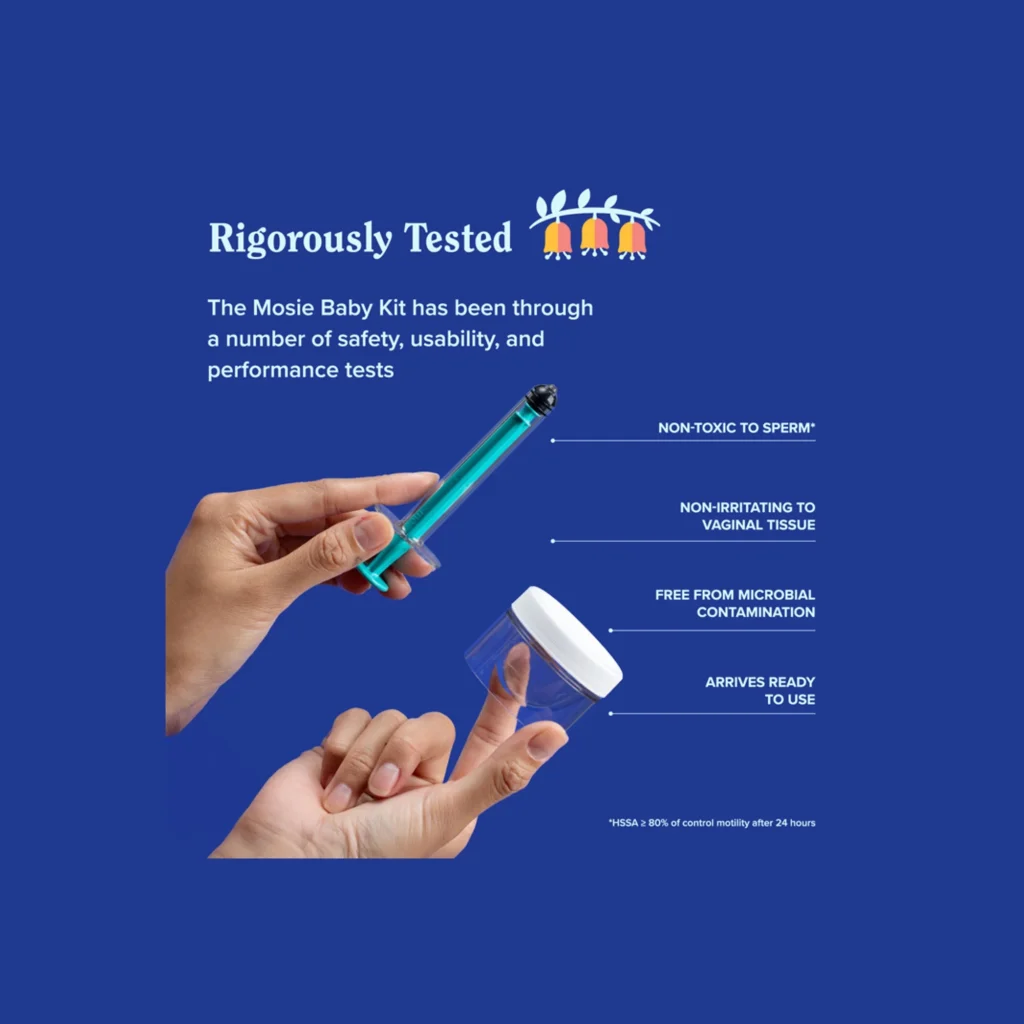
    Mosie Baby Kit features a syringe and container, highlighting safety and usability tests on a blue background.

    The Future of Parenthood Prep: Advancements in Insemination Syringe Technology

    Another significant advancement in insemination syringe technology is the development of smart syringes. These syringes use microchips and sensors to track the sperm’s movement, temperature, and other factors that can affect its viability. This data is then transmitted to a smartphone app, allowing for real-time monitoring and analysis. Smart syringes are still in the early stages of development, but they hold a lot of promise for the future of insemination.

    The Benefits of Advanced Insemination Syringes

    The advancements in insemination syringe technology offer many benefits for both healthcare professionals and patients. Firstly, the precision and consistency of electronic syringes can increase the success rate of insemination. This is especially important for those using donor sperm, as it ensures that only the best quality sperm is used.

    Secondly, the real-time monitoring and analysis of sperm quality with digital and smart syringes can also increase the success rate. This allows healthcare professionals to make adjustments to the procedure if needed, leading to better outcomes.

    Moreover, advanced insemination syringes can also reduce the time and cost of the procedure. With traditional syringes, multiple attempts may be needed to achieve pregnancy. However, with the precision and real-time monitoring of advanced syringes, the chances of success are higher, reducing the need for multiple attempts.

    The Future of Parenthood Prep

    The advancements in insemination syringe technology are just the beginning of what the future holds for parenthood prep. Researchers are also exploring other innovative methods, such as using 3D printing technology to create customized syringes for individual patients. This can further improve the precision and success rate of insemination.

    Furthermore, with the rise of artificial intelligence (AI) and machine learning, there is potential for these technologies to be integrated into insemination syringes. This can help predict the optimal time for insemination and improve the overall success rate.

    Summary:

    Insemination syringes have been a crucial tool in assisted reproductive technology for many years. However, with advancements in technology, the future of parenthood prep is looking very different. Electronic, digital, and smart insemination syringes offer many benefits, including increased precision, real-time monitoring of sperm quality, and reduced time and cost of the procedure. The future holds even more potential for advanced insemination syringes with the development of customized 3D printed syringes and the integration of AI and machine learning.