Tag: communication.

  • Practices for Better Relationships and Improved Mental Health

    Blog Post:

    Having strong relationships is essential for our overall well-being and mental health. When we have supportive and positive relationships, we feel happier, more supported, and more connected to others. On the other hand, unhealthy relationships can lead to stress, anxiety, and even depression. Therefore, it is important to develop practices that can help improve our relationships and ultimately, our mental health.

    In this blog post, we will discuss some practices that can help us build better relationships and improve our mental health.

    1. Effective Communication
    The foundation of any healthy relationship is effective communication. This means being able to express your thoughts and feelings openly and honestly, as well as being able to actively listen to your partner. Effective communication also involves avoiding negative communication patterns such as criticism, defensiveness, and stonewalling. Instead, try to use “I” statements to express your feelings and needs, and practice active listening by acknowledging and validating your partner’s feelings.

    2. Practice Empathy
    Empathy is the ability to understand and share the feelings of another person. It plays a crucial role in building strong and healthy relationships. When we practice empathy, we are better able to understand our partner’s perspective and feelings, which can help us to communicate and resolve conflicts more effectively. To develop empathy, try to put yourself in your partner’s shoes and imagine how they might be feeling in a particular situation.

    3. Set Boundaries
    Setting boundaries is an important part of maintaining healthy relationships. Boundaries help us to establish and maintain our personal limits, needs, and preferences. They also help to create a sense of respect and trust in our relationships. When setting boundaries, it is important to communicate them clearly and assertively. It is also important to respect your partner’s boundaries and to be open to negotiating and compromising when necessary.

    Instructions for reading pregnancy test results with visual indicators for "Not Pregnant," "Pregnant," and "Invalid.

    Practices for Better Relationships and Improved Mental Health

    4. Show Appreciation
    Expressing gratitude and appreciation for your partner is a simple yet powerful way to improve your relationship and boost your mental health. When we feel appreciated, we feel valued and validated, which can increase our overall happiness and well-being. Make a habit of expressing gratitude for the things your partner does, big or small. This can be as simple as saying “thank you” or leaving a note to show your appreciation.

    5. Spend Quality Time Together
    In today’s busy world, it is easy to get caught up in work and other responsibilities, leaving little time for our relationships. However, spending quality time with our partner is crucial for building and maintaining a strong connection. This can involve doing activities together, having meaningful conversations, or simply spending time relaxing and enjoying each other’s company.

    6. Practice Forgiveness
    No relationship is perfect, and conflicts are bound to arise. However, it is how we handle these conflicts that can make or break a relationship. Learning to forgive is an important practice for maintaining healthy relationships. Holding onto grudges and resentment can lead to feelings of anger, bitterness, and even depression. Instead, try to practice forgiveness by letting go of past hurts and focusing on moving forward in a positive way.

    7. Seek Support
    Sometimes, we need outside help to improve our relationships and our mental health. Seeking support from a therapist or counselor can be beneficial, especially if you are struggling with communication, trust, or other issues in your relationship. A therapist can provide a safe and non-judgmental space to work through challenges and help you develop healthy coping strategies.

    In summary, building and maintaining strong relationships is crucial for our mental health and overall well-being. By practicing effective communication, empathy, setting boundaries, showing appreciation, spending quality time together, practicing forgiveness, and seeking support when needed, we can improve our relationships and ultimately, our mental health.

    SEO Metadata:

  • The Best Parenting Books for Teens: 45 Top-rated Picks

    Blog Post:

    As a parent of a teenager, it can be challenging to navigate the ever-changing landscape of parenting. With technology, social media, and peer pressure influencing our teens, it’s essential to stay informed and equipped with the best strategies to help guide them through these formative years. One valuable resource for parents is parenting books specifically tailored for teens. These books offer insights, advice, and practical tips to help parents build healthy relationships, communicate effectively, and support their teens’ growth and development. In this blog post, we have compiled a list of the top-rated parenting books for teens, divided into different categories to help you find the perfect fit for your family.

    1. For Communication and Relationships:
    – “How to Talk So Teens Will Listen and Listen So Teens Will Talk” by Adele Faber and Elaine Mazlish
    – “The 7 Habits of Highly Effective Teens” by Sean Covey
    – “The 5 Love Languages of Teenagers” by Gary Chapman
    – “Parenting a Teen Girl: A Crash Course on Conflict, Communication and Connection with Your Teenage Daughter” by Lucie Hemmen
    – “Parenting a Teen Who Has Intense Emotions: DBT Skills to Help Your Teen Navigate Emotional and Behavioral Challenges” by Pat Harvey and Britt H. Rathbone

    2. For Mental Health and Well-Being:
    – “The Anxiety Survival Guide for Teens” by Jennifer Shannon
    – “The Self-Esteem Workbook for Teens: Activities to Help You Build Confidence and Achieve Your Goals” by Lisa M. Schab
    – “The Mindful Teen: Powerful Skills to Help You Handle Stress One Moment at a Time” by Dzung X. Vo
    – “The Depression Workbook for Teens: Tools to Improve Your Mood, Build Self-Esteem, and Stay Motivated” by Katie Hurley
    – “The Teenage Brain: A Neuroscientist’s Survival Guide to Raising Adolescents and Young Adults” by Frances E. Jensen

    3. For Digital Parenting:
    – “The Tech-Wise Family: Everyday Steps for Putting Technology in Its Proper Place” by Andy Crouch
    – “Screenwise: Helping Kids Thrive (and Survive) in Their Digital World” by Devorah Heitner
    – “Glow Kids: How Screen Addiction Is Hijacking Our Kids-and How to Break the Trance” by Nicholas Kardaras
    – “The Social Media Workbook for Teens: Skills to Help You Balance Screen Time, Manage Stress, and Take Charge of Your Life” by Goali Saedi Bocci
    – “UnSelfie: Why Empathetic Kids Succeed in Our All-About-Me World” by Michele Borba

    4. For Financial Literacy:
    – “The Teen Money Manual: A Guide to Cash, Credit, Spending, Saving, Work, Wealth, and More” by Kara McGuire
    – “The Total Money Makeover for Teens: A Proven Plan for Financial Success” by Dave Ramsey
    – “Raising Financially Confident Kids” by Mary Hunt
    – “The Teen’s Guide to Personal Finance: Basic Concepts in Personal Finance that Every Teen Should Know” by Joshua Holmberg
    – “The Opposite of Spoiled: Raising Kids Who Are Grounded, Generous, and Smart About Money” by Ron Lieber

    illustration of Mosie Baby home insemination kit highlighting seamless transfer and size features

    The Best Parenting Books for Teens: 45 Top-rated Picks

    5. For Identity and Self-Discovery:
    – “The 7 Habits of Highly Effective Teens Workbook” by Sean Covey
    – “This Book Is Gay” by Juno Dawson
    – “The Teen Girl’s Survival Guide: Ten Tips for Making Friends, Avoiding Drama, and Coping with Social Stress” by Lucie Hemmen
    – “The Confidence Code for Girls: Taking Risks, Messing Up, and Becoming Your Amazingly Imperfect, Totally Powerful Self” by Katty Kay and Claire Shipman
    – “The 6 Most Important Decisions You’ll Ever Make: A Guide for Teens” by Sean Covey

    6. For Parenting Strategies and Tips:
    – “Parenting Teens with Love and Logic: Preparing Adolescents for Responsible Adulthood” by Foster Cline and Jim Fay
    – “How to Hug a Porcupine: Dealing with Toxic and Difficult to Love Personalities” by John Lund
    – “The Grown-Up’s Guide to Teenage Humans: How to Decode Their Behavior, Develop Unshakable Trust, and Raise a Respectable Adult” by Josh Shipp
    – “The Teenage Brain: A Neuroscientist’s Survival Guide to Raising Adolescents and Young Adults” by Frances E. Jensen
    – “Positive Parenting for Teenagers: How to Create a Culture of Mutual Respect” by Jane Nelsen, Lynn Lott, and H. Stephen Glenn

    7. For Special Situations:
    – “The Transgender Teen: A Handbook for Parents and Professionals Supporting Transgender and Non-Binary Teens” by Stephanie Brill and Lisa Kenney
    – “The Essential Guide to Raising Complex Kids with ADHD, Anxiety, and More” by Elaine Taylor-Klaus and Diane Dempster
    – “Parenting a Teen Who Has Intense Emotions: DBT Skills to Help Your Teen Navigate Emotional and Behavioral Challenges” by Pat Harvey and Britt H. Rathbone
    – “The Bipolar Teen: What You Can Do to Help Your Child and Your Family” by David J. Miklowitz
    – “Parenting Your Out-of-Control Teenager: 7 Steps to Reestablish Authority and Reclaim Love” by Scott P. Sells

    8. For Diversity and Inclusion:
    – “The Skin I’m In: A First Look at Racism” by Pat Thomas
    – “Queer: The Ultimate LGBTQ Guide for Teens” by Kathy Belge and Marke Bieschke
    – “The Conscious Parent’s Guide to Gender Identity: A Mindful Approach to Embracing Your Child’s Authentic Self” by Darlene Tando
    – “The Teen’s Guide to World Domination: Advice on Life, Liberty, and the Pursuit of Awesomeness” by Josh Shipp
    – “The ABC’s of LGBT+: Understanding and Embracing Your Identity” by Ashley Mardell

    Parenting is a journey that comes with many challenges, and parenting a teen is no exception. These books offer valuable insights, practical tips, and strategies to help parents build strong relationships with their teens, navigate mental health and technology issues, and support their teens’ growth and development. Whether you’re looking for communication techniques, financial literacy, or advice on handling special situations, these top-rated parenting books for teens have got you covered.

    Summary:

    Parenting a teenager can be challenging, but having the right resources can make a significant difference. In this blog post, we have compiled a list of the best parenting books for teens, divided into different categories to help parents find the perfect fit for their family. These books offer valuable insights, practical tips, and strategies to help parents build strong relationships with their teens, navigate mental health and technology issues, and support their teens’ growth and development. Whether you’re looking for communication techniques, financial literacy, or advice on handling special situations, these top-rated parenting books for teens have got you covered.

  • Parenting Books That Will Help You Raise Emotionally Intelligent Children

    Being a parent is one of the most challenging and rewarding experiences in life. As parents, we are responsible for shaping our children into kind, empathetic, and emotionally intelligent individuals. However, with so much conflicting information and advice available, it can be overwhelming to know where to start. That’s where parenting books come in. These books offer valuable insights, strategies, and techniques to help you raise emotionally intelligent children. In this blog post, we will discuss some of the best parenting books that will guide you in raising emotionally intelligent children.

    1. “Emotional Intelligence: Why It Can Matter More Than IQ” by Daniel Goleman
    Daniel Goleman’s groundbreaking book, “Emotional Intelligence,” revolutionized the way we think about intelligence and success. In this book, Goleman explains that emotional intelligence (EQ) is just as important, if not more so, than intellectual intelligence (IQ). He argues that children with high EQ are more likely to succeed in life, have better relationships, and be happier overall. Goleman offers practical advice on how parents can nurture and develop their child’s emotional intelligence, including how to teach empathy, manage emotions, and handle conflicts. This book is a must-read for any parent looking to raise emotionally intelligent children.

    2. “The Whole-Brain Child: 12 Revolutionary Strategies to Nurture Your Child’s Developing Mind” by Daniel J. Siegel and Tina Payne Bryson
    “The Whole-Brain Child” is a must-have for any parent looking to understand their child’s brain development and emotions better. In this book, Siegel and Bryson explain how a child’s brain works and provide twelve essential strategies for parents to help their child develop emotional intelligence. These strategies include connecting with your child, teaching emotional regulation, and fostering resilience. The authors use real-life examples and practical techniques to make this book an engaging and informative read for parents.

    3. “How to Talk So Kids Will Listen & Listen So Kids Will Talk” by Adele Faber and Elaine Mazlish
    Communication is a crucial aspect of emotional intelligence, and this book focuses on helping parents communicate effectively with their children. Faber and Mazlish offer practical and easy-to-follow techniques for parents to communicate with their children in a way that encourages open and honest dialogue. They also provide strategies for handling conflicts, building self-esteem, and fostering problem-solving skills in children. This book is a valuable resource for parents who want to improve their communication with their children and ultimately raise emotionally intelligent individuals.

    At-home insemination kit with ovulation and pregnancy tests, promoting fertility and family planning.

    Parenting Books That Will Help You Raise Emotionally Intelligent Children

    4. “Raising An Emotionally Intelligent Child: The Heart of Parenting” by John Gottman and Joan Declaire
    In this book, renowned psychologist John Gottman and parenting expert Joan Declaire offer valuable insights into how parents can raise emotionally intelligent children. They provide practical advice on how to recognize and respond to your child’s emotions, how to build a strong emotional bond, and how to manage your own emotions as a parent. This book also includes specific strategies for different age groups, making it a helpful resource for parents with children of all ages.

    5. “The Power of Showing Up: How Parental Presence Shapes Who Our Kids Become and How Their Brains Get Wired” by Daniel J. Siegel and Tina Payne Bryson
    In this book, Siegel and Bryson highlight the importance of parental presence in a child’s life and how it shapes their emotional intelligence. They explain how being present and attuned to your child’s needs can help them develop secure attachments, emotional regulation, and empathy. The authors also provide practical tips for parents to show up for their children in meaningful ways. This book is a powerful reminder for parents to prioritize being present and emotionally available for their children.

    6. “The Conscious Parent: Transforming Ourselves, Empowering Our Children” by Dr. Shefali Tsabary
    Dr. Shefali Tsabary’s book challenges traditional parenting methods and offers a new approach to raising emotionally intelligent children. She argues that parents need to be conscious of their own emotional baggage and unhealed wounds to be able to raise emotionally intelligent children. In the book, she provides practical tools for parents to become more self-aware, mindful, and present in their parenting. This book is a thought-provoking read for parents who want to raise emotionally intelligent children by first working on themselves.

    In summary, raising emotionally intelligent children is a multifaceted and ongoing journey. These parenting books offer valuable insights, techniques, and strategies for parents to guide their children towards emotional intelligence. Whether you are struggling with communication, managing emotions, or building resilience in your child, these books will provide you with the tools and knowledge to help your child thrive emotionally. As a parent, investing in your child’s emotional intelligence is one of the best gifts you can give them for a happy and successful future.

  • Parenting Books That Will Teach You How to Nurture Your Child’s Mental Health

    Blog post title: Parenting Books That Will Teach You How to Nurture Your Child’s Mental Health

    As parents, we all want our children to be happy and healthy. We take care of their physical needs, but often overlook their mental well-being. However, in today’s fast-paced and competitive world, it’s more important than ever to prioritize our children’s mental health. As parents, we may not have all the answers, but there are many books available that can guide us in nurturing our child’s mental health. In this blog post, we will discuss some of the best parenting books that will teach you how to nurture your child’s mental health.

    1. “The Whole-Brain Child” by Daniel J. Siegel and Tina Payne Bryson

    In this book, renowned neuropsychiatrist Dr. Daniel Siegel and parenting expert Tina Payne Bryson explain how a child’s brain develops and what parents can do to foster healthy brain development. The book offers practical strategies for helping children deal with emotional challenges, build resilience, and develop self-control. It also teaches parents how to communicate effectively with their children, understand their emotions, and help them navigate through difficult situations. “The Whole-Brain Child” is a must-read for any parent who wants to raise emotionally intelligent and mentally healthy children.

    2. “How to Talk So Kids Will Listen & Listen So Kids Will Talk” by Adele Faber and Elaine Mazlish

    Communication is key in any relationship, including the one between parents and children. This book offers practical and effective tips for communicating with children of all ages. It teaches parents how to listen to their children, validate their feelings, and avoid common communication pitfalls. The authors also provide strategies for dealing with conflicts, setting limits, and building a strong emotional connection with your child. “How to Talk So Kids Will Listen & Listen So Kids Will Talk” is a valuable resource for any parent looking to improve their communication with their child and promote their mental well-being.

    3. “The Conscious Parent” by Shefali Tsabary

    In this book, clinical psychologist and parenting expert Shefali Tsabary explains how our own childhood experiences and beliefs can impact our parenting style. She encourages parents to become more mindful and conscious of their actions and reactions towards their children. The book also delves into the importance of understanding our children’s true nature and allowing them to grow and develop at their own pace. “The Conscious Parent” challenges traditional parenting methods and offers a fresh perspective on raising happy and emotionally healthy children.

    home insemination kit components: a syringe and a collection container against a blue background.

    Parenting Books That Will Teach You How to Nurture Your Child's Mental Health

    4. “Raising an Emotionally Intelligent Child” by John Gottman and Joan Declaire

    Emotional intelligence is a crucial skill that can help children thrive in all areas of their lives. In this book, renowned relationship expert John Gottman and psychotherapist Joan Declaire provide parents with practical tools for raising emotionally intelligent children. The book teaches parents how to recognize and respond to their child’s emotions, foster empathy and self-awareness, and build strong relationships with their children. It also addresses common parenting challenges, such as discipline and sibling rivalry. “Raising an Emotionally Intelligent Child” is a valuable resource for parents who want to help their children develop essential emotional skills.

    5. “The Explosive Child” by Ross W. Greene

    Some children may struggle with emotional regulation and have frequent outbursts or meltdowns. “The Explosive Child” offers a compassionate and effective approach for parents of children with explosive behavior. The book teaches parents how to identify the underlying causes of their child’s explosive behavior and work together with their child to find solutions. It also provides strategies for managing conflicts and promoting positive behaviors. “The Explosive Child” is a valuable resource for parents who want to help their child learn to manage their emotions and improve their overall mental well-being.

    6. “The Power of Showing Up” by Daniel J. Siegel and Tina Payne Bryson

    In this book, the authors emphasize the importance of being present and emotionally available for our children. They explain the four essential elements of showing up: providing safety, being seen, tuning in, and following through. The book also discusses the impact of attachment on a child’s emotional well-being and how parents can cultivate a secure attachment with their child. “The Power of Showing Up” provides parents with practical tools for nurturing their child’s emotional health and building a strong parent-child relationship.

    7. “The Self-Driven Child” by William Stixrud and Ned Johnson

    As parents, we often want to control every aspect of our child’s life, including their academic and extracurricular activities. However, this can lead to stress and burnout for both parents and children. In this book, neuropsychologist William Stixrud and educator Ned Johnson explain the importance of giving children autonomy and control over their lives. They discuss the impact of stress on a child’s mental health and offer strategies for promoting a sense of control and autonomy in children. “The Self-Driven Child” is a valuable resource for parents who want to raise self-motivated and emotionally resilient children.

    In summary, parenting books can be valuable resources for learning how to nurture your child’s mental health. They provide practical strategies for promoting emotional intelligence, effective communication, and a strong parent-child relationship. These books also challenge traditional parenting methods and offer fresh perspectives on raising happy and healthy children. By reading and implementing the tips from these books, you can become a more mindful and conscious parent and help your child thrive both mentally and emotionally.

  • Parenting Books That Will Help You Raise Confident and Independent Thinkers

    Blog Post:

    Parenting is a tough job and there is no one right way to do it. As parents, we want to raise our children to be confident, independent thinkers who are able to make their own decisions and navigate the world with ease. However, with so much conflicting advice and information out there, it can be overwhelming and confusing to know where to start. That’s where parenting books come in. These books offer guidance, insight, and practical tips on how to raise confident and independent thinkers. In this blog post, we will explore some of the best parenting books that will help you on your journey to raising strong and capable children.

    1. “Mindset: The New Psychology of Success” by Carol Dweck

    In this book, renowned psychologist Carol Dweck explores the concept of a “growth mindset” versus a “fixed mindset.” She argues that those with a growth mindset are more likely to succeed in life because they see challenges as opportunities for growth and learning, while those with a fixed mindset are more likely to give up when faced with difficulties. This book offers valuable insights on how to cultivate a growth mindset in your children, encouraging them to embrace challenges and view failures as a stepping stone towards success.

    2. “The Whole-Brain Child: 12 Revolutionary Strategies to Nurture Your Child’s Developing Mind” by Daniel J. Siegel and Tina Payne Bryson

    Based on the latest research in neuroscience, this book provides parents with practical strategies to help their children develop a healthy and integrated brain. The authors explain how a child’s brain works and offer strategies to help parents connect with their children on an emotional level, promote empathy, and teach them self-regulation skills. This book is a must-read for parents looking to understand and support their child’s emotional and cognitive development.

    3. “How to Talk So Kids Will Listen and Listen So Kids Will Talk” by Adele Faber and Elaine Mazlish

    Communication is key in any relationship, and the parent-child relationship is no exception. In this classic book, the authors offer practical and effective communication techniques to help parents build a strong and positive relationship with their children. The book covers topics such as how to listen to your child, how to express your feelings without blaming, and how to resolve conflicts peacefully. By applying the techniques outlined in this book, parents can create a more harmonious and respectful relationship with their children.

    sperm-ready insemination kit with a syringe and container, featuring a screw top lid and non-tip safety wall

    Parenting Books That Will Help You Raise Confident and Independent Thinkers

    4. “The Blessing of a Skinned Knee: Using Jewish Teachings to Raise Self-Reliant Children” by Wendy Mogel

    In this book, clinical psychologist and Jewish educator Wendy Mogel draws on the wisdom of ancient Jewish teachings to offer practical advice on raising self-reliant and resilient children. She challenges the current trend of overprotective parenting and argues that children need to experience failure and disappointment in order to develop resilience. This book offers a unique perspective on parenting and encourages parents to let go of their fears and trust in their children’s abilities.

    5. “How to Raise an Adult: Break Free of the Overparenting Trap and Prepare Your Kid for Success” by Julie Lythcott-Haims

    As parents, we want the best for our children, and sometimes that can lead to overparenting and micromanaging our children’s lives. In this book, former Stanford University Dean Julie Lythcott-Haims argues that this type of parenting can have damaging effects on our children’s development and their ability to become independent and successful adults. She offers practical advice on how to break free from the overparenting trap and raise children who are capable, confident, and ready to take on the world.

    6. “The Explosive Child: A New Approach for Understanding and Parenting Easily Frustrated, Chronically Inflexible Children” by Ross W. Greene, PhD

    Parenting a child with behavioral challenges can be extremely challenging and overwhelming. In this book, clinical psychologist Ross W. Greene offers a revolutionary approach to understanding and parenting children with explosive behavior. He explains how to identify and address the underlying causes of challenging behavior and offers practical strategies for parents to help their children develop problem-solving skills and improve their relationships with their child.

    7. “The Conscious Parent: Transforming Ourselves, Empowering Our Children” by Dr. Shefali Tsabary

    This book challenges traditional parenting methods and offers a new perspective on the parent-child relationship. Dr. Shefali Tsabary argues that in order to raise confident and independent thinkers, parents must first work on themselves and become more conscious and self-aware. She encourages parents to let go of their own expectations and projections onto their children and instead focus on building a strong and authentic connection with them. This book offers a powerful message for parents to shift their mindset and create a more meaningful and fulfilling relationship with their children.

    In summary, parenting books can be a valuable resource for parents looking to raise confident and independent thinkers. From cultivating a growth mindset to improving communication and understanding behavior, these books offer practical advice and strategies to help parents navigate the challenges of parenting and create a strong and positive relationship with their children.

  • The Top 45 Parenting Books for Navigating the Challenges of Co-parenting

    Summary:

    Co-parenting, or raising children together after a separation or divorce, can be a challenging and emotional journey for both parents. However, with the right resources and support, it is possible to navigate these challenges and create a successful co-parenting relationship for the benefit of the children involved.

    In this blog post, we have compiled a list of the top 45 parenting books for co-parenting. These books cover a wide range of topics, from communication and conflict resolution to blending families and managing emotions. They offer valuable insights, tips, and strategies for navigating the complexities of co-parenting and creating a healthy and positive environment for children.

    We have categorized these books into different sections to make it easier for you to find the ones that best suit your specific needs and challenges. Whether you are just starting your co-parenting journey or looking for ways to improve your current situation, these books are a valuable resource for any co-parent.

    Communication and Conflict Resolution:

    1. “Co-Parenting with a Toxic Ex: What to Do When Your Ex-Spouse Tries to Turn the Kids Against You” by Amy J. L. Baker and Paul R. Fine
    2. “Mom’s House, Dad’s House: Making Two Homes for Your Child” by Isolina Ricci
    3. “The Co-Parenting Handbook: Raising Well-Adjusted and Resilient Kids from Little Ones to Young Adults through Divorce or Separation” by Karen Bonnell and Kristin Little
    4. “The Co-Parenting Survival Guide: Letting Go of Conflict After a Difficult Divorce” by Elizabeth Thayer and Jeffrey Zimmerman
    5. “Joint Custody with a Jerk: Raising a Child with an Uncooperative Ex” by Julie A. Ross and Judy Corcoran

    Blending Families:

    6. “The Smart Stepfamily: Seven Steps to a Healthy Family” by Ron L. Deal
    7. “The Successful Stepfamily: Strengthening Your Blended Family” by Ron L. Deal
    8. “Stepmonster: A New Look at Why Real Stepmothers Think, Feel, and Act the Way We Do” by Wednesday Martin
    9. “The Happy Stepmother: Stay Sane, Empower Yourself, Thrive in Your New Family” by Rachelle Katz

    Managing Emotions:

    10. “Emotional Intensity in Gifted Students: Helping Kids Cope with Explosive Feelings” by Christine Fonseca
    11. “The Whole-Brain Child: 12 Revolutionary Strategies to Nurture Your Child’s Developing Mind” by Daniel J. Siegel and Tina Payne Bryson
    12. “How to Talk So Kids Will Listen & Listen So Kids Will Talk” by Adele Faber and Elaine Mazlish
    13. “Raising an Emotionally Intelligent Child: The Heart of Parenting” by John Gottman and Joan DeClaire
    14. “Siblings Without Rivalry: How to Help Your Children Live Together So You Can Live Too” by Adele Faber and Elaine Mazlish

    Co-Parenting After Loss:

    15. “The Grief Recovery Handbook for Pet Loss” by Russell Friedman and John W. James
    16. “The Grief Recovery Handbook: The Action Program for Moving Beyond Death, Divorce, and Other Losses” by John W. James and Russell Friedman
    17. “The Co-Parenting After Divorce Survival Guide” by Judith Ruskay Rabinor
    18. “The Co-Parenting Toolkit: The Essential Supplement to Mom’s House, Dad’s House” by Isolina Ricci

    Co-Parenting and Special Needs:

    pregnancy test kit with instructions, test device, and packaging on a white background

    The Top 45 Parenting Books for Navigating the Challenges of Co-parenting

    19. “Parenting Children with ADHD: 10 Lessons That Medicine Cannot Teach” by Vincent J. Monastra
    20. “The Explosive Child: A New Approach for Understanding and Parenting Easily Frustrated, Chronically Inflexible Children” by Ross W. Greene
    21. “Parenting a Child with Asperger Syndrome: 200 Tips and Strategies” by Brenda Boyd
    22. “Raising Resilient Children with Autism Spectrum Disorders: Strategies for Maximizing Their Strengths, Coping with Adversity, and Developing a Social Mindset” by Robert Brooks and Sam Goldstein
    23. “Parenting Your Asperger Child: Individualized Solutions for Teaching Your Child Practical Skills” by Alan Sohn and Cathy Grayson

    Co-Parenting and Teenagers:

    24. “The Teenage Brain: A Neuroscientist’s Survival Guide to Raising Adolescents and Young Adults” by Frances E. Jensen and Amy Ellis Nutt
    25. “Parenting the Strong-Willed Child: The Clinically Proven Five-Week Program for Parents of Two- to Six-Year-Olds, Third Edition” by Rex Forehand and Nicholas Long
    26. “The 7 Habits of Highly Effective Teens” by Sean Covey
    27. “The Drama Years: Real Girls Talk About Surviving Middle School — Bullies, Brands, Body Image, and More” by Haley Kilpatrick and Whitney Joiner

    Co-Parenting and LGBTQ+:

    28. “The Ultimate Guide for Gay Dads: Everything You Need to Know About LGBTQ Parenting But Are (Mostly) Afraid to Ask” by Eric Rosswood
    29. “Gay Dads: A Celebration of Fatherhood” by David Strah
    30. “Parenting Beyond Pink & Blue: How to Raise Your Kids Free of Gender Stereotypes” by Christia Spears Brown
    31. “The Transgender Child: A Handbook for Families and Professionals” by Stephanie A. Brill and Rachel Pepper
    32. “Love Makes a Family: Portraits of Lesbian, Gay, Bisexual, and Transgender Parents and Their Families” by Peggy Gillespie and Gigi Kaeser

    Co-Parenting and Multiracial Families:

    33. “Raising Multiracial Children: Tools for Nurturing Identity in a Racialized World” by Farzana Nayani
    34. “Mixed: An Anthology of Short Fiction on the Multiracial Experience” edited by Chandra Prasad
    35. “The Interracial Adoption Option: Creating a Family Across Race” by Marlene G. Fine and Fern L. Johnson
    36. “Parenting Without Borders: Surprising Lessons Parents Around the World Can Teach Us” by Christine Gross-Loh

    Co-Parenting and Special Circumstances:

    37. “Parenting the Custodial Grandchild: Implications for Clinical Practice” by Bert Hayslip Jr. and Gregory C. Smith
    38. “Raising Your Spirited Child: A Guide for Parents Whose Child Is More Intense, Sensitive, Perceptive, Persistent, and Energetic” by Mary Sheedy Kurcinka
    39. “The Soul of Discipline: The Simplicity Parenting Approach to Warm, Firm, and Calm Guidance — From Toddlers to Teens” by Kim John Payne and Lisa M. Ross
    40. “The Conscious Parent: Transforming Ourselves, Empowering Our Children” by Shefali Tsabary
    41. “The Explosive Child: A New Approach for Understanding and Parenting Easily Frustrated, Chronically Inflexible Children” by Ross W. Greene

    Self-Help and Personal Development:

    42. “Co-Parenting With a Narcissist: A Guidebook for All Relationships” by Angela Atkinson
    43. “Co-Parenting 101: Helping Your Kids Thrive in Two Households After Divorce” by Deesha Philyaw and Michael D. Thomas
    44. “Co-Parenting After Divorce: How to Raise Happy, Healthy Children in Two-Home Families” by Diana Mercer and Katie Jane Wennechuk
    45. “Co-Parenting Through Separation and Divorce: Putting Your Children First” by Deborah T. Hackman and Karen L. Kristjanson

    Conclusion:

    Co-parenting can be a difficult journey, but with the right resources, it is possible to create a successful co-parenting relationship for the benefit of the children involved. These top 45 parenting books for co-parenting offer valuable insights, tips, and strategies for navigating the complexities of co-parenting and creating a healthy and positive environment for children. Whether you are just starting your co-parenting journey or looking for ways to improve your current situation, these books are a valuable resource for any co-parent.

  • The Best Parenting Books for New Parents: 45 Top-rated Picks

    Summary:

    Becoming a new parent can be an overwhelming experience, filled with joy, excitement, and also a fair share of uncertainty. With so much information and advice available, it can be challenging to know where to turn for reliable guidance. That’s where parenting books come in. These books can provide valuable insights, tips, and strategies to help navigate the new world of parenthood.

    In this blog post, we have compiled a list of the best parenting books for new parents. These books cover a wide range of topics, from pregnancy and childbirth to raising toddlers and teenagers. We have included top-rated picks from experts, real-life parents, and popular authors, ensuring a diverse and well-rounded selection.

    First, we start with books that focus on preparing for the arrival of a new baby. “What to Expect When You’re Expecting” by Heidi Murkoff is a classic go-to guide for pregnancy, covering everything from week-by-week development to common questions and concerns. “Ina May’s Guide to Childbirth” by Ina May Gaskin is a must-read for those interested in natural childbirth, while “The Happiest Baby on the Block” by Harvey Karp offers useful tips on soothing a fussy baby.

    Next, we move on to books that tackle the challenges of raising infants and toddlers. “The Baby Book” by Dr. William Sears is a comprehensive guide to attachment parenting, while “No-Drama Discipline” by Daniel J. Siegel and Tina Payne Bryson provides practical strategies for disciplining without yelling or punishment. “Solve Your Child’s Sleep Problems” by Richard Ferber is a popular book on sleep training, and “The Whole-Brain Child” by Daniel J. Siegel and Tina Payne Bryson offers insights on raising emotionally intelligent children.

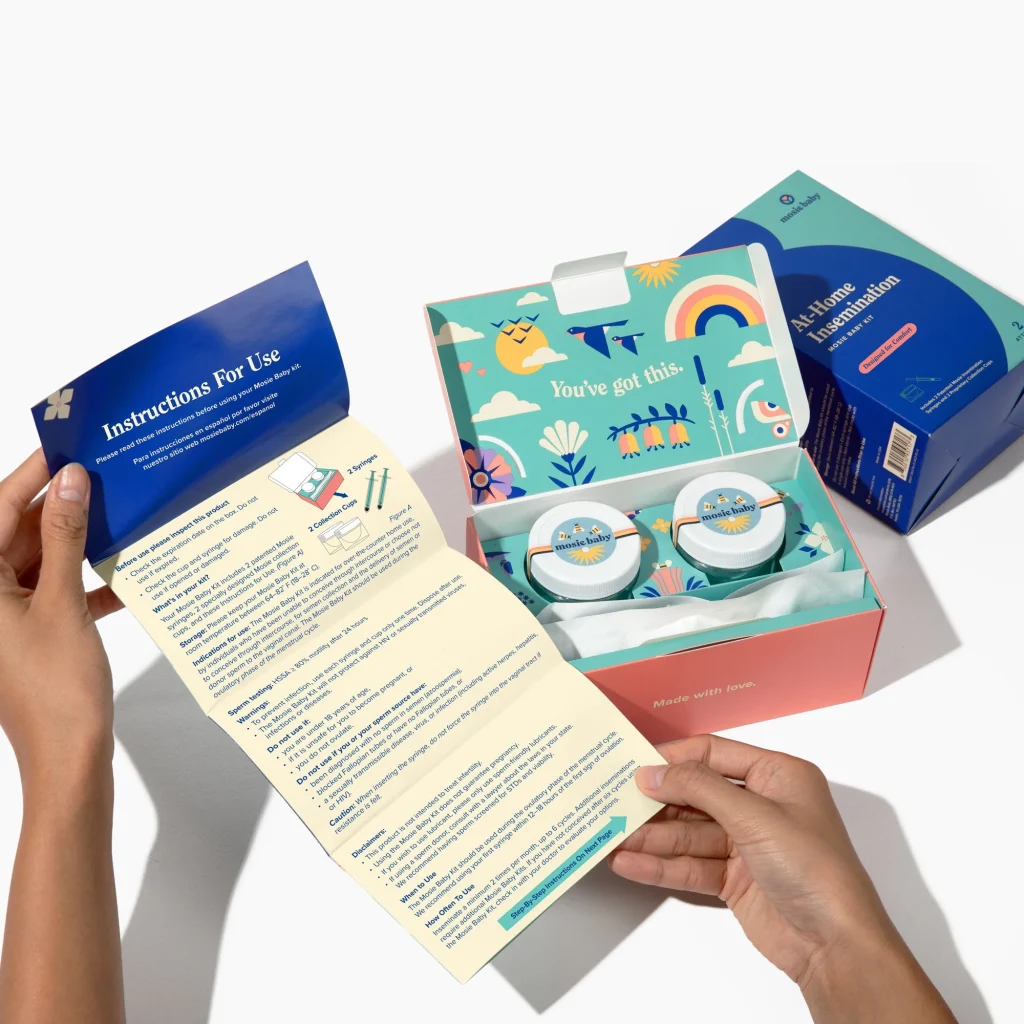
    Home insemination kit by Mosie Baby with instructions and colorful packaging.

    The Best Parenting Books for New Parents: 45 Top-rated Picks

    As children grow, new challenges arise, and so do the parenting books. “Positive Discipline” by Jane Nelsen is a top-rated book on fostering positive behavior and cooperation in children. “How to Talk So Kids Will Listen & Listen So Kids Will Talk” by Adele Faber and Elaine Mazlish has been a go-to guide for parents for over 30 years, providing effective communication strategies. “The Teenage Brain” by Frances E. Jensen and Amy Ellis Nutt is a must-read for parents of teenagers, offering insights into the adolescent brain and behavior.

    In addition to practical advice, some parenting books also offer a humorous take on parenthood. “Go the F**k to Sleep” by Adam Mansbach and Ricardo Cortés is a hilarious read for new parents who are sleep-deprived and struggling to get their little one to sleep. “Sh*tty Mom” by Laurie Kilmartin, Karen Moline, Alicia Ybarbo, and Mary Ann Zoellner is a collection of stories and advice from real moms, providing a much-needed dose of humor and solidarity.

    We also cannot overlook books that focus on the unique challenges of parenting in the modern world. “The Conscious Parent” by Dr. Shefali Tsabary delves into the concept of mindful parenting, while “Parenting Beyond Pink & Blue” by Christia Spears Brown challenges traditional gender roles and stereotypes in parenting. “The Whole-Brain Child Workbook” by Daniel J. Siegel and Tina Payne Bryson offers practical exercises and activities for parents to help their children develop emotional and social skills.

    Lastly, we have included some books that offer a different perspective on parenting. “The Montessori Toddler” by Simone Davies introduces the Montessori method and its principles for raising curious, independent, and confident children. “The Danish Way of Parenting” by Jessica Joelle Alexander and Iben Dissing Sandahl explores the Danish concept of “hygge” and how it can positively impact parenting. “The Attachment Parenting Book” by Martha Sears and William Sears focuses on the importance of secure attachment in raising happy and healthy children.

    In conclusion, these 45 top-rated parenting books offer valuable insights, advice, and support for new parents. They cover a wide range of topics and perspectives, ensuring that there is something for every parent. Whether you are looking for practical tips, a humorous read, or a mindful approach to parenting, these books have got you covered.

  • Parenting Books That Will Teach You How to Communicate Effectively with Your Child

    Parenting can be one of the most challenging and rewarding experiences in life. As parents, we want to do everything we can to ensure that our children grow up to be happy, healthy, and well-adjusted individuals. One of the most important aspects of parenting is communication. Effective communication with our children not only helps us build strong relationships with them but also teaches them valuable skills for their future relationships. However, communicating with children can be tricky, as they often have a limited understanding of language and emotions. That’s where parenting books come in – they offer valuable insights, techniques, and strategies to help parents communicate effectively with their children. In this blog post, we will discuss some of the best parenting books that will teach you how to communicate effectively with your child.

    1. “How to Talk So Kids Will Listen and Listen So Kids Will Talk” by Adele Faber and Elaine Mazlish

    One of the classic parenting books on communication, “How to Talk So Kids Will Listen and Listen So Kids Will Talk” has been helping parents for over 35 years. This book provides practical and effective strategies for parents to communicate with their children of all ages. It covers various topics such as handling emotions, engaging cooperation, and resolving conflicts. The authors use real-life examples and cartoons to make the concepts easy to understand and apply in real-life situations.

    2. “No-Drama Discipline” by Daniel J. Siegel and Tina Payne Bryson

    In this book, the authors emphasize the importance of connection and empathy in parenting. They believe that children’s behavior is a form of communication, and it is the parents’ responsibility to understand and respond to it in a positive and loving manner. The book offers a unique approach to discipline, focusing on teaching children self-control and problem-solving skills rather than punishment. It also includes practical exercises and techniques for parents to apply in their daily interactions with their children.

    3. “How to Talk so Little Kids Will Listen: A Survival Guide to Life with Children Ages 2-7” by Joanna Faber and Julie King

    This book is a follow-up to “How to Talk so Kids Will Listen and Listen So Kids Will Talk” and is tailored specifically for parents of young children. It provides helpful tips and tricks for communicating with children between the ages of 2 to 7, who may have a limited understanding of language and emotions. The book offers techniques for dealing with common challenges such as tantrums, sibling rivalry, and mealtime battles. It also emphasizes the importance of building a strong and respectful relationship with your child.

    4. “Simplicity Parenting: Using the Extraordinary Power of Less to Raise Calmer, Happier, and More Secure Kids” by Kim John Payne

    Baby with blue eyes wearing a light blue onesie that says "made with Love" on a soft white background.

    Parenting Books That Will Teach You How to Communicate Effectively with Your Child

    In this book, the author focuses on simplifying parenting by removing unnecessary clutter and distractions from children’s lives. The book highlights how overstimulation and too much choice can affect children’s behavior and emotional well-being. It offers practical advice on how to simplify your child’s environment, schedule, and expectations for a more peaceful and harmonious family life. The book also includes tips for effective communication with children, such as using fewer words and providing clear and consistent boundaries.

    5. “The Whole-Brain Child: 12 Revolutionary Strategies to Nurture Your Child’s Developing Mind” by Daniel J. Siegel and Tina Payne Bryson

    Another book by the authors of “No-Drama Discipline,” “The Whole-Brain Child” focuses on understanding the brain development of children and using that knowledge to communicate effectively with them. It offers 12 strategies for parents to help their children develop emotional intelligence, self-regulation, and resilience. The book also includes real-life examples and practical exercises for parents to implement the strategies in their daily interactions with their children.

    6. “Peaceful Parent, Happy Kids: How to Stop Yelling and Start Connecting” by Dr. Laura Markham

    In this book, the author emphasizes the importance of building a strong emotional connection with your child. She believes that children are more likely to listen and cooperate when they feel loved, understood, and respected. The book offers practical tips and techniques for parents to improve their communication skills, manage their own emotions, and create a peaceful and loving home environment. It also includes a chapter on sibling relationships and offers strategies for handling conflicts between siblings.

    7. “The Conscious Parent: Transforming Ourselves, Empowering Our Children” by Dr. Shefali Tsabary

    “The Conscious Parent” challenges traditional parenting methods and offers a new approach to raising children. The author believes that true parenting is about personal growth and self-awareness, and it is the key to creating a healthy and fulfilling relationship with our children. The book encourages parents to be present and mindful in their interactions with their children, to let go of their own ego, and to see their children as whole and complete beings. It offers insights and exercises for parents to understand and manage their own emotions, which in turn will help them communicate more effectively with their children.

    In summary, effective communication with our children is crucial for building strong relationships and teaching them valuable skills for their future. These seven parenting books offer a wealth of knowledge, strategies, and techniques to help parents communicate effectively with their children. Whether you have toddlers or teenagers, these books can provide valuable insights and practical tips to improve your communication skills and create a harmonious and loving relationship with your child.

  • Parenting Books That Will Help You Raise Kind, Compassionate, and Inclusive Kids

    Blog Post Summary:

    Parenting is a challenging yet rewarding journey, and as parents, we want to raise kind, compassionate, and inclusive kids. However, with so many conflicting parenting advice and techniques out there, it can be overwhelming to know where to start. That’s where parenting books come in – they offer valuable insights, tips, and strategies to help parents navigate through the ups and downs of raising children.

    In this blog post, we have compiled a list of top parenting books that will help you raise kind, compassionate, and inclusive kids. These books cover a range of topics from teaching empathy and kindness, promoting diversity and inclusion, to addressing challenging behaviors and emotions. Whether you are a new parent or have older children, these books are a must-read for any parent looking to raise their kids to be kind, caring, and inclusive individuals.

    The first book on our list is “UnSelfie: Why Empathetic Kids Succeed in Our All-About-Me World” by Dr. Michele Borba. In this book, Dr. Borba explores the importance of empathy in raising successful and happy children. She offers practical strategies to teach empathy to kids, such as modeling, active listening, and perspective-taking. This book is a valuable resource for parents who want to raise kind and compassionate kids in today’s self-centered society.

    Next, we have “The Power of Showing Up: How Parental Presence Shapes Who Our Kids Become and How Their Brains Get Wired” by Dr. Daniel J. Siegel and Dr. Tina Payne Bryson. This book emphasizes the significance of parental presence in a child’s life and how it can shape their well-being and development. The authors provide insights on how to be more present and attuned to your child’s needs, foster a secure attachment, and promote positive behavior in your child. This book is a must-read for any parent who wants to build a strong and nurturing relationship with their kids.

    At-home insemination kit with ovulation and pregnancy tests, promoting fertility and family planning.

    Parenting Books That Will Help You Raise Kind, Compassionate, and Inclusive Kids

    “Raising an Emotionally Intelligent Child: The Heart of Parenting” by Dr. John Gottman and Dr. Joan DeClaire is another excellent resource for parents. This book focuses on the importance of emotional intelligence in children and how it can be nurtured by parents. The authors offer practical tools and exercises to help parents teach their kids how to identify and manage their emotions, communicate effectively, and build healthy relationships. This book is a valuable guide for parents who want to raise emotionally intelligent and resilient kids.

    Moving on to the topic of diversity and inclusion, “Anti-Bias Education for Young Children and Ourselves” by Louise Derman-Sparks and Julie Olsen Edwards is a must-read for parents who want to raise inclusive and anti-bias children. This book provides insights on how to talk about race, culture, and other forms of diversity with young children in a respectful and age-appropriate way. It also offers practical strategies for promoting diversity and inclusion in early childhood settings and at home. This book is a valuable resource for parents who want to raise kids who are accepting and open-minded towards others.

    Another book that tackles the topic of diversity and inclusion is “It’s Okay to Be Different” by Todd Parr. This colorful and engaging children’s book celebrates diversity in all its forms and teaches kids the importance of acceptance and inclusion. It covers topics such as race, disabilities, and family structures, and encourages children to embrace and celebrate our differences. This book is a great tool for parents to introduce diversity and inclusion to their young children in a fun and positive way.

    For parents of older kids, “The Conscious Parent: Transforming Ourselves, Empowering Our Children” by Dr. Shefali Tsabary is a thought-provoking read. This book challenges the traditional parenting methods and encourages parents to become more mindful and conscious in their approach. It explores the power of self-awareness and how it can lead to a more fulfilling and connected relationship with our children. This book is a must-read for any parent looking to improve their parenting skills and raise children who are emotionally healthy and resilient.

    Last but not least, “How to Talk So Kids Will Listen & Listen So Kids Will Talk” by Adele Faber and Elaine Mazlish is a classic parenting book that every parent should read. This book offers practical and effective communication techniques to help parents talk to their kids in a way that fosters cooperation, self-motivation, and problem-solving skills. It also provides strategies for handling difficult emotions and conflicts in a constructive manner. This book is a valuable resource for parents who want to improve their communication with their children and build a strong and positive relationship.

    In conclusion, parenting books can be a valuable resource for parents looking to raise kind, compassionate, and inclusive kids. The books mentioned in this blog post cover a range of topics and provide practical strategies and insights to help parents navigate through the challenges of raising children. By reading these books and implementing their advice, parents can create a positive and nurturing environment for their children to thrive in.

  • The Ultimate List of 45 Top-rated Parenting Books for Dads

    Summary:

    Fatherhood is a challenging and rewarding journey, and for many dads, navigating the world of parenting can be overwhelming. Luckily, there is a wealth of knowledge and guidance available in the form of parenting books specifically written for dads. These books cover a wide range of topics, from newborn care to raising teenagers, and offer practical advice and insights from experienced fathers.

    In this blog post, we have compiled a list of 45 top-rated parenting books for dads. These books have been carefully selected based on their popularity, positive reviews, and relevance to modern fatherhood. The list includes both classic and newly published books, covering various aspects of fatherhood, including discipline, communication, and building strong relationships with children.

    We have categorized the books into six sections for easy navigation: New Dads, Fatherhood and Relationships, Parenting Styles, Discipline and Behavior, Communication, and Special Situations. Whether you are a first-time dad or a seasoned father looking for some guidance, this ultimate list has got you covered.

    Section 1: New Dads
    Becoming a dad for the first time can be both exciting and nerve-wracking. These books offer practical tips and advice to help new dads navigate the early stages of fatherhood.

    1. The Expectant Father by Armin A. Brott and Jennifer Ash
    2. The New Father: A Dad’s Guide to the First Year by Armin A. Brott
    3. The New Dad’s Survival Guide: Man-to-Man Advice for First-Time Fathers by Scott Mactavish
    4. Be Prepared: A Practical Handbook for New Dads by Gary Greenberg and Jeannie Hayden
    5. The New Dad’s Playbook: Gearing Up for the Biggest Game of Your Life by Benjamin Watson

    Section 2: Fatherhood and Relationships
    Being a dad also means being a partner and a role model. These books focus on the importance of building strong relationships with your partner and children.

    6. Strong Fathers, Strong Daughters: 10 Secrets Every Father Should Know by Meg Meeker
    7. The Secrets of Happy Families: Improve Your Mornings, Tell Your Family History, Fight Smarter, Go Out and Play, and Much More by Bruce Feiler
    8. The Father’s Almanac: From Pregnancy to Pre-school, Baby-care to Behavior, the Complete and Indispensable Book of Practical Advice and Ideas for Every Man Discovering the Fun and Challenge of Fatherhood by S. Adams Sullivan
    9. Fathering Your Toddler: A Dad’s Guide to the Second and Third Years by Armin A. Brott
    10. The Father Factor: How Your Father’s Legacy Impacts Your Career by Stephan Brouwer and Richard P. Brouwer

    Section 3: Parenting Styles
    There is no one-size-fits-all approach to parenting, and these books explore different parenting styles and techniques to help dads find what works best for their family.

    Mosie Baby pregnancy test kit with two tests and packaging, featuring a mint green color scheme.

    The Ultimate List of 45 Top-rated Parenting Books for Dads

    11. The Whole-Brain Child: 12 Revolutionary Strategies to Nurture Your Child’s Developing Mind by Daniel J. Siegel and Tina Payne Bryson
    12. Parenting with Love and Logic: Teaching Children Responsibility by Foster Cline and Jim Fay
    13. The Danish Way of Parenting: What the Happiest People in the World Know About Raising Confident, Capable Kids by Jessica Joelle Alexander and Iben Dissing Sandahl
    14. How to Talk So Kids Will Listen & Listen So Kids Will Talk by Adele Faber and Elaine Mazlish
    15. Raising Boys: Why Boys Are Different – and How to Help Them Become Happy and Well-Balanced Men by Steve Biddulph

    Section 4: Discipline and Behavior
    Every parent faces challenges when it comes to discipline and managing their child’s behavior. These books offer practical strategies and techniques for dealing with common behavioral issues.

    16. No-Drama Discipline: The Whole-Brain Way to Calm the Chaos and Nurture Your Child’s Developing Mind by Daniel J. Siegel and Tina Payne Bryson
    17. Positive Discipline: The Classic Guide to Helping Children Develop Self-Discipline, Responsibility, Cooperation, and Problem-Solving Skills by Jane Nelsen
    18. The Explosive Child: A New Approach for Understanding and Parenting Easily Frustrated, Chronically Inflexible Children by Ross W. Greene
    19. 1-2-3 Magic: Effective Discipline for Children 2-12 by Thomas W. Phelan
    20. The Kazdin Method for Parenting the Defiant Child: With No Pills, No Therapy, No Contest of Wills by Alan E. Kazdin and Carlo Rotella

    Section 5: Communication
    Effective communication is essential for building strong relationships with children. These books offer practical advice on how to communicate with children of all ages, from toddlers to teenagers.

    21. How to Talk So Little Kids Will Listen: A Survival Guide to Life with Children Ages 2-7 by Joanna Faber and Julie King
    22. The Power of Showing Up: How Parental Presence Shapes Who Our Kids Become and How Their Brains Get Wired by Daniel J. Siegel and Tina Payne Bryson
    23. Screamfree Parenting: The Revolutionary Approach to Raising Your Kids by Keeping Your Cool by Hal Edward Runkel
    24. The Teenage Brain: A Neuroscientist’s Survival Guide to Raising Adolescents and Young Adults by Frances E. Jensen and Amy Ellis Nutt
    25. The 5 Love Languages of Children: The Secret to Loving Children Effectively by Gary Chapman and Ross Campbell

    Section 6: Special Situations
    Being a dad also means being prepared for unexpected situations. These books offer advice and guidance for dealing with challenging situations, such as single parenting and raising children with special needs.

    26. The Single Father: A Dad’s Guide to Parenting Without a Partner by Armin A. Brott
    27. The Co-Parenting Handbook: Raising Well-Adjusted and Resilient Kids from Little Ones to Young Adults through Divorce or Separation by Karen Bonnell and Kristin Little
    28. The Autism Playbook for Teens by Irene McHenry and Carol Moog
    29. Raising a Sensory Smart Child: The Definitive Handbook for Helping Your Child with Sensory Processing Issues by Lindsey Biel and Nancy Peske
    30. The Strong-Willed Child: Birth Through Adolescence by James Dobson

    Conclusion:
    Becoming a dad is a life-changing experience, and with the help of these top-rated parenting books, dads can navigate the challenges and joys of fatherhood with confidence. From preparing for a new baby to dealing with teenage rebellion, these books offer practical advice, insights, and support for every stage of fatherhood.

    SEO metadata: