Tag: contamination

  • Syringe Method Troubleshooting: Common Challenges and How to Overcome Them

    Blog Post:

    Syringe method is a popular technique used in various fields such as medicine, chemistry, and biology for precise and controlled transfer of liquids. It involves using a syringe to draw up the desired amount of liquid and then injecting it into another vessel. While this method is relatively simple, there are common challenges that can arise, causing frustration and delay in experiments. In this blog post, we will discuss the most common challenges faced while using the syringe method and how to overcome them.

    Challenge 1: Air Bubbles
    One of the most common challenges while using the syringe method is the presence of air bubbles in the syringe. These bubbles can affect the accuracy of the measurement and can also cause inconsistencies in the liquid being transferred. To overcome this challenge, it is essential to prime the syringe before use. This can be done by drawing up and expelling the liquid multiple times, ensuring that all the air bubbles are removed. Another tip is to hold the syringe vertically while drawing up the liquid to prevent air bubbles from entering.

    Challenge 2: Leaking or Dripping
    Another common challenge while using the syringe method is the leaking or dripping of the liquid from the syringe. This can be caused by a loose or damaged plunger, a damaged needle, or an incorrect attachment of the needle to the syringe. To overcome this challenge, it is crucial to check the syringe and needle for any damage before use. It is also essential to ensure that the needle is securely attached to the syringe to prevent any leakage. In case of a damaged plunger, it is best to replace the syringe altogether.

    Challenge 3: Resistance or Difficulty in Dispensing
    Sometimes, the liquid in the syringe can become too viscous, making it challenging to dispense. This can be due to several reasons, such as the liquid being too cold or too thick. To overcome this challenge, it is essential to warm the liquid to room temperature before use. This can be done by placing the syringe in a warm water bath or using a heating pad. Another option is to use a larger gauge needle, which will make it easier to dispense the liquid.

    Challenge 4: Inaccurate Measurements
    Accurate measurements are crucial while using the syringe method, and any inconsistency can affect the outcome of an experiment. One of the common reasons for inaccurate measurements is using the wrong size syringe. It is essential to choose a syringe that can hold the desired amount of liquid without any excess space. Another tip is to hold the syringe horizontally while taking measurements to prevent any errors due to the angle of the syringe.

    Mosie Baby Kit features a syringe and container, highlighting safety and usability tests on a blue background.

    Syringe Method Troubleshooting: Common Challenges and How to Overcome Them

    Challenge 5: Contamination
    Contamination is a significant concern while using the syringe method, as it can affect the accuracy of the results and even be hazardous in some cases. To prevent contamination, it is essential to use a new and sterile syringe for each use. It is also crucial to properly clean and sterilize the syringe after use to prevent any cross-contamination. In case of multiple injections, it is recommended to use a separate syringe for each injection.

    Challenge 6: Difficulties in Aspiration
    Aspiration refers to the process of drawing up a liquid into the syringe. Sometimes, it can be challenging to aspirate the desired amount of liquid due to various reasons such as the viscosity of the liquid, the size of the needle, or the angle of the syringe. To overcome this challenge, it is essential to use a needle with a larger gauge to reduce the resistance while aspirating. It is also important to hold the syringe at a slight angle to prevent any air bubbles from entering.

    Challenge 7: Clogging of the Needle
    Clogging of the needle can occur due to various reasons, such as the presence of particles in the liquid, using a small gauge needle, or reusing a dirty needle. To prevent clogging, it is essential to use a clean and new needle for each use. In case of particles in the liquid, it is recommended to filter the liquid before filling the syringe. If the needle gets clogged during use, it is essential to replace it immediately to prevent any contamination.

    In conclusion, the syringe method is a widely used technique that can face various challenges. However, with proper precautions and techniques, these challenges can be easily overcome to ensure accurate and precise results. By priming the syringe, checking for any damage, using the correct size and type of needle, and preventing contamination, the syringe method can be successfully used in various applications.

    Summary:

    The syringe method is a popular technique used in various fields for precise and controlled transfer of liquids. However, there are common challenges that can arise, such as air bubbles, leaking or dripping, difficulties in dispensing, inaccurate measurements, contamination, difficulties in aspiration, and clogging of the needle. To overcome these challenges, it is essential to prime the syringe, check for any damage, use the correct size and type of needle, prevent contamination, and use proper techniques while aspirating and dispensing.
  • The Syringe Kit: A Safe and Effective Alternative to Traditional Methods

    Blog Post:

    The Syringe Kit: A Safe and Effective Alternative to Traditional Methods

    For centuries, syringes have been an essential tool in modern medicine, allowing for the delivery of life-saving medications and treatments. However, traditional syringes have some inherent risks and limitations, such as needlestick injuries and the potential for contamination. These shortcomings have led to the development of a new and innovative solution – the syringe kit. In this blog post, we will explore the syringe kit, its benefits, and how it is revolutionizing the medical industry.

    What is a Syringe Kit?

    A syringe kit is a complete set that includes a syringe, needle, and other essential accessories, such as alcohol wipes and bandages. Unlike traditional syringes, which come pre-assembled, syringe kits require the user to assemble the syringe and needle before use. This unique design offers several advantages, making it a safer and more effective alternative to traditional methods.

    The Benefits of a Syringe Kit

    1. Reduced Risk of Needlestick Injuries

    One of the most significant risks of using traditional syringes is needlestick injuries. These injuries occur when a healthcare worker accidentally pricks themselves with a used needle, potentially exposing themselves to infectious diseases. The Centers for Disease Control and Prevention (CDC) estimates that approximately 385,000 needlestick injuries occur annually in the United States alone. The use of syringe kits can significantly reduce this risk, as the needle is not attached until just before use, minimizing the chances of accidental injuries.

    2. Decreased Potential for Contamination

    Traditional syringes, with their pre-assembled design, can also lead to contamination. The needle and syringe are packaged together, and any damage to the packaging can allow for the entry of bacteria or other harmful substances. Syringe kits, on the other hand, are individually packaged, ensuring that the needle and syringe remain sterile until just before use, reducing the potential for contamination.

    3. Improved Accuracy and Precision

    Syringe kits allow for more precise and accurate dosing when administering medications. The user can select the appropriate needle size and attach it to the syringe, ensuring that the correct amount of medication is delivered. This level of customization is not possible with traditional syringes, which come with a predetermined needle size and cannot be changed.

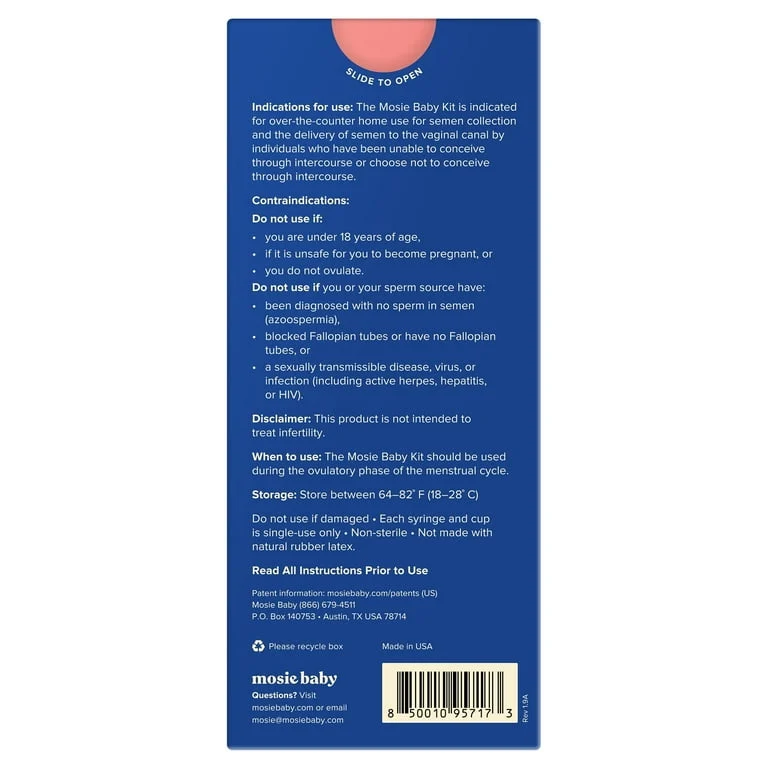
    Mosie Baby At-Home Insemination Kit instructions and storage guidelines on a blue background.

    The Syringe Kit: A Safe and Effective Alternative to Traditional Methods

    4. Cost-Effective

    Syringe kits are cost-effective for both healthcare facilities and patients. Traditional syringes come pre-assembled, which means they have a higher production and shipping cost. In contrast, syringe kits have a more compact design, requiring less packaging and shipping space, ultimately reducing the overall cost. Additionally, for patients who need to administer medication at home, syringe kits are more affordable, as they can reuse the syringe multiple times by changing the needle with each use.

    5. Environmentally Friendly

    With a growing focus on sustainability and reducing medical waste, syringe kits are an environmentally friendly alternative to traditional syringes. The compact design and individual packaging of syringe kits result in less waste, making them a more sustainable option for healthcare facilities.

    How Syringe Kits Are Revolutionizing the Medical Industry

    The use of syringe kits is gaining popularity in the medical industry, and for a good reason. They are not only safer and more cost-effective but also offer several other benefits that are revolutionizing the way medications are administered.

    1. Improving Medication Administration in Developing Countries

    Syringe kits are especially beneficial in developing countries, where access to safe and sterile medical equipment is limited. Traditional syringes, with their pre-assembled design, are more prone to contamination, making them a potential health risk for patients. Syringe kits, with their individually packaged components, provide a safer option for administering medications in these regions.

    2. Preventing the Spread of Diseases

    The risk of needlestick injuries and contamination with traditional syringes is not limited to healthcare workers. Improper disposal of used syringes can lead to the spread of diseases such as HIV and Hepatitis B and C. Syringe kits, with their compact design and individual packaging, are easier to dispose of safely, reducing the risk of disease transmission.

    3. Enhancing Safety during Emergencies

    In emergency situations, healthcare workers often have to act quickly and efficiently. Syringe kits offer a convenient and safe solution for administering medications in these high-stress situations. With a syringe kit, healthcare workers can quickly assemble and use the syringe, reducing the risk of needlestick injuries and contamination.

    In summary, the syringe kit is a safe and effective alternative to traditional methods of medication administration. With reduced risks of needlestick injuries and contamination, improved accuracy and precision, and cost-effectiveness, syringe kits are revolutionizing the medical industry. Their compact design and individual packaging also make them an environmentally friendly option. Whether in developing countries or during emergencies, syringe kits are proving to be a valuable tool for delivering life-saving treatments.