Tag: Donor Screening

  • Choosing the Right Donor for Your Syringe Kit Insemination

    Blog Post: Choosing the Right Donor for Your Syringe Kit Insemination

    Syringe kit insemination has become a popular method for individuals and couples who are looking to start or expand their family. This procedure involves using a syringe to deposit semen into the cervix or uterus, bypassing the traditional method of intercourse. While this may seem like a simple and straightforward process, one of the most crucial decisions in syringe kit insemination is choosing the right donor. In this blog post, we will discuss the important factors to consider when selecting a donor for your syringe kit insemination.

    1. Health History
    The health of the donor is a significant consideration when choosing a syringe kit insemination donor. It is crucial to obtain a comprehensive health history of the donor, including any genetic diseases or hereditary conditions that may be present in their family. This information will help you understand the potential health risks that may be passed on to your child, and it will also give you an insight into the overall health of the donor.

    2. Fertility
    The fertility of the donor is another important factor to consider. Before selecting a donor, it is essential to ensure that they have a good sperm count and motility. This information can be obtained through a fertility test, and it will give you a better idea of the chances of the insemination being successful.

    3. Personal Qualities
    In addition to health and fertility, it is also essential to consider the personal qualities of the donor. While physical characteristics such as height, weight, and eye color may seem important, it is crucial to focus on the donor’s personality traits and values. These qualities can play a significant role in shaping your child’s character and should not be overlooked.

    logo of mosie baby featuring a heart and leaf design in blue, pink, and green colors

    Choosing the Right Donor for Your Syringe Kit Insemination

    4. Anonymity vs. Known Donor
    Another critical decision to make when choosing a donor for syringe kit insemination is whether to use an anonymous or known donor. An anonymous donor provides the benefit of privacy and the option to disclose the child’s conception method at a later stage. On the other hand, a known donor may provide more information about the donor’s personality and health history, but it may also complicate the relationship dynamic in the future.

    5. Legal Considerations
    It is essential to understand the legal implications of using a donor for syringe kit insemination. In some states, the donor may have parental rights, even if they are not the biological parent, which can complicate matters in the future. It is crucial to seek legal advice and have a legally binding agreement in place to protect all parties involved.

    6. Donor Screening
    Donor screening is a critical step in the syringe kit insemination process. It involves conducting a series of tests to ensure that the donor is free from any infectious diseases, such as HIV, hepatitis B, and C, and STDs. It is essential to work with a reputable sperm bank or fertility clinic that follows strict screening protocols to ensure the safety of the donor’s sperm.

    7. Cost
    The cost of using a donor for syringe kit insemination can vary significantly. Factors such as the donor’s health, fertility, and whether they are anonymous or known can impact the cost. It is crucial to have a budget in mind and consider all the expenses involved, such as sperm storage fees and legal fees.

    8. Communication and Consent
    Open and honest communication is essential when using a donor for syringe kit insemination. It is crucial to have a clear understanding of the donor’s expectations and boundaries, and to have a written consent agreement in place. This will help avoid any misunderstandings or conflicts in the future.

    In summary, choosing the right donor for syringe kit insemination involves considering their health history, fertility, personal qualities, anonymity, legal implications, donor screening, cost, and communication. It is a decision that should not be taken lightly, as it can have a significant impact on your child’s life. It is essential to do thorough research, seek professional advice, and make a well-informed decision.

  • Home Insemination and Genetic Testing: Ensuring a Healthy Baby

    Home insemination and genetic testing are two important factors to consider when trying to ensure a healthy baby. With advancements in technology, these methods have become more accessible and widely used by couples who are trying to conceive. In this blog post, we will discuss the process of home insemination and the importance of genetic testing in creating a healthy and happy family.

    Home insemination, also known as self-insemination or natural insemination, is the process of using a syringe or other device to introduce sperm into the vagina in order to achieve pregnancy. This method is often used by same-sex couples, single women, and heterosexual couples who are struggling with fertility issues. It can be done at home with the use of a donor or in a clinical setting with the help of a doctor.

    The process of home insemination starts with finding a suitable donor. This can be a known donor, such as a friend or family member, or an anonymous donor from a sperm bank. It is important to thoroughly research and screen potential donors to ensure they are healthy and have no genetic or hereditary diseases. Many couples also choose to use a fertility specialist or a sperm bank to ensure the safety and quality of the sperm.

    Once a donor has been chosen, the next step is to prepare the sperm for insemination. The sperm can be collected through ejaculation into a sterile container or by using a sperm extraction device. It is important to handle the sperm with care to maintain its viability. The sperm can then be inserted into the vagina using a syringe or other device. Some couples may choose to use a cervical cap or diaphragm to help keep the sperm in the right place.

    Timing is crucial when it comes to home insemination. It is recommended to track ovulation through methods such as basal body temperature tracking or ovulation predictor kits. This helps to increase the chances of conception by ensuring that the sperm is introduced into the vagina during the most fertile time of the woman’s menstrual cycle.

    While home insemination may seem like a simple and convenient option, it is important to note that it does not come without risks. One of the main concerns with home insemination is the risk of sexually transmitted infections (STIs). It is important to have both the donor and the recipient tested for STIs before proceeding with home insemination to ensure the safety and health of both parties.

    Mosie Baby At-Home Insemination Kit instructions and storage guidelines on a blue background.

    Home Insemination and Genetic Testing: Ensuring a Healthy Baby

    Another important factor to consider when trying to ensure a healthy baby is genetic testing. Genetic testing involves screening for genetic disorders or diseases that may be passed down from parents to their children. This can include conditions such as cystic fibrosis, sickle cell anemia, and Tay-Sachs disease. Genetic testing can also reveal any potential chromosomal abnormalities, which can result in conditions such as Down syndrome.

    Genetic testing can be done before pregnancy, during pregnancy, or after the baby is born. Preconception genetic testing can help couples determine their risk of passing down certain genetic disorders and make informed decisions about their family planning. During pregnancy, genetic testing can be done through procedures such as amniocentesis or chorionic villus sampling to detect any potential issues with the baby’s genetic makeup. After the baby is born, genetic testing can be done through a simple blood test to screen for a wide range of genetic disorders.

    By undergoing genetic testing, couples can identify any potential risks and make informed decisions about their family planning. In some cases, couples may choose to opt for prenatal testing or even choose not to conceive in order to avoid passing down a hereditary disease. On the other hand, if a genetic disorder is detected, couples can prepare for any potential challenges and seek appropriate medical care for their child.

    In conclusion, home insemination and genetic testing are two important factors to consider when trying to ensure a healthy baby. With the advancement of technology, these methods have become more accessible and can greatly increase the chances of conceiving a healthy baby. It is important to thoroughly research and plan for both home insemination and genetic testing, as they can have a significant impact on the health and well-being of your future child.

    Summary:

    Home insemination is a method of introducing sperm into the vagina in order to achieve pregnancy, often used by same-sex couples, single women, and couples with fertility issues. The process involves finding a suitable donor, preparing the sperm, and timing the insemination with ovulation. However, it is important to consider the risks, such as the potential for STIs, before proceeding with home insemination. Additionally, genetic testing is crucial in ensuring a healthy baby, as it can detect any potential hereditary diseases or chromosomal abnormalities. Couples can make informed decisions about their family planning based on the results of genetic testing.

  • At-Home Conception and Sperm Donors: What You Need to Know

    At-Home Conception and Sperm Donors: What You Need to Know

    In recent years, there has been a significant increase in the number of individuals and couples turning to at-home conception methods and sperm donors to start or expand their families. This trend is driven by a variety of factors, including the rising cost of fertility treatments and the growing acceptance of non-traditional family structures. However, before embarking on this journey, it is essential to have a thorough understanding of the process, including the legal, ethical, and medical implications. In this blog post, we will discuss everything you need to know about at-home conception and sperm donors.

    What is At-Home Conception?

    At-home conception refers to the process of conceiving a child without the assistance of a medical professional. This can include methods such as self-insemination, which involves using a syringe or cervical cap to introduce sperm into the vagina, or natural insemination, which involves having sex with a sperm donor. At-home conception may also involve the use of fertility tracking apps or kits to determine the most fertile days of a person’s cycle.

    What is a Sperm Donor?

    A sperm donor is an individual who provides their sperm for use in the fertilization of an egg to create a pregnancy. Sperm donors can be known or anonymous, with most at-home conception methods involving the use of known donors, such as a friend or family member. However, there are also sperm banks that provide anonymous donor sperm for use in at-home conception.

    Legal Implications of At-Home Conception and Sperm Donation

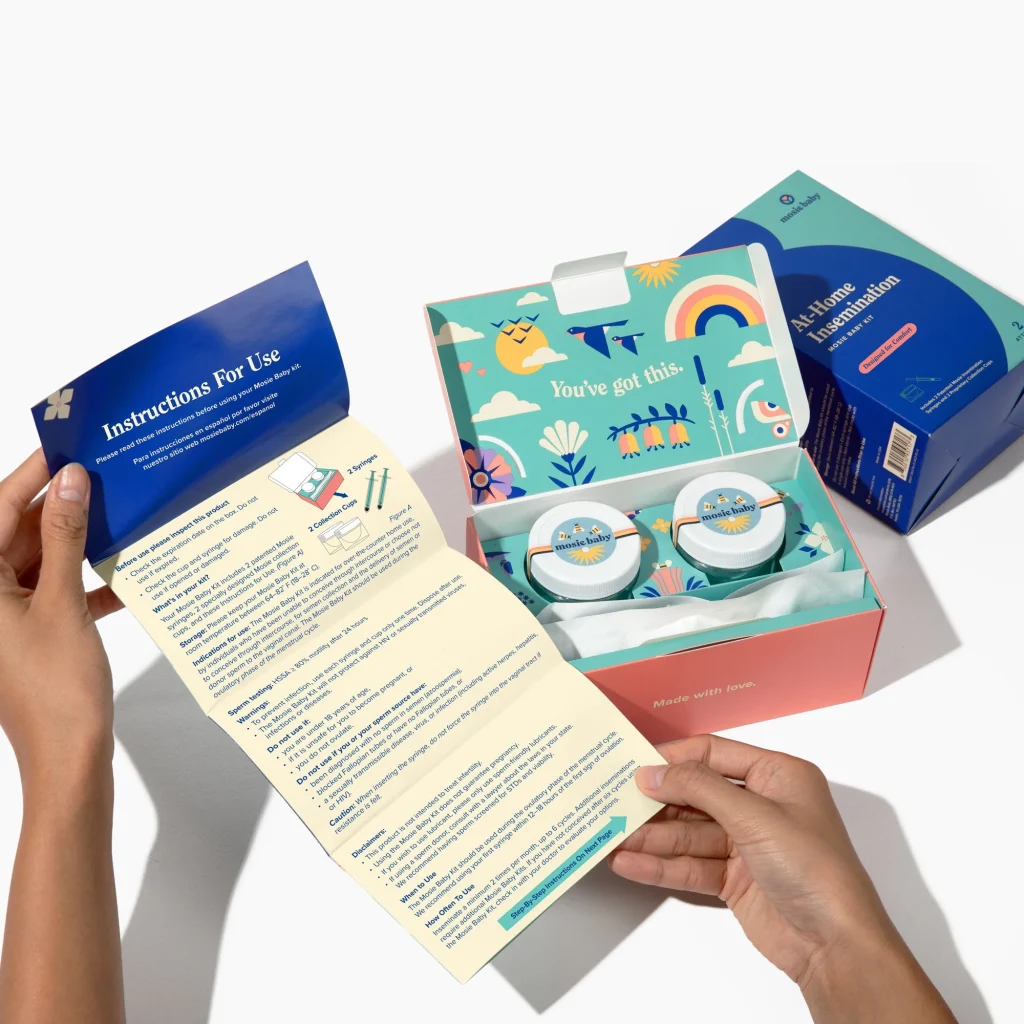
    Home insemination kit by Mosie Baby with instructions and colorful packaging.

    At-Home Conception and Sperm Donors: What You Need to Know

    One of the most critical aspects to consider before pursuing at-home conception and sperm donation is the legal implications. The laws surrounding at-home conception and sperm donation vary from state to state, and it is crucial to understand your rights and responsibilities as a donor or recipient. In most cases, the donor may have no legal rights or responsibilities to the child, and the recipient may also have no legal obligation to involve the donor in the child’s life. However, it is essential to consult with a lawyer to ensure that all parties involved understand and agree to the legal implications of the process.

    Ethical Considerations of At-Home Conception and Sperm Donation

    Another crucial aspect to consider is the ethical implications of at-home conception and sperm donation. It is essential to have open and honest communication with all parties involved, including the donor, recipient, and any potential children. It is also crucial to consider the potential emotional impact on all parties, especially the child, who may have questions about their genetic background and identity. Additionally, it is essential to respect the privacy and anonymity of anonymous donors and their families.

    Medical Precautions for At-Home Conception

    While at-home conception may seem like a simple and accessible method, it is essential to take necessary medical precautions to ensure the health and safety of all parties involved. This includes screening the donor for sexually transmitted infections and genetic diseases that could be passed on to the child. It is also recommended to consult with a doctor or fertility specialist to discuss any potential health risks or concerns.

    The Role of Communication and Planning

    Communication and planning play a crucial role in the success and well-being of all parties involved in at-home conception and sperm donation. It is essential to have open and honest communication about expectations, boundaries, and any potential challenges that may arise. It is also vital to have a plan in place for future scenarios, such as if the donor or recipient decides to pursue a legal relationship with the child.

    In conclusion, at-home conception and sperm donation can be a viable option for individuals and couples looking to start or expand their families. However, it is essential to have a thorough understanding of the legal, ethical, and medical implications and to have open and honest communication and planning with all parties involved. With proper precautions and considerations, at-home conception and sperm donation can be a positive and fulfilling experience for all involved.