Tag: Gender Reveal

  • Is Your Cervical Mucus Trying to Tell You Something About Your Baby’s Gender?

    Summary:

    When it comes to pregnancy, there are countless old wives’ tales and myths about predicting the gender of a baby. From the shape of a woman’s bump to the cravings she experiences, many people believe that these factors can reveal whether the baby is a boy or a girl. However, one lesser-known factor that may actually hold some truth is cervical mucus.

    Cervical mucus is a fluid produced by the cervix that helps protect and nourish sperm on their journey to fertilize an egg. It also plays a crucial role in fertility and ovulation. But can it also provide clues about a baby’s gender? In this blog post, we will explore the link between cervical mucus and baby gender and whether or not it can truly be used as a predictor.

    First, it’s important to understand how cervical mucus changes throughout a woman’s menstrual cycle. At the beginning of a cycle, the mucus is usually thick and sticky, acting as a barrier to prevent sperm from entering the uterus. As ovulation approaches, the mucus becomes thinner, clearer, and more stretchy, creating a hospitable environment for sperm to survive and reach the egg. After ovulation, the mucus becomes thicker again, making it difficult for sperm to pass through.

    guide and materials for using Mosie Baby fertility kit on a textured surface

    Is Your Cervical Mucus Trying to Tell You Something About Your Baby's Gender?

    According to some theories, the consistency and appearance of cervical mucus can indicate whether the sperm that fertilized the egg carried an X chromosome (resulting in a girl) or a Y chromosome (resulting in a boy). The idea is that the acidic environment created by the thick, sticky mucus before ovulation is more favorable for the survival of female sperm, while the alkaline environment created by the thin, clear mucus during ovulation is more conducive to male sperm.

    However, there is limited scientific evidence to support this theory. While some studies have shown a correlation between cervical mucus and baby gender, the results have been inconsistent and inconclusive. Other factors, such as the timing of intercourse and the quality of sperm, can also affect the chances of conceiving a boy or a girl.

    Additionally, cervical mucus alone cannot accurately predict the gender of a baby. It is just one of many factors that contribute to the conception of a child. Other methods, such as ultrasound and genetic testing, are much more reliable in determining a baby’s gender.

    So, while cervical mucus may have some connection to a baby’s gender, it is not a reliable or accurate method of prediction. It is important for women to remember that the most crucial factor in determining a baby’s gender is the genetic makeup of the sperm and egg that come together to create a new life.

    In conclusion, while cervical mucus may offer some insight into a baby’s gender, it should not be relied upon as a definitive predictor. As with any old wives’ tale or myth, it is always best to take these theories with a grain of salt and trust in more scientifically proven methods. The most important thing is to have a healthy pregnancy and a happy, healthy baby, regardless of their gender.

  • Is Cervical Mucus the New Gender Reveal Method?

    Cervical mucus has long been considered an indicator of fertility and reproductive health. But recently, it has gained attention as a potential method for predicting the gender of a baby. With the rise of gender reveal parties and the desire for expectant parents to know their baby’s gender as early as possible, the idea of using cervical mucus as a gender reveal method is gaining traction. But is it accurate, and what are the implications of using this method?

    To understand the potential of cervical mucus as a gender reveal method, it’s important to first understand its role in fertility and pregnancy. Cervical mucus is a fluid produced by the cervix that changes in consistency, texture, and color throughout a woman’s menstrual cycle. It serves as a protective barrier for sperm, helps them reach the egg, and also provides important nutrients for the sperm to survive. Cervical mucus also plays a crucial role in helping sperm determine the timing and location of ovulation.

    During ovulation, cervical mucus becomes clear, slippery, and stretchy, similar to the consistency of egg whites. This type of mucus is known as “fertile mucus” and indicates that a woman is at her most fertile. As the cycle progresses, the mucus becomes thicker and cloudier, making it more difficult for sperm to survive and reach the egg. This type of mucus is known as “infertile mucus” and is a sign that ovulation has passed.

    Proponents of using cervical mucus as a gender reveal method argue that the type of mucus present at the time of conception can indicate the gender of the baby. It is believed that sperm carrying the Y chromosome, which results in a male baby, can survive longer in fertile mucus, while sperm carrying the X chromosome, which results in a female baby, are more likely to survive in infertile mucus. Therefore, if a couple has intercourse during their most fertile days and the woman conceives, it is more likely that they will have a boy. On the other hand, if they have intercourse during the infertile days and the woman conceives, it is more likely that they will have a girl.

    sperm-ready insemination kit with a syringe and container, featuring a screw top lid and non-tip safety wall

    Is Cervical Mucus the New Gender Reveal Method?

    The idea of using cervical mucus as a gender reveal method is not a new concept. In fact, it has been around for centuries, with some cultures using it as a way to predict the gender of a baby. However, there is very little scientific evidence to support this method. In fact, a study published in the Journal of Obstetrics and Gynecology found that there was no significant difference in the type of cervical mucus present at the time of conception between couples who had a boy or a girl. This suggests that cervical mucus may not be a reliable method for predicting the gender of a baby.

    Furthermore, there are other factors that can affect the type of mucus present at the time of conception. For example, certain medications, hormonal imbalances, and infections can all alter cervical mucus production and consistency. Additionally, sperm carrying the Y chromosome can also survive longer in the female reproductive tract, making it possible for a couple to have a girl even if they had intercourse during their most fertile days.

    Aside from the lack of scientific evidence, there are also ethical and social implications to consider when using cervical mucus as a gender reveal method. The desire to know the gender of a baby as early as possible has led to the rise of gender reveal parties, where parents-to-be reveal the gender of their baby to friends and family in creative and sometimes extravagant ways. While these parties may seem harmless, they can perpetuate harmful gender stereotypes and put pressure on expectant parents to conform to traditional gender roles.

    In conclusion, while cervical mucus has been touted as a potential gender reveal method, there is little scientific evidence to support its accuracy. Other factors can affect the type of mucus present at the time of conception, and the desire for early gender determination may have negative effects on gender equality. Instead of relying on unproven methods, it’s important for expectant parents to focus on the health and well-being of their baby, regardless of its gender.

    In summary, cervical mucus has gained attention as a potential gender reveal method due to its role in fertility and pregnancy. However, there is little scientific evidence to support its accuracy, and other factors can affect the type of mucus present at the time of conception. The desire for early gender determination may also have negative effects on gender equality. Instead, expectant parents should prioritize the health and well-being of their baby, regardless of its gender.

  • Is it a Boy or a Girl? How Cervical Mucus Can Give You the Answer

    Is it a Boy or a Girl? How Cervical Mucus Can Give You the Answer

    The age-old question of whether a baby is a boy or a girl is one that expectant parents are eager to find out. While ultrasound technology has made it possible to determine the baby’s gender in-utero, there are other methods that may give a clue about the baby’s sex. One such method is examining the changes in a woman’s cervical mucus. In this blog post, we will explore the connection between cervical mucus and the baby’s gender and how it can provide the answer to the question, “Is it a boy or a girl?”

    Understanding Cervical Mucus

    Cervical mucus is a fluid produced by the cervix that helps sperm travel through the reproductive system to fertilize the egg. It also serves as a protective barrier against bacteria and other harmful substances. The amount and consistency of cervical mucus change throughout the menstrual cycle, influenced by hormones such as estrogen and progesterone.

    The Three Types of Cervical Mucus

    There are three main types of cervical mucus that a woman may experience during her cycle. The first type is called “dry” mucus, which is thick and sticky and provides a barrier for sperm, making it difficult for them to reach the egg. This type of mucus is typically present in the days after a woman’s period ends.

    The second type is called “creamy” mucus, which is white or yellowish in color and has a creamy consistency. This type of mucus is more hospitable to sperm and allows them to travel more easily. It is present during the mid-cycle when a woman is most fertile.

    The third type, “egg white” mucus, is clear, stretchy, and resembles the consistency of raw egg whites. This type of mucus is the most fertile and allows sperm to swim through it easily. It is present right before ovulation occurs and is a sign that a woman is at her peak fertility.

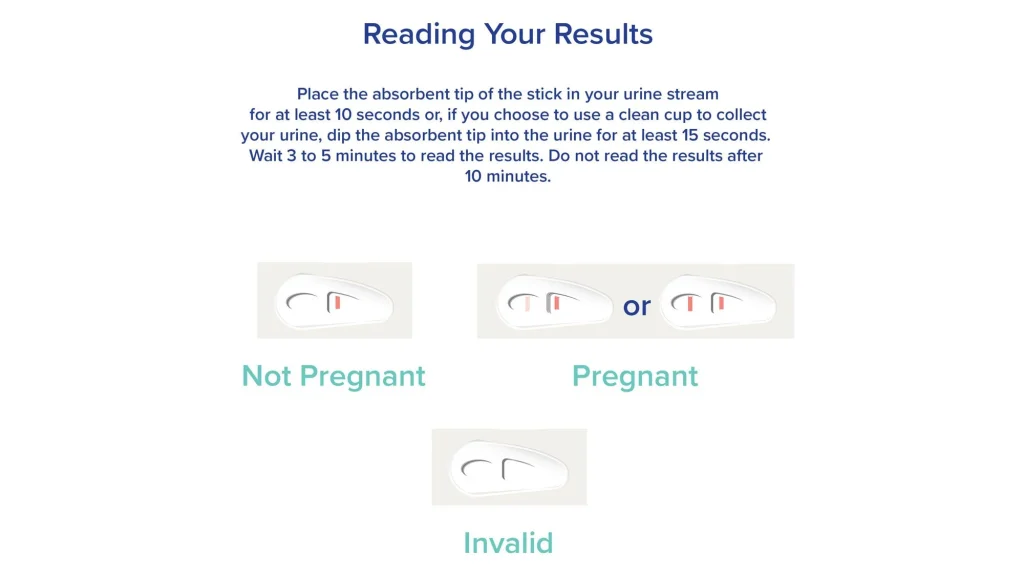
    Instructions for reading pregnancy test results with visual indicators for "Not Pregnant," "Pregnant," and "Invalid.

    Is it a Boy or a Girl? How Cervical Mucus Can Give You the Answer

    The Link Between Cervical Mucus and Baby’s Gender

    According to the “Shettles Method,” developed by Dr. Landrum Shettles in the 1960s, the type of cervical mucus a woman produces can indicate the baby’s gender. The method states that a woman’s cervical mucus can create a more hospitable environment for either female or male sperm, thus increasing the chances of conceiving a baby of a particular gender.

    For example, the dry and acidic environment of the vagina during dry mucus days is said to be more favorable for female sperm, while the alkaline and more fertile environment during egg white mucus days is said to be more favorable for male sperm. Therefore, if a couple wants to conceive a girl, they should have intercourse during the dry mucus days, and if they want a boy, they should try during the egg white mucus days.

    The Scientific Evidence

    While the Shettles Method has been around for decades and has gained popularity among expectant parents, there is limited scientific evidence supporting its accuracy. Some studies have shown a slight correlation between the type of cervical mucus and the baby’s gender, while others have not found any significant connection.

    In a study published in the Journal of Reproductive Medicine in 2003, researchers examined the cervical mucus of 221 women undergoing intrauterine insemination (IUI) and found that women with more alkaline mucus were more likely to have male babies. However, the study had some limitations, such as a small sample size and the use of assisted reproductive techniques, which may have influenced the results.

    Another study published in the Journal of Obstetrics and Gynaecology in 2006 found no significant difference in the type of cervical mucus between women who gave birth to boys and those who gave birth to girls. The study also noted that the type of cervical mucus can vary from cycle to cycle and may not always follow the same pattern.

    Summary

    In conclusion, while examining cervical mucus may provide some insight into the baby’s gender, it is not a reliable method for determining the sex of the baby. The Shettles Method may have some merit, but more research is needed to confirm its effectiveness. It is essential to remember that the baby’s gender is determined by the sperm’s chromosome, and no method can influence that. Ultimately, the only way to know for sure is to wait until the baby is born.

  • Gender Reveal Secrets: Using Cervical Mucus as a Tool for Predicting Your Baby’s Sex

    Gender reveal parties have become a popular trend in recent years, with expecting parents eagerly anticipating the announcement of their baby’s sex. From pink or blue cakes to exploding confetti, there are endless creative ways to reveal the news. But what if you could predict your baby’s sex before the party even begins? This is where the controversial topic of using cervical mucus as a tool for predicting gender comes in.

    Cervical mucus, also known as cervical fluid, is a natural substance produced by the cervix that helps sperm travel to the egg for fertilization. It is a crucial component in the fertility process and can also provide valuable insight into a woman’s menstrual cycle. But can it really be used to predict a baby’s sex? Let’s explore the science behind this claim and whether or not it has any merit.

    The Theory Behind Cervical Mucus and Gender Prediction

    The theory behind using cervical mucus as a tool for predicting gender is based on the idea that the pH levels in a woman’s body can affect the survival rate of sperm. It is believed that the acidic environment of the vagina is more favorable for female sperm, while the alkaline environment of the cervix is more favorable for male sperm.

    During a woman’s ovulation cycle, her cervical mucus changes in consistency, color, and amount. This is due to hormonal fluctuations and plays a crucial role in determining a woman’s fertility. According to the theory, if a woman’s cervical mucus is thin, clear, and stretchy, it is said to be more alkaline and therefore more favorable for male sperm. On the other hand, if the cervical mucus is thick, cloudy, and sticky, it is believed to be more acidic and thus more favorable for female sperm.

    The Accuracy of Cervical Mucus Gender Prediction

    While this theory may sound convincing, there is no scientific evidence to support it. In fact, studies have shown that the pH levels in cervical mucus do not have a significant impact on the survival rate of sperm. Additionally, the consistency and appearance of cervical mucus can vary from person to person and can be affected by various factors such as diet, hydration, and sexual activity.

    Furthermore, the timing of ovulation and the release of an egg also play a crucial role in determining the baby’s gender. Sperm can survive for up to five days in the female reproductive tract, so the timing of intercourse can also influence the chances of conceiving a boy or a girl. It is impossible to predict the exact moment when ovulation will occur, making it difficult to rely solely on cervical mucus for gender prediction.

    Home insemination kit by Mosie Baby with instructions and colorful packaging.

    Gender Reveal Secrets: Using Cervical Mucus as a Tool for Predicting Your Baby's Sex

    The Risks and Controversy Surrounding Cervical Mucus Gender Prediction

    While using cervical mucus as a tool for predicting gender may seem harmless, there are some potential risks and controversies surrounding this practice. Firstly, it is important to note that the only accurate way to determine a baby’s sex is through medical methods such as ultrasound or amniocentesis.

    There is also a concern that relying on cervical mucus for gender prediction can lead to disappointment or false hope. If a couple is hoping for a particular gender and the prediction turns out to be wrong, it can cause unnecessary stress and disappointment. Additionally, there is a risk of gender disappointment, where expecting parents may be disappointed if the prediction is not what they were hoping for.

    Moreover, the use of cervical mucus for gender prediction reinforces gender stereotypes and expectations. It perpetuates the idea that certain characteristics or behaviors are only associated with a particular gender, which can be harmful and limiting for children. It is important to remember that a baby’s gender does not determine their personality, interests, or abilities.

    In Conclusion

    While the use of cervical mucus as a tool for predicting gender may seem like an intriguing and convenient method, it is not backed by scientific evidence and should not be relied upon. It is essential to remember that the only accurate way to determine a baby’s sex is through medical methods.

    Gender reveal parties should be a fun and joyous occasion to celebrate the arrival of a new family member, regardless of their gender. The focus should be on the health and well-being of the baby and the excitement of becoming parents, rather than placing importance on their gender.

    In summary, using cervical mucus as a tool for predicting gender is an unproven and potentially harmful practice. It is important to rely on medical methods for accurate gender determination and to focus on the joy of welcoming a new baby into the world, regardless of their gender.