Tag: LGBTQ+

  • The Top 45 Parenting Books for Navigating the Challenges of Co-parenting

    Summary:

    Co-parenting, or raising children together after a separation or divorce, can be a challenging and emotional journey for both parents. However, with the right resources and support, it is possible to navigate these challenges and create a successful co-parenting relationship for the benefit of the children involved.

    In this blog post, we have compiled a list of the top 45 parenting books for co-parenting. These books cover a wide range of topics, from communication and conflict resolution to blending families and managing emotions. They offer valuable insights, tips, and strategies for navigating the complexities of co-parenting and creating a healthy and positive environment for children.

    We have categorized these books into different sections to make it easier for you to find the ones that best suit your specific needs and challenges. Whether you are just starting your co-parenting journey or looking for ways to improve your current situation, these books are a valuable resource for any co-parent.

    Communication and Conflict Resolution:

    1. “Co-Parenting with a Toxic Ex: What to Do When Your Ex-Spouse Tries to Turn the Kids Against You” by Amy J. L. Baker and Paul R. Fine
    2. “Mom’s House, Dad’s House: Making Two Homes for Your Child” by Isolina Ricci
    3. “The Co-Parenting Handbook: Raising Well-Adjusted and Resilient Kids from Little Ones to Young Adults through Divorce or Separation” by Karen Bonnell and Kristin Little
    4. “The Co-Parenting Survival Guide: Letting Go of Conflict After a Difficult Divorce” by Elizabeth Thayer and Jeffrey Zimmerman
    5. “Joint Custody with a Jerk: Raising a Child with an Uncooperative Ex” by Julie A. Ross and Judy Corcoran

    Blending Families:

    6. “The Smart Stepfamily: Seven Steps to a Healthy Family” by Ron L. Deal
    7. “The Successful Stepfamily: Strengthening Your Blended Family” by Ron L. Deal
    8. “Stepmonster: A New Look at Why Real Stepmothers Think, Feel, and Act the Way We Do” by Wednesday Martin
    9. “The Happy Stepmother: Stay Sane, Empower Yourself, Thrive in Your New Family” by Rachelle Katz

    Managing Emotions:

    10. “Emotional Intensity in Gifted Students: Helping Kids Cope with Explosive Feelings” by Christine Fonseca
    11. “The Whole-Brain Child: 12 Revolutionary Strategies to Nurture Your Child’s Developing Mind” by Daniel J. Siegel and Tina Payne Bryson
    12. “How to Talk So Kids Will Listen & Listen So Kids Will Talk” by Adele Faber and Elaine Mazlish
    13. “Raising an Emotionally Intelligent Child: The Heart of Parenting” by John Gottman and Joan DeClaire
    14. “Siblings Without Rivalry: How to Help Your Children Live Together So You Can Live Too” by Adele Faber and Elaine Mazlish

    Co-Parenting After Loss:

    15. “The Grief Recovery Handbook for Pet Loss” by Russell Friedman and John W. James
    16. “The Grief Recovery Handbook: The Action Program for Moving Beyond Death, Divorce, and Other Losses” by John W. James and Russell Friedman
    17. “The Co-Parenting After Divorce Survival Guide” by Judith Ruskay Rabinor
    18. “The Co-Parenting Toolkit: The Essential Supplement to Mom’s House, Dad’s House” by Isolina Ricci

    Co-Parenting and Special Needs:

    pregnancy test kit with instructions, test device, and packaging on a white background

    The Top 45 Parenting Books for Navigating the Challenges of Co-parenting

    19. “Parenting Children with ADHD: 10 Lessons That Medicine Cannot Teach” by Vincent J. Monastra
    20. “The Explosive Child: A New Approach for Understanding and Parenting Easily Frustrated, Chronically Inflexible Children” by Ross W. Greene
    21. “Parenting a Child with Asperger Syndrome: 200 Tips and Strategies” by Brenda Boyd
    22. “Raising Resilient Children with Autism Spectrum Disorders: Strategies for Maximizing Their Strengths, Coping with Adversity, and Developing a Social Mindset” by Robert Brooks and Sam Goldstein
    23. “Parenting Your Asperger Child: Individualized Solutions for Teaching Your Child Practical Skills” by Alan Sohn and Cathy Grayson

    Co-Parenting and Teenagers:

    24. “The Teenage Brain: A Neuroscientist’s Survival Guide to Raising Adolescents and Young Adults” by Frances E. Jensen and Amy Ellis Nutt
    25. “Parenting the Strong-Willed Child: The Clinically Proven Five-Week Program for Parents of Two- to Six-Year-Olds, Third Edition” by Rex Forehand and Nicholas Long
    26. “The 7 Habits of Highly Effective Teens” by Sean Covey
    27. “The Drama Years: Real Girls Talk About Surviving Middle School — Bullies, Brands, Body Image, and More” by Haley Kilpatrick and Whitney Joiner

    Co-Parenting and LGBTQ+:

    28. “The Ultimate Guide for Gay Dads: Everything You Need to Know About LGBTQ Parenting But Are (Mostly) Afraid to Ask” by Eric Rosswood
    29. “Gay Dads: A Celebration of Fatherhood” by David Strah
    30. “Parenting Beyond Pink & Blue: How to Raise Your Kids Free of Gender Stereotypes” by Christia Spears Brown
    31. “The Transgender Child: A Handbook for Families and Professionals” by Stephanie A. Brill and Rachel Pepper
    32. “Love Makes a Family: Portraits of Lesbian, Gay, Bisexual, and Transgender Parents and Their Families” by Peggy Gillespie and Gigi Kaeser

    Co-Parenting and Multiracial Families:

    33. “Raising Multiracial Children: Tools for Nurturing Identity in a Racialized World” by Farzana Nayani
    34. “Mixed: An Anthology of Short Fiction on the Multiracial Experience” edited by Chandra Prasad
    35. “The Interracial Adoption Option: Creating a Family Across Race” by Marlene G. Fine and Fern L. Johnson
    36. “Parenting Without Borders: Surprising Lessons Parents Around the World Can Teach Us” by Christine Gross-Loh

    Co-Parenting and Special Circumstances:

    37. “Parenting the Custodial Grandchild: Implications for Clinical Practice” by Bert Hayslip Jr. and Gregory C. Smith
    38. “Raising Your Spirited Child: A Guide for Parents Whose Child Is More Intense, Sensitive, Perceptive, Persistent, and Energetic” by Mary Sheedy Kurcinka
    39. “The Soul of Discipline: The Simplicity Parenting Approach to Warm, Firm, and Calm Guidance — From Toddlers to Teens” by Kim John Payne and Lisa M. Ross
    40. “The Conscious Parent: Transforming Ourselves, Empowering Our Children” by Shefali Tsabary
    41. “The Explosive Child: A New Approach for Understanding and Parenting Easily Frustrated, Chronically Inflexible Children” by Ross W. Greene

    Self-Help and Personal Development:

    42. “Co-Parenting With a Narcissist: A Guidebook for All Relationships” by Angela Atkinson
    43. “Co-Parenting 101: Helping Your Kids Thrive in Two Households After Divorce” by Deesha Philyaw and Michael D. Thomas
    44. “Co-Parenting After Divorce: How to Raise Happy, Healthy Children in Two-Home Families” by Diana Mercer and Katie Jane Wennechuk
    45. “Co-Parenting Through Separation and Divorce: Putting Your Children First” by Deborah T. Hackman and Karen L. Kristjanson

    Conclusion:

    Co-parenting can be a difficult journey, but with the right resources, it is possible to create a successful co-parenting relationship for the benefit of the children involved. These top 45 parenting books for co-parenting offer valuable insights, tips, and strategies for navigating the complexities of co-parenting and creating a healthy and positive environment for children. Whether you are just starting your co-parenting journey or looking for ways to improve your current situation, these books are a valuable resource for any co-parent.


  • The Unbreakable Bond of Ellen DeGeneres and Portia de Rossi: A Modern Love Story

    Ellen DeGeneres and Portia de Rossi are not just a Hollywood power couple, they are an emblem of love and resilience in the face of adversity. Their unbreakable bond has captured the hearts of millions around the world, and their love story serves as a source of inspiration for many. In this blog post, we will take a closer look at the modern love story of Ellen and Portia, and how their relationship has stood the test of time.

    From the outside, Ellen and Portia may seem like your typical celebrity couple – glamorous, successful, and constantly in the spotlight. But their journey to finding each other and building a strong and enduring relationship has not been without its challenges.

    Ellen DeGeneres, a renowned comedian and talk show host, first met Portia de Rossi, an Australian actress, in 2000 at a social gathering. At the time, Ellen was not publicly out as a lesbian, and Portia was still struggling with her own identity. Despite their immediate connection, they both had reservations about pursuing a relationship. But fate brought them together again in 2004, and this time, they couldn’t deny the undeniable spark between them.

    The early stages of their relationship were not easy, as Ellen had just come out publicly and faced backlash and discrimination from the media and society. Portia, on the other hand, was struggling with her own internalized homophobia and the fear of being judged. But their love for each other was stronger than any obstacle, and they stood by each other’s side, facing the challenges together.

    In 2008, after four years of dating, Ellen and Portia tied the knot in a small and private ceremony. This was a significant moment in both their lives, as it symbolized their commitment and love for each other, despite the opposition they faced from some parts of society. The couple’s wedding photos were featured in People magazine, and they received an outpouring of love and support from their fans and the LGBTQ+ community.

    Since then, Ellen and Portia have been inseparable, building a life together and supporting each other through thick and thin. They have been vocal advocates for LGBTQ+ rights, using their platform to raise awareness and promote equality. They have also been open about their struggles with infertility and their decision to not have children, breaking societal norms and standing by their choices as a couple.

    Two transparent syringes with teal accents positioned diagonally on a light gray background.

    The Unbreakable Bond of Ellen DeGeneres and Portia de Rossi: A Modern Love Story

    One of the most remarkable aspects of Ellen and Portia’s relationship is their unwavering support and love for each other. They have been each other’s rock through difficult times, including Portia’s battle with an eating disorder and Ellen’s health issues. They have also been each other’s biggest cheerleaders, celebrating each other’s successes and accomplishments.

    In a 2018 interview with People, Ellen shared, “Portia understands me completely. In our vows, she recited a quote, ‘It is good to be loved. It is profound to be understood.’ And she does both of those things for me.” Their deep understanding and acceptance of each other have been the foundation of their unbreakable bond.

    Ellen and Portia’s love for each other has also been evident in their actions and gestures. From grand romantic gestures to simple acts of love and support, they have constantly shown their commitment to making each other happy. Whether it’s surprising each other with thoughtful gifts or publicly standing up for one another, their love knows no bounds.

    In recent years, Ellen and Portia have faced rumors and speculation about the state of their marriage. But they have always remained united, shutting down the tabloids and reaffirming their love for each other. In a joint interview with People in 2019, they shared, “The truth is, and this is corny, I fall more in love with Portia all the time. I really do. She surprises me all the time. It’s what anyone experiences when you find that person that gets you, wants to take care of you, wants the best for you. We’re really lucky because we know how rare it is.”

    In a world where celebrity relationships are often short-lived and plagued by scandals, Ellen and Portia’s love story is a refreshing reminder of true love and commitment. They have shown that love knows no boundaries, and when two people are meant to be together, nothing can tear them apart.

    In summary, Ellen DeGeneres and Portia de Rossi’s modern love story is a testament to the power of love, resilience, and acceptance. Despite facing challenges and adversity, they have stood by each other’s side and built a strong and unbreakable bond. Their love serves as a beacon of hope and inspiration for many, and their relationship continues to thrive, proving that true love knows no bounds.

    Metadata:

  • The Role of Cervical Mucus in Conception for Same-Sex Couples

    Blog Post:

    When it comes to conception, most people are familiar with the traditional narrative of a man and a woman coming together to create a child. However, with the advancement of reproductive technologies and the increasing visibility and acceptance of the LGBTQ+ community, same-sex couples are now able to start families of their own. Yet, there are still many misconceptions and gaps in knowledge about the role of cervical mucus in conception for same-sex couples. In this blog post, we will explore the importance of cervical mucus in the conception process for same-sex couples and how understanding this can help increase their chances of starting a family.

    First, it is important to understand what cervical mucus is and its role in fertility. Cervical mucus is a fluid secreted by the cervix that helps sperm travel through the reproductive tract to reach the egg. It also helps to filter out abnormal or damaged sperm and provides a hospitable environment for the sperm to survive and fertilize the egg. In a traditional conception process, sperm is deposited into the vagina during sexual intercourse and cervical mucus helps to guide the sperm to the egg for fertilization. However, for same-sex couples, this process is not possible and they may need to rely on alternative methods of conception such as intrauterine insemination (IUI) or in vitro fertilization (IVF).

    For female same-sex couples, cervical mucus can play a crucial role in the success of IUI or IVF. In IUI, sperm is inserted directly into the uterus, bypassing the need for cervical mucus to guide the sperm. However, having a healthy amount and quality of cervical mucus can still greatly increase the chances of successful fertilization. This is because the mucus creates a more favorable environment for the sperm to survive and reach the egg. In IVF, cervical mucus is not directly involved in the fertilization process, but it is still important for the health of the cervix and uterus. A thin or absent cervical mucus can make it more difficult for the embryo to implant in the uterus, decreasing the chances of a successful pregnancy.

    logo featuring a pink heart above two teal leaves on a blue circular background

    The Role of Cervical Mucus in Conception for Same-Sex Couples

    For male same-sex couples, cervical mucus may not seem relevant as there is no direct involvement of sperm and the female reproductive system. However, understanding cervical mucus can still be beneficial for these couples. For instance, if a male same-sex couple is using a surrogate or a gestational carrier to carry their child, the quality and amount of cervical mucus can impact the success of the embryo transfer. It can also be helpful for male same-sex couples who are using a known sperm donor, as they can track the donor’s fertility by monitoring the changes in their cervical mucus.

    In addition to its role in conception, cervical mucus can also provide important information about a person’s overall reproductive health. The consistency, color, and amount of cervical mucus can vary throughout a person’s menstrual cycle, and these changes can indicate when they are most fertile. Tracking these changes can help same-sex couples better understand their fertility and increase their chances of successful conception. Furthermore, any abnormalities in cervical mucus can also be an indicator of underlying reproductive health issues that may need to be addressed before attempting conception.

    It is also worth mentioning that the presence or absence of cervical mucus does not determine a person’s fertility. While cervical mucus can greatly increase the chances of conception, there are many other factors that can impact fertility, such as age, overall health, and genetics. Therefore, it is important for same-sex couples to work closely with their healthcare provider to determine the best course of action for their individual situation.

    In conclusion, while cervical mucus may not seem relevant to same-sex couples in the traditional sense of conception, it still plays a crucial role in their journey towards starting a family. Understanding the importance of cervical mucus and how it can impact fertility can help same-sex couples navigate the process of conception with more knowledge and confidence. By tracking changes in cervical mucus and working closely with healthcare providers, same-sex couples can increase their chances of successful conception and create the family they have always dreamed of.

    In summary, cervical mucus plays a crucial role in conception for same-sex couples. It helps guide sperm to the egg, creates a favorable environment for fertilization, and provides important information about a person’s overall reproductive health. For female same-sex couples, cervical mucus can impact the success of IUI or IVF, while for male same-sex couples, it can be helpful in tracking fertility and ensuring the success of embryo transfer. Understanding the role of cervical mucus can help same-sex couples navigate the journey of starting a family with more knowledge and confidence.

  • Redefining Parenthood: Jenna and Tyler’s Mosiebaby Adventure

    Redefining Parenthood: Jenna and Tyler’s Mosiebaby Adventure

    Parenthood is often seen as a traditional concept, defined by a biological connection between a mother, father, and child. However, modern families have challenged this narrow definition and have proven that parenthood can take many forms. One such example is the story of Jenna and Tyler, a couple who redefined parenthood through their journey with Mosiebaby.

    Jenna and Tyler always knew they wanted to start a family, but they faced a unique challenge. As a same-sex couple, they were unable to conceive naturally and faced limited options when it came to alternative methods of conception. After exploring various fertility treatments, they stumbled upon Mosiebaby – a at-home insemination kit designed specifically for couples like them.

    Their Mosiebaby adventure began with research and preparation. They learned about the process of at-home insemination and how Mosiebaby’s innovative design made it easier and more comfortable than traditional methods. With the help of Mosiebaby’s educational resources and support, Jenna and Tyler felt confident in their ability to use the kit and start their journey towards parenthood.

    hand holding a pregnancy test with instructions on a colorful background

    Redefining Parenthood: Jenna and Tyler's Mosiebaby Adventure

    The first attempt with Mosiebaby was unsuccessful, but Jenna and Tyler did not give up. They continued to use the kit and were overjoyed when they finally saw a positive pregnancy test. The simplicity and convenience of Mosiebaby allowed them to try multiple times without the added stress and expense of clinic visits.

    As their pregnancy progressed, Jenna and Tyler documented their journey on social media. They shared their excitement, fears, and milestones with their followers, many of whom were also part of the LGBTQ+ community and could relate to their experience. Through their transparency and openness, Jenna and Tyler not only formed a support system for themselves but also became advocates for alternative parenting and breaking traditional stereotypes of parenthood.

    Their Mosiebaby adventure continued with the birth of their daughter, who they lovingly call their “Mosiebaby.” Jenna and Tyler’s unconventional journey to parenthood has challenged the notion that parenthood is solely based on biology. It has shown that love, determination, and modern technology can create a family in any form.

    Jenna and Tyler’s story is just one example of how Mosiebaby has redefined parenthood for many couples. The kit has opened up avenues for alternative parenting and made the dream of having a family a reality for those who may have faced barriers in the past. Mosiebaby’s success has also brought attention to the lack of accessibility and inclusivity in the fertility industry and sparked conversations about the need for more options for all types of families.

    In conclusion, Jenna and Tyler’s Mosiebaby adventure is a powerful example of how parenthood can be redefined and how love knows no boundaries. Mosiebaby has not only helped them start their family but has also brought awareness to the need for more inclusive and accessible options for all individuals and couples. Jenna and Tyler’s story is a testament to the strength and resilience of modern families, and it serves as an inspiration for others who may be on a similar journey towards parenthood.

  • The Miracle of Mosiebaby: Kelly and Mark’s Unconventional Insemination Story

    Kelly and Mark had always known that starting a family would be a challenge for them. As a same-sex couple, they were faced with the reality that traditional methods of conception were not possible for them. After years of struggling with fertility treatments and feeling discouraged, they discovered the miracle of Mosiebaby – a revolutionary at-home insemination kit that would change their lives forever.

    The couple had been together for 10 years when they decided it was time to start a family. They had always dreamed of having children and knew that it would be a difficult journey for them. They had explored various options such as adoption and surrogacy, but ultimately decided that they wanted to try for a biological child using donor sperm.

    Their journey to parenthood began with countless doctor appointments and fertility treatments. They tried intrauterine insemination (IUI) and in vitro fertilization (IVF), but after multiple failed attempts and thousands of dollars spent, they were left feeling defeated and hopeless. They were ready to give up on their dream of having a child.

    That’s when they discovered Mosiebaby. The at-home insemination kit was created by a husband and wife team, Maureen and Marc Brown, who had also struggled with infertility. The kit was designed to be a simple, affordable, and effective way for couples to inseminate at home. Kelly and Mark were intrigued by the idea and decided to give it a try.

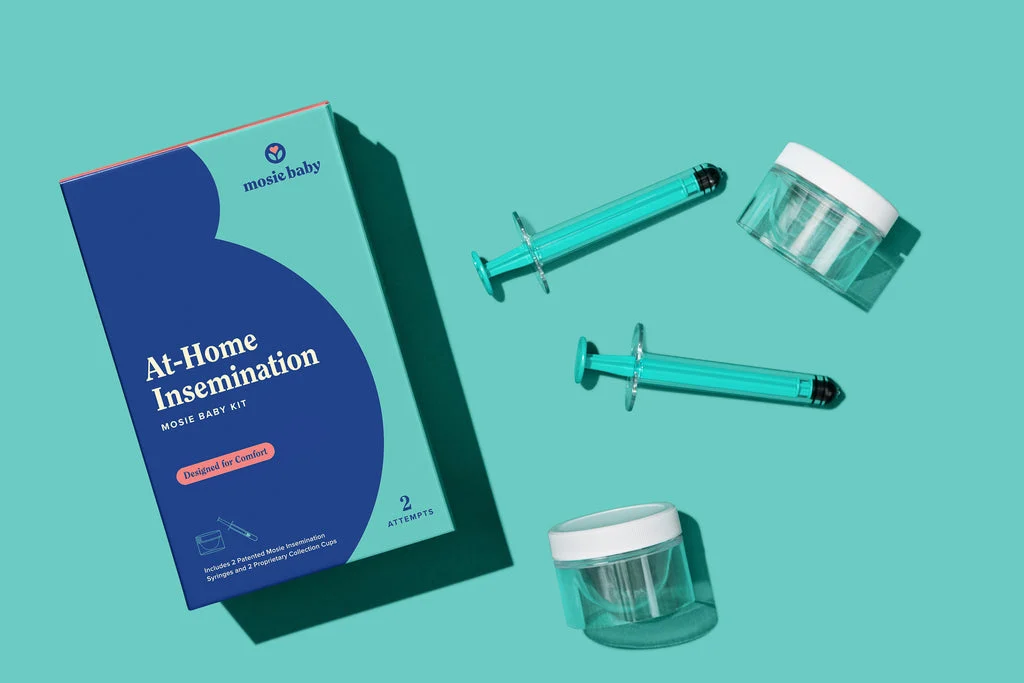
    The Mosiebaby kit included everything they needed – a syringe, a sterile cup, and instructions. The process was simple and easy to follow. They collected the donor sperm, placed it in the cup, and used the syringe to insert it into Kelly’s vagina. They repeated this process for a few days leading up to ovulation, just as they would with IUI.

    After just one cycle of using Mosiebaby, Kelly and Mark were overjoyed to find out that they were pregnant. They couldn’t believe it. After years of disappointment and heartache, they were finally going to be parents. They credit Mosiebaby for making their dream come true.

    At-home insemination kit with syringes and collection cups on a teal background.

    The Miracle of Mosiebaby: Kelly and Mark's Unconventional Insemination Story

    The couple’s pregnancy journey was filled with excitement and hope, but also with some challenges. As a same-sex couple, they faced discrimination and ignorance from some healthcare providers. They had to constantly educate others about their unconventional method of conception and explain the legitimacy and effectiveness of Mosiebaby.

    Despite these challenges, Kelly and Mark remained determined and focused on their goal of becoming parents. They documented their journey on social media, sharing their story and raising awareness about Mosiebaby. Their posts caught the attention of many other hopeful parents who were also struggling with fertility issues.

    Mosiebaby not only helped Kelly and Mark conceive but also brought them a community of support and understanding. They connected with other couples who were using Mosiebaby and shared their experiences, tips, and advice. They also received messages from people all over the world who were inspired by their story and wanted to try Mosiebaby for themselves.

    Kelly and Mark’s unconventional insemination story with Mosiebaby has brought them so much more than just a pregnancy. It has given them hope, a sense of community, and a platform to educate and raise awareness about fertility and LGBTQ+ issues. They are now proud parents to a healthy baby girl and are grateful every day for the miracle of Mosiebaby.

    In conclusion, the miracle of Mosiebaby has changed the lives of countless couples struggling with fertility. It has provided a simple, affordable, and effective solution for at-home insemination, giving hope to those who thought starting a family was out of reach. Kelly and Mark’s story is a testament to the power of perseverance, love, and the unconventional methods that bring miracles to life.

    SEO metadata:

  • The Mosiebaby Effect: Kelly and Mark’s Journey to Conception

    Kelly and Mark had been trying to conceive for over two years, but their journey had been filled with disappointment and heartache. They had tried everything from tracking ovulation to fertility treatments, but nothing seemed to work. That was until they discovered Mosiebaby – a revolutionary at-home insemination kit designed to help couples like them achieve their dream of starting a family.

    Mosiebaby was created by Maureen and Marc Brown, a couple who struggled with infertility themselves. After years of trying to conceive through traditional methods, they decided to take matters into their own hands and develop a product that would make the process of getting pregnant easier and more accessible for everyone. And thus, Mosiebaby was born.

    Kelly and Mark first heard about Mosiebaby through a friend who had successfully used it to conceive. They were initially skeptical, as they had tried so many different methods without success. But after doing some research and reading countless success stories, they decided to give it a try.

    The Mosiebaby kit comes with everything needed for an at-home insemination, including a syringe and a specially designed soft-tip catheter. The process is simple – the couple inserts the catheter into the vagina, while the sperm is collected into the syringe and then inserted through the catheter. The soft tip of the catheter prevents any trauma to the cervix, making the process more comfortable and less invasive.

    Kelly and Mark were amazed at how easy and stress-free the whole process was. They didn’t have to worry about timing intercourse or dealing with the side effects of fertility drugs. They could do everything in the comfort of their own home, and it felt more intimate and natural than other methods they had tried.

    But most importantly, they felt like they were taking control of their fertility journey. With Mosiebaby, they were no longer relying on doctors and clinics to help them conceive. They were empowered to take matters into their own hands and increase their chances of success.

    Mosie Baby kit with two jars, a syringe, and a supportive message card inside a colorful box.

    The Mosiebaby Effect: Kelly and Mark's Journey to Conception

    After using Mosiebaby for just two cycles, Kelly and Mark got the news they had been waiting for – they were pregnant! They couldn’t believe it had finally happened after years of disappointment and heartache. They credit Mosiebaby for making their dream of starting a family a reality.

    The success of Mosiebaby goes beyond just Kelly and Mark’s journey. Since its launch in 2017, Mosiebaby has helped thousands of couples conceive, many of whom had been struggling with infertility for years. And it’s not just heterosexual couples – Mosiebaby has also been a game-changer for LGBTQ+ couples who are trying to start a family.

    One of the reasons for Mosiebaby’s success is its effectiveness in bypassing common fertility roadblocks. For example, many women have trouble conceiving due to hostile cervical mucus, which can make it difficult for sperm to reach the egg. Mosiebaby’s soft-tip catheter helps to bypass this issue, increasing the chances of conception.

    But Mosiebaby is more than just a product – it’s a community. The Mosiebaby website features a blog and forum where couples can share their experiences and support each other through their fertility journeys. There is also a Facebook group where members can connect and ask questions, and the founders themselves are always available to offer advice and support.

    The success of Mosiebaby has also led to the creation of the Mosiebaby Effect Fund, which helps to provide Mosiebaby kits to those who cannot afford them. This fund has made it possible for more couples to access this innovative product and increase their chances of starting a family.

    In conclusion, the Mosiebaby Effect has been life-changing for countless couples who have struggled with infertility. Kelly and Mark’s journey to conception is just one of many success stories that prove the effectiveness of this innovative product. With its simplicity, affordability, and inclusivity, Mosiebaby has become a game-changer in the world of fertility and has given hope to many who thought starting a family was out of reach.

  • A Father’s Love: Michael’s Perspective on Using Mosiebaby for Insemination

    Blog Post:

    When Michael and his husband, David, decided to start a family, they faced a unique set of challenges. As an LGBTQ+ couple, they knew that the traditional route of conceiving a child through intercourse was not an option for them. After much research and consideration, they turned to Mosiebaby, a DIY insemination kit, as a way to fulfill their dream of becoming parents.

    For Michael, the journey to fatherhood was filled with excitement, fear, and uncertainty. In this blog post, we will explore Michael’s perspective on using Mosiebaby for insemination and how it has impacted his life as a father.

    The Decision to Use Mosiebaby
    As they began their journey to parenthood, Michael and David looked into various options for insemination. After weighing the pros and cons of each, they decided to try Mosiebaby. The simplicity and ease of use, along with the success stories of other couples, convinced them that this was the right choice for them.

    Michael recalls the initial hesitation he felt about using Mosiebaby. As a gay man, he never imagined that he would be the one to carry a child. However, the desire to have a biological connection to their child was strong, and Mosiebaby provided them with the opportunity to do so.

    The Insemination Process
    Using Mosiebaby was a new experience for both Michael and David. They were nervous and unsure if they were doing everything correctly. However, as they followed the instruction manual and watched tutorial videos, they became more confident in their abilities.

    Michael describes the process as a bonding experience for him and David. They were both involved in the insemination process, which brought them closer together and solidified their desire to become parents.

    The Waiting Game
    After the insemination process, Michael and David had to wait two weeks before taking a pregnancy test. These two weeks were filled with anxiety and anticipation. Michael remembers feeling anxious about the possibility of not being pregnant, but he also had a sense of peace knowing that they had done everything they could to make their dream of having a child a reality.

    Mosie Baby pregnancy test kit with two tests and packaging, featuring a mint green color scheme.

    A Father's Love: Michael's Perspective on Using Mosiebaby for Insemination

    When the day of the pregnancy test finally arrived, they were overjoyed to see a positive result. Michael describes that moment as one of the happiest in his life, knowing that they were going to become parents.

    Fatherhood
    As their child grew inside Michael’s womb, he experienced a mix of emotions. He felt a sense of pride and awe at the miracle of life, but also had concerns about being a good father. However, as he felt the baby kick and saw the ultrasounds, those fears were replaced with excitement and love.

    When their daughter was born, Michael was overcome with emotion. Holding her for the first time, he knew that all the struggles and challenges they faced were worth it. He was now a father, and nothing could compare to the love he felt for his child.

    Using Mosiebaby had a profound impact on Michael’s journey to fatherhood. It allowed him to have a biological connection to his child and share in the experience of pregnancy with his husband. It also brought them closer together as a couple and prepared them for the challenges of parenthood.

    A Message to Other Couples
    Michael’s experience with Mosiebaby has inspired him to share his story with others. He wants to spread the message that parenthood is possible for all types of families, and Mosiebaby is a great option for those who may not have the traditional means of conceiving a child.

    He also encourages other LGBTQ+ couples who are considering using Mosiebaby to not let fear or societal expectations hold them back. Michael believes that every person has the right to experience the joys of parenthood, and Mosiebaby is a wonderful tool to help make that a reality.

    In conclusion, Michael’s perspective on using Mosiebaby for insemination highlights the power of love and determination in creating a family. Through this DIY insemination kit, he and his husband were able to overcome obstacles and fulfill their dream of becoming parents. Mosiebaby has not only given them a child but has also strengthened their relationship and brought immeasurable love into their lives.

    Summary:

    Michael and his husband, David, turned to Mosiebaby, a DIY insemination kit, as a way to fulfill their dream of becoming parents as an LGBTQ+ couple. The decision to use Mosiebaby, the insemination process, and the waiting game all brought Michael and David closer together and solidified their desire to become parents. When their daughter was born, Michael was overcome with emotion, knowing that all the struggles and challenges they faced were worth it. He now shares his story to inspire and encourage other couples who may not have the traditional means of conceiving a child. Through Mosiebaby, Michael’s journey to fatherhood has been filled with love, determination, and the miracle of life.

  • The Power of At-Home Insemination: Sarah and Tim’s Success Story

    Summary:

    Sarah and Tim had always known that they wanted to start a family, but as a same-sex couple, they faced unique challenges when it came to conceiving a child. They quickly learned that traditional methods such as adoption or using a sperm donor were not only costly, but also came with their own set of legal and emotional complications.

    After doing extensive research, Sarah and Tim stumbled upon the concept of at-home insemination. This alternative method of conception allowed them to use Tim’s sperm to artificially inseminate Sarah in the comfort and privacy of their own home. Despite initial doubts and skepticism from friends and family, Sarah and Tim decided to give at-home insemination a try.

    With the help of a fertility specialist and some basic supplies, Sarah and Tim were able to successfully inseminate at home and conceive their first child. The process was not without its challenges, but the couple was overjoyed when they found out they were pregnant. As they navigated through the ups and downs of pregnancy, they also had to address the misconceptions and stigma surrounding at-home insemination.

    Throughout their journey, Sarah and Tim discovered the true power of at-home insemination. Not only did it allow them to conceive a child, but it also gave them a sense of control and autonomy over their own family planning. It also opened their eyes to the many other individuals and couples who have successfully used at-home insemination to start a family.

    In this blog post, we will dive deeper into the concept of at-home insemination and share Sarah and Tim’s success story. We will also discuss the benefits and challenges of this method, address common misconceptions, and provide tips for those considering at-home insemination as an alternative conception option.

    The Power of At-Home Insemination: Sarah and Tim’s Success Story

    At-home insemination, also known as artificial insemination or home insemination, is the process of using a syringe or a cervical cap to inject sperm into the cervix or vagina in order to achieve pregnancy. This method has been used for decades as a fertility treatment and has gained popularity in recent years as an alternative conception option for those struggling with traditional methods.

    For Sarah and Tim, at-home insemination was not only a way to overcome the challenges of being a same-sex couple, but it also provided them with a sense of control and intimacy in their journey towards parenthood. Like many other couples, they were initially hesitant and unsure about the process. However, after weighing their options and consulting with a fertility specialist, they decided to give it a try.

    sperm-ready insemination kit with a syringe and container, featuring a screw top lid and non-tip safety wall

    The Power of At-Home Insemination: Sarah and Tim's Success Story

    The first step in their at-home insemination journey was determining the best time for Sarah to ovulate. This involved tracking her menstrual cycle and using ovulation predictor kits to pinpoint the most fertile days. Once they had the timing down, they turned to the internet to purchase a cervical cap and a syringe, as well as some fertility-friendly lubricant.

    On the day of the insemination, Sarah and Tim created a comfortable and sterile environment in their own home. With the guidance of their fertility specialist, Tim collected his sperm in a sterile cup and then used the syringe to inject it into the cervical cap. Sarah then inserted the cap into her vagina, allowing the sperm to travel to the cervix and potentially fertilize an egg.

    While the process itself was relatively simple, Sarah and Tim had to manage their emotions and expectations throughout the two-week wait until they could take a pregnancy test. When they finally saw a positive result, they were overjoyed and grateful that at-home insemination had worked for them on the first try.

    As they shared their news with friends and family, Sarah and Tim were met with mixed reactions. Some were supportive and excited for them, while others expressed doubts and concerns about the safety and effectiveness of at-home insemination. This led the couple to do more research and educate themselves on the subject, finding that many other couples and individuals have successfully used this method to conceive.

    One of the biggest misconceptions about at-home insemination is that it is not as effective as traditional methods. However, studies have shown that the success rates of at-home insemination are comparable to other forms of artificial insemination, with pregnancy rates ranging from 10-20% per cycle. This success rate also increases with multiple attempts.

    Another misconception is that at-home insemination is only for same-sex couples. While it is a popular choice for LGBTQ+ couples, at-home insemination can also be used by heterosexual couples struggling with male infertility or who are looking for a more intimate and affordable alternative to traditional methods.

    However, at-home insemination is not without its challenges. It requires a lot of patience, planning, and openness to discussing sensitive topics such as fertility and sperm donation. It also involves a certain level of risk, as there is no medical professional present during the insemination process. Therefore, it is important for couples to have a clear understanding of the process and to consult with a fertility specialist for guidance and support.

    In the end, Sarah and Tim’s journey with at-home insemination proved to be a powerful and transformative experience. It not only helped them achieve their dream of starting a family, but it also brought them closer together and empowered them to take control of their own fertility journey. They hope that by sharing their story, they can inspire and educate others who may be considering at-home insemination as an alternative conception method.

    In conclusion, at-home insemination is a viable and empowering option for individuals and couples looking to start a family. It allows for a more intimate and cost-effective approach to assisted reproduction and has helped many people overcome the challenges of traditional methods. While it may not be the right choice for everyone, Sarah and Tim’s success story is a testament to the power of at-home insemination in making family planning dreams a reality.

    SEO metadata:

  • Mosiebaby and the Modern Family: Lauren and Ben’s Story

    For many couples, starting a family can be a challenging and emotional journey. This is especially true for same-sex couples, who may face additional obstacles when it comes to fertility and family planning. However, with advancements in modern medicine and a growing acceptance of LGBTQ+ families, the possibilities for starting a family have expanded. One of the most innovative and inclusive options for conception is Mosiebaby, a revolutionary at-home insemination kit. In this blog post, we will dive into the inspiring story of Lauren and Ben, a same-sex couple who used Mosiebaby to bring their dream of starting a family to life.

    Lauren and Ben met in college and knew from the beginning that they wanted to build a life together. However, as a lesbian couple, they soon realized that starting a family would not be as straightforward as it is for heterosexual couples. After researching various options, they decided to try using a sperm donor and artificial insemination, a process that can be expensive and invasive. But with determination, love, and the help of Mosiebaby, Lauren and Ben were able to overcome the challenges and make their dream of becoming parents a reality.

    Mosiebaby was created by Maureen Brown, a registered nurse who struggled with her own fertility challenges. After trying various methods, she and her husband decided to use at-home insemination using a syringe, which proved to be successful. This experience inspired her to create Mosiebaby, a more effective and comfortable option for couples trying to conceive. The kit includes specially designed syringes and a step-by-step guide, making it easy to use at home.

    For Lauren and Ben, Mosiebaby was a game-changer. They were able to order the kit discreetly and use it in the comfort of their own home, eliminating the stress and discomfort of multiple doctor visits. Mosiebaby’s design also made the process more enjoyable for the couple. Unlike traditional syringes, Mosiebaby’s soft and flexible tip minimizes discomfort and increases the chances of success. This was especially important for Lauren, who has endometriosis, a condition that can make intercourse and traditional insemination painful.

    Mosie Baby kit with two jars, a syringe, and a supportive message card inside a colorful box.

    Mosiebaby and the Modern Family: Lauren and Ben's Story

    But the road to parenthood was not without its challenges. After multiple attempts with Mosiebaby, Lauren and Ben were not achieving the desired results. However, they remained determined and sought out additional support and resources. They also found a sense of community through Mosiebaby’s online forums, connecting with other couples on similar journeys. This support system gave them the strength and motivation to keep trying.

    Finally, after six months of trying, Lauren and Ben received the news they had been waiting for – they were pregnant. Their joy and excitement were immeasurable, and they credit Mosiebaby for making their dream a reality. Nine months later, they welcomed their son, Oliver, into the world, and their family was complete.

    Lauren and Ben’s story is a testament to the power of determination, love, and modern advancements in fertility. Mosiebaby’s inclusive approach to conception has helped many couples, regardless of sexual orientation or fertility challenges, to achieve their dream of starting a family. This innovative product has not only made the process more accessible but has also brought a sense of hope and support to many couples on their journey to parenthood.

    In conclusion, Mosiebaby has not only revolutionized the way couples can conceive at home, but it has also played a crucial role in creating a more inclusive and accepting environment for modern families. Lauren and Ben’s story is just one example of the countless success stories made possible by Mosiebaby. With continued advancements in fertility and a more open-minded society, we can only hope to see more stories like theirs in the future.

  • Beyond Expectations: Rachel and Sam’s Story with Mosiebaby

    Beyond Expectations: Rachel and Sam’s Story with Mosiebaby is a heartwarming tale of love, determination, and the power of modern fertility options. This inspiring story follows the journey of Rachel and Sam, a couple who faced challenges while trying to conceive, but ultimately found success with the help of Mosiebaby, a revolutionary at-home insemination kit. Through their highs and lows, Rachel and Sam’s story serves as a reminder that sometimes, the most unexpected paths can lead to the greatest blessings.

    The story begins with Rachel and Sam, a young couple who had been trying to conceive for over a year without success. As they navigated the emotional rollercoaster of infertility, they quickly realized that their options were limited and expensive. Traditional fertility treatments, such as intrauterine insemination (IUI) and in vitro fertilization (IVF), were not only costly but also came with no guarantee of success. Feeling discouraged and overwhelmed, Rachel and Sam began to lose hope of starting a family of their own.

    But then, they discovered Mosiebaby. Created by a husband and wife duo, Mosiebaby is a simple, affordable, and effective at-home insemination kit that is designed to help couples conceive naturally. Unlike traditional methods, Mosiebaby is non-invasive and can be used in the comfort and privacy of one’s own home. This was a game-changer for Rachel and Sam.

    With Mosiebaby, Rachel and Sam took the first step towards their dream of parenthood. The process was easy to follow, and the kit came with everything they needed, including step-by-step instructions and a syringe specifically designed for insemination. The couple was pleasantly surprised by how simple and stress-free the entire process was, especially compared to other fertility treatments they had considered.

    After using Mosiebaby for a few months, Rachel and Sam received the news they had been waiting for – they were pregnant! The couple was overjoyed and grateful for the help of Mosiebaby in their journey to parenthood. They credit the at-home insemination kit for making their dream of starting a family a reality.

    comparison of Mosie syringe opening versus standard syringe opening with text highlighting benefits

    Beyond Expectations: Rachel and Sam's Story with Mosiebaby

    Rachel and Sam’s story is just one of many success stories of couples who have used Mosiebaby. The company has helped countless individuals and couples overcome the challenges of infertility and conceive naturally. It has become a beacon of hope for those struggling with fertility issues, providing a more affordable and accessible option for starting a family.

    Beyond the physical aspect of fertility, Rachel and Sam’s story also highlights the emotional toll that infertility can take on individuals and couples. The constant disappointment and uncertainty can be overwhelming, and the financial burden of traditional fertility treatments only adds to the stress. Mosiebaby not only offers a more affordable option but also provides a sense of control and privacy in a journey that can often feel out of one’s hands.

    In addition to affordability and convenience, Mosiebaby also stands out for its inclusivity. The at-home insemination kit is designed to be LGBTQ+ friendly, providing a safe and accessible option for same-sex couples and individuals who are looking to start a family. This is an important aspect, as traditional fertility treatments can be exclusive and discriminatory towards LGBTQ+ individuals and couples.

    Through Rachel and Sam’s story, we can see that Mosiebaby goes beyond just providing a product – it offers a community of support and understanding for those struggling with fertility. The company’s website features a blog and forum where individuals and couples can connect with others going through similar experiences, share their stories, and offer support and advice. This sense of community is invaluable for those facing the challenges of infertility.

    In conclusion, Rachel and Sam’s story with Mosiebaby is a testament to the power of modern fertility options and the resilience of the human spirit. It is a reminder that hope and love can conquer even the most difficult of challenges. Mosiebaby has redefined the traditional approach to fertility and has given hope to countless individuals and couples around the world. It is a reminder to never give up on one’s dreams of starting a family, and to always be open to unexpected paths that may lead to the greatest blessings.