Tag: reproductive technologies

  • Insemination Syringe Kits and the Rise of Single Parenthood

    Blog Post: The Rise of Single Parenthood and the Insemination Syringe Kit Revolution

    In today’s society, the traditional nuclear family has evolved into a more diverse and complex structure. One major factor that has contributed to this change is the rise of single parenthood. According to the latest statistics from the U.S. Census Bureau, approximately 23% of children under the age of 18 live with a single parent, with the majority being single mothers. This significant increase in single parenthood has sparked discussions and debates about its impact on society, particularly on the well-being of the children raised in these households.

    The concept of single parenthood is not a new phenomenon, but what has changed is the increasing acceptance and normalization of it. In the past, single parenthood was often stigmatized and seen as a result of divorce, death, or unplanned pregnancy. However, in recent years, there has been a rise in intentional single parenthood, with more and more individuals choosing to become parents on their own. This shift can be attributed to various societal factors, including advancements in reproductive technologies and changing attitudes towards alternative family structures.

    One significant development that has contributed to the rise of single parenthood is the availability of insemination syringe kits. These kits, also known as home insemination kits, allow individuals to perform artificial insemination in the comfort of their own homes without the need for expensive medical procedures. This DIY approach to conception has made it more accessible and affordable for single individuals, same-sex couples, and those struggling with fertility issues to start a family.

    Insemination syringe kits typically include a syringe, a vial of donor sperm, and instructions on how to use them. With the rise of online sperm banks and donor registries, individuals can now easily access information and select from a wide range of donors, including their desired physical characteristics, educational background, and health history. This option of choosing a sperm donor has given individuals more control and autonomy over their reproductive choices, making it an attractive option for single individuals who want to become parents.

    Hands holding a syringe and a small container against a blue background.

    Insemination Syringe Kits and the Rise of Single Parenthood

    Moreover, the use of insemination syringe kits has also opened up possibilities for individuals who may not have a partner or are not in a position to conceive through traditional methods. This includes single women who want to have a biological child but may not have a male partner, single men who want to have a child without a female partner, and same-sex couples who want to start a family. It has also provided an option for individuals who may have fertility issues or are unable to conceive through sexual intercourse.

    However, the rise of single parenthood and the use of insemination syringe kits have not been without controversy. Critics argue that children raised in single-parent households may face challenges such as financial strain, lack of emotional support, and societal stigma. They also express concerns about the absence of a father figure in the child’s life and the potential impact on their development.

    On the other hand, supporters of single parenthood argue that what matters most is the quality of parenting rather than the structure of the family. They argue that single parents can provide a loving and stable environment for their children and that children raised in single-parent households can thrive just as well as those in traditional families. Furthermore, they believe that the increasing acceptance and normalization of single parenthood will lead to a more diverse and inclusive society.

    In conclusion, the rise of single parenthood and the use of insemination syringe kits have brought about significant changes in the traditional concept of family. With the increasing acceptance and accessibility of these options, it is clear that single parenthood is here to stay. While there may be challenges and debates surrounding this phenomenon, what is essential is for society to continue to support and provide resources for all types of families, regardless of their structure.

    Summary: The rise of single parenthood has been a significant trend in recent years, with more individuals choosing to become parents on their own. This shift can be attributed to various societal factors, including advancements in reproductive technologies and changing attitudes towards alternative family structures. One significant development that has contributed to the rise of single parenthood is the availability of insemination syringe kits, which allow individuals to perform artificial insemination in the comfort of their own homes. While there are debates surrounding the impact of single parenthood on society, what is essential is for society to continue to support and provide resources for all types of families, regardless of their structure.

  • The Changing Face of Parenthood: The Rise of Conceiving on Your Own Terms

    Blog Post Title: The Changing Face of Parenthood: The Rise of Conceiving on Your Own Terms

    Parenthood has always been seen as a natural progression in life, with society placing pressure on individuals to marry and have children at a certain age. However, with advancements in technology and shifting societal norms, the face of parenthood is changing. More and more people are choosing to conceive on their own terms, challenging traditional ideas of what it means to be a parent.

    In the past, the concept of parenthood was closely tied to marriage. It was expected that once a couple got married, they would start a family and have children. However, in recent years, the rise of single parenthood has become more prevalent. According to the Center for Disease Control and Prevention, the number of single parents has steadily increased over the past few decades, with 23% of children in the United States living in a single-parent household in 2020.

    This change can be attributed to various factors, including a rise in divorce rates, changing attitudes towards marriage and relationships, and the increasing acceptance of alternative family structures. With more people choosing to remain single or co-parent with a partner without getting married, the traditional idea of parenthood within a marriage is no longer the norm.

    Another significant shift in the face of parenthood is the rise of same-sex couples choosing to have children. With the legalization of same-sex marriage in many countries, more LGBTQ+ couples are starting families through adoption, surrogacy, or assisted reproductive technologies. This has led to a more diverse range of family structures, challenging the traditional idea of what a family should look like.

    Technology has also played a significant role in the changing face of parenthood. With advancements in fertility treatments and reproductive technologies, individuals are now able to conceive on their own terms. This has given hope to those who may have previously struggled with infertility or those who have chosen to delay parenthood for personal or professional reasons.

    At-home insemination kit with ovulation and pregnancy tests, promoting fertility and family planning.

    The Changing Face of Parenthood: The Rise of Conceiving on Your Own Terms

    The rise of egg freezing has also given women more control over their reproductive choices. Women can now choose to freeze their eggs when they are younger and use them later on when they are ready to start a family, without worrying about the biological clock. This has been a game-changer for women who want to prioritize their careers or personal goals before starting a family.

    Moreover, the concept of co-parenting has gained popularity in recent years. This involves two or more individuals, regardless of their romantic relationship, coming together to raise a child. It could be two friends, siblings, or even strangers who have decided to co-parent and share the responsibilities and joys of parenthood. This option provides a sense of community and support for those who may not have a partner but still want to experience the joys of raising a child.

    The rise of solo parenthood has also become more prevalent, with more individuals choosing to have a child without a partner. This can happen through adoption, surrogacy, or self-insemination with donor sperm. It allows individuals who may not have a partner or are unable to conceive with a partner to still have a child and experience parenthood.

    The changing face of parenthood has also brought about a shift in societal attitudes towards single parents, same-sex couples, and alternative family structures. While there is still progress to be made, there is more acceptance and inclusivity towards these unconventional family structures. This has allowed more individuals to feel confident and empowered in their choices to become parents on their own terms.

    However, with these changes also come challenges. Single parents and same-sex couples may face discrimination and legal barriers when trying to start a family. There may also be financial challenges, as fertility treatments and adoption processes can be expensive. Additionally, solo parents and co-parents may face criticism and judgment from society for not conforming to traditional ideas of parenthood.

    In conclusion, the face of parenthood is changing, with more individuals choosing to conceive on their own terms. This shift has been influenced by various factors, including advancements in technology, changing attitudes towards marriage and relationships, and a more diverse and inclusive society. While there are challenges and obstacles that come with this change, it has allowed for more individuals to experience the joys of parenthood on their own terms, breaking free from societal expectations and norms.

  • The Rise of Solo Moms: Conceiving on Your Own Terms

    Blog Post: The Rise of Solo Moms: Conceiving on Your Own Terms

    In recent years, there has been a significant increase in the number of women choosing to become solo moms. This trend is known as “solo motherhood” or “single mother by choice.” These are women who have intentionally decided to have a child without a partner, either through artificial insemination or adoption. This decision comes with its own set of challenges and obstacles, but it also brings a sense of empowerment and freedom to women who want to start a family on their own terms.

    The traditional notion of a family has evolved over the years, and solo motherhood is just one of the many forms it has taken. With the rise of reproductive technologies and changing societal norms, more and more women are embracing the idea of becoming solo moms. Let’s take a closer look at the reasons behind this growing trend and the challenges faced by solo moms.

    Why Choose Solo Motherhood?

    There are various reasons why women may choose to become solo moms. Some may have had difficulty finding a suitable partner, while others may have prioritized their career and delayed starting a family. Some women may have experienced infertility or the breakdown of a relationship, leading them to consider solo motherhood as an alternative. Whatever the reason, these women have made a conscious decision to become mothers, and they do not let societal expectations or norms dictate their choices.

    One of the main reasons behind the rise of solo motherhood is the advancement of reproductive technologies. With the help of assisted reproductive techniques such as intrauterine insemination (IUI) and in vitro fertilization (IVF), women can now conceive without a partner. They can use donor sperm to fertilize their eggs, giving them the opportunity to start a family on their own.

    Moreover, the stigma surrounding single motherhood has reduced significantly in recent years. Women are now more financially independent and have the resources to raise a child without a partner. Society is also becoming more accepting and supportive of non-traditional family structures. This shift in attitudes has made it easier for women to consider solo motherhood as a viable option.

    The Challenges of Solo Motherhood

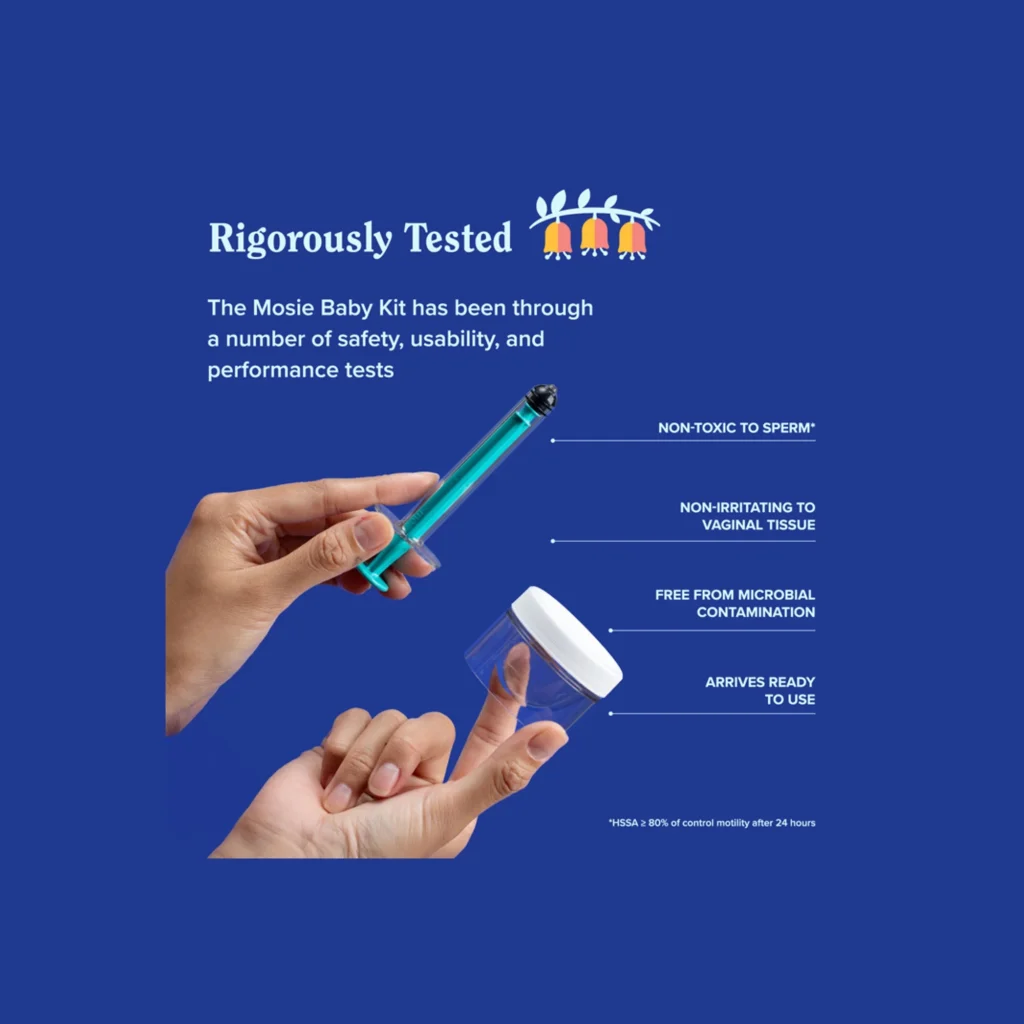
    Mosie Baby Kit features a syringe and container, highlighting safety and usability tests on a blue background.

    The Rise of Solo Moms: Conceiving on Your Own Terms

    As with any major life decision, choosing to become a solo mom comes with its own set of challenges. One of the biggest challenges faced by solo moms is the lack of a support system. Raising a child on your own can be physically, emotionally, and financially demanding, and it can be overwhelming without a partner to share the load. However, many solo moms have found support in their family, friends, and online communities, which provide a sense of belonging and understanding.

    Another challenge faced by solo moms is the societal pressure and judgment they may face. Despite the growing acceptance of non-traditional family structures, some people still hold onto the belief that a child needs both a mother and a father to thrive. This can lead to feelings of guilt and inadequacy for solo moms, but it’s essential to remember that love and support are the most crucial factors in a child’s upbringing, not the number or gender of their parents.

    Solo moms also have to navigate the legal and financial aspects of parenthood on their own. This can include securing parental rights, arranging for childcare, and managing the costs of raising a child. It’s crucial for solo moms to educate themselves on their legal rights and seek out resources and support to help them navigate these challenges.

    The Freedom and Empowerment of Solo Motherhood

    Despite the challenges, many solo moms feel a sense of freedom and empowerment in their decision to become a mother on their own terms. They have the autonomy to make decisions for themselves and their child without having to consider a partner’s opinions or desires. They also have the opportunity to create a unique and loving bond with their child, without the interference of a co-parent.

    Solo motherhood also allows women to break free from traditional gender roles and expectations. They can be both a mother and a career woman, challenging the idea that a woman’s role is limited to being a wife and mother. This sense of empowerment and independence can have a positive impact on the mental and emotional well-being of solo moms.

    In conclusion, the rise of solo moms is a testament to the changing dynamics of modern families and the increasing freedom and agency of women. These women have chosen to become mothers on their own terms, and their decision should be celebrated and supported. While solo motherhood may come with its own set of challenges, it also brings a sense of empowerment and freedom to women who want to create a loving and fulfilling family on their own.

    Summary: Solo motherhood, also known as single mother by choice, is a growing trend where women intentionally choose to have a child without a partner. This decision is often fueled by advancements in reproductive technologies, changing societal norms, and a desire for autonomy and empowerment. While solo motherhood comes with its own set of challenges, it also brings a sense of freedom and empowerment to women who want to start a family on their own terms.

  • The Non-Invasive Insemination Kit: A Revolutionary Option for Women with Medical Conditions

    Blog post:

    For many women, the journey to motherhood can be filled with challenges, especially for those who have medical conditions that make traditional conception difficult or impossible. In these cases, assisted reproductive technologies, such as in vitro fertilization (IVF), have been the go-to option. However, these procedures can be invasive, expensive, and not always successful. That’s where the Non-Invasive Insemination (NII) Kit comes in as a revolutionary option for women with medical conditions.

    What is the Non-Invasive Insemination Kit?

    The Non-Invasive Insemination Kit is a device that allows for at-home insemination, without the need for medical procedures or interventions. It is designed to be used by women who have conditions that affect the quality or quantity of their cervical mucus, making it difficult for sperm to reach and fertilize an egg.

    The NII Kit was first developed by Dr. David Knight, a reproductive endocrinologist, after seeing many patients struggle with traditional fertility treatments due to their medical conditions. He recognized the need for a non-invasive and cost-effective solution for these women and set out to create the NII Kit. After years of research and development, the NII Kit was launched in 2017 and has since helped many women achieve their dream of becoming mothers.

    How does it work?

    The NII Kit works by creating an optimal environment for sperm to survive and reach the egg. It consists of a special cervical cap, a syringe, and a pregnancy test. The cervical cap is made of medical-grade silicone and is designed to be worn for up to 12 hours, allowing sperm to stay inside the cervix and travel towards the egg. The syringe is used to collect and deposit the sperm into the cap, while the pregnancy test can be used to confirm pregnancy after insemination.

    The NII Kit also includes an ovulation predictor kit, which helps women determine their most fertile days. This is crucial for the success of the NII Kit, as it ensures that insemination is done at the right time, increasing the chances of conception.

    Who can benefit from the NII Kit?

    The NII Kit is an excellent option for women with medical conditions that affect their cervical mucus, such as endometriosis, PCOS, and cervical abnormalities. It is also suitable for women who have had cervical surgeries or procedures that may have affected their fertility. Additionally, women who have a partner with low sperm count or motility may also benefit from using the NII Kit, as it allows for direct placement of sperm near the cervix, increasing the chances of fertilization.

    mosie baby logo featuring a heart and leaves in blue, pink, and green colors.

    The Non-Invasive Insemination Kit: A Revolutionary Option for Women with Medical Conditions

    Benefits of the NII Kit

    The Non-Invasive Insemination Kit offers several advantages over traditional fertility treatments:

    1. Non-invasive: As the name suggests, the NII Kit is a non-invasive method of conception, making it an attractive option for women who want to avoid medical procedures.

    2. Cost-effective: IVF and other assisted reproductive technologies can be expensive, with no guarantee of success. The NII Kit, on the other hand, is a one-time purchase and can be used multiple times, making it a more affordable option for many women.

    3. Convenience: The NII Kit can be used in the comfort of one’s home and does not require multiple visits to a fertility clinic, making it a convenient option for busy women.

    4. Increased privacy: For some women, the idea of undergoing fertility treatments in a clinical setting can be uncomfortable. The NII Kit allows for a more private and intimate experience.

    5. Higher success rates: The NII Kit has shown to have success rates comparable to IVF, making it a viable option for women who have struggled with other fertility treatments.

    In conclusion, the Non-Invasive Insemination Kit is a game-changer for women with medical conditions who want to conceive. It offers a safe, affordable, and convenient option for conception, with comparable success rates to traditional fertility treatments. With the NII Kit, women can take control of their fertility journey and fulfill their dream of becoming mothers.

    Summary:

    The Non-Invasive Insemination Kit is a revolutionary device that allows for at-home insemination without the need for medical procedures. It is designed for women with medical conditions that affect their cervical mucus, making traditional conception difficult. Developed by a reproductive endocrinologist, the NII Kit offers a non-invasive, cost-effective, and convenient option for conception, with comparable success rates to IVF. It has helped many women with medical conditions achieve their dream of becoming mothers.