Tag: Single parent

  • Parenting Books That Will Help You Overcome the Challenges of Single Parenthood

    Blog Post:

    Being a single parent is no easy task. Whether you are a single mom or dad, raising a child on your own can be overwhelming and challenging. From juggling work and household responsibilities to dealing with the emotional and financial pressures of single parenthood, it can be hard to find the time and energy to focus on your child’s well-being. However, there is no need to feel alone or lost in this journey. Parenting books can be a valuable resource for single parents, providing guidance, support, and inspiration to overcome the challenges of single parenthood. In this blog post, we have compiled a list of parenting books that will help you navigate the ups and downs of single parenting with confidence and grace.

    1. “Raising Great Kids on Your Own: A Guide and Companion for Every Single Parent” by David and Lisa Frisbie

    Written by a husband and wife team who have raised four children as a single parent, this book offers practical advice and encouragement for single parents. It covers a wide range of topics, including effective communication, discipline, and building a strong relationship with your child. The authors also share their own experiences and those of other single parents, making this book relatable and easy to connect with.

    2. “The Successful Single Mom: Get Your Life Back and Your Game On!” by Honoree Corder

    As a single mom and coach, Honoree Corder understands the unique challenges faced by single mothers. In this book, she shares her personal experiences and strategies for achieving success as a single mom. From managing finances to finding time for self-care, this book provides practical tips and resources to help single moms thrive.

    3. “The Single Father: A Dad’s Guide to Parenting Without a Partner” by Armin Brott

    Written specifically for single dads, this book covers all aspects of parenting, from pregnancy and childbirth to raising teenagers. It addresses common concerns and challenges faced by single fathers, such as building a support system and dealing with the absence of a mother figure. With real-life stories and expert advice, this book is a valuable resource for single dads.

    Hands holding a syringe and a small container against a blue background.

    Parenting Books That Will Help You Overcome the Challenges of Single Parenthood

    4. “Single Parenting That Works: Six Keys to Raising Happy, Healthy Children in a Single-Parent Home” by Kevin Leman

    In this book, renowned psychologist and New York Times bestselling author Kevin Leman offers practical strategies for single parents to raise happy and well-adjusted children. He emphasizes the importance of consistency, communication, and positive discipline in single-parent households. With humor and empathy, this book provides a refreshing perspective on single parenting.

    5. “Confessions of a Single Mother: Or How I Learned to Stop Worrying and Love the Job” by Madeleine L’Engle

    Written by the beloved author of “A Wrinkle in Time,” this book is a candid and witty account of Madeleine L’Engle’s experience as a single mother. She shares her struggles and triumphs, offering a unique perspective on single parenting. This book is not a how-to guide, but rather a comforting and relatable read for single parents who may feel overwhelmed at times.

    6. “Strong Fathers, Strong Daughters: 10 Secrets Every Father Should Know” by Meg Meeker

    Based on years of research and experience as a pediatrician, Dr. Meg Meeker’s book is a must-read for single fathers raising daughters. It offers valuable insights into the ways fathers can positively influence their daughters’ lives. With practical advice and real-life examples, this book will help single fathers build a strong and healthy relationship with their daughters.

    7. “The Single Parenting Journey: Raising Children Alone” by Angela Thomas

    In this book, author and single mother Angela Thomas shares her personal journey of single parenthood. She offers encouragement and hope to other single parents, reminding them that they are not alone in their struggles. With a focus on faith and spirituality, this book provides a comforting and uplifting read for single parents.

    In summary, single parenthood can be a challenging and sometimes overwhelming experience, but it doesn’t have to be a lonely one. These parenting books offer valuable guidance, support, and encouragement for single parents. From practical tips to personal stories, these books will help you navigate the unique challenges of single parenthood with confidence and grace.


  • The Syringe Kit: The Affordable Alternative to Traditional Insemination Procedures

    Blog Post Title: The Syringe Kit: The Affordable Alternative to Traditional Insemination Procedures

    Summary:

    Insemination procedures have long been the go-to method for couples struggling with fertility or same-sex couples looking to start a family. However, the cost of these medical procedures can be prohibitive for many, leaving them with few options. That’s where the syringe kit comes in – an affordable and accessible alternative to traditional insemination procedures.

    The syringe kit includes all the necessary tools for at-home insemination, making it a convenient and cost-effective option for those looking to conceive. In this blog post, we will delve into the benefits of using a syringe kit, how to use it properly, and why it is a game-changer for many couples.

    Benefits of Using a Syringe Kit:

    1. Cost-Effective: One of the most significant advantages of using a syringe kit is its affordability. Insemination procedures can cost thousands of dollars, including doctor’s fees, medication, and laboratory fees. On the other hand, a syringe kit typically costs less than $100, making it a more accessible option for many couples.

    2. Convenience: With a syringe kit, couples can perform the insemination procedure in the comfort of their own home, eliminating the need for multiple doctor’s visits. This convenience can be especially beneficial for those living in remote areas or for couples with busy schedules.

    3. Privacy: Insemination procedures can be invasive and may make some couples uncomfortable. With a syringe kit, couples can maintain their privacy, which can be crucial for same-sex couples or those struggling with fertility issues.

    4. Reusability: Unlike traditional insemination procedures, which are typically a one-time use, a syringe kit can be reused multiple times, making it a more sustainable option. This also means that couples can continue trying for a longer period without incurring additional costs.

    How to Use a Syringe Kit:

    Mosie Baby kit with two jars, a syringe, and a supportive message card inside a colorful box.

    The Syringe Kit: The Affordable Alternative to Traditional Insemination Procedures

    Using a syringe kit may seem intimidating at first, but with the right knowledge and preparation, it can be a simple and effective process. Here are the steps to follow when using a syringe kit for insemination:

    1. Prepare the Kit: The syringe kit typically includes a syringe, a sterile cup, and a lubricant. It is essential to read the instructions carefully and ensure that all the components are clean and sterile before use.

    2. Collect the Sperm: If using a sperm donor, it is important to collect the sperm in a sterile cup provided in the kit. If using a partner’s sperm, it can be collected directly into the syringe.

    3. Load the Syringe: Once the sperm is collected, it needs to be loaded into the syringe. This can be done by attaching the syringe to the cup or by drawing the sperm into the syringe using the plunger.

    4. Prepare for Insemination: The person receiving the sperm should lie down with their hips slightly elevated. The syringe should be inserted into the vagina and pushed gently to insert the sperm into the cervix.

    5. Clean Up: After insemination, it is important to clean and sterilize all the components of the syringe kit to avoid any contamination.

    Why the Syringe Kit is a Game-Changer:

    The syringe kit has proven to be a game-changer for many couples, providing them with an affordable and accessible option for insemination. This has given hope to couples who may have otherwise been unable to afford traditional procedures, and has also brought a greater sense of control and privacy to the process.

    Moreover, the syringe kit has also been a helpful tool for single individuals looking to start a family. It has opened up possibilities for individuals who may not have a partner or who may not want to rely on traditional sperm banks.

    In conclusion, the syringe kit is an affordable and convenient alternative to traditional insemination procedures. It has provided many couples with a more accessible option for starting a family and has also given individuals more control and privacy in the process. With its cost-effectiveness, sustainability, and ease of use, the syringe kit is a game-changer in the world of fertility treatments.

  • Creating a Family on Your Own Terms with Insemination Syringe Kits

    Creating a Family on Your Own Terms with Insemination Syringe Kits

    In today’s society, the traditional concept of family has evolved to encompass various forms and structures. One such structure is that of a single parent family, where an individual chooses to have a child on their own. While this may have been considered unconventional in the past, advancements in medical technology have made it possible for anyone to create a family on their own terms. Insemination syringe kits are one such innovation that has made it easier and more accessible for individuals to conceive and start a family on their own. In this blog post, we will explore the benefits and process of using insemination syringe kits for single parents looking to start a family.

    What are Insemination Syringe Kits?

    Insemination syringe kits, also known as artificial insemination kits, are a type of at-home fertility treatment used to assist in the process of conception. These kits contain all the necessary tools and instructions for individuals to perform insemination on their own, without the need for medical assistance. The kits typically include a syringe, collection cup, ovulation predictor kit, and sometimes a speculum. They are available for purchase online and in some pharmacies, making them easily accessible for those looking to start a family on their own terms.

    Benefits of Using Insemination Syringe Kits

    1. Cost-Effective

    One of the most significant benefits of using insemination syringe kits is the cost-effectiveness compared to other fertility treatments. Traditional fertility treatments such as in vitro fertilization (IVF) can be expensive and out of reach for many individuals. Insemination syringe kits, on the other hand, are relatively affordable and can be purchased at a fraction of the cost of other treatments.

    2. Privacy

    For some individuals, the thought of undergoing fertility treatments in a clinical setting can be daunting and uncomfortable. Insemination syringe kits provide the opportunity for individuals to perform the procedure in the privacy of their own home. This allows for a more comfortable and relaxed environment, which can positively impact the success of the procedure.

    3. Control and Autonomy

    Using insemination syringe kits also gives individuals full control and autonomy over the process. They can choose the time, place, and method of insemination, without the need for medical professionals. This can be empowering for individuals who want to create a family on their own terms and take control of their fertility journey.

    The Process of Using Insemination Syringe Kits

    at-home insemination kit by Mosie Baby, featuring syringes and containers for comfort and convenience.

    Creating a Family on Your Own Terms with Insemination Syringe Kits

    1. Ovulation Tracking

    The first step in using an insemination syringe kit is to track ovulation. This can be done through an ovulation predictor kit, which measures hormone levels in urine and predicts when ovulation will occur. Alternatively, some individuals may choose to track their ovulation using their basal body temperature or cervical mucus.

    2. Collection of Sperm

    Next, the sperm must be collected from a sperm donor or a partner. This can be done through ejaculation into a collection cup or through a process called sperm washing, where sperm is collected and prepared for insemination.

    3. Preparing the Syringe

    The syringe must be prepared by removing the plunger and attaching the plastic tip. The sperm is then drawn up into the syringe, and the plunger is reinserted.

    4. Inserting the Syringe

    Using a speculum, the syringe is inserted into the vagina and placed near the cervix. The plunger is then pushed, and the sperm is released into the uterus.

    5. Resting and Monitoring

    After the insemination, it is recommended to rest for 10-20 minutes with your hips elevated to increase the chances of success. It is also essential to monitor ovulation and track any symptoms to determine if the procedure was successful.

    Summary

    Insemination syringe kits have made it possible for individuals to create a family on their own terms. They offer a more cost-effective, private, and empowering alternative to traditional fertility treatments. The process of using these kits involves tracking ovulation, collecting sperm, preparing the syringe, inserting it into the vagina, and resting and monitoring. With the use of insemination syringe kits, individuals can take control of their fertility journey and start a family on their own terms.

  • Breaking Barriers: Using Mosie Brand Insemination as a Single Parent

    Breaking Barriers: Using Mosie Brand Insemination as a Single Parent

    In today’s society, there are many different paths to parenthood. While traditional methods of conception may not be an option for everyone, there are alternative options available. One such option is Mosie Brand Insemination, a simple and effective way for single parents to conceive without the need for a partner. In this blog post, we will explore the barriers that single parents face when trying to conceive, and how Mosie Brand Insemination can help break those barriers and make parenthood a reality.

    The Challenges of Being a Single Parent

    Being a single parent can be a fulfilling and rewarding experience, but it also comes with its own set of challenges. For single individuals who want to become parents, there are several obstacles that they may face. One of the main challenges is the cost associated with assisted reproductive techniques, such as in vitro fertilization (IVF) or intrauterine insemination (IUI). These procedures can be expensive and may not be covered by insurance, making it difficult for single parents to afford them.

    Another barrier for single parents is finding a sperm donor. Traditional sperm banks often have strict requirements for donors, such as being in a committed relationship or having a certain level of education. This can limit the options for single parents, making it more challenging to find a suitable donor.

    How Mosie Brand Insemination Can Help

    Mosie Brand Insemination was created with the goal of breaking down barriers for those trying to conceive. It is a simple, at-home insemination kit that allows individuals to bypass the traditional barriers and take control of their own fertility journey. The kit includes everything needed for the insemination process, including a syringe, sperm-friendly lubricant, and step-by-step instructions.

    One of the main advantages of Mosie Brand Insemination is its affordability. Compared to other assisted reproductive techniques, Mosie is much more cost-effective, making it a more accessible option for single parents. Additionally, Mosie does not require a sperm donor, as the individual can use their own or a known donor’s sperm. This eliminates the need to go through a sperm bank and its strict requirements.

    Using Mosie Brand Insemination as a Single Parent

    illustration of Mosie Baby home insemination kit highlighting seamless transfer and size features

    Breaking Barriers: Using Mosie Brand Insemination as a Single Parent

    Using Mosie Brand Insemination as a single parent is a simple and straightforward process. The first step is to determine when ovulation is expected to occur. This can be done through tracking basal body temperature, monitoring cervical mucus, or using ovulation predictor kits. Once ovulation is expected, the individual can use the Mosie kit to inseminate at home.

    To use the Mosie kit, the individual will first mix the sperm with the provided lubricant. Then, using the syringe, the sperm and lubricant mixture is inserted into the vagina, near the cervix. The individual can then lie down for 15 minutes to allow the sperm to travel towards the egg. After this, they can resume their daily activities.

    Why Mosie Brand Insemination is a Great Option for Single Parents

    Aside from being a cost-effective option, Mosie Brand Insemination offers many other benefits for single parents. It allows individuals to take control of their fertility journey without the need for a partner or a sperm bank. It also provides a more intimate and natural way of conceiving, as the insemination is done at home, in a comfortable and familiar environment.

    Furthermore, using Mosie Brand Insemination can also help single parents to save time and reduce stress. Traditional assisted reproductive techniques often require multiple visits to a clinic and can be a lengthy and stressful process. With Mosie, the insemination can be done at home, at the most optimal time for conception, without the added stress of appointments and procedures.

    In addition to these benefits, Mosie also offers a supportive community for single parents through its website and social media platforms. They provide resources, tips, and success stories from other single parents who have used Mosie to conceive.

    In Conclusion

    For single parents who are looking to start or expand their families, Mosie Brand Insemination can be a game-changer. It offers an affordable, convenient, and effective option for conceiving without the need for a partner or a sperm bank. By breaking down barriers and providing a more natural and intimate way of conceiving, Mosie is paving the way for single parents to achieve their dreams of parenthood.

    SEO metadata:

  • The Emotional Journey of Insemination on Your Own Terms

    The Emotional Journey of Insemination on Your Own Terms

    Deciding to start a family is a big decision for anyone, but for those who choose to undergo insemination on their own terms, the journey can be even more complex. Insemination on your own terms refers to the process of using donor sperm to conceive without a partner or with a partner of the same gender. This choice can be empowering and liberating, but it also comes with its own set of emotional challenges. In this blog post, we will delve into the emotional journey of insemination on your own terms and provide tips for navigating through it.

    The Decision to Pursue Insemination on Your Own Terms

    The decision to pursue insemination on your own terms is not one that is made lightly. It often comes after a great deal of thought and consideration. For some, it may be the result of not finding the right partner or wanting to start a family at a certain point in life. For others, it may be a conscious choice to challenge traditional societal norms and create a family on their own terms. Whatever the reason, it is a decision that can bring about a range of emotions.

    Excitement and Hope

    The initial stages of considering insemination on your own terms are often filled with excitement and hope. The idea of creating a family and being a parent can be incredibly fulfilling. This newfound sense of purpose and the possibilities of what the future holds can bring about a sense of joy and anticipation.

    Anxiety and Fear

    However, alongside the excitement and hope, there can also be feelings of anxiety and fear. The idea of undergoing a medical procedure and the uncertainty of the outcome can bring about a sense of unease. For those who have a history of fertility issues, there may be added fears and concerns about the success of the insemination.

    Loneliness and Isolation

    The decision to pursue insemination on your own terms can also bring about feelings of loneliness and isolation. Society often places a lot of emphasis on traditional family structures, and not conforming to these norms can make individuals feel like outsiders. This can be especially difficult for those who do not have a strong support system or who live in areas where non-traditional families are not widely accepted.

    The Insemination Process

    Once the decision to pursue insemination on your own terms has been made, the actual process can be emotionally taxing. From choosing a sperm donor to undergoing the insemination procedure, there are many steps involved that can bring about a rollercoaster of emotions.

    Excitement and Hope (Again)

    Baby wearing a blue shirt with "made with Love" text, surrounded by colorful floral and butterfly designs.

    The Emotional Journey of Insemination on Your Own Terms

    The initial stages of the insemination process can bring about feelings of excitement and hope once again. As the process begins, there is a newfound sense of purpose and determination to make it a success. This can also be a time of bonding for those who have chosen to undergo insemination with a partner.

    Disappointment and Frustration

    However, as with any fertility treatment, there is always the possibility of disappointment. A failed insemination attempt can bring about feelings of frustration and sadness. This can be even more difficult for those who have undergone multiple attempts without success.

    Guilt and Self-Doubt

    When a failed insemination attempt occurs, it is natural for individuals to start questioning themselves and feeling guilty. Thoughts such as “Was it something I did wrong?” or “Am I not meant to be a parent?” can start to creep in. These feelings of guilt and self-doubt can be overwhelming and can take a toll on one’s emotional well-being.

    Joy and Relief

    On the other hand, a successful insemination can bring about a great sense of joy and relief. The months of hard work and emotional turmoil have finally paid off, and the prospect of becoming a parent becomes more tangible. This can be an incredibly emotional and fulfilling moment for those who have chosen to undergo insemination on their own terms.

    Preparing for Parenthood

    Once a successful insemination has taken place, the focus shifts to preparing for parenthood. This can be a time of great anticipation and excitement, but it can also bring about feelings of anxiety and uncertainty. The idea of being solely responsible for another human being can be overwhelming, and it is natural for individuals to question their ability to be a good parent.

    Bonding with the Baby

    As the pregnancy progresses, many individuals may experience a sense of bonding with the baby. This can be a beautiful and emotional experience, but it can also bring about feelings of anxiety and fear. For those who have chosen to undergo insemination with a partner, this can be a time of strengthening their relationship and preparing for the arrival of their little one.

    The Arrival of the Baby

    Finally, the big day arrives, and the baby is born. This can be a moment of pure joy and happiness, but it can also be a time of great adjustment. The reality of being a parent and all the responsibilities that come with it can be overwhelming. It is important to remember that it is okay to feel a range of emotions during this time, and seeking support from loved ones or a therapist can be incredibly beneficial.

    In summary, the emotional journey of insemination on your own terms is a complex one that involves a range of emotions. From the decision to pursue insemination to the arrival of the baby, there are many ups and downs along the way. It is important to acknowledge and validate these emotions and seek support when needed. The journey to parenthood may not always be easy, but it is ultimately a beautiful and rewarding experience.

  • Inseminating Alone: A Single Parent’s Guide to Home Insemination

    Blog Post Title: Inseminating Alone: A Single Parent’s Guide to Home Insemination

    Introduction:
    Becoming a parent is a dream for many people, and for some, this dream does not necessarily include a partner. With advancements in technology and the growing acceptance of single parenthood, more and more individuals are choosing to start a family on their own. However, for single individuals who want to conceive through home insemination, the process can seem daunting and overwhelming. In this blog post, we will discuss the basics of home insemination and provide a comprehensive guide for single parents who want to embark on this journey.

    What is Home Insemination?
    Home insemination is a method of achieving pregnancy without the assistance of a medical professional. It involves manually placing sperm in the reproductive tract through methods such as artificial insemination or self-insemination. Home insemination is a popular choice for single individuals who want to conceive as it is cost-effective, can be done in the privacy of one’s home, and can be done without a partner’s involvement.

    Preparing for Home Insemination:
    Before embarking on the home insemination process, it is crucial to consult with a healthcare provider to discuss any potential risks and ensure that you are healthy enough to conceive. It is also essential to understand your ovulation cycle and track it using methods such as ovulation predictor kits or tracking basal body temperature. Additionally, it is crucial to have a support system in place, whether it be friends, family, or a therapist, as the journey of single parenthood can be emotionally challenging.

    Sperm Acquisition:
    The first step in home insemination is acquiring sperm. There are various options available, including using a sperm bank or finding a known donor. If using a sperm bank, it is essential to research and choose a reputable one that follows strict guidelines for screening and testing donors. If using a known donor, it is crucial to have a legal agreement in place to protect all parties involved. Whichever option is chosen, it is vital to ensure that the sperm is delivered fresh or frozen and has been tested for sexually transmitted infections.

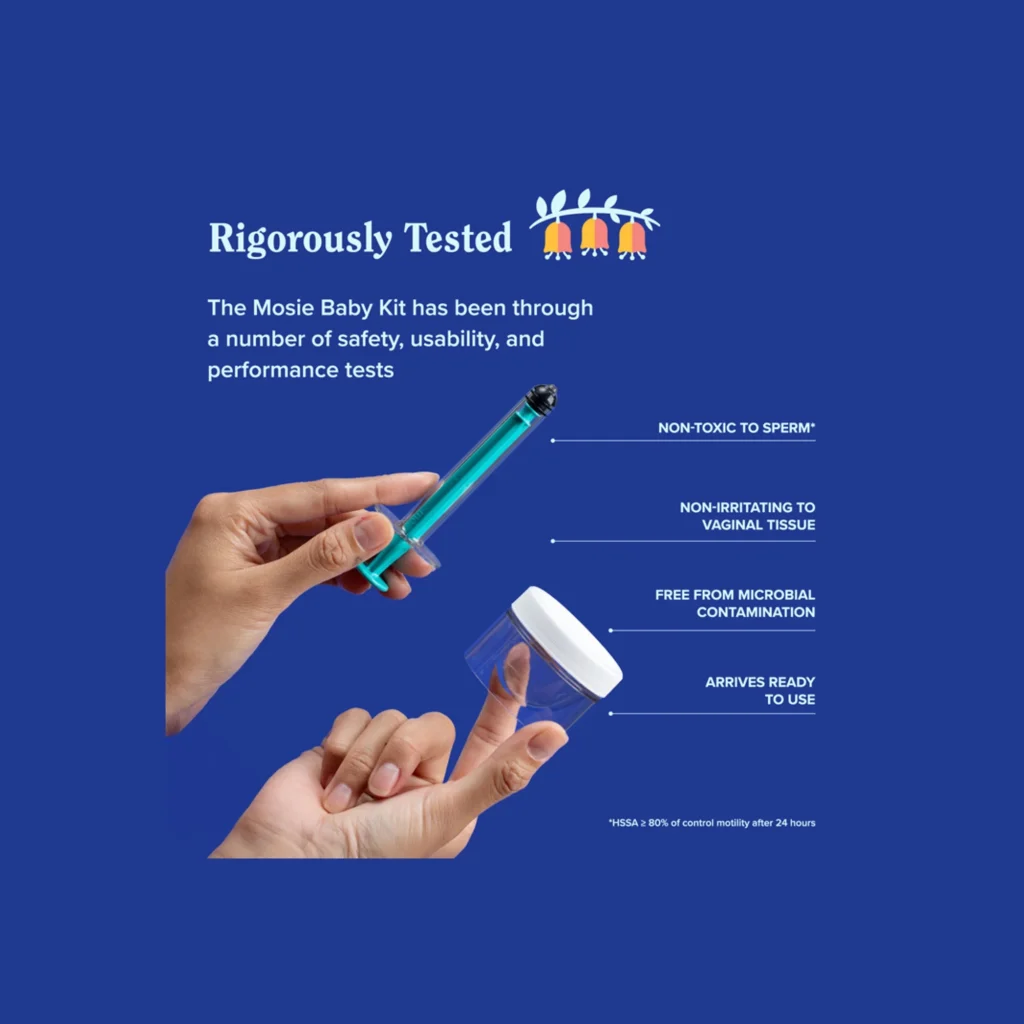
    Mosie Baby Kit features a syringe and container, highlighting safety and usability tests on a blue background.

    Inseminating Alone: A Single Parent's Guide to Home Insemination

    The Insemination Process:
    Once the sperm is acquired, the insemination process can begin. There are two main methods of home insemination: artificial insemination and self-insemination. Artificial insemination involves using a syringe or a soft cup to deposit sperm into the cervix. Self-insemination, on the other hand, involves using a needleless syringe or a menstrual cup to place the sperm near the cervix. Both methods have similar success rates, and the choice ultimately depends on personal preference.

    Tips for Successful Home Insemination:
    – Follow the instructions provided by the sperm bank or donor on how to handle and store the sperm.
    – Use ovulation predictor kits or track basal body temperature to determine the best time for insemination.
    – Create a comfortable and relaxing environment for the process.
    – Use a lubricant that is sperm-friendly.
    – After insemination, remain lying down for at least 15 minutes to increase the chances of conception.

    Challenges of Inseminating Alone:
    Inseminating alone can be a challenging and emotional journey for single individuals. It can be physically demanding and emotionally draining, especially if multiple attempts are needed. It is crucial to have a support system in place to help alleviate some of these challenges. Additionally, the financial burden of sperm acquisition and the insemination process can also be a significant challenge for single parents. Researching and understanding the costs involved and exploring options such as insurance coverage or financial assistance programs can help ease this burden.

    The Legalities of Home Insemination:
    As a single parent, it is essential to understand the legalities involved in home insemination. In some jurisdictions, the donor may have legal rights and responsibilities towards the child, even if they are not the biological parent. It is crucial to have a legal agreement in place to protect all parties involved and ensure that the donor’s rights and responsibilities are clearly defined.

    Conclusion:
    Home insemination is a viable option for single individuals who want to become parents. With proper research, preparation, and support, it can be a successful and rewarding journey. However, it is essential to understand the physical, emotional, and financial challenges involved and have a support system in place. Consulting with healthcare providers and legal professionals can also help navigate the process and ensure that all legalities are addressed.

    In summary, home insemination is a method of achieving pregnancy without the assistance of a medical professional. It involves manually placing sperm in the reproductive tract and is a popular choice for single individuals who want to conceive. Some key steps in the home insemination process include preparing for insemination, acquiring sperm, understanding the insemination process, and addressing challenges and legalities. With proper research, preparation, and support, home insemination can be a successful and fulfilling journey for single parents.