Tag: societal norms

  • Fashion Designers Who Transformed Fashion into Art

    Blog Post:

    Fashion has always been a form of self-expression, but there are some fashion designers who have taken it to the next level by transforming it into art. These designers have pushed the boundaries of fashion, blurring the lines between fashion and art and creating pieces that are not only beautiful but also thought-provoking. In this blog post, we will take a closer look at some of the fashion designers who have transformed fashion into art.

    1. Alexander McQueen
    Known for his dark and dramatic designs, Alexander McQueen is often referred to as a visionary in the fashion world. His collections were more than just clothes, they were works of art that challenged societal norms and pushed the limits of fashion. McQueen’s shows were often theatrical and controversial, with models walking down the runway in pieces that were both beautiful and disturbing. One of his most iconic collections, “The Horn of Plenty,” featured models dressed in trash-inspired garments, making a statement about the excess and waste in the fashion industry.

    2. Vivienne Westwood
    Vivienne Westwood is another designer who has transformed fashion into art. She is known for her punk-inspired designs and her ability to mix high fashion with street style. Westwood’s designs are often a reflection of her political and social beliefs, making powerful statements through her clothing. She has also collaborated with artists, musicians, and filmmakers, blurring the lines between fashion and other forms of art.

    3. Rei Kawakubo
    Rei Kawakubo, the founder of Comme des Garçons, is a true pioneer in the fashion world. Her designs are unconventional and often challenge traditional ideas of beauty. Kawakubo’s collections are a fusion of fashion and art, with pieces that are more like sculptures than clothing. She has also collaborated with artists such as Cindy Sherman and Jean-Michel Basquiat, further blurring the lines between fashion and art.

    two teal and clear syringes positioned on a white background

    Fashion Designers Who Transformed Fashion into Art

    4. Jean Paul Gaultier
    Jean Paul Gaultier is known for his avant-garde designs and his ability to push boundaries. He has transformed fashion into art by using unconventional materials like plastic, metal, and even food in his designs. Gaultier’s collections are often inspired by subcultures and his shows are more like performances. He has also collaborated with artists like Madonna and Pedro Almodóvar, cementing his status as a true artist in the fashion world.

    5. Hussein Chalayan
    Hussein Chalayan is a designer who is not afraid to experiment and push the boundaries of fashion. His collections often have a strong concept behind them, and he uses technology and unconventional materials to bring his ideas to life. Chalayan’s pieces are not only visually stunning but also have a deeper meaning, making them true works of art.

    6. Iris van Herpen
    Iris van Herpen is a designer who has truly transformed fashion into art. She uses 3D printing and other innovative techniques to create pieces that are futuristic and otherworldly. Her collections are a fusion of fashion, science, and technology, and her pieces are often exhibited in museums and galleries. Van Herpen’s designs are not only visually stunning but also challenge our ideas of what fashion can be.

    7. Christian Dior
    While many may think of Christian Dior as a traditional fashion designer, he was actually a true visionary who transformed fashion into art. Dior’s iconic “New Look” collection in 1947 revolutionized fashion, with its full skirts and nipped-in waists. His designs were not only beautiful but also reflected the changing societal attitudes of the time. Dior’s influence can still be seen in the fashion world today, making him a true master of transforming fashion into art.

    Summary:

    Fashion designers have always been known for their creativity and ability to push boundaries. However, there are some designers who have taken it a step further by transforming fashion into art. These designers, such as Alexander McQueen, Vivienne Westwood, and Rei Kawakubo, have challenged traditional ideas of beauty and societal norms through their thought-provoking designs. Others, like Jean Paul Gaultier and Iris van Herpen, have used unconventional materials and technology to create pieces that are truly works of art. Even designers from the past, such as Christian Dior, have left a lasting impact on the fashion world by transforming it into art. These fashion designers have not only changed the way we think about fashion but have also blurred the lines between fashion and art, proving that fashion truly is a form of art.

  • The Best-Selling Books That Were Banned or Censored

    The Best-Selling Books That Were Banned or Censored

    Books have the power to transform lives, inspire change, and challenge societal norms. However, this power has also made books the target of censorship and banning throughout history. From religious and political authorities to concerned parents and educators, books have been at the center of controversy and have often been banned or censored in different parts of the world. Despite this, some of these controversial books have gone on to become best-sellers, proving that even censorship cannot stop great literature from reaching the masses. In this blog post, we will explore some of the best-selling books that have faced challenges in their journey to reach readers.

    1. To Kill a Mockingbird by Harper Lee

    Published in 1960, To Kill a Mockingbird by Harper Lee is a classic American novel that addresses issues of race, class, and the justice system in the American South. The book follows the story of a young girl, Scout, and her father, Atticus Finch, as he defends a black man wrongly accused of rape. The novel was an instant success, winning the Pulitzer Prize and selling millions of copies worldwide. However, it also faced challenges and was banned in several schools and libraries for its use of racial slurs and its portrayal of sensitive topics. Despite this, the book has remained a beloved classic and continues to be studied in schools and universities.

    2. The Catcher in the Rye by J.D. Salinger

    The Catcher in the Rye, published in 1951, is a coming-of-age novel that follows the story of Holden Caulfield, a teenage boy struggling with the loss of innocence and the pressures of adulthood. The book quickly became a best-seller but also faced censorship for its use of profanity and its portrayal of teenage rebellion and sexuality. It has been banned in several schools and libraries in the United States, with some critics arguing that it promotes immoral behavior. However, the book remains a popular read among teenagers and has been praised for its honest and raw depiction of adolescence.

    mosie baby logo featuring a heart and leaves in blue, pink, and green colors.

    The Best-Selling Books That Were Banned or Censored

    3. 1984 by George Orwell

    Considered a literary masterpiece and a cautionary tale, 1984 by George Orwell is a dystopian novel that portrays a totalitarian society where individualism and freedom are suppressed. Published in 1949, the book has sold millions of copies and has been translated into over 65 languages. However, it has also faced challenges and has been banned in some countries for its critique of authoritarian regimes and its depiction of violence and sexual content. Despite this, the book continues to be relevant and has been referenced in political and social discussions, solidifying its place as a best-selling banned book.

    4. The Harry Potter Series by J.K. Rowling

    The Harry Potter series, written by J.K. Rowling, is a global phenomenon that has captured the hearts of readers of all ages. The books follow the journey of a young wizard, Harry Potter, as he battles against the dark forces of Lord Voldemort. However, the series has also faced considerable backlash and has been banned in some schools and libraries for its use of magic and witchcraft, which some religious groups see as promoting occultism. Despite this, the series has sold over 500 million copies worldwide and has been translated into over 80 languages, making it one of the best-selling and most beloved banned books of all time.

    5. To Kill a Mockingbird by Harper Lee

    Another banned book that has also become a best-seller is The Da Vinci Code by Dan Brown. Published in 2003, the novel follows the story of symbologist Robert Langdon as he unravels a conspiracy involving the Catholic Church and the search for the Holy Grail. The book faced challenges and was banned in some countries for its controversial portrayal of the Church and its alleged cover-up of the true identity of Jesus. Despite this, the book has sold over 80 million copies and has been adapted into a successful film, solidifying its place as a best-seller despite attempts to censor it.

    In summary, these best-selling books that were banned or censored have one thing in common – they all sparked controversy and challenged societal norms. These books have faced challenges from different groups and organizations, but their powerful messages and compelling storytelling have made them impossible to ignore. They have gone on to become best-sellers and have shaped literature and influenced readers around the world, proving that even censorship cannot stop great books from reaching the masses.

  • The New Face of Fatherhood: Our Experience with At-Home Insemination

    Summary:

    Fatherhood has traditionally been associated with being the breadwinner of the family, while the mother takes on the role of the primary caregiver. However, with changing societal norms, more and more fathers are taking on an active role in parenting and challenging traditional gender roles. One area where this is evident is in the growing trend of at-home insemination, where couples are using DIY methods to conceive. In this blog post, we will share our personal experience with at-home insemination as a same-sex couple and how it has changed our perception of fatherhood.

    Our Journey to Parenthood:

    As a same-sex couple, my partner and I always knew that starting a family would be a different journey for us. After exploring various options, we decided that at-home insemination was the best choice for us. We did extensive research and consulted with medical professionals to ensure we were doing it safely and effectively.

    Preparation and Process:

    The first step in the process was to prepare our bodies for conception. We both made lifestyle changes and took fertility supplements to improve our chances of success. We also carefully tracked our ovulation cycles to determine the best time for insemination. We purchased a donor sperm kit from a reputable company and followed the instructions carefully.

    The actual insemination process was relatively simple, but it required patience and precision. We used a syringe to deposit the sperm into the cervix, and then I would lie down for about 20 minutes to increase the chances of conception. We repeated this process for several cycles, and after a few months, we were ecstatic to find out that we were pregnant.

    Challenges and Triumphs:

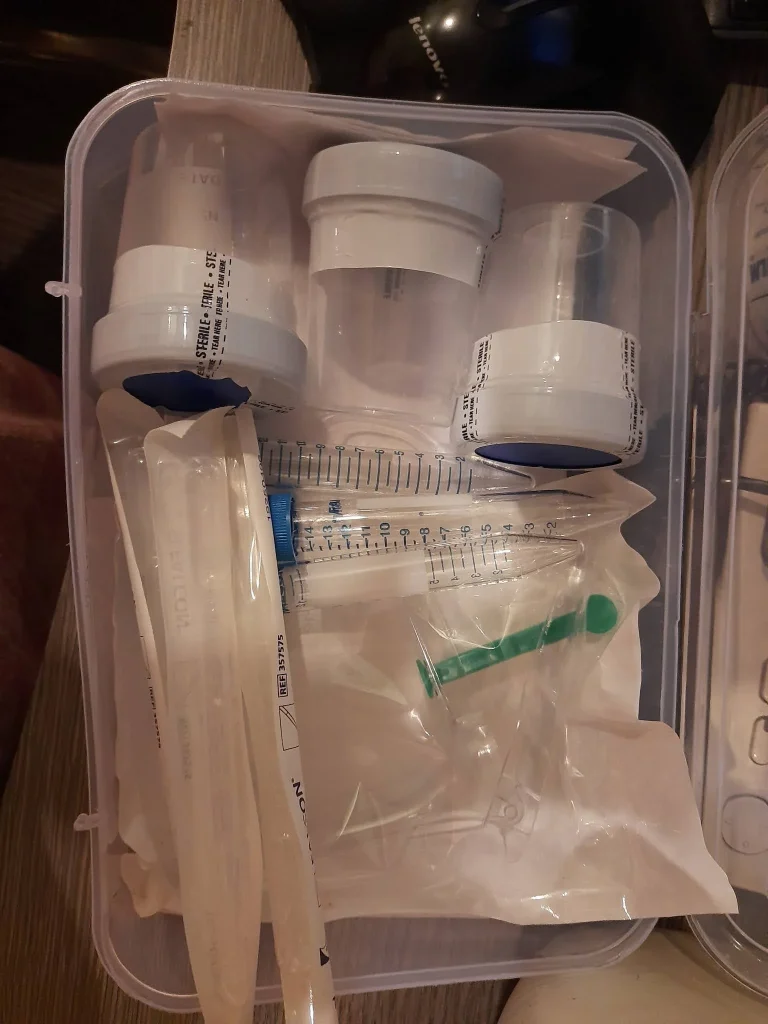
    various medical supplies and containers organized in a clear plastic box on a wooden surface

    The New Face of Fatherhood: Our Experience with At-Home Insemination

    Like any other form of conception, at-home insemination came with its own set of challenges. The emotional rollercoaster of waiting to find out if each cycle was successful was tough. We also had to deal with societal stigma and judgment from some family members and friends who didn’t understand our decision.

    But the triumphs outweighed the challenges. We were able to create a beautiful bond with our future child even before they were born. We also felt empowered by taking control of our fertility and starting our family on our terms.

    The New Face of Fatherhood:

    Through our experience with at-home insemination, we have come to understand that fatherhood is not defined by biology or traditional roles. Fatherhood is about love, support, and being an active participant in your child’s life. Our journey to parenthood has shown us that fathers can be just as nurturing and involved as mothers and that there are no limitations to what a father’s role can be.

    Impact on Society:

    The rise of at-home insemination is not just limited to same-sex couples; it is also becoming a popular choice for single women and heterosexual couples facing fertility issues. This trend challenges the traditional notion of what it means to be a father and expands the definition of family. It also raises questions about the role of medical professionals and the accessibility and affordability of fertility treatments.

    Conclusion:

    Our experience with at-home insemination has been a transformative and empowering journey. It has not only allowed us to start our family but has also challenged societal norms and opened our minds to the diverse ways of becoming a father. We hope that by sharing our story, we can inspire and educate others about the new face of fatherhood and the beauty of unconventional paths to parenthood.

  • The Modern Family: Emily and David’s Non-Traditional At-Home Insemination Journey

    Blog Post:

    In today’s society, the traditional concept of a family has evolved into a more diverse and inclusive definition. With advancements in technology and changing social norms, the idea of a modern family is no longer limited to the traditional nuclear family structure. One example of this is the story of Emily and David, a couple who chose to embark on a non-traditional at-home insemination journey to start their family.

    Emily and David met in college and quickly fell in love. They knew they wanted to have children someday, but they also knew that their journey towards parenthood would be different from the mainstream. As a same-sex couple, they were not able to conceive a child through traditional means. After much research and consideration, they decided to pursue an at-home insemination method.

    Their journey began with finding a sperm donor. Emily and David wanted to ensure that their child would have some genetic connection to both of them, so they turned to a sperm bank that offered a known donor option. This meant that they could choose a donor who would be open to future contact with their child, allowing them to potentially have a relationship with their biological father in the future.

    Once they found their donor, the couple began the process of tracking Emily’s ovulation cycle. They used ovulation predictor kits and tracked Emily’s basal body temperature to determine the most fertile days of her cycle. This helped them to plan the timing of the insemination, which is crucial for success.

    On the day of the insemination, Emily and David created a comfortable and private space in their home. They followed the instructions provided by the sperm bank and used a syringe to inseminate the sperm into Emily’s cervix. Although it may seem like a clinical and impersonal process, the couple made sure to add a touch of romance and intimacy to make the experience more meaningful.

    Home insemination kit by Mosie Baby with instructions and colorful packaging.

    The Modern Family: Emily and David's Non-Traditional At-Home Insemination Journey

    After the insemination, Emily rested for a while, giving the sperm a chance to swim towards her egg. The couple remained hopeful and excited, but also knew that their journey might take some time. They continued to track Emily’s cycle and repeated the process every month until they received the news they had been waiting for – Emily was pregnant.

    The couple’s joy and anticipation were palpable as they prepared for the arrival of their child. They made sure to involve their donor in the process, keeping him updated on the pregnancy and inviting him to participate in important milestones such as ultrasounds and baby showers. This allowed their child to have a sense of connection to their biological father, even though he was not actively involved in their upbringing.

    Emily and David’s non-traditional at-home insemination journey was not without its challenges. They faced societal stigma and judgment from some family members and strangers. However, the couple remained focused on their love for each other and their desire to start a family. They also found a strong support system in their close friends and the LGBTQ+ community.

    Their journey towards parenthood has not only given them their beautiful child but has also strengthened their relationship and challenged societal norms. Emily and David have shown that with determination, love, and support, any couple can build their family in a way that is meaningful and authentic to them.

    In conclusion, Emily and David’s non-traditional at-home insemination journey is a testament to the evolving definition of a modern family. Their story showcases the importance of love, inclusivity, and support in creating a family, regardless of social norms and expectations. It also highlights the advancements in technology that have allowed same-sex couples and others facing fertility challenges to have a chance at parenthood.

    Summary:

    Emily and David, a same-sex couple, embarked on a non-traditional at-home insemination journey to start their family. They found a known sperm donor and tracked Emily’s ovulation cycle to plan the insemination. After several attempts, Emily became pregnant and the couple involved their donor in important milestones. Despite challenges, their journey showcases the evolving definition of a modern family, emphasizing the importance of love, inclusivity, and support in creating a family.

  • Breaking Boundaries: Natalie and Kyle’s Mosiebaby Insemination Journey

    Blog Post:

    Breaking Boundaries: Natalie and Kyle’s Mosiebaby Insemination Journey

    Natalie and Kyle had always dreamt of starting a family together. As a same-sex couple, they knew that their journey to parenthood would not be traditional, but they were determined to make it happen. After researching and considering various options, they came across Mosiebaby, a revolutionary at-home insemination kit that promised to make their dream a reality.

    With excitement and hope, Natalie and Kyle embarked on their journey with Mosiebaby, breaking boundaries and challenging societal norms along the way. In this blog post, we will dive into their insemination journey, from the highs and lows to the ultimate success of welcoming their baby into the world.

    The Decision to Use Mosiebaby

    For Natalie and Kyle, the decision to use Mosiebaby was an easy one. They had heard about the kit from a friend who had successfully conceived using it, and they were drawn to its simplicity and effectiveness. As a same-sex couple, they appreciated how Mosiebaby catered specifically to their needs, providing a safe and comfortable way to inseminate at home.

    The Process of Insemination

    Natalie and Kyle’s insemination journey with Mosiebaby began with a thorough understanding of the process. They carefully followed the instructions provided by the kit, which included using sterile syringes, inserting the Mosie syringe into the cervix, and releasing the sperm into the vagina. They also made sure to track Natalie’s ovulation cycle to ensure the best chances of conception.

    The Emotional Rollercoaster

    at-home insemination kit featuring a syringe and container for fresh or donor sperm conception

    Breaking Boundaries: Natalie and Kyle's Mosiebaby Insemination Journey

    Like any fertility journey, Natalie and Kyle’s experience with Mosiebaby was an emotional rollercoaster. There were moments of excitement and hope, followed by disappointment and doubt. They faced the reality that not every attempt would be successful, and that was a difficult realization. But they also found comfort in knowing that they were in this together and that they had each other’s unwavering support.

    Breaking Societal Norms

    As a same-sex couple, Natalie and Kyle knew that their journey to parenthood would be met with challenges and judgments from society. However, they refused to let that stop them from pursuing their dream. By using Mosiebaby, they were able to break societal norms and pave the way for other LGBTQ+ couples who also wanted to start a family.

    The Ultimate Success

    After a few months of trying, Natalie and Kyle finally received the news they had been waiting for – they were pregnant! The joy and excitement they felt were indescribable, and they knew that Mosiebaby played a significant role in making their dream come true. They continued to use the kit throughout Natalie’s pregnancy, with each insemination serving as a reminder of their journey and the incredible bond they shared.

    Welcoming Baby into the World

    Nine months later, Natalie and Kyle welcomed their beautiful baby into the world. Holding their little one in their arms, they were overwhelmed with love and gratitude for the journey they had been on. They knew that they had broken boundaries and shattered stereotypes, and that their baby would grow up in a world where love knows no boundaries.

    Summary:

    Natalie and Kyle’s insemination journey with Mosiebaby is a story of breaking boundaries and challenging societal norms. As a same-sex couple, they were determined to start a family and found hope in the revolutionary at-home insemination kit. With careful tracking of ovulation and the support of each other, they experienced the emotional rollercoaster that comes with any fertility journey. But after a few months, their dream finally came true, and they welcomed their baby into the world. Despite facing societal challenges, Natalie and Kyle refused to let anything stand in the way of their love for each other and their desire to start a family.

  • Breaking the Mold: Laura and Brian’s Mosiebaby At-Home Insemination Triumph

    Blog Post:

    When Laura and Brian first started their journey to parenthood, they knew it would be a challenge. As a same-sex couple, they faced unique obstacles in their quest to have a child. However, they refused to let societal norms and traditional methods dictate their path. Instead, they chose to break the mold and try something unconventional – at-home insemination with Mosiebaby.

    Laura and Brian’s story began like many others – with a deep desire to start a family. After years of discussion, planning, and research, they were ready to take the next step. As a same-sex couple, they knew that traditional methods of conception, such as intercourse or IVF, were not options for them. They also knew that the cost and emotional toll of medical procedures were not something they were willing to endure. That’s when they stumbled upon Mosiebaby – a simple, affordable, and effective at-home insemination kit.

    At first, Laura and Brian were skeptical. They had heard of other couples attempting at-home insemination but were unsure if it would work for them. However, after reading countless success stories and doing their own research, they decided to give it a try. They ordered the Mosiebaby kit and eagerly awaited its arrival.

    When the kit arrived, Laura and Brian were impressed by its simplicity and user-friendly instructions. They followed the steps carefully, and within minutes, they were ready to begin their first at-home insemination. The process was intimate and emotional, as they knew that this could potentially be the moment they had been waiting for.

    hands using a blue syringe to extract contents from a clear container for a home insemination kit

    Breaking the Mold: Laura and Brian's Mosiebaby At-Home Insemination Triumph

    The waiting game began, and Laura and Brian did their best to remain patient. But just two weeks later, they received the news they had been dreaming of – they were pregnant! The at-home insemination with Mosiebaby had worked for them, and they couldn’t believe their luck. They were overjoyed and grateful that they had found a method that allowed them to conceive in the comfort of their own home.

    As their pregnancy progressed, Laura and Brian continued to use Mosiebaby for each insemination, and each time, they were met with success. They were amazed by how easy and stress-free the process was, and they were grateful for the bond it created between them. They also appreciated how affordable Mosiebaby was compared to other fertility options, which allowed them to save money for their growing family.

    Finally, the day arrived when Laura and Brian welcomed their beautiful baby girl into the world. They named her Lily, and she was the perfect addition to their family. Looking back on their journey, they couldn’t be happier with their decision to break the mold and try at-home insemination with Mosiebaby. It had not only helped them achieve their dream of becoming parents, but it had also brought them closer together as a couple.

    Laura and Brian’s story is a testament to the power of breaking the mold and choosing a path that may not be considered “traditional.” They refused to let societal norms dictate their journey to parenthood and instead found a method that worked for them. Their story also highlights the effectiveness of Mosiebaby and its ability to help couples, like Laura and Brian, achieve their dreams of starting a family.

    In conclusion, Laura and Brian’s Mosiebaby at-home insemination triumph is an inspiring example of how unconventional methods can lead to incredible success. Their story not only showcases the power of love and determination but also highlights the importance of breaking free from societal norms and expectations. With Mosiebaby, they were able to overcome the challenges they faced as a same-sex couple and create a beautiful family of their own.

    SEO Metadata:

  • Breaking the Mold: Insemination Syringe Kits and Non-Traditional Families

    Breaking the Mold: Insemination Syringe Kits and Non-Traditional Families

    In the past, the idea of starting a family outside of the traditional nuclear family structure was considered taboo. However, as society continues to evolve, so do our definitions of family. Non-traditional families, such as same-sex couples and single parents, are becoming more prevalent and accepted. With this shift, new and innovative ways of starting a family have emerged, including the use of insemination syringe kits.

    Insemination syringe kits, also known as at-home insemination kits, provide a way for individuals or couples to self-inseminate in the comfort and privacy of their own home. These kits typically include a syringe, a vial of sperm, and instructions on how to properly perform the insemination process. While this method of conception may seem unconventional to some, it has opened up possibilities for those who may have otherwise struggled with starting a family.

    One of the main benefits of using an insemination syringe kit is that it allows individuals or couples to take control of their reproductive journey. For same-sex couples, this means not having to rely on a sperm donor or a clinic, which can be expensive and may have limited options. It also eliminates the need for invasive medical procedures, making the process more comfortable and intimate.

    For single parents, insemination syringe kits provide an accessible and affordable option for starting a family. With the rising costs of fertility treatments, many single individuals may have felt discouraged or excluded from the possibility of having a child. Insemination syringe kits level the playing field and offer a solution for those who want to become parents.

    Smiling baby in a blue onesie with "made with Love" text, lying on a light blue crocheted blanket.

    Breaking the Mold: Insemination Syringe Kits and Non-Traditional Families

    Another advantage of using an insemination syringe kit is the ability to involve a known donor. This could be a close friend or family member, allowing individuals or couples to have a deeper connection with their child’s biological parent. This can be especially important for individuals who may have strong beliefs about the importance of biological ties.

    Insemination syringe kits also offer a sense of privacy and autonomy. In traditional fertility clinics, individuals or couples may feel pressure to conform to societal norms or may face judgment from medical professionals. With at-home insemination, individuals can choose to share the news of their pregnancy on their own terms and with whom they feel comfortable.

    However, there are also challenges and considerations to keep in mind when using an insemination syringe kit. One of the main concerns is the lack of medical supervision and guidance. While the kits do come with instructions, they may not cover all potential risks or complications that could arise. It is important for individuals or couples to do thorough research and consult with a medical professional before proceeding with at-home insemination.

    Additionally, the success rates of at-home insemination may not be as high as traditional fertility treatments. This is due to the fact that medical professionals are not involved in the process and may not be able to ensure the optimal timing and conditions for conception. It is important for individuals or couples to manage their expectations and be prepared for potential challenges.

    Insemination syringe kits have also faced criticism for perpetuating the idea that pregnancy and childbirth are solely the responsibility of women. While these kits may provide a solution for individuals or couples who may not have access to traditional fertility treatments, it is important to recognize and address the underlying societal issues that contribute to these limitations.

    In conclusion, insemination syringe kits have broken the mold of traditional family structures and opened up new possibilities for non-traditional families. They offer a convenient, affordable, and intimate way for individuals or couples to start a family on their own terms. However, it is important to consider the potential challenges and seek medical guidance when using these kits. As society continues to evolve, it is crucial for us to continue breaking down barriers and embracing the diverse ways in which families can be formed.

  • Breaking the Stigma: Normalizing Insemination Syringe Kits for LGBTQ+ Families

    Blog Post: Breaking the Stigma: Normalizing Insemination Syringe Kits for LGBTQ+ Families

    In recent years, there has been a growing acceptance and understanding towards LGBTQ+ families and their desire to have children. However, there is still a lack of awareness and normalization surrounding the use of insemination syringe kits for same-sex and non-traditional families. This stigma not only affects the LGBTQ+ community but also perpetuates harmful and outdated beliefs about conception and parenting. In this blog post, we will discuss the importance of breaking the stigma and normalizing the use of insemination syringe kits for LGBTQ+ families.

    The Stigma Surrounding Insemination Syringe Kits

    Insemination syringe kits are commonly used by same-sex and non-traditional families as a method of assisted reproductive technology. These kits allow individuals or couples to self-inseminate at home, without the need for medical intervention. However, due to societal norms and expectations, there is a stigma attached to the use of these kits. Many people view them as unnatural or unconventional, which can lead to feelings of shame and judgment for those who use them.

    This stigma is not only harmful but also unfounded. Insemination syringe kits have been used for decades in fertility clinics and have been proven to be a safe and effective method of conception. They offer a more affordable and accessible option for individuals and couples who want to start a family. Yet, the stigma surrounding them persists, preventing many LGBTQ+ families from considering this option.

    The Impact of Stigma on LGBTQ+ Families

    The stigma surrounding insemination syringe kits can have a significant impact on LGBTQ+ families. It can create barriers to starting a family and cause feelings of isolation and shame. It also perpetuates the belief that only heterosexual couples are “normal” or “legitimate” families, further marginalizing LGBTQ+ individuals and their desire to have children.

    Moreover, the stigma can also affect the mental and emotional well-being of LGBTQ+ individuals. The fear of judgment and discrimination can lead to anxiety, depression, and other mental health issues. This is especially true for those who are already facing societal discrimination and rejection based on their sexual orientation or gender identity.

    at-home insemination kit featuring a syringe and container for fresh or donor sperm conception

    Breaking the Stigma: Normalizing Insemination Syringe Kits for LGBTQ+ Families

    Normalizing Insemination Syringe Kits for LGBTQ+ Families

    It is time to break the stigma and normalize the use of insemination syringe kits for LGBTQ+ families. It starts with education and awareness. By educating ourselves and others about the effectiveness and safety of these kits, we can break down the misconceptions and negative attitudes surrounding them.

    Furthermore, it is essential to promote inclusivity and diversity in the media and society as a whole. Representation matters, and by showcasing diverse families in a positive light, we can help to normalize the use of insemination syringe kits and break the stigma.

    Creating safe and inclusive spaces for LGBTQ+ families is also crucial. This includes healthcare settings, fertility clinics, and other support systems. By providing a welcoming and non-judgmental environment, we can help to make the process of starting a family less daunting for LGBTQ+ individuals and couples.

    The Benefits of Normalizing Insemination Syringe Kits

    Breaking the stigma and normalizing the use of insemination syringe kits for LGBTQ+ families has numerous benefits. It allows individuals and couples to have more control over their reproductive choices, provides a more affordable and accessible option for starting a family, and promotes inclusivity and diversity in society. It also sends a message of acceptance and support to LGBTQ+ individuals and families, helping to create a more inclusive and understanding society.

    In conclusion, it is essential to break the stigma and normalize insemination syringe kits for LGBTQ+ families. By doing so, we can promote inclusivity, provide more options for starting a family, and create a more accepting and understanding society. Let us work towards breaking down harmful beliefs and stereotypes and embrace the diversity of families in our society.

    SEO Metadata:

  • The Growing Popularity of Insemination Syringe Sets in Modern Parenting

    Blog Post: The Growing Popularity of Insemination Syringe Sets in Modern Parenting

    As society continues to evolve and embrace diversity, so does the concept of parenting. In recent years, there has been a growing trend in the use of insemination syringe sets for individuals and couples who are looking to start a family. This method of assisted reproduction has gained popularity for its convenience, affordability, and success rates. In this blog post, we will delve into the reasons behind the rise of insemination syringe sets in modern parenting and explore its impact on the traditional concept of family.

    Firstly, let’s understand what an insemination syringe set is and how it works. An insemination syringe set is a medical device that allows for at-home insemination. It consists of a syringe, a catheter, and a vial of sperm. The sperm is typically acquired from a sperm bank or from a known donor. The process involves the insertion of the sperm into the woman’s cervix, similar to the procedure done in a fertility clinic. However, with an insemination syringe set, the procedure can be done in the comfort of one’s home without the need for medical assistance.

    One of the main reasons for the popularity of insemination syringe sets is its affordability. Traditional methods of assisted reproduction, such as in-vitro fertilization (IVF), can cost thousands of dollars and may not be covered by insurance. On the other hand, an insemination syringe set can cost as little as $100, making it a more accessible option for those who cannot afford expensive fertility treatments. This has opened up opportunities for individuals and couples who may have previously been unable to pursue parenthood due to financial constraints.

    Moreover, the use of insemination syringe sets has also become more widely accepted due to advancements in technology and the availability of information. With the internet, individuals and couples can easily access resources and instructions on how to use an insemination syringe set. This has empowered people to take control of their reproductive choices and explore alternative methods of starting a family. Additionally, the use of social media has also played a role in normalizing and destigmatizing the use of insemination syringe sets, as more and more people share their experiences and success stories.

    Hands holding a syringe and a small container against a blue background.

    The Growing Popularity of Insemination Syringe Sets in Modern Parenting

    Another factor contributing to the rise of insemination syringe sets is the increasing acceptance of non-traditional family structures. In the past, the traditional nuclear family consisting of a heterosexual couple and their biological children was seen as the only acceptable form of family. However, as society becomes more inclusive and diverse, there is a growing understanding and acceptance of different family structures, including single parents, same-sex couples, and blended families. Insemination syringe sets provide a way for these individuals and couples to conceive and start their own families, breaking away from the constraints of traditional norms.

    The success rates of insemination syringe sets have also contributed to its popularity. While the success rates may vary depending on factors such as age and fertility, studies have shown that at-home insemination using a syringe set can be just as effective as undergoing the procedure in a fertility clinic. This has given hope to those struggling with infertility and has made starting a family a more achievable goal.

    The use of insemination syringe sets has also sparked debates and discussions on the ethical and legal implications of at-home insemination. Some argue that it may lead to the commodification of human reproductive materials and raise concerns about the screening and regulation of sperm donors. Additionally, there are also concerns about the well-being and rights of the child conceived through this method, as they may not have access to information about their biological father.

    In conclusion, the growing popularity of insemination syringe sets in modern parenting can be attributed to various factors such as affordability, accessibility, advancements in technology, and changing societal norms. While this method of assisted reproduction has provided hope and opportunities for many individuals and couples, it has also raised important ethical and legal concerns. As society continues to evolve, it is crucial to have open discussions and proper regulations in place to ensure the well-being and rights of all parties involved in the use of insemination syringe sets in modern parenting.

    Summary: Insemination syringe sets have gained popularity in modern parenting due to their affordability, accessibility, technological advancements, acceptance of non-traditional family structures, and success rates. This method of assisted reproduction has provided hope and opportunities for individuals and couples, but has also sparked debates on ethical and legal implications.

  • Conceiving on Your Own Terms: A Bold Step Towards Independence

    Blog Post:

    Conceiving on Your Own Terms: A Bold Step Towards Independence

    In today’s society, the traditional path to starting a family has been shifting. More and more women are choosing to conceive on their own terms, without a partner, and this decision is often met with mixed reactions. Some view it as a bold and empowering move towards independence, while others see it as a controversial and unconventional choice. However, the reality is that every woman should have the right to decide when and how she wants to start a family, and choosing to conceive on one’s own terms should be celebrated as a brave and empowering decision.

    For many women, the idea of having a child without a partner may seem daunting and overwhelming. Society has ingrained the idea that women need a partner to have a child, and without one, they are deemed incomplete or incapable. However, this notion is slowly shifting as more and more women are choosing to break away from societal norms and take control of their reproductive choices. This is especially true for single women who have not found the right partner or those who have chosen to prioritize their careers or personal goals before starting a family.

    Conceiving on your own terms is not an easy decision to make. It requires a lot of thought, planning, and courage. It also comes with its own set of challenges and obstacles, both emotional and practical. But for those who have made this choice, the rewards and benefits are immeasurable. Let’s take a closer look at why conceiving on your own terms can be a bold step towards independence.

    1. Breaking Free from Societal Expectations

    One of the primary reasons why women choose to conceive on their own terms is to break free from societal expectations. As mentioned earlier, there is a long-standing belief that a woman needs a partner to have a child. This idea not only puts unnecessary pressure on women to find a partner but also implies that they are incomplete without one. By choosing to conceive on their own, women are challenging this belief and taking control of their own lives. They are saying that they do not need a partner to fulfill their desire to have a child and are choosing to define their own path instead of conforming to societal norms.

    2. Empowering Women to Make Their Own Choices

    Conceiving on your own terms is a bold statement of empowerment. It gives women the power to make their own choices about their bodies and their lives. It allows them to take control of their reproductive health and decide when they are ready to start a family, without the influence or pressure of a partner. This decision also empowers women to choose the type of family they want, whether it be a single-parent household or a co-parenting arrangement. It puts women in the driver’s seat of their own lives and allows them to define their own version of motherhood.

    logo featuring a pink heart above two teal leaves on a blue circular background

    Conceiving on Your Own Terms: A Bold Step Towards Independence

    3. Encouraging Financial Independence

    Another significant benefit of conceiving on your own terms is the financial independence it can bring. Raising a child is a significant financial responsibility, and doing it on your own can be a daunting task. However, by choosing to have a child without a partner, women are taking full responsibility for their financial well-being and that of their child. This can lead to a sense of self-reliance and empowerment, as women are not dependent on a partner for financial support. It also allows them to make decisions about their child’s upbringing without having to consider a partner’s opinions or financial contributions.

    4. Redefining the Concept of Family

    Conceiving on your own terms also challenges the traditional concept of family. It allows women to redefine what it means to have a family and who is considered a family member. In a society where the nuclear family is often seen as the norm, choosing to have a child without a partner opens up the idea that a family can come in many different forms. It encourages inclusivity and celebrates diversity in family structures, which is a positive step towards a more accepting and open-minded society.

    5. Inspiring Others to Do the Same

    One of the most significant impacts of conceiving on your own terms is its ability to inspire others to do the same. When women make bold choices, they pave the way for others to do the same. By choosing to have a child without a partner, women are showing others that it is possible to break away from societal norms and define their own path. This can be especially empowering for young girls and women who may feel pressured to follow a specific life script. It encourages them to think outside the box and shows them that they have the power to make their own choices, regardless of what society says.

    In conclusion, conceiving on your own terms is a bold step towards independence. It allows women to break free from societal expectations, empowers them to make their own choices, encourages financial independence, redefines the concept of family, and inspires others to do the same. It is a decision that should be celebrated and supported, as it gives women the freedom to define their own version of motherhood and take control of their lives. So, let’s continue to celebrate and empower women who choose to conceive on their own terms, and work towards a society that embraces and supports all types of families.

    Summary:

    Conceiving on your own terms is a bold and empowering decision that challenges societal norms and expectations. It allows women to break free from the idea that they need a partner to start a family and empowers them to make their own choices. This decision also encourages financial independence, redefines the concept of family, and inspires others to do the same. It is a brave step towards independence that should be celebrated and supported.





