Tag: Wearable Technology

  • The Latest Trend in Fitness: How Wearable Technology is Changing the Game

    Summary:

    The world of fitness has been revolutionized by the latest trend of wearable technology. These innovative devices, such as fitness trackers, smartwatches, and virtual reality headsets, have changed the game for both fitness enthusiasts and professionals. With their advanced features, accurate tracking capabilities, and user-friendly interfaces, wearable technology is making it easier for people to achieve their fitness goals and for trainers to monitor their clients’ progress. In this blog post, we will explore the latest trends in wearable technology and how they are transforming the fitness industry.

    Introduction:

    Wearable technology has been gaining popularity in recent years, with the global market expected to reach $74 billion by 2026. This technology has not only changed the way we live and work but also how we approach fitness and wellness. The rise of fitness trackers, smartwatches, and virtual reality headsets has made it possible for individuals to track their fitness goals, monitor their health, and engage in more immersive workout experiences.

    Accurate Tracking and Real-Time Feedback:

    One of the key features of wearable technology is its ability to provide accurate tracking of various fitness metrics such as steps taken, calories burned, heart rate, and sleep quality. This real-time feedback allows individuals to monitor their progress and adjust their workouts accordingly. With this information readily available, it becomes easier to set achievable goals and stay motivated.

    Furthermore, many wearable devices come with advanced sensors and algorithms that can provide even more detailed and accurate data. For example, some fitness trackers can track specific exercises, such as running or cycling, and provide insights on distance, pace, and even route mapping. This level of tracking allows individuals to have a better understanding of their performance and make necessary changes to improve.

    Personalized Workouts:

    Wearable technology has also made it possible for individuals to have personalized workout experiences. Many fitness trackers and smartwatches come with pre-programmed or customizable workout plans that cater to individual needs and goals. These plans take into account factors such as fitness level, age, and health conditions to provide tailored workouts.

    In addition, some wearable devices also come with virtual coaching features, which can guide individuals through workouts, provide real-time feedback, and offer motivation and encouragement. This personalized approach to fitness allows individuals to have a more effective and enjoyable workout experience.
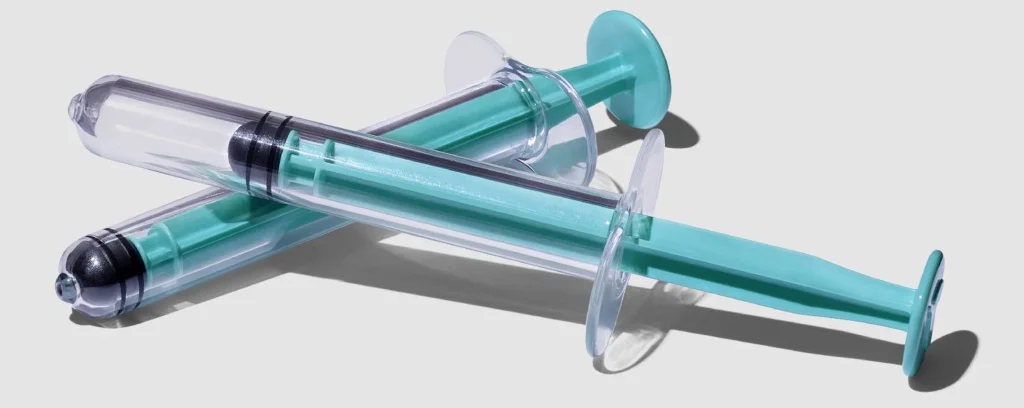
    Two transparent syringes with teal accents positioned diagonally on a light gray background.

    The Latest Trend in Fitness: How Wearable Technology is Changing the Game

    Convenience and Motivation:

    Another significant advantage of wearable technology is the convenience it offers. With fitness trackers and smartwatches, individuals can track their progress and monitor their health without having to carry around their phones or other devices. This makes it easier to stay on top of fitness goals and stay motivated.

    Moreover, many wearable devices come with social features that allow users to connect with friends, family, or other fitness enthusiasts. This social aspect adds a competitive element to fitness, as individuals can challenge each other and compare progress. This can be a great source of motivation and accountability.

    Virtual Reality for Immersive Workouts:

    Virtual reality (VR) technology is also making its way into the fitness world, providing a whole new level of immersive workouts. With VR headsets, individuals can engage in simulated workouts, such as running, cycling, or boxing, in a virtual environment. This not only adds an element of fun but also allows individuals to push their limits and try new exercises without leaving their homes.

    Furthermore, VR technology can also be used for virtual training sessions with professionals. This allows individuals to have one-on-one sessions with trainers from anywhere in the world, making fitness more accessible and convenient.

    Impact on the Fitness Industry:

    Wearable technology is not only changing the game for individuals but also for fitness professionals and the industry as a whole. Trainers can now have a better understanding of their clients’ progress and tailor their workout plans accordingly. This not only improves the effectiveness of training but also enhances the client-trainer relationship.

    Moreover, the abundance of data collected by wearable devices can also be used for research and development in the fitness industry. This can help manufacturers and professionals to create more advanced and effective devices and workout programs.

    Conclusion:

    Wearable technology has undoubtedly transformed the world of fitness and wellness. With its accurate tracking capabilities, personalized workouts, convenience, and motivation, it has made it easier for individuals to achieve their fitness goals. Furthermore, the integration of virtual reality technology has taken fitness to a whole new level, providing immersive and innovative workout experiences. As the industry continues to evolve, we can expect to see more advancements in wearable technology that will further revolutionize the fitness world.


  • From Tech to Healthcare: 14 Job Industries to Watch

    From Tech to Healthcare: 14 Job Industries to Watch

    In recent years, there has been a rapid increase in the integration of technology in the healthcare industry, resulting in new job opportunities and a shift in traditional job roles. With the rise of digital health, telemedicine, and data-driven healthcare, the lines between technology and healthcare have become increasingly blurred. As a result, many industries are emerging and evolving, creating a plethora of new job prospects. In this blog post, we will explore 14 job industries that are at the forefront of this tech-to-healthcare shift and are worth keeping an eye on.

    1. Health Informatics
    Health informatics is the use of technology and data analytics to improve healthcare delivery and patient outcomes. Professionals in this field are responsible for managing, analyzing, and interpreting healthcare data to support decision making and drive positive change. With the increasing demand for data-driven healthcare, the job opportunities in health informatics are expected to grow exponentially.

    2. Telemedicine
    Telemedicine, also known as telehealth, is the use of technology to provide healthcare services remotely. This industry has seen significant growth in recent years, especially with the rise of virtual consultations and remote patient monitoring. As more people turn to virtual care, the demand for telemedicine professionals such as telehealth coordinators, telehealth nurses, and telemedicine technicians is on the rise.

    3. Electronic Health Records (EHR)
    Electronic Health Records (EHR) are digital versions of a patient’s medical history, which can be accessed and shared by healthcare providers. As healthcare facilities transition from paper-based records to EHRs, there is a growing need for professionals who can manage and maintain these systems. EHR specialists and analysts are in high demand, making this a promising field to watch.

    4. Health IT Security
    With the increasing use of technology in healthcare, the need for cybersecurity professionals has also risen. Health IT security professionals are responsible for keeping patient data secure and protected from cyber threats. As cyber attacks in the healthcare industry continue to rise, this field is expected to see significant growth in the coming years.

    5. Artificial Intelligence (AI) in Healthcare
    Artificial Intelligence (AI) has the potential to revolutionize healthcare by improving diagnosis, treatment, and patient outcomes. AI-powered technologies such as chatbots, virtual assistants, and predictive analytics are being increasingly used in the healthcare industry. As a result, there is a growing demand for professionals who can develop, implement, and manage these technologies.

    6. Virtual Reality (VR) in Healthcare
    Virtual Reality (VR) is being used in healthcare to train medical professionals, treat mental health disorders, and reduce pain and anxiety in patients. As the potential of VR in healthcare continues to grow, so does the demand for professionals who have the skills to develop and implement VR applications in a healthcare setting.

    At-home insemination kit with syringes and collection cups on a teal background.

    From Tech to Healthcare: 14 Job Industries to Watch

    7. Health App Development
    With the increase in smartphone usage, there has been a surge in the number of health apps available in the market. These apps help users track their health, monitor chronic conditions, and access healthcare services remotely. As more people turn to health apps for their healthcare needs, the demand for professionals who can develop and maintain these apps is also on the rise.

    8. Digital Marketing in Healthcare
    Digital marketing has become an essential tool for healthcare facilities to reach and engage with their patients. With the rise of social media and online platforms, healthcare organizations are investing in digital marketing professionals to increase their online presence and improve patient engagement.

    9. Medical Robotics
    Medical robotics is the use of robots in healthcare to assist with surgeries, rehabilitation, and patient care. As technology continues to advance, the use of robots in healthcare is expected to increase, creating job opportunities for professionals who can operate and maintain these machines.

    10. 3D Printing in Healthcare
    3D printing has the potential to revolutionize the way medical devices, prosthetics, and even organs are created. As the technology becomes more advanced and accessible, the demand for professionals who can design and operate 3D printers in a healthcare setting is expected to grow.

    11. Wearable Technology
    Wearable technology such as fitness trackers, smartwatches, and health monitors has become increasingly popular in recent years. These devices can track steps, heart rate, sleep patterns, and more, providing valuable data for both patients and healthcare professionals. As the market for wearable technology continues to expand, there will be a growing need for professionals who can analyze and interpret the data collected by these devices.

    12. Precision Medicine
    Precision medicine is an approach to healthcare that takes into account individual variability in genes, environment, and lifestyle when diagnosing and treating diseases. With the advancements in genetic testing and personalized medicine, the demand for professionals who can analyze and interpret genetic data is expected to increase.

    13. Biotechnology
    Biotechnology is the use of living organisms or their derivatives to develop products and processes for healthcare, agriculture, and other industries. With the constant evolution of technology and the growing demand for sustainable and eco-friendly solutions, the biotechnology industry is expected to see significant growth, creating job opportunities for professionals in various fields.

    14. Data Science in Healthcare
    The use of data science in healthcare has the potential to improve patient outcomes, reduce costs, and increase efficiency. As healthcare organizations collect and analyze large amounts of data, the demand for professionals who can use data science techniques to derive insights and drive decision making is expected to grow.

    In conclusion, the integration of technology in the healthcare industry has created a wave of new job industries that are worth keeping an eye on. From health informatics and telemedicine to AI, VR, and wearable technology, there are plenty of opportunities for individuals with a background in technology to make a difference in the healthcare sector. As these industries continue to evolve and grow, there will be a high demand for professionals who can bridge the gap between technology and healthcare, making it an exciting time to explore these job prospects.

  • The Future of Fertility: Insemination Syringe Kits in the Age of Technology

    Blog Post:

    In today’s modern age, technology has revolutionized many aspects of our lives, from the way we communicate to the way we work and even the way we reproduce. With the advancement of science and medicine, fertility treatments have become more accessible and effective, allowing individuals and couples to overcome fertility challenges. One particular technology that has gained popularity in recent years is the use of insemination syringe kits, which offer a convenient and affordable option for at-home insemination. But what does the future hold for these kits in the age of technology? In this blog post, we will explore the potential advancements and impact of insemination syringe kits on the future of fertility.

    First, let’s understand what insemination syringe kits are and how they work. These kits typically include a syringe, a catheter, and a vial of sperm. The process involves collecting semen from a partner or a donor, placing it into the syringe, and then inserting it into the vagina or cervix. This method mimics the natural process of insemination and can be done at home without the need for medical assistance. Insemination syringe kits are often used by same-sex couples, single individuals, or heterosexual couples who are facing fertility challenges.

    One of the main advantages of insemination syringe kits is their convenience and affordability. Traditional fertility treatments such as intrauterine insemination (IUI) or in vitro fertilization (IVF) can be costly and require multiple visits to a fertility clinic. In contrast, insemination syringe kits can be purchased online or over the counter at a lower cost, and the procedure can be done in the comfort of one’s home. This accessibility has made these kits a popular choice for many individuals and couples.

    But what does the future hold for insemination syringe kits? With the rapid advancements in technology, it is only a matter of time before these kits become even more advanced and efficient. One potential development is the use of DNA sequencing to select the best sperm for insemination. This technology can analyze the genetic makeup of sperm and determine which ones have the highest chance of fertilizing an egg. This could significantly increase the success rate of insemination, making it a more reliable option for those trying to conceive.

    In addition to DNA sequencing, there is also the potential for the use of artificial intelligence (AI) in the process of insemination. AI can analyze a person’s medical history, lifestyle, and other factors to predict the best time for insemination and the most suitable sperm donor. This could save individuals and couples a lot of time and money by eliminating the trial and error process of finding the right timing and donor.

    at-home insemination kit featuring a syringe and container for fresh or donor sperm conception

    The Future of Fertility: Insemination Syringe Kits in the Age of Technology

    Another aspect of the future of fertility and insemination syringe kits is the use of telemedicine. With the rise of telehealth services, it is not far-fetched to imagine a scenario where individuals can consult with a fertility specialist remotely and receive guidance on using insemination syringe kits. This could be particularly beneficial for those living in rural or remote areas where access to fertility clinics may be limited.

    Furthermore, the use of wearable technology, such as fertility tracking apps and devices, could also play a role in the future of insemination. These tools can monitor a person’s ovulation cycle, hormone levels, and other fertility indicators, providing valuable information for those using insemination syringe kits. This data could help individuals and couples make more informed decisions about the timing of insemination and increase their chances of success.

    However, with all these potential advancements, there are also ethical and legal considerations that need to be addressed. As the use of DNA sequencing and AI becomes more prevalent in the fertility industry, questions about ownership of genetic material and potential discrimination may arise. It will be essential for laws and regulations to keep up with these advancements to protect individuals and ensure ethical practices.

    In conclusion, insemination syringe kits have already made a significant impact on the world of fertility and will continue to do so in the future. With the potential advancements in technology and their increasing popularity, these kits have the potential to make fertility treatments more accessible, affordable, and efficient. However, it is crucial to consider the ethical and legal implications of these developments and ensure that individuals’ rights are protected. As we move forward, it will be exciting to see how technology will shape the future of fertility and insemination syringe kits.

    Summary:

    Insemination syringe kits have become a popular and affordable option for individuals and couples facing fertility challenges. With the advancement of technology, these kits are expected to become even more efficient and accessible in the future. Potential developments include the use of DNA sequencing and artificial intelligence to increase success rates, telemedicine for remote consultations, and wearable technology for tracking fertility indicators. However, ethical and legal considerations must also be addressed to ensure the responsible use of these technologies. The future of fertility and insemination syringe kits is promising, and it will be exciting to see how technology will continue to shape this field.