Tag: Insemination

  • Conceiving Naturally: The Role of Fertility Boosting Insemination Sets

    Blog Post: Conceiving Naturally: The Role of Fertility Boosting Insemination Sets

    Conceiving a child is a natural and beautiful experience for many couples. However, for some, the path to parenthood can be challenging and may require additional assistance. In recent years, there has been a rise in the use of fertility boosting insemination sets to help couples conceive naturally. In this blog post, we will explore what these sets are, how they work, and the benefits they offer for couples trying to conceive.

    What are Fertility Boosting Insemination Sets?

    Fertility boosting insemination sets, also known as home insemination kits, are designed to help couples conceive naturally by increasing the chances of sperm reaching the egg. These sets typically include a syringe or a soft cup, which is used to insert the sperm into the woman’s reproductive tract, bypassing any potential barriers. They also come with instructions on how to use them properly and may include additional items such as ovulation tests and fertility-friendly lubricants.

    How Do They Work?

    Fertility boosting insemination sets work by increasing the chances of sperm reaching the egg. During natural conception, sperm must travel through the cervix, uterus, and fallopian tubes to reach the egg. However, this journey can be challenging, and many sperm may die along the way. Insemination sets help by bypassing these barriers, placing the sperm closer to the egg, and increasing the chances of fertilization.

    There are two main types of fertility boosting insemination sets: syringe insemination and soft cup insemination. In syringe insemination, the sperm is collected in a sterile syringe and inserted directly into the cervix or uterus. This method is often used by couples who have difficulty with intercourse or for those who have sperm quality or quantity issues.

    On the other hand, soft cup insemination involves using a soft, flexible cup that is inserted into the vagina, where it sits close to the cervix for several hours. The sperm is placed into the cup and can swim towards the cervix and into the uterus, increasing the chances of reaching the egg. Soft cup insemination is often preferred by couples who are not comfortable with the idea of using a syringe or who have had difficulty with cervical insemination in the past.

    Benefits of Fertility Boosting Insemination Sets

    One of the primary benefits of using fertility boosting insemination sets is that they offer a natural and non-invasive method of conception. Unlike other fertility treatments, such as in vitro fertilization (IVF), insemination sets do not require any medical procedures or drugs. This makes them a more affordable option for couples who want to conceive naturally without the added expenses of fertility treatments.

    Two transparent syringes with teal accents positioned diagonally on a light gray background.

    Conceiving Naturally: The Role of Fertility Boosting Insemination Sets

    Furthermore, using insemination sets can also help reduce the stress and pressure that couples may feel when trying to conceive. For many couples, the process of trying to get pregnant can be emotionally draining, and the use of insemination sets can provide a more relaxed and less clinical approach to conception.

    Insemination sets also offer the advantage of timing intercourse around ovulation. Ovulation tests are often included in these sets, helping couples determine the most fertile days in a woman’s cycle. By timing insemination around ovulation, couples can increase their chances of conceiving naturally.

    Tips for Using Fertility Boosting Insemination Sets

    While fertility boosting insemination sets can be an effective tool for couples trying to conceive, it is essential to use them correctly. Here are some tips to help maximize the chances of success:

    1. Follow the instructions carefully: It is crucial to follow the instructions that come with the insemination set to ensure that the sperm is placed in the right location and at the right time.

    2. Use high-quality sperm: The success of insemination sets heavily relies on the quality of the sperm. It is essential to use sperm that has been collected and processed correctly to increase the chances of fertilization.

    3. Consider additional fertility supplements: Some couples may also benefit from taking fertility-boosting supplements, such as folic acid, to increase their chances of conceiving.

    4. Be patient: It may take a few tries before successfully conceiving with insemination sets. It is essential to be patient and keep trying.

    Summary:

    Conceiving naturally can be a challenging journey for some couples, but fertility boosting insemination sets offer a natural and non-invasive option to help increase the chances of pregnancy. These sets work by placing sperm closer to the egg, bypassing any potential barriers, and increasing the chances of fertilization. They offer a more affordable and less stressful option compared to other fertility treatments, and with careful use and patience, they can be an effective tool for couples trying to conceive naturally.

  • Breaking Down the Benefits of a Fertility Boosting Insemination Set

    Summary: Insemination sets are a popular method for boosting fertility and increasing the chances of conception. These sets contain various tools and products that are designed to help with the process of insemination, making it easier and more effective for couples trying to conceive. In this blog post, we will break down the benefits of a fertility boosting insemination set, discussing the various products and their benefits, as well as tips for using them effectively.

    Firstly, what exactly is an insemination set? Simply put, it is a collection of products and tools that are used in the process of insemination. These may include ovulation prediction kits, fertility supplements, lubricants, and even sperm-friendly underwear. The main goal of these sets is to provide couples with everything they need to increase their chances of conception without having to purchase each item separately.

    One of the biggest benefits of using a fertility boosting insemination set is convenience. As mentioned earlier, these sets contain all the necessary tools and products in one package, saving couples the hassle of having to purchase them separately. This can also save them money in the long run, as some products may be more expensive when purchased individually.

    Another benefit is that insemination sets are specifically designed for couples trying to conceive, meaning that all the products included are carefully selected to maximize fertility and increase the chances of conception. This takes the guesswork out of choosing which products to use and ensures that couples are using the most effective tools for their fertility journey.

    Ovulation prediction kits are a common product found in insemination sets. These kits help women track their ovulation and determine the most fertile days of their cycle. This is crucial information for couples trying to conceive, as timing is everything when it comes to insemination. By using an ovulation prediction kit, couples can ensure that they are inseminating during the most fertile window, increasing their chances of success.

    Two transparent syringes with teal accents positioned diagonally on a light gray background.

    Breaking Down the Benefits of a Fertility Boosting Insemination Set

    Fertility supplements are another important component of insemination sets. These supplements are designed to support reproductive health and improve fertility in both men and women. They may contain vitamins, minerals, and herbal extracts that have been shown to boost fertility. These supplements can help address any nutritional deficiencies that may be hindering fertility and prepare the body for pregnancy.

    Many insemination sets also include lubricants that are specifically formulated to be sperm-friendly. Traditional lubricants can actually hinder sperm movement and reduce their chances of fertilizing an egg. However, sperm-friendly lubricants are pH-balanced and contain ingredients that mimic the natural cervical mucus, making it easier for sperm to reach the egg. This can greatly increase the chances of conception for couples using insemination sets.

    Some insemination sets may also include sperm-friendly underwear for men. These underwear are designed with special fabric and technology that create a conducive environment for sperm to survive and thrive. They also provide extra support and comfort for men during the insemination process, making it more comfortable for both partners.

    In addition to the products included in insemination sets, there are also tips and techniques that can further enhance the effectiveness of using these sets. For example, it is important for couples to communicate and plan ahead for insemination, as timing is crucial. It is also recommended to use multiple products from the set, such as combining ovulation prediction kits with fertility supplements and sperm-friendly lubricants, for a more comprehensive approach.

    In conclusion, fertility boosting insemination sets offer a convenient and effective way for couples to increase their chances of conceiving. They provide a range of products that are specifically designed to support fertility and make the process of insemination easier and more successful. By using these sets, couples can take a proactive approach towards their fertility journey and improve their chances of starting a family.

  • The Science Behind Fertility Boosting Insemination Sets

    Blog Post Title: The Science Behind Fertility Boosting Insemination Sets: Understanding How They Work

    Fertility is a complex process that involves various factors, and for some couples, conceiving a child can be a challenging journey. Insemination sets, also known as at-home insemination kits, have become popular among couples trying to conceive. These kits provide a more affordable and convenient option for artificial insemination compared to traditional medical procedures. But how exactly do these insemination sets work and what is the science behind their effectiveness? In this blog post, we will delve into the science behind fertility boosting insemination sets and how they can increase the chances of conceiving.

    Understanding Fertility and Insemination

    Before we dive into the science behind insemination sets, it’s essential to understand how fertility and insemination work. Fertility is the ability to conceive and carry a child to full term. Insemination, on the other hand, refers to the process of introducing sperm into the female reproductive system. In traditional medical procedures, insemination is typically done in a clinical setting, where a doctor will insert sperm directly into the uterus or cervix. However, with the advancement of technology, at-home insemination kits have become available, making the process more accessible and affordable for couples.

    The Role of Sperm in Fertility

    Sperm plays a crucial role in the process of conception. During sexual intercourse, millions of sperm are ejaculated into the female reproductive system. These sperm then swim through the cervix and into the fallopian tubes, where they meet the egg. Only one sperm can fertilize the egg, and this fertilized egg then implants itself in the uterus, resulting in pregnancy.

    Factors Affecting Fertility

    Several factors can affect fertility, including age, health conditions, and lifestyle choices. As a woman ages, her fertility declines due to a decrease in the number and quality of eggs. Health conditions such as endometriosis, polycystic ovary syndrome (PCOS), and sexually transmitted infections (STIs) can also affect fertility. Lifestyle choices such as smoking, excessive alcohol consumption, and poor nutrition can also decrease fertility.

    How Insemination Sets Work

    Insemination sets work by providing a method for introducing sperm into the female reproductive system, bypassing the need for sexual intercourse. These kits typically come with a syringe or a soft cup, along with a vial of sperm. The sperm can either be fresh or frozen and is often provided by a sperm bank. The couple can then use the syringe or soft cup to deposit the sperm near the cervix, increasing the chances of fertilization.

    The Science Behind Fertility Boosting Insemination Sets

    Now that we understand the basics of fertility and insemination let’s delve into the science behind how insemination sets can boost fertility. There are two main ways in which insemination sets can increase the chances of conceiving.

    1. Timing is Everything

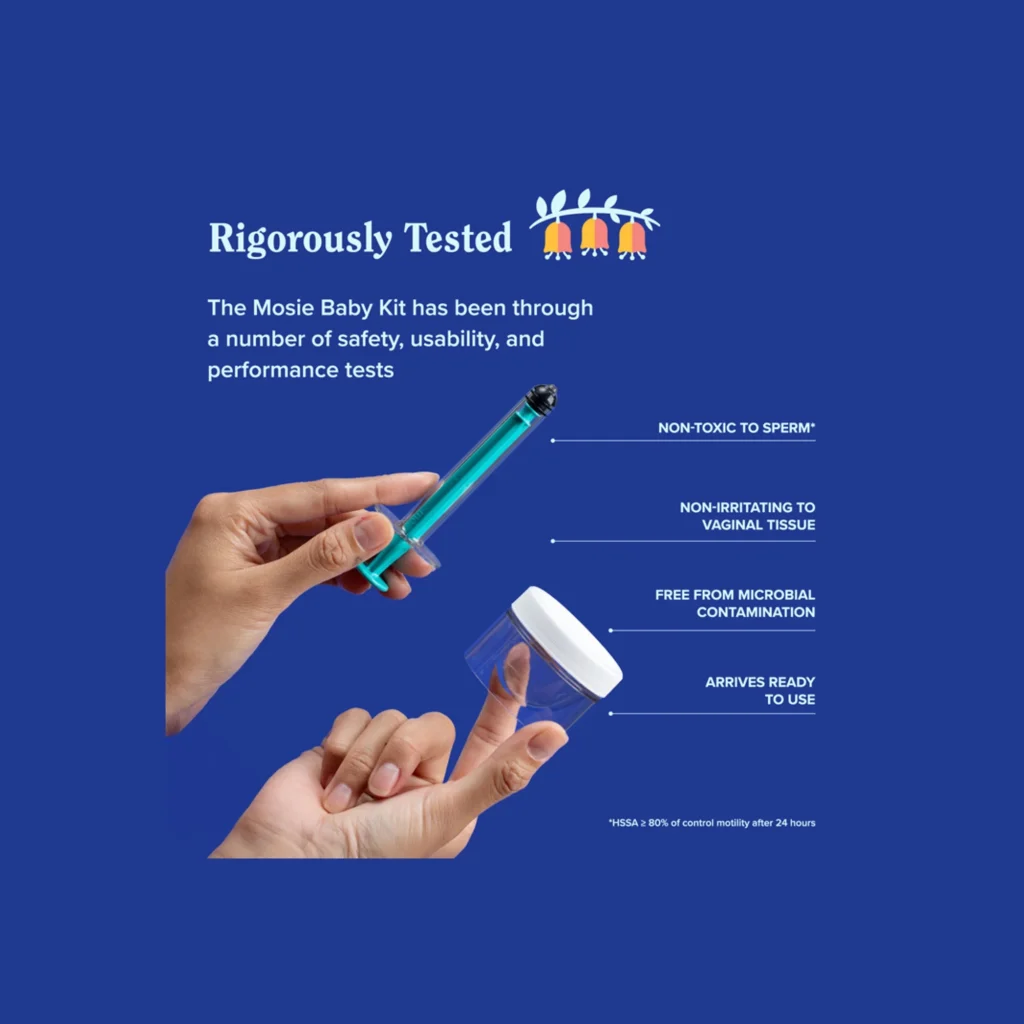
    Mosie Baby Kit features a syringe and container, highlighting safety and usability tests on a blue background.

    The Science Behind Fertility Boosting Insemination Sets

    For conception to occur, sperm must be present in the female reproductive system when the egg is released from the ovary. This is known as the fertile window, which is typically five days before ovulation and on the day of ovulation itself. Insemination sets can help couples time intercourse more accurately by depositing sperm directly near the cervix, increasing the chances of fertilization during the fertile window.

    2. Increasing Sperm Count

    For conception to occur, an adequate number of sperm must reach the egg. Insemination kits can help increase sperm count by providing a concentrated dose of sperm near the cervix. This is especially beneficial for men with a low sperm count, as the concentrated dose increases the chances of one sperm reaching and fertilizing the egg.

    Additional Factors to Consider

    While insemination sets can be an effective method for increasing fertility, there are a few additional factors to consider.

    1. Sperm Quality

    The success of insemination sets also depends on the quality of the sperm being used. Sperm quality can be affected by various factors, such as age, health, and lifestyle choices. It’s essential to ensure that the sperm being used is of good quality to increase the chances of conception.

    2. Medical Conditions

    Insemination sets may not be suitable for couples with certain medical conditions that can affect fertility. It’s crucial to consult with a doctor before using these kits, especially if you or your partner have any underlying health conditions.

    3. Success Rates

    The success rates of insemination sets vary and can depend on various factors, such as age and sperm quality. While it can be a more affordable option compared to traditional medical procedures, it’s essential to manage expectations and be prepared for multiple attempts.

    In conclusion, fertility boosting insemination sets can be an effective option for couples trying to conceive. By understanding the science behind how they work, couples can make informed decisions and increase their chances of conceiving. However, it’s essential to consult with a doctor and consider all factors before using these kits. With the right timing, sperm quality, and expectations, insemination sets can be a valuable tool in the journey towards parenthood.

    Summary:

    Fertility is a complex process, and for some couples, conceiving a child can be a challenging journey. Insemination sets, also known as at-home insemination kits, have become a popular option for artificial insemination. These kits provide a more affordable and convenient option compared to traditional medical procedures. The science behind how these kits work lies in their ability to time intercourse accurately and increase sperm count, ultimately boosting fertility. However, it’s crucial to consider factors such as sperm quality, medical conditions, and success rates before using insemination sets.

  • Maximizing Your Chances: How to Use a Fertility Boosting Insemination Set

    Blog Post Title: Maximizing Your Chances: How to Use a Fertility Boosting Insemination Set

    Introduction:
    For couples struggling with infertility, the journey to parenthood can be a challenging and emotional one. Insemination is a common fertility treatment option that can help increase the chances of conception. However, to maximize the chances of success, it is important to use the right tools and techniques. In this blog post, we will explore the benefits of using a fertility boosting insemination set and provide a step-by-step guide on how to use it effectively.

    What is a Fertility Boosting Insemination Set?
    A fertility boosting insemination set is a collection of tools and supplies that are specifically designed to aid in the process of insemination. These sets typically include a cervical cap, a syringe, and a sperm-friendly lubricant. The cervical cap helps to keep the sperm close to the cervix, while the syringe allows for precise placement of the sperm. The sperm-friendly lubricant helps to create a more favorable environment for the sperm to survive and swim towards the egg.

    Benefits of Using a Fertility Boosting Insemination Set:
    1. Increased Sperm Survival: The cervical cap in the insemination set helps to keep the sperm close to the cervix, increasing their chances of survival. This is especially beneficial for couples who have low sperm count or poor sperm motility.

    2. Precise Placement of Sperm: The syringe in the insemination set allows for accurate and controlled placement of the sperm. This is important as the sperm needs to be deposited near the cervix to have a chance of fertilizing the egg.

    3. Improved Vaginal Environment: The sperm-friendly lubricant in the insemination set helps to create an optimal environment for the sperm to swim towards the egg. It mimics the natural cervical mucus and helps to reduce any potential barriers that may hinder the sperm’s journey.

    Step-by-Step Guide on How to Use a Fertility Boosting Insemination Set:
    Step 1: Wash Your Hands – Before handling any of the tools in the insemination set, it is important to wash your hands thoroughly to avoid any potential contamination.

    Step 2: Prepare the Sperm – If you are using donor sperm, make sure it has been properly thawed and is at room temperature. If you are using fresh sperm from your partner, make sure it has been collected in a sterile container.

    guide and materials for using Mosie Baby fertility kit on a textured surface

    Maximizing Your Chances: How to Use a Fertility Boosting Insemination Set

    Step 3: Prepare the Cervical Cap – Rinse the cervical cap with warm water and sperm-friendly lubricant. Make sure to squeeze out any excess lubricant before using it.

    Step 4: Fill the Syringe – Use the syringe to draw up the sperm, making sure to remove any air bubbles.

    Step 5: Insert the Cervical Cap – Sitting in a comfortable position, insert the cervical cap into your vagina and push it up against your cervix. The cap should cover the cervix completely.

    Step 6: Insert the Sperm – Once the cervical cap is in place, insert the syringe into the cervical cap’s opening and gently release the sperm.

    Step 7: Remove the Syringe – Slowly remove the syringe from the cervical cap and discard it.

    Step 8: Remove the Cervical Cap – After 2 to 4 hours, remove the cervical cap by gently pulling on the loop attached to it.

    Step 9: Rest – It is recommended to lie down for about 20 minutes after the insemination to allow the sperm to swim towards the egg.

    Conclusion:
    Using a fertility boosting insemination set can greatly increase the chances of conception for couples struggling with infertility. It provides a controlled and effective way to deposit sperm near the cervix, creating an optimal environment for fertilization. By following these simple steps, couples can maximize their chances of success with insemination and move one step closer to their dream of parenthood.

    In summary, using a fertility boosting insemination set can increase sperm survival, allow for precise placement of sperm, and improve the vaginal environment. To use the set effectively, it is important to prepare the tools properly, insert the sperm and cervical cap correctly, and rest after the insemination. With the help of a fertility boosting insemination set, couples can increase their chances of conceiving and bring their little bundle of joy into the world.

  • The Science Behind DIY Baby-Making with a Syringe Kit

    The decision to start a family can be an exciting and emotional one, but for some couples, getting pregnant may not come as easily as they had hoped. In these situations, many couples turn to fertility treatments or medical interventions, but there is another option that is gaining popularity among hopeful parents: DIY baby-making with a syringe kit.

    In this blog post, we will explore the science behind DIY baby-making with a syringe kit, including the benefits and risks, the process itself, and the success rates. We will also discuss some important considerations to keep in mind before embarking on this journey.

    The Science Behind DIY Baby-Making
    Before diving into the specifics of DIY baby-making, it’s important to understand the science behind it. The process involves using a syringe to insert sperm into the vagina, either during ovulation or near the time of ovulation, with the goal of achieving pregnancy.

    The key to success with this method lies in the timing. Sperm can survive in the female reproductive tract for up to five days, so it’s important to time the insemination correctly to increase the chances of fertilization. This is where tracking ovulation and understanding the menstrual cycle becomes crucial.

    Benefits of DIY Baby-Making
    One of the main benefits of DIY baby-making is the cost. Fertility treatments and medical interventions can be expensive, and for some couples, it may not be a feasible option. DIY baby-making can be a more affordable alternative, as it only requires purchasing a syringe kit and possibly some ovulation tracking tools.

    Additionally, DIY baby-making can be a more intimate and personal experience for couples. It allows them to be in control of the process and can strengthen their bond as they work towards a shared goal. This method also allows for more privacy, as couples can perform the insemination in the comfort of their own home.

    Risks and Considerations
    While DIY baby-making may seem like a simple and cost-effective option, there are some risks and considerations to keep in mind. First and foremost, it’s important to consult with a healthcare professional before attempting this method. They can provide guidance and ensure that there are no underlying fertility issues that need to be addressed.

    Mosie Baby kit with two jars, a syringe, and a supportive message card inside a colorful box.

    The Science Behind DIY Baby-Making with a Syringe Kit

    There is also a risk of infection if proper hygiene is not followed during the process. It’s crucial to use sterile equipment and follow sterile techniques to minimize the risk of infection. Additionally, there is a small chance of damaging the cervix if the syringe is inserted too forcefully. This can increase the risk of infection and potentially affect fertility in the long run.

    Success Rates
    The success rates of DIY baby-making vary, as there are many factors that can affect the outcome. Timing, sperm quality, and overall fertility health are just a few of the factors that can influence the success of this method.

    Some studies have shown success rates of up to 40% for couples who use this method correctly and have no underlying fertility issues. However, it’s important to note that these success rates are lower than those of medical interventions, such as intrauterine insemination (IUI) or in vitro fertilization (IVF).

    Tips for Success
    For those considering DIY baby-making, there are some tips that can help increase the chances of success. Firstly, it’s important to track ovulation accurately and have a good understanding of the menstrual cycle. This can be done through methods such as tracking basal body temperature or using ovulation predictor kits.

    It’s also crucial to use high-quality sperm from a known and trusted donor. This can increase the chances of fertilization and reduce the risk of any potential genetic or health issues.

    In conclusion, DIY baby-making with a syringe kit is a viable option for couples looking to start a family. While it may not be suitable for everyone, it can be a more affordable and intimate alternative to medical interventions. It’s important to consult with a healthcare professional, understand the process and success rates, and follow proper hygiene and techniques to increase the chances of success.

    SEO metadata:

  • From Conception to Birth: Using a Syringe Kit for DIY Baby-Making

    Blog Post: From Conception to Birth: Using a Syringe Kit for DIY Baby-Making

    The journey to parenthood can be a challenging and emotional one, especially for couples struggling with fertility issues. In recent years, there has been a rise in do-it-yourself (DIY) methods for conception, including using a syringe kit for self-insemination. This alternative method allows individuals or couples to take control of their fertility journey and possibly increase their chances of achieving pregnancy. In this blog post, we will explore the process of using a syringe kit for DIY baby-making, from conception to birth.

    Conception

    The first step in using a syringe kit for DIY baby-making is understanding the process of conception. Conception occurs when a sperm fertilizes an egg, resulting in the formation of an embryo. This can happen through sexual intercourse or artificial insemination, where sperm is inserted into the female reproductive tract. With a syringe kit, individuals or couples can perform artificial insemination at home, eliminating the need for a medical professional.

    Choosing a Syringe Kit

    The next step is to choose the right syringe kit for your needs. There are various options available on the market, and it is essential to do thorough research before making a purchase. Some factors to consider include the type of syringe (plastic or glass), the size and shape of the syringe, and the type of needle. It is crucial to select a kit that is specifically designed for artificial insemination, as it will have features that make the process easier and more effective.

    Preparing for Insemination

    Once you have chosen your syringe kit, it is time to prepare for insemination. This involves tracking your ovulation cycle and choosing the right time to inseminate. Ovulation predictor kits or tracking your basal body temperature can help determine when you are most fertile. It is also essential to have a clean and sterile environment for the procedure. This may involve washing your hands, sterilizing the syringe, and preparing a clean surface for the process.

    Informative card introducing the Mosie Baby Kit and its mission for at-home insemination.

    From Conception to Birth: Using a Syringe Kit for DIY Baby-Making

    Performing the Insemination

    The actual insemination process involves inserting the sperm into the cervix using a syringe. The sperm can be obtained from a donor or from the male partner through masturbation. It is crucial to follow the instructions provided with the syringe kit to ensure proper insertion and placement of the sperm. It may be helpful to have a partner assist with the process to make it more comfortable and efficient.

    Post-Insemination Care

    After the insemination, it is essential to take care of your body and give the sperm the best chance of fertilizing the egg. This may involve lying down for 15-20 minutes after the procedure to allow the sperm to travel towards the egg. It is also recommended to avoid activities that may interfere with the sperm’s journey, such as taking a bath or using a tampon. It is crucial to continue tracking your ovulation and possibly perform a second insemination if needed.

    Pregnancy and Birth

    The next step in the journey is to wait for the pregnancy test. If the insemination was successful, the fertilized egg will implant into the uterus, and pregnancy will occur. It is essential to follow the recommended guidelines for pregnancy, such as taking prenatal vitamins, eating a healthy diet, and avoiding harmful substances. As the pregnancy progresses, it is also crucial to seek medical care and monitor the development of the baby.

    In the end, the DIY baby-making journey using a syringe kit is not much different from traditional methods. It still involves the same steps of conception, pregnancy, and birth. However, it offers individuals and couples a sense of control and a more intimate experience. It is essential to remember that not every DIY insemination attempt will be successful, and it is crucial to seek medical help if needed.

    In summary, using a syringe kit for DIY baby-making can be a viable option for those struggling with fertility or for same-sex couples. It involves choosing the right kit, tracking ovulation, performing the insemination, and taking care of your body during the pregnancy. It is essential to do thorough research and consult with a medical professional before embarking on this journey.

  • The Non-Invasive Insemination Process: Step-by-Step Guide for Couples in Their 30s

    Summary:

    Couples in their 30s who are struggling with fertility issues may turn to non-invasive insemination as a way to conceive. This process involves using donated sperm to fertilize the woman’s egg without the need for surgery or invasive procedures. In this step-by-step guide, we will walk through the non-invasive insemination process and provide helpful tips for couples in their 30s who are considering this option.

    Step 1: Consultation with a Fertility Specialist

    The first step in the non-invasive insemination process is to schedule a consultation with a fertility specialist. This doctor will review your medical history and perform any necessary tests to determine if you are a good candidate for insemination. They will also discuss the different methods of insemination and help you decide which one is best for you.

    Step 2: Choose a Donor

    Once you have decided to move forward with non-invasive insemination, you will need to choose a sperm donor. This can be done through a sperm bank or through a known donor, such as a friend or family member. It’s important to thoroughly screen the donor for any genetic or health issues, and to ensure that they have been properly tested for sexually transmitted infections.

    Step 3: Ovulation Monitoring

    Before insemination can occur, the woman’s ovulation must be closely monitored. This can be done through at-home ovulation kits or through ultrasounds at the fertility clinic. It’s important to time the insemination correctly to increase the chances of success.

    Step 4: Preparation for Insemination

    On the day of insemination, the woman will need to prepare her body by taking ovulation-inducing medication or receiving hormone injections. This will help to stimulate the production of eggs and increase the chances of conception.

    Step 5: Insemination Procedure

    at-home insemination kit by Mosie Baby, featuring syringes, collection cups, and instructions on a pink background.

    The Non-Invasive Insemination Process: Step-by-Step Guide for Couples in Their 30s

    The actual insemination procedure is a quick and painless process. The sperm is collected and prepared in the clinic, and then inserted into the woman’s uterus using a catheter. The entire procedure takes only a few minutes and can be done in the doctor’s office.

    Step 6: Rest and Recovery

    After the insemination, the woman will need to rest for a short period of time before going home. It’s important to avoid strenuous activity for the rest of the day to allow the sperm to reach the egg and increase the chances of conception.

    Step 7: Pregnancy Testing

    Two weeks after the insemination procedure, a pregnancy test will be taken to determine if the procedure was successful. If the test is positive, the woman will need to schedule a follow-up appointment with her fertility specialist for further monitoring and care.

    Tips for Couples in Their 30s

    1. Be patient: Non-invasive insemination may not be successful on the first try. It’s important to be patient and give your body time to adjust to the process.

    2. Seek emotional support: The process of trying to conceive can be emotionally draining. It’s important for couples to seek emotional support from each other, as well as from friends and family.

    3. Consider other options: If non-invasive insemination is not successful, there are other fertility treatments available, such as in vitro fertilization (IVF) or adoption.

    4. Take care of your health: Eating a healthy diet, exercising regularly, and reducing stress can all help to improve fertility and increase the chances of success with non-invasive insemination.

    5. Be open and honest: Communication is key during this process. Be open and honest with your partner and your fertility specialist about any concerns or questions you may have.

    In conclusion, non-invasive insemination is a viable option for couples in their 30s who are struggling with fertility issues. By following this step-by-step guide and taking care of your emotional and physical health, you can increase your chances of success and start your journey towards parenthood.

  • The Future of Fertility: How Non-Invasive Insemination is Changing the Game

    The Future of Fertility: How Non-Invasive Insemination is Changing the Game

    Fertility has always been a topic of great interest and concern for couples trying to conceive. In the past, fertility treatments were limited to invasive procedures such as in vitro fertilization (IVF) or intrauterine insemination (IUI). However, with advancements in technology and medical research, non-invasive insemination methods are emerging as a game-changer in the field of fertility. These methods offer a less invasive and more affordable option for couples struggling with fertility issues. In this blog post, we will explore the future of fertility and the impact of non-invasive insemination on the field.

    The Rise of Non-Invasive Insemination

    In recent years, non-invasive insemination methods such as at-home insemination and intrauterine insemination have gained popularity among couples. These methods involve introducing sperm into the reproductive tract without the need for surgery or complex procedures. This is done either at home or in a clinical setting, making it a convenient and less stressful option for couples.

    One of the main reasons for the rise of non-invasive insemination is its success rate. Studies have shown that at-home insemination has a success rate of around 25%, while intrauterine insemination has a success rate of up to 30%. These success rates are comparable to those of traditional IVF treatments, which can be costly and time-consuming.

    Non-Invasive Insemination and LGBTQ+ Couples

    Non-invasive insemination methods have also opened up new possibilities for LGBTQ+ couples who want to start a family. Same-sex couples and single individuals can now use donor sperm to conceive through at-home insemination or IUI. This has brought hope and joy to many couples who were previously limited in their options for starting a family.

    In addition, non-invasive insemination has also made it possible for transgender individuals to preserve their fertility before undergoing hormone therapy or gender confirmation surgery. This has given them the option to have biological children in the future, even after transitioning.

    Reducing the Stigma Around Fertility Treatments

    One of the major barriers to seeking fertility treatments has been the stigma attached to it. Many couples feel embarrassed or ashamed to discuss their struggles with fertility, and this can lead to delays in seeking help. However, with the rise of non-invasive insemination methods, the stigma around fertility treatments is slowly being reduced.

    At-home insemination kit with ovulation and pregnancy tests, promoting fertility and family planning.

    The Future of Fertility: How Non-Invasive Insemination is Changing the Game

    Non-invasive insemination methods are more discreet and private, allowing couples to undergo treatment without feeling judged or scrutinized by society. This has also opened up conversations about fertility and its impact on individuals and couples, reducing the taboo surrounding the topic.

    The Role of Technology

    Technology has played a crucial role in the development and success of non-invasive insemination methods. With the use of home insemination kits and fertility tracking apps, couples can now track their ovulation and time their insemination more accurately. This has significantly increased the chances of successful conception.

    Furthermore, advancements in sperm freezing and storage techniques have made it possible for individuals to preserve their fertility for longer periods. This is especially beneficial for those undergoing medical treatments such as chemotherapy, which can affect their fertility.

    Challenges and Limitations

    While non-invasive insemination methods have brought about significant improvements in the field of fertility, there are still some challenges and limitations to be addressed. One of the main concerns is the lack of standardization and regulation in at-home insemination kits. This can lead to variations in success rates and raise concerns about the safety and effectiveness of these methods.

    In addition, non-invasive insemination methods may not be suitable for all couples, especially those with more complex fertility issues. In such cases, traditional fertility treatments such as IVF may still be the best option. It is essential for couples to consult with a fertility specialist to determine the most suitable treatment option for their specific situation.

    The Future of Fertility

    With the continued advancements in technology and medical research, the future of fertility looks promising. Non-invasive insemination methods are expected to become even more accessible and affordable, making it a viable option for more couples. This will also lead to more research and development in this field, further improving success rates and reducing limitations.

    In conclusion, the rise of non-invasive insemination methods has revolutionized the field of fertility and brought hope to many couples struggling to conceive. With its success rates, reduced stigma, and advancements in technology, it is clear that non-invasive insemination is changing the game and shaping the future of fertility.

  • Breaking the Barriers: Non-Invasive Insemination for All Couples

    Breaking the Barriers: Non-Invasive Insemination for All Couples

    With advancements in medical technology, the options for couples struggling with infertility have expanded. One of the most recent developments is non-invasive insemination, a procedure that can be used by all couples regardless of their sexual orientation or fertility challenges. This groundbreaking technique has broken down barriers and provided hope for many couples who dream of starting a family.

    What is Non-Invasive Insemination?

    Non-invasive insemination, also known as intrauterine insemination (IUI), is a fertility treatment that involves placing sperm directly into the uterus during the woman’s ovulation period. This procedure is less invasive and less expensive than other fertility treatments, making it an attractive option for many couples. The sperm can come from either the partner or a donor, depending on the couple’s circumstances.

    How Does Non-Invasive Insemination Work?

    The process of non-invasive insemination begins with the woman taking fertility drugs to stimulate ovulation. This step helps to ensure that there are enough eggs for fertilization to occur. The woman’s ovulation is then monitored closely, and when the eggs are ready, the sperm is inserted into the uterus using a thin tube. This is typically a painless and quick procedure, and the woman can resume her normal activities immediately after.

    Breaking Down Barriers for Same-Sex Couples

    For same-sex couples, non-invasive insemination has been a game-changer. Before this technique, lesbian couples had to go through a more invasive and expensive procedure called intrauterine insemination (IUI) using donor sperm. This process involves retrieving the sperm from a donor and inserting it into the uterus using a catheter. It is a more complicated and costly process compared to non-invasive insemination.

    With non-invasive insemination, lesbian couples can now use sperm from a known donor, such as a friend or family member, making the process more personal and intimate. This option also eliminates the need for expensive donor sperm, making it a more affordable option for many couples.

    Mosie Baby Kit features a syringe and container, highlighting safety and usability tests on a blue background.

    Breaking the Barriers: Non-Invasive Insemination for All Couples

    For gay couples, non-invasive insemination also breaks down barriers. Before this technique, gay couples had to go through the process of surrogacy or adoption to start a family. While these options are still available and widely used, non-invasive insemination provides an accessible and more affordable option for gay couples to have a biological child.

    Hope for Heterosexual Couples with Fertility Challenges

    Non-invasive insemination is not just for same-sex couples; it also provides hope for heterosexual couples struggling with fertility challenges. This procedure is often used when there are sperm-related issues, such as low sperm count or poor sperm motility. By placing the sperm directly into the uterus, the chances of fertilization are increased, making it a promising option for many couples.

    Additionally, non-invasive insemination can also be used in cases of unexplained infertility, where there is no known cause for the couple’s inability to conceive. This procedure can be a less invasive and less expensive alternative to in vitro fertilization (IVF), which is a more complicated and costly procedure.

    Breaking Down the Stigma Surrounding Fertility Treatments

    Infertility is a sensitive topic for many couples, and the stigma surrounding it can make it difficult for them to seek help. Non-invasive insemination has helped to break down this stigma by providing a less invasive and more accessible option for couples to start a family. This procedure has also opened up conversations about fertility and has brought more awareness to the challenges that many couples face.

    The Success Rates of Non-Invasive Insemination

    The success rates of non-invasive insemination vary depending on various factors, such as the age of the woman, the quality of the sperm, and the cause of infertility. On average, the success rates range from 5% to 20% per cycle, but with multiple cycles, the chances of conception increase.

    Summary:

    Non-invasive insemination, also known as intrauterine insemination (IUI), is a fertility treatment that involves placing sperm directly into the uterus during the woman’s ovulation period. This procedure has broken down barriers for same-sex couples, providing a less invasive and more affordable option for them to start a family. It has also given hope to heterosexual couples struggling with fertility challenges and has helped to break down the stigma surrounding fertility treatments. While the success rates vary, non-invasive insemination has proven to be an effective option for many couples looking to conceive.

  • Revolutionizing the Insemination Process with Non-Invasive Solutions

    Blog Post Title: Revolutionizing the Insemination Process with Non-Invasive Solutions

    In the world of reproductive medicine, one of the most common procedures is artificial insemination. This process is used to help couples struggling with infertility or same-sex couples who want to start a family. However, traditional insemination processes can be invasive and uncomfortable for patients. Fortunately, advancements in technology have led to the development of non-invasive solutions that are revolutionizing the insemination process.

    In this blog post, we will explore the traditional insemination process, the challenges it poses, and the new non-invasive solutions that are changing the game.

    The Traditional Insemination Process

    The traditional insemination process, also known as intrauterine insemination (IUI), involves placing washed and prepared sperm directly into a woman’s uterus through a catheter. This process is typically performed in a doctor’s office and can be done with fresh or frozen sperm.

    While IUI is a relatively simple and straightforward procedure, it does have its challenges. One of the main challenges is the invasiveness of the procedure. The insertion of the catheter can cause discomfort and pain for the patient, leading to anxiety and stress. Additionally, the procedure requires multiple visits to the doctor’s office, which can be time-consuming and inconvenient for patients.

    Another challenge with traditional insemination is the cost. In some cases, IUI may not be covered by insurance, which can be a significant financial burden for couples struggling with infertility.

    Non-Invasive Solutions

    Fortunately, advancements in technology have led to the development of non-invasive solutions for artificial insemination. These solutions aim to improve the patient experience and increase the success rates of the procedure.

    One of the most exciting non-invasive solutions is transvaginal ultrasound-guided follicle aspiration. This procedure involves using an ultrasound probe to guide a needle through the vaginal wall and into the follicles containing the eggs. The eggs are then aspirated, and sperm can be directly injected into the follicles, increasing the chances of fertilization.

    This procedure is less invasive than traditional IUI and can be done in an outpatient setting. It also minimizes the risk of multiple pregnancies, as only a few eggs are retrieved and fertilized at a time. This procedure is particularly beneficial for couples struggling with male factor infertility, as it bypasses any issues with sperm motility or count.

    Mosie Baby pregnancy test kit with two tests and packaging, featuring a mint green color scheme.

    Revolutionizing the Insemination Process with Non-Invasive Solutions

    Another non-invasive solution is in vitro maturation (IVM). This process involves collecting immature eggs from the ovaries and maturing them in a laboratory before fertilization. This eliminates the need for hormonal stimulation and reduces the risk of ovarian hyperstimulation syndrome, a potential complication of traditional IUI.

    IVM also has a lower cost compared to traditional IUI, making it a more accessible option for couples struggling with infertility. Additionally, it can be combined with egg freezing, allowing women to preserve their fertility for future use.

    Benefits of Non-Invasive Solutions

    The primary benefit of non-invasive solutions for insemination is the improved patient experience. These procedures are less invasive, less painful, and can be done in an outpatient setting, reducing the burden on patients. This can lead to reduced anxiety and stress, which can have a positive impact on the success rates of the procedure.

    Non-invasive solutions also offer a higher success rate compared to traditional IUI. As the procedures are more precise and targeted, they increase the chances of fertilization and pregnancy. This is particularly beneficial for couples who have been unsuccessful with traditional IUI or those with male factor infertility.

    Additionally, non-invasive solutions can be more cost-effective for patients. As they require fewer visits to the doctor’s office and less medication, the overall cost of the procedure is reduced. This makes it a more accessible option for couples who may not have insurance coverage for traditional IUI.

    Conclusion

    The traditional insemination process has been the go-to for couples struggling with infertility for years. However, advancements in technology have led to the development of non-invasive solutions that offer a more comfortable and effective alternative. These procedures are revolutionizing the insemination process, providing hope for couples who dream of starting a family.

    Whether it’s transvaginal ultrasound-guided follicle aspiration or in vitro maturation, non-invasive solutions offer a higher success rate, improved patient experience, and cost-effectiveness. As technology continues to advance, we can expect to see even more innovations in the field of reproductive medicine, making it easier for couples to achieve their dream of parenthood.

    Summary:

    Traditional insemination processes, also known as intrauterine insemination (IUI), can be invasive and uncomfortable for patients. However, advancements in technology have led to the development of non-invasive solutions that are revolutionizing the insemination process. These solutions, such as transvaginal ultrasound-guided follicle aspiration and in vitro maturation, offer a higher success rate, improved patient experience, and cost-effectiveness. These innovations in the field of reproductive medicine provide hope for couples struggling with infertility and same-sex couples who want to start a family.




