Tag: ovulation

  • A Step-by-Step Guide to Home Insemination for Beginners

    Blog post:

    Many couples and individuals have turned to home insemination as a way to start a family. This process involves using donated sperm to fertilize an egg at home, rather than going through a fertility clinic. While it may seem intimidating at first, home insemination can be a simple and affordable option for those looking to conceive. In this step-by-step guide, we will break down the process of home insemination for beginners, making it easy to understand and follow.

    Step 1: Determine if Home Insemination is Right for You
    Before diving into the process of home insemination, it is important to make sure that it is the right choice for you and your partner. This method is generally recommended for same-sex couples, single individuals, or those with fertility issues. If you and your partner are able to conceive through traditional methods, home insemination may not be necessary.

    Step 2: Find a Sperm Donor
    The next step is to find a sperm donor. There are a few options for this, such as asking a friend or family member to donate, using a sperm bank, or finding a donor through a reputable online sperm donation website. It is important to thoroughly research any potential donors and their medical history to ensure the health and safety of both the donor and the recipient.

    Step 3: Gather Supplies
    To perform home insemination, you will need a few supplies. These include a sterile container for the sperm, a sterile syringe, and a soft cup or menstrual cup. You can also purchase home insemination kits that contain all the necessary supplies.

    Step 4: Track Ovulation
    It is crucial to track ovulation when attempting home insemination. This can be done through ovulation predictor kits, tracking basal body temperature, or keeping track of menstrual cycles. Knowing when you are ovulating will increase the chances of successful insemination.

    Step 5: Prepare the Sperm
    Once you have determined that you are ovulating, it is time to prepare the sperm for insemination. If using a sperm bank, follow their specific instructions for thawing and preparing the sperm. If using a donor, make sure the sperm is collected in a sterile container and brought to room temperature before use.

    Informative card introducing the Mosie Baby Kit and its mission for at-home insemination.

    A Step-by-Step Guide to Home Insemination for Beginners

    Step 6: Perform the Insemination
    Using the sterile syringe, carefully draw up the sperm from the container. Then, insert the syringe into the soft cup and slowly release the sperm. If using a menstrual cup, insert the sperm into the cup and then insert the cup into the vagina. The sperm should be deposited near the cervix to increase the chances of fertilization.

    Step 7: Rest and Relax
    After the insemination, it is recommended to lie down with your hips elevated for about 20 minutes. This will help the sperm reach the cervix and increase the chances of fertilization. It is also important to stay relaxed and avoid strenuous activity for the rest of the day.

    Step 8: Wait and Test
    Now comes the waiting game. It can take up to two weeks to know if the insemination was successful. You can take a pregnancy test at home, or make an appointment with your doctor for a blood test to confirm pregnancy.

    Step 9: Consider Legal and Emotional Aspects
    While home insemination can be a great option for starting a family, it is important to consider the legal and emotional aspects involved. It is recommended to draw up a legal agreement with the sperm donor to establish parental rights and responsibilities. It is also important to discuss and prepare for any emotional challenges that may arise during the process.

    In conclusion, home insemination can be a viable and affordable option for those looking to start a family. By following these steps and doing thorough research, you can increase the chances of a successful insemination and fulfill your dream of becoming a parent.

    Summary:

    Home insemination is a process that involves using donated sperm to fertilize an egg at home. This method is recommended for same-sex couples, single individuals, or those with fertility issues. The first step is to determine if home insemination is the right choice for you. Then, find a sperm donor and gather the necessary supplies. It is crucial to track ovulation and prepare the sperm before performing the insemination. After insemination, it is recommended to rest and relax and then wait for the pregnancy test. It is important to consider the legal and emotional aspects of home insemination before beginning the process.


  • The Science of Home Insemination: Understanding the Process

    Blog Post: The Science of Home Insemination: Understanding the Process

    Home insemination, also known as artificial insemination or at-home insemination, is the process of placing sperm into a woman’s reproductive tract in order to achieve pregnancy. While it may seem like a daunting and complex process, home insemination is actually a simple and effective method for couples or individuals looking to start a family. In this blog post, we will delve into the science of home insemination and help you understand the process better.

    What is Home Insemination?

    Home insemination is a form of assisted reproductive technology (ART) that does not require the assistance of a medical professional. It involves the placement of sperm into the vagina, cervix, or uterus of a woman in order to fertilize an egg and achieve pregnancy. This technique can be used by heterosexual couples, single women, or same-sex couples.

    Types of Home Insemination

    There are two main types of home insemination: intracervical insemination (ICI) and intrauterine insemination (IUI). In ICI, sperm is placed in the cervix using a syringe or soft cup. This method is less invasive and can be done at home without any assistance. On the other hand, IUI involves placing sperm directly into the uterus using a catheter. This method is more invasive and usually requires the help of a healthcare provider.

    Preparing for Home Insemination

    Before attempting home insemination, it is important to prepare the sperm and the body for the process. For the sperm, it is crucial to select high-quality sperm from a donor or partner. This can be done through a sperm bank or by collecting semen from a partner. The sperm should then be washed and prepared to increase the chances of successful fertilization.

    For the body, it is important to track ovulation and time the insemination accordingly. This can be done through ovulation predictor kits or by monitoring changes in cervical mucus. It is also recommended to have a pelvic exam or ultrasound to ensure that the reproductive organs are healthy and ready for insemination.

    Steps of Home Insemination

    The process of home insemination can vary depending on the type of insemination chosen. However, there are some general steps that apply to both ICI and IUI methods.

    blue box with "mosie" logo, syringes, and informational pamphlet on a pink background

    The Science of Home Insemination: Understanding the Process

    1. Collect the semen: If using donor sperm, follow the instructions from the sperm bank on how to collect and transport the sperm. If using a partner’s sperm, it can be collected through ejaculation into a sterile container.

    2. Prepare the sperm: Once the sperm is collected, it should be washed and prepared according to the instructions provided by the sperm bank or healthcare provider.

    3. Insert the sperm: Using a syringe or soft cup, the sperm is inserted into the vagina for ICI or into the cervix or uterus for IUI. The sperm should be placed as close to the cervix as possible to increase the chances of fertilization.

    4. Relax and rest: After insemination, it is important to relax and rest for at least 15 minutes to allow the sperm to travel towards the egg.

    5. Monitor for pregnancy: It is recommended to monitor for pregnancy symptoms and take a pregnancy test after two weeks to confirm if the insemination was successful.

    Risks and Success Rate of Home Insemination

    Home insemination is considered a safe and effective method for achieving pregnancy. However, there are some risks involved, such as infection or allergic reactions to sperm or sperm preparation materials. It is important to follow proper hygiene practices and use sterile materials to minimize these risks.

    The success rate of home insemination varies depending on factors such as the timing of insemination, the quality of sperm, and the health of the reproductive organs. On average, the success rate for home insemination is around 10-15%, which is comparable to the success rate of natural conception.

    Conclusion

    Home insemination is a simple and accessible method for couples or individuals looking to start a family. By understanding the process and following the necessary steps, it can be a successful way to achieve pregnancy. However, it is important to consult with a healthcare provider and follow proper hygiene practices to ensure safety and increase the chances of success.

    Summary:

    Home insemination is a form of assisted reproductive technology that involves placing sperm into a woman’s reproductive tract to achieve pregnancy. There are two main types of home insemination: intracervical insemination (ICI) and intrauterine insemination (IUI). Before attempting home insemination, it is important to prepare the sperm and the body. The process involves collecting and preparing the sperm, inserting it into the vagina, cervix, or uterus, and monitoring for pregnancy. While it is considered safe and effective, there are some risks involved, and the success rate varies depending on various factors.

  • The Role of Ovulation in Home Insemination and How to Track It

    Blog Post: The Role of Ovulation in Home Insemination and How to Track It

    Ovulation is a crucial process in a woman’s reproductive cycle, in which a mature egg is released from the ovary and travels down the fallopian tube, ready to be fertilized by a sperm. For couples who are trying to conceive, tracking ovulation is essential to increase the chances of successful fertilization. But what about same-sex couples or single women who are using home insemination to start a family? Can ovulation tracking still play a role in their journey to parenthood? In this blog post, we will discuss the importance of ovulation in home insemination and how to track it effectively.

    Why is Ovulation Important in Home Insemination?

    Home insemination is a method of conception in which sperm is introduced directly into the vagina or cervix using a syringe or a specially designed device. This method is often used by same-sex couples or single women who are unable to conceive through traditional means. In home insemination, timing is everything. The sperm needs to be present in the reproductive tract at the same time as the egg to increase the chances of fertilization.

    This is where ovulation comes into play. By tracking ovulation, couples can determine the most fertile days in a woman’s cycle, increasing the chances of successful insemination. Ovulation typically occurs around day 14 of a 28-day menstrual cycle, but it can vary from woman to woman and even from cycle to cycle. Therefore, it is essential to track ovulation to ensure that sperm is introduced into the reproductive tract at the most opportune time.

    How to Track Ovulation

    1. Calendar Method

    The calendar method, also known as the rhythm method, involves tracking the length of a woman’s menstrual cycle and calculating the most fertile days based on that information. However, this method is not foolproof, as it relies on the assumption that a woman’s cycle is regular. Also, it does not take into account the variations in the length of ovulation from cycle to cycle.

    2. Basal Body Temperature Method

    The basal body temperature (BBT) method involves tracking a woman’s body temperature throughout her menstrual cycle. Just before ovulation, a woman’s BBT will rise by about 0.5-1 degree Fahrenheit. By tracking this temperature rise, couples can determine the most fertile days in the cycle. However, this method requires diligent tracking and may be challenging for couples who have different wake-up times.

    3. Ovulation Predictor Kits

    Ovulation predictor kits (OPKs) are urine tests that detect the surge of luteinizing hormone (LH) that occurs just before ovulation. These kits are available over-the-counter and are relatively easy to use. However, they can be costly, and some women may have trouble interpreting the results.

    4. Cervical Mucus Method

    The cervical mucus method involves tracking changes in the consistency and amount of cervical mucus throughout the menstrual cycle. As ovulation approaches, the mucus becomes clearer, stretchier, and more abundant, resembling raw egg whites. By monitoring these changes, couples can determine the most fertile days in the cycle. However, this method may be difficult for some women to track and interpret.

    at-home insemination kit by Mosie Baby, featuring syringes, collection cups, and instructions on a pink background.

    The Role of Ovulation in Home Insemination and How to Track It

    5. Ovulation Tracking Apps

    In today’s digital age, there are numerous apps available that help women track their menstrual cycles and predict ovulation. These apps use algorithms based on data inputted by the user, such as menstrual cycle length, BBT, and cervical mucus changes, to determine the most fertile days in a cycle. However, these apps may not be entirely accurate and should be used in conjunction with other tracking methods.

    Tips for Successful Ovulation Tracking

    1. Start tracking early in the cycle.

    To increase the chances of successful home insemination, it is essential to start tracking ovulation early in the cycle. This will allow you to identify your most fertile days and plan accordingly.

    2. Use multiple tracking methods.

    To ensure the most accurate results, it is best to use multiple tracking methods in conjunction with each other. For example, using an OPK in combination with tracking cervical mucus can help you pinpoint your ovulation more accurately.

    3. Be consistent.

    Whichever tracking method you choose, it is crucial to be consistent and track your data every day. This will help you identify patterns in your cycle and increase the accuracy of your predictions.

    4. Consider seeking professional help.

    If you have been tracking ovulation for several months with no success, it may be time to seek professional help. A fertility specialist can provide more accurate and advanced methods for tracking ovulation, such as ultrasound monitoring.

    In Conclusion

    Ovulation plays a crucial role in home insemination, and tracking it effectively can increase the chances of successful conception. By using a combination of tracking methods and being consistent, couples can identify their most fertile days and plan for home insemination accordingly. However, if you are having trouble tracking ovulation or have been unsuccessful in home insemination, it is best to seek professional help for more accurate and advanced methods.

    Summary: In home insemination, timing is everything, and ovulation tracking plays a crucial role in increasing the chances of successful conception. Couples can track ovulation through methods such as the calendar method, basal body temperature method, ovulation predictor kits, cervical mucus method, and ovulation tracking apps. It is essential to start tracking early in the cycle, use multiple methods, be consistent, and seek professional help if needed.

  • The Importance of Timing: Maximizing Success with Home Insemination

    Timing is crucial in many aspects of our lives, and this is especially true when it comes to home insemination. This process, also known as self-insemination or at-home insemination, involves using a syringe or other device to deposit sperm into the vagina or cervix in order to achieve pregnancy. While it may seem like a simple and straightforward process, timing plays a significant role in the success of home insemination. In this blog post, we will delve into the importance of timing and how to maximize success with home insemination.

    First and foremost, timing is crucial in home insemination because it is essential for the sperm to meet the egg at the right time for fertilization to occur. This means that the sperm must be present in the reproductive tract, ready and waiting for the egg to be released. This window of opportunity is known as the fertile window and typically occurs around the time of ovulation, which is when the egg is released from the ovary. Ovulation usually happens once a month, and it is essential to pinpoint this window to increase the chances of achieving pregnancy.

    One of the most effective ways to determine the fertile window is by tracking ovulation. There are various methods to do this, including charting your basal body temperature, monitoring changes in cervical mucus, and using ovulation predictor kits. By tracking these signs, you can identify when you are most likely to ovulate and plan for home insemination accordingly. This will help ensure that the sperm is present in the reproductive tract when the egg is released, increasing the chances of fertilization.

    Timing is also crucial in home insemination because sperm can survive in the reproductive tract for up to five days. This means that even if you have intercourse or perform home insemination a few days before ovulation, the sperm can still be present and viable when the egg is released. This is why it is recommended to have sex or perform home insemination in the days leading up to ovulation to increase the chances of fertilization.

    Moreover, timing is essential in home insemination because sperm quality can vary depending on when it is ejaculated. Sperm that is ejaculated too frequently may be of lower quality, with reduced motility and viability. On the other hand, sperm that is ejaculated after a longer period of abstinence may have a higher concentration and better quality. Therefore, timing home insemination sessions to coincide with the fertile window and sperm quality can significantly increase the chances of success.

    home insemination kit components: a syringe and a collection container against a blue background.

    The Importance of Timing: Maximizing Success with Home Insemination

    In addition to tracking ovulation and timing home insemination sessions, there are other factors to consider when it comes to maximizing success with home insemination. These include having a healthy lifestyle, maintaining a nutritious diet, and avoiding substances that can harm sperm, such as tobacco and alcohol. It is also crucial to have a supportive and stress-free environment, as stress can affect fertility and decrease the chances of pregnancy.

    Another important aspect to consider is the use of fertility supplements and lubricants. Fertility supplements, such as folic acid and Coenzyme Q10, can help improve sperm quality and increase the chances of fertilization. On the other hand, some lubricants can have a negative impact on sperm motility and should be avoided during home insemination. It is essential to do thorough research and consult with a healthcare provider before using any supplements or lubricants during home insemination.

    In addition to timing home insemination sessions, tracking ovulation, and considering other factors, it is also crucial to have patience and persistence. Home insemination may not result in pregnancy on the first try, and it is essential to be patient and continue trying. Many factors can affect fertility and the success of home insemination, so it is crucial to not get discouraged and keep trying.

    In conclusion, timing plays a crucial role in the success of home insemination. By tracking ovulation, timing home insemination sessions, and considering other factors such as sperm quality and lifestyle, the chances of achieving pregnancy through home insemination can significantly increase. Patience and persistence are also key, as it may take multiple attempts to achieve a successful pregnancy. With proper timing and consideration of all factors, home insemination can be a successful and empowering option for those trying to conceive.

    In summary, timing is crucial in home insemination as it is essential for the sperm to meet the egg at the right time for fertilization to occur. This can be achieved by tracking ovulation, timing home insemination sessions, and considering other factors such as sperm quality and lifestyle. Patience and persistence are also crucial, as it may take multiple attempts to achieve pregnancy through home insemination.

  • DIY Baby-Making: Home Insemination Made Simple

    DIY Baby-Making: Home Insemination Made Simple

    Having a baby is one of the most exciting and life-changing experiences a person can have. However, for some couples, conceiving a child may not come as easily as they had hoped. This is where DIY baby-making through home insemination can provide a simple and cost-effective solution. In this blog post, we will discuss everything you need to know about DIY baby-making through home insemination, including the advantages, risks, and step-by-step instructions to help you get started.

    Advantages of DIY Baby-Making through Home Insemination

    One of the main advantages of DIY baby-making through home insemination is the cost savings. Traditional methods of conceiving a child, such as in vitro fertilization (IVF), can be extremely expensive and may not be a feasible option for everyone. With home insemination, you can skip the costly medical procedures and perform the insemination in the comfort of your own home.

    Another advantage is the convenience. Many couples may feel uncomfortable or self-conscious about undergoing medical procedures for conception. With DIY baby-making, you have complete privacy and can perform the insemination at your own pace and in a comfortable setting.

    In addition, home insemination allows for more control over the process. You can choose the timing and frequency of insemination, which can be particularly helpful for couples with irregular ovulation cycles. It also gives couples the option to use fresh sperm from a known donor, rather than relying on frozen sperm from a sperm bank.

    Risks of DIY Baby-Making through Home Insemination

    While DIY baby-making through home insemination may seem like a simple and risk-free option, there are still potential risks to consider. The main risk is the lack of medical supervision. Without a doctor overseeing the process, there is a possibility of incorrect technique or contamination, which could lead to infection or other complications.

    Another risk is the possibility of using sperm from an unknown donor, which may increase the risk of genetic diseases or disorders. It is important to thoroughly research and screen any potential donors to ensure the health and safety of the baby.

    Step-by-Step Guide to Home Insemination

    Before beginning the process of home insemination, it is important to consult with a doctor to ensure that you are a good candidate and to rule out any potential fertility issues. Once you have the green light, here is a step-by-step guide to DIY baby-making through home insemination:

    Step 1: Track Ovulation

    The first step is to determine when you are ovulating. This can be done through tracking your menstrual cycle, using ovulation predictor kits, or monitoring your basal body temperature. Ovulation typically occurs around day 14 of a 28-day cycle, but it can vary for each woman.

    illustration of Mosie Baby home insemination kit highlighting seamless transfer and size features

    DIY Baby-Making: Home Insemination Made Simple

    Step 2: Gather Supplies

    You will need a few supplies for the insemination process, including a sterile syringe, a sterile cup, and a sterile specimen jar. These can be purchased at most drugstores or online. It is important to ensure that all equipment is sterile to avoid any potential contamination.

    Step 3: Collect the Sperm

    If using a known donor, the sperm can be collected in the sterile specimen jar. If using frozen sperm from a sperm bank, it will need to be thawed according to the instructions provided. It is important to note that sperm can only survive for a few hours outside of the body, so it is crucial to time the insemination correctly.

    Step 4: Prepare the Insemination Site

    The insemination site should be clean and comfortable. Some couples prefer to use a bed or couch, while others prefer the bathroom. Make sure to lay down a towel or sheet to protect any surfaces from potential spills.

    Step 5: Insert the Sperm

    Using a sterile syringe, extract the sperm from the specimen jar and insert it into the vagina. This should be done as close to the cervix as possible to increase the chances of conception. It may be helpful to use a mirror or have a partner assist in the process.

    Step 6: Rest and Relax

    After the insemination, it is important to remain lying down for 15-20 minutes to allow the sperm to travel to the cervix. This will increase the chances of conception. It is also important to stay relaxed and avoid strenuous activities for the rest of the day.

    Step 7: Repeat the Process

    For the best chances of conception, it is recommended to repeat the insemination process for a few days in a row, starting a few days before ovulation and continuing until a day or two after ovulation. This will provide the sperm with multiple opportunities to fertilize an egg.

    Summary

    DIY baby-making through home insemination is a cost-effective and convenient option for couples struggling with fertility issues. It allows for more control over the process and provides privacy for those who may feel uncomfortable with medical procedures. However, it is important to consider the risks involved, such as lack of medical supervision and potential genetic concerns. By following a simple step-by-step guide and consulting with a doctor beforehand, couples can increase their chances of conceiving a child through home insemination.

  • Fertility Boosting Insemination Kits: The Key to Unlocking Your Conception Potential

    Blog Post:

    For many couples, starting a family is one of the most exciting and life-changing decisions they will ever make. However, for some, the journey to parenthood may not be as easy as they had hoped. The struggle with fertility issues can be overwhelming, both emotionally and physically. In recent years, there has been a rise in the use of fertility boosting insemination kits to help couples increase their chances of conception. These kits offer a less invasive and more affordable option compared to traditional fertility treatments. In this blog post, we will explore the benefits and effectiveness of fertility boosting insemination kits and how they can help unlock your conception potential.

    Understanding Insemination Kits:

    Insemination kits, also known as at-home insemination kits, are designed to help couples who are trying to conceive. The kits typically consist of ovulation predictor kits, sperm-friendly lubricants, and cervical caps or cervical cups. The ovulation predictor kit helps couples determine the most fertile days of their cycle, while the sperm-friendly lubricants aid in the movement of sperm towards the cervix. The cervical caps or cups are used to collect and hold the sperm near the cervix, increasing the chances of conception.

    Benefits of Fertility Boosting Insemination Kits:

    1. Increased Chances of Conception: The main benefit of fertility boosting insemination kits is that they can significantly increase the chances of conception. By using the ovulation predictor kits, couples can accurately time their attempts at insemination during the most fertile days of the woman’s cycle. Additionally, the use of sperm-friendly lubricants and cervical caps or cups can help the sperm reach the cervix and improve their chances of fertilizing an egg.

    2. Non-Invasive and Affordable: Traditional fertility treatments such as in vitro fertilization (IVF) can be expensive and invasive. Insemination kits offer a more affordable alternative that can be done in the comfort of one’s home. This can be especially beneficial for couples who may not have the financial means to pursue other fertility treatments.

    3. Less Stressful: The process of trying to conceive can be stressful for couples, especially when they have been struggling with fertility issues. Insemination kits offer a less stressful option as the process can be done at home and does not require any medical procedures or appointments.

    Effectiveness of Fertility Boosting Insemination Kits:

    Informative card introducing the Mosie Baby Kit and its mission for at-home insemination.

    Fertility Boosting Insemination Kits: The Key to Unlocking Your Conception Potential

    Many studies have shown that fertility boosting insemination kits can be effective in increasing the chances of conception. A study published in the Journal of Assisted Reproduction and Genetics found that using an at-home insemination kit with a cervical cap resulted in a 33% pregnancy rate. Another study published in the Journal of Obstetrics and Gynaecology Canada showed a 42% pregnancy rate when using an at-home insemination kit with a cervical cap.

    Tips for Using Fertility Boosting Insemination Kits:

    1. Follow Instructions Carefully: It is important to carefully follow the instructions provided with the insemination kit. This will ensure that you are using the kit correctly and maximizing its effectiveness.

    2. Track Ovulation: It is crucial to track ovulation using an ovulation predictor kit to determine the most fertile days of your cycle. This will increase the chances of insemination occurring during the woman’s fertile window.

    3. Use Sperm-Friendly Lubricants: Regular lubricants can hinder sperm movement and decrease their chances of reaching the cervix. It is essential to use sperm-friendly lubricants, such as Pre-Seed, to help facilitate sperm movement.

    4. Practice Proper Hygiene: Before using the insemination kit, it is important to wash your hands and the area around the vagina thoroughly. This will help prevent any bacteria from entering the vagina and potentially affecting sperm quality.

    In conclusion, fertility boosting insemination kits can be a valuable tool for couples struggling to conceive. They offer a non-invasive, affordable, and less stressful option compared to traditional fertility treatments. With proper usage and following the tips mentioned above, these kits can significantly increase the chances of conception. If you and your partner are trying to start a family, consider giving fertility boosting insemination kits a try.

    Summary:

    Fertility boosting insemination kits are designed to help couples struggling with fertility issues increase their chances of conception. These kits consist of ovulation predictor kits, sperm-friendly lubricants, and cervical caps or cups. The benefits of using these kits include increased chances of conception, affordability, and less stress. Studies have shown that they can be effective in helping couples conceive. To maximize their effectiveness, it is essential to follow instructions carefully, track ovulation, use sperm-friendly lubricants, and practice proper hygiene.

  • The Importance of Preparation: How Insemination Kits Can Help You Get Ready for Pregnancy

    The journey towards parenthood is a beautiful and life-changing experience, but it also requires a lot of preparation. From taking care of your physical and emotional well-being to setting up your home for a new arrival, there are many things that need to be considered before starting a family. One important aspect of preparation for parenthood is ensuring that you are ready for pregnancy. This is where insemination kits come in – they can be a valuable tool in helping you get ready for the journey of pregnancy.

    Insemination kits are designed to aid couples who are trying to conceive through artificial insemination. They typically include all the necessary items for the insemination process, such as a syringe, a cup for collecting semen, and a cervical cap or diaphragm. Using an insemination kit can greatly increase the chances of conception, as it provides a controlled and efficient way of depositing sperm into the vagina near the cervix.

    But aside from its main purpose of aiding conception, insemination kits can also play a crucial role in preparing for pregnancy. In this blog post, we will discuss how these kits can help you get ready for the journey of pregnancy and why they are an essential tool for couples trying to conceive.

    1. Convenience and Ease of Use

    One of the main reasons why insemination kits are helpful for preparing for pregnancy is their convenience and ease of use. These kits are designed to be user-friendly and can be easily used at home, eliminating the need for multiple visits to a fertility clinic. This makes the process more comfortable and less stressful for couples, allowing them to focus on their journey towards parenthood.

    Moreover, insemination kits come with clear instructions and all the necessary items, making the process of artificial insemination much simpler. This convenience helps couples to be more prepared and confident in their journey towards pregnancy.

    2. Accurate Timing of Ovulation

    Timing is crucial when it comes to conception, and insemination kits can help with accurate timing of ovulation. These kits often come with ovulation prediction tools, such as a basal body thermometer or ovulation predictor kits, which can help determine the most fertile time of the month for a woman to conceive.

    By tracking ovulation accurately, couples can plan their insemination process accordingly and increase their chances of conception. This also allows them to be more prepared and organized, making the journey towards pregnancy less stressful.

    at-home insemination kit by Mosie Baby, featuring syringes, collection cups, and instructions on a pink background.

    The Importance of Preparation: How Insemination Kits Can Help You Get Ready for Pregnancy

    3. Boosts Sperm Quality

    Another important aspect of preparing for pregnancy is ensuring that the sperm quality is optimal. Insemination kits are designed to preserve and maintain sperm quality during the insemination process. The sperm sample is collected in a cup and then inserted into the vagina close to the cervix, where the sperm can survive longer and have a better chance of reaching the egg.

    Insemination kits also come with specific instructions on how to handle the sperm sample, ensuring that it is not exposed to harmful elements that can affect its quality. By using an insemination kit, couples can be confident that they are doing everything they can to boost their chances of conception.

    4. Creates a Relaxed Environment

    The journey towards pregnancy can be a stressful and emotionally draining experience. Insemination kits can help create a relaxed environment for couples during the insemination process. As mentioned earlier, these kits can be used at home, eliminating the need for multiple clinic visits, which can cause added stress and pressure.

    Moreover, the process of using an insemination kit is less invasive and more comfortable compared to other fertility treatments. This helps couples to feel more relaxed and at ease, which can positively impact their chances of conception.

    5. Cost-effective

    Fertility treatments can be expensive, and not everyone has the means to afford them. Insemination kits are a cost-effective alternative to other fertility treatments, making it a more accessible option for couples who are trying to conceive.

    Moreover, these kits can be used multiple times, making it a budget-friendly choice for couples who may need to try multiple times before successfully conceiving. This eliminates the financial burden and stress that often comes with fertility treatments, allowing couples to focus on their journey towards parenthood.

    In summary, preparation is key to a successful and healthy pregnancy. Insemination kits can be a valuable tool in helping couples prepare for pregnancy by providing convenience, accurate timing of ovulation, boosting sperm quality, creating a relaxed environment, and being a cost-effective alternative. These kits can greatly increase the chances of conception and make the journey towards parenthood a more manageable and enjoyable experience.

  • The Role of Timing: Using an Insemination Kit to Maximize Your Chances of Conception

    Summary:

    Timing is a crucial factor when it comes to conception, and using an insemination kit can help maximize your chances of getting pregnant. In this blog post, we will discuss the role of timing in conception and how an insemination kit can be a helpful tool in the process.

    Firstly, we will explore the importance of understanding your menstrual cycle and how timing plays a significant role in getting pregnant. Knowing when you ovulate is crucial as it is the prime time for conception. We will also discuss the different methods of tracking ovulation, such as tracking your basal body temperature, using ovulation predictor kits, and monitoring changes in cervical mucus.

    Next, we will delve into the benefits of using an insemination kit for conception. These kits contain all the necessary tools to help you inseminate at the right time, including a collection cup, sterile syringe, and instructions. We will also discuss the different types of insemination kits available, such as at-home insemination kits and those used in fertility clinics.

    at-home insemination kit by Mosie Baby, featuring syringes, collection cups, and instructions on a pink background.

    The Role of Timing: Using an Insemination Kit to Maximize Your Chances of Conception

    Another crucial factor in timing for conception is sperm health. We will discuss the importance of sperm count, motility, and morphology, and how an insemination kit can help maximize the chances of healthy sperm reaching the egg. We will also explore tips for improving sperm health, such as maintaining a healthy diet, exercising regularly, and avoiding substances that can harm sperm.

    In addition to timing and sperm health, we will also discuss the role of stress in conception. Stress can negatively impact fertility, so we will provide tips for reducing stress levels and creating a positive mindset for conception. These include practicing relaxation techniques, seeking support from loved ones, and making self-care a priority.

    Furthermore, we will address common misconceptions about timing and conception, such as the belief that having sex every day increases the chances of getting pregnant. We will provide evidence-based information on the optimal frequency of intercourse for conception and how using an insemination kit can help in this regard.

    Finally, we will discuss the success rates of using an insemination kit for conception and how it compares to other fertility treatments. We will also provide tips for using an insemination kit correctly and maximizing its effectiveness.

    In conclusion, timing is a critical factor in the journey towards conception, and using an insemination kit can be a helpful tool in the process. By tracking ovulation, using an insemination kit, and making lifestyle changes to improve sperm health and reduce stress, you can increase your chances of getting pregnant.

  • Fertility Boosting Essentials: The Must-Have Insemination Kit for Every Couple

    Summary:

    For couples trying to conceive, having a fertility boosting insemination kit is essential. This kit contains all the necessary tools and supplies for successful insemination, making the process easier and more effective. In this blog post, we will discuss the must-have essentials for every couple’s insemination kit, including ovulation kits, fertility supplements, sperm-friendly lubricant, and more. We will also provide tips on how to use these products and how they can increase your chances of conceiving. With the right tools and knowledge, couples can boost their fertility and increase their chances of starting a family.

    Introduction:

    Having a baby is a dream for many couples, but for some, it may not come as easily. Infertility affects approximately 1 in 8 couples, and the struggle to conceive can be emotionally and physically draining. Luckily, with advancements in technology and medicine, there are now various options available for couples to boost their fertility and increase their chances of getting pregnant. One such option is insemination, where sperm is placed directly into the uterus to improve the chances of fertilization. In this blog post, we will discuss the must-have essentials for every couple’s insemination kit.

    Ovulation Kits:

    Timing is crucial when it comes to insemination. It is essential to know when a woman is ovulating to increase the chances of successful fertilization. Ovulation kits are a simple and effective way to track ovulation. These kits detect the surge of luteinizing hormone (LH) in a woman’s urine, which is a sign that ovulation is about to occur. Using an ovulation kit can help couples plan their insemination at the most fertile time, thus increasing their chances of conception. There are various types of ovulation kits available in the market, including traditional urine-based tests and newer digital tests. It is advisable to use the kit according to the instructions provided and to test multiple times to ensure accuracy.

    Fertility Supplements:

    In addition to tracking ovulation, taking fertility supplements can also boost a couple’s chances of conceiving. These supplements contain vitamins, minerals, and herbs that are believed to improve overall reproductive health. Some of the key ingredients found in fertility supplements include folic acid, which helps with the development of the baby’s neural tube, and zinc, which is important for sperm production. Other common supplements include CoQ10, which helps with egg quality, and maca root, which is believed to regulate hormones. It is essential to consult with a doctor before taking any supplements to ensure they are safe and suitable for you.

    Sperm-Friendly Lubricant:

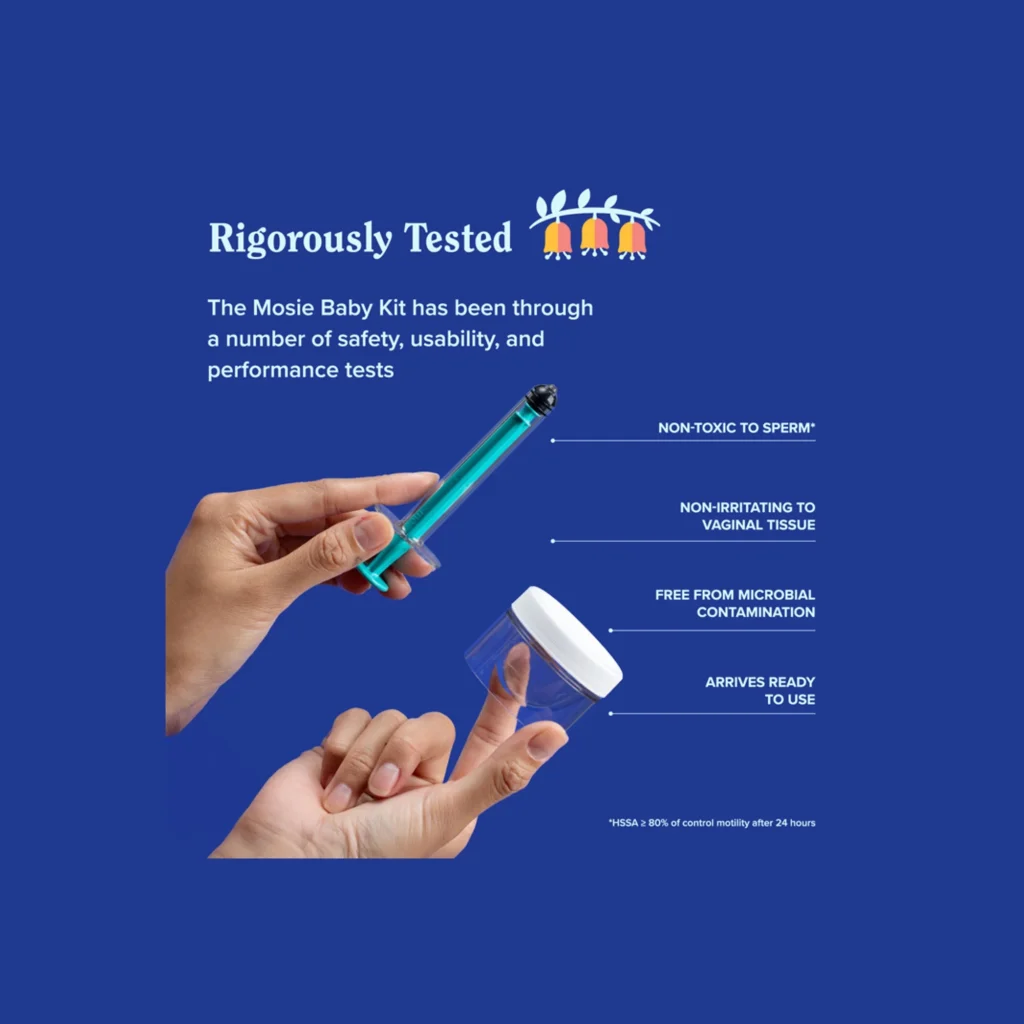
    Mosie Baby Kit features a syringe and container, highlighting safety and usability tests on a blue background.

    Fertility Boosting Essentials: The Must-Have Insemination Kit for Every Couple

    Many couples may not realize this, but certain lubricants can harm sperm and decrease their chances of reaching the egg. It is essential to use a sperm-friendly lubricant when attempting insemination. These lubricants are specially formulated to mimic the natural pH and consistency of cervical mucus, making it easier for sperm to swim towards the egg. Some popular sperm-friendly lubricants include Pre-Seed and Conceive Plus. It is important to note that using regular lubricants or saliva during insemination can be harmful to sperm and should be avoided.

    Sperm Collection Cup:

    For couples who are using donor sperm for insemination, a sperm collection cup is a must-have essential. These cups are designed to collect and store sperm, making it easier to transport to the insemination site. They also come with a lid to keep the sperm safe and secure. Using a sperm collection cup eliminates the need for messy and unhygienic methods of sperm collection, making the process more efficient and less stressful.

    Insemination Supplies:

    Aside from the essentials mentioned above, there are a few other items that should be included in every couple’s insemination kit. These include a sterile syringe, a speculum, and a soft cup. The sterile syringe is used to transfer sperm from the collection cup into the uterus. A speculum is used to open the vaginal canal and provide a clear view of the cervix, making it easier to insert the syringe. The soft cup is used to keep the sperm close to the cervix and prevent leakage, increasing the chances of successful insemination.

    Tips for Using Insemination Kit:

    Now that you have all the necessary items for your insemination kit, here are a few tips to help you use them effectively:

    1. Read the instructions carefully for each product and follow them accordingly.
    2. Make sure all the items are sterile and clean before use.
    3. Use the sperm-friendly lubricant generously.
    4. Keep track of your ovulation using an ovulation kit to ensure you inseminate at the most fertile time.
    5. Relax and stay comfortable during the insemination process. It may help to have your partner or a friend assist you.

    Conclusion:

    Insemination can be an effective method for couples struggling to conceive. By having a fertility boosting insemination kit, couples can increase their chances of successful fertilization and start their journey towards parenthood. The essentials mentioned in this blog post are a great starting point for every couple’s insemination kit. Remember to consult with your doctor before using any products and to follow the instructions carefully for best results. With the right tools, knowledge, and timing, couples can boost their fertility and make their dream of having a baby a reality.

  • Getting Pregnant Naturally: The Benefits of Using a Fertility Boosting Insemination Kit

    Getting pregnant naturally is a dream for many couples who are struggling with fertility issues. While there are various medical interventions available to help with conception, they often come with high costs and potential side effects. Fortunately, there is a natural and affordable option that can boost fertility and increase the chances of getting pregnant – using a fertility boosting insemination kit.

    In this blog post, we will explore the benefits of using a fertility boosting insemination kit and how it can help couples achieve their dream of starting a family.

    What is a Fertility Boosting Insemination Kit?

    A fertility boosting insemination kit is a simple and easy-to-use kit that contains all the necessary tools and supplies for performing an at-home insemination. It typically includes a sterile collection cup, a syringe or a softcup, and sometimes, fertility-friendly lubricant. These kits are designed to provide a safe and effective method for depositing sperm directly into the cervix, which can increase the chances of conception.

    Benefits of Using a Fertility Boosting Insemination Kit

    1. Cost-effective

    One of the major advantages of using a fertility boosting insemination kit is that it is a cost-effective alternative to other fertility treatments. Insemination kits are significantly cheaper than medical procedures such as intrauterine insemination (IUI) or in vitro fertilization (IVF). This makes them an attractive option for couples who may not have the financial means to pursue expensive treatments.

    2. Natural and Non-Invasive

    Fertility boosting insemination kits offer a natural and non-invasive approach to conception. Unlike medical interventions, which involve medications, injections, and procedures, using an insemination kit does not interfere with the body’s natural processes. It is a simple and gentle method that does not cause any discomfort or pain.

    3. Can be used at Home

    logo featuring a pink heart above two teal leaves on a blue circular background

    Getting Pregnant Naturally: The Benefits of Using a Fertility Boosting Insemination Kit

    Another benefit of using a fertility boosting insemination kit is that it can be used in the comfort of your own home. This eliminates the need to visit a doctor’s office and allows couples to maintain their privacy. It also gives them more control over the process and allows them to perform the insemination at the most optimal time for conception.

    4. Increases Chances of Conception

    The main purpose of using a fertility boosting insemination kit is to increase the chances of conception. By depositing sperm directly into the cervix, the sperm has a shorter distance to travel to reach the egg, which can improve the chances of fertilization. Additionally, the kit can also help bypass any potential issues with sperm motility or cervical mucus, which can hinder conception.

    5. Suitable for Various Fertility Issues

    Insemination kits can be beneficial for couples dealing with various fertility issues. They can help in cases of low sperm count, low sperm motility, and even issues with ovulation. The kits are also a great option for same-sex couples or single women who are trying to conceive.

    6. Easy to Use

    Using a fertility boosting insemination kit is relatively easy and does not require any special training or medical expertise. The instructions are clear and straightforward, making it accessible for anyone to use. This also allows couples to feel more in control of the process and can help reduce stress and anxiety associated with trying to conceive.

    7. Can be Used Alongside Other Fertility Treatments

    Fertility boosting insemination kits can also be used alongside other fertility treatments, such as timed intercourse or fertility medications. This can further increase the chances of conception and provide a more holistic approach to fertility.

    In summary, using a fertility boosting insemination kit offers a natural, cost-effective, and non-invasive way to increase the chances of conception. It can be used in the comfort of your own home, is suitable for various fertility issues, and is easy to use. It can also be used alongside other fertility treatments for a more comprehensive approach.