Tag: infertility

  • and Facing Secondary Infertility? Non-Invasive Insemination Could Be the Answer

    Facing Secondary Infertility? Non-Invasive Insemination Could Be the Answer

    For many couples, starting a family is a dream that comes with hopes, excitement, and anticipation. However, for those who have experienced secondary infertility, the dream can quickly turn into a difficult and emotionally taxing journey. Secondary infertility refers to the inability to conceive or carry a pregnancy to term after successfully having one or more children. This condition can be just as devastating as primary infertility, and it often goes unnoticed and unaddressed. In this blog post, we will explore the struggles of facing secondary infertility and how non-invasive insemination could be the answer for those trying to expand their families.

    Understanding Secondary Infertility

    Secondary infertility affects millions of couples around the world, and yet it is rarely talked about. It is often seen as a taboo subject, and many couples suffer in silence, feeling alone and isolated. Unlike primary infertility, where couples have never been able to conceive, secondary infertility can come as a shock to those who have already experienced the joy of parenthood. Many people assume that if you have successfully had a child before, you will have no problems getting pregnant again. However, the reality is that secondary infertility can affect anyone, regardless of their previous fertility history.

    There are many possible causes of secondary infertility, including hormonal imbalances, endometriosis, uterine fibroids, and age-related factors. In some cases, it can also be linked to previous pregnancies, such as scar tissue from a C-section or complications during childbirth. Secondary infertility can also affect both men and women, making it a shared struggle for couples.

    The Emotional Toll of Secondary Infertility

    The journey of secondary infertility can take a significant emotional toll on couples. Many people find it challenging to talk about their struggles with family and friends, as they may not understand the complexity of the issue. This can lead to feelings of isolation, guilt, and shame. Those experiencing secondary infertility may also feel a sense of loss and grief for the family they had envisioned for themselves. The constant disappointment and frustration of not being able to conceive can also cause strain on a couple’s relationship, leading to feelings of resentment and blame.

    Finding a Solution: Non-Invasive Insemination

    home insemination kit components: a syringe and a collection container against a blue background.

    and Facing Secondary Infertility? Non-Invasive Insemination Could Be the Answer

    While there are many fertility treatments available for primary infertility, such as IVF or IUI, these options may not be necessary for those facing secondary infertility. In many cases, non-invasive insemination can be a successful and less invasive option. Non-invasive insemination, also known as intrauterine insemination (IUI), is a procedure where sperm is inserted directly into the uterus during ovulation. This method can be used with a partner’s sperm or donor sperm, depending on the individual’s circumstances.

    One of the significant benefits of non-invasive insemination is that it is a relatively simple and painless procedure. It does not require any surgery or anesthesia, making it a less intimidating option for couples. Additionally, non-invasive insemination has a higher success rate compared to natural conception, making it a more viable solution for couples struggling with secondary infertility.

    The Process of Non-Invasive Insemination

    The first step of non-invasive insemination is to determine the timing of ovulation. This can be done through at-home ovulation predictor kits or through monitoring by a healthcare professional. The next step is to prepare the sperm sample, which can be either from a partner or a donor. The sample is then washed and prepared in a laboratory to separate the sperm from the semen, increasing the chances of fertilization.

    During the insemination procedure, a thin catheter is inserted into the uterus, and the prepared sperm is injected directly into the uterus. This process is relatively quick and painless, with minimal discomfort for the patient. Afterward, the patient can resume their normal activities, and a pregnancy test can be taken about two weeks later to confirm the procedure’s success.

    Final Thoughts

    Facing secondary infertility can be a difficult and isolating experience for couples. However, it is essential to know that there are options available, such as non-invasive insemination, that can provide hope and a chance for a successful pregnancy. While it may not be the solution for everyone, it is worth considering for couples struggling with secondary infertility. Most importantly, it is essential to seek support and talk about your struggles with loved ones or a professional to help navigate this challenging journey.

    In conclusion, secondary infertility is a common yet often overlooked issue that affects many couples. It can take a significant emotional toll on individuals and their relationships. However, non-invasive insemination offers a simpler, less invasive, and more successful option for those trying to conceive. If you are facing secondary infertility, know that you are not alone and that there are options available to help you on your journey to expand your family.


  • and Struggling with Unexplained Infertility? Non-Invasive Insemination May Hold the Answer

    Struggling with infertility can be a heart-wrenching and frustrating experience for many couples. According to the Centers for Disease Control and Prevention, about 12% of women in the United States aged 15 to 44 have difficulty getting pregnant or carrying a pregnancy to term. Infertility can have various causes, and sometimes, even after extensive testing, the cause remains unexplained. This can leave couples feeling helpless and unsure of what options are available to them. However, there is a relatively new and non-invasive treatment option that may hold the answer for those struggling with unexplained infertility – non-invasive insemination.

    Unexplained infertility is a diagnosis given when all standard fertility tests come back normal, yet the couple is still unable to conceive. This can be incredibly frustrating for couples who are eager to start a family and have been trying for months or even years. It can also be emotionally draining, as many couples may feel like they are running out of options and may never have the family they have always dreamed of.

    In the past, when all other fertility treatments had failed, the only option left for couples with unexplained infertility was in-vitro fertilization (IVF). IVF is a costly and invasive procedure that involves retrieving eggs from the woman’s ovaries, fertilizing them with sperm in a laboratory, and then transferring the embryos back into the uterus. While IVF has been successful for many couples, it is not without risks and side effects. It also comes with a hefty price tag, making it inaccessible for many couples.

    This is where non-invasive insemination (NII) comes in as a potential game-changer for couples struggling with unexplained infertility. NII, also known as natural cycle in-vitro fertilization, is a less invasive and more affordable option that can be used before resorting to IVF. It involves monitoring a woman’s natural ovulation cycle and then using a small catheter to place the sperm directly into the uterus, bypassing any potential fertility issues in the cervix or fallopian tubes. This increases the chances of sperm reaching the egg and fertilizing it, thus increasing the chances of conception.

    two teal and clear syringes positioned on a white background

    and Struggling with Unexplained Infertility? Non-Invasive Insemination May Hold the Answer

    One of the major benefits of NII is that it is minimally invasive, making it a less stressful and painful option for couples. The procedure does not require any anesthesia or medications, making it more accessible for women who may have health conditions that prevent them from undergoing more invasive procedures. It also has a lower risk of complications compared to IVF, which involves retrieving eggs from the ovaries.

    Another advantage of NII is that it is more affordable compared to IVF. The cost of NII can be as much as 80% lower than the cost of IVF, making it a more viable option for couples who may not be able to afford IVF or do not have insurance coverage for fertility treatments. This can alleviate some of the financial stress that comes with infertility treatments and allow couples to pursue multiple cycles if needed.

    Additionally, NII can also be used in combination with other fertility treatments, such as intrauterine insemination (IUI), to increase the chances of success. This flexibility in treatment options can provide couples with more hope and a sense of control over their fertility journey.

    However, NII may not be suitable for every couple struggling with unexplained infertility. It is important to consult with a fertility specialist to determine if NII is the right option for you. The success rates of NII can vary depending on factors such as age, overall health, and the cause of infertility. It is also essential to note that NII is not a quick fix and may require multiple cycles to achieve pregnancy.

    In conclusion, struggling with unexplained infertility can be a challenging and emotional experience for couples. However, non-invasive insemination offers a promising alternative to the more invasive and expensive IVF. It is a less invasive and more affordable option that can be used before resorting to IVF, giving couples more hope and control over their fertility journey. While NII may not be suitable for every couple, it is a potential solution that should not be overlooked. With more research and advancements in technology, non-invasive insemination may hold the answer for many couples struggling with unexplained infertility.

  • Non-Invasive Insemination: A Promising Alternative for Women with Endometriosis

    Non-Invasive Insemination: A Promising Alternative for Women with Endometriosis

    Endometriosis is a chronic condition in which endometrial tissue, which normally lines the uterus, grows outside of it. This can cause severe pain, heavy bleeding, and infertility in women. It affects approximately 1 in 10 women worldwide, making it a common gynecological disorder.

    For women with endometriosis, trying to conceive can be a challenging and emotionally taxing journey. Traditional methods of assisted reproductive technology such as in vitro fertilization (IVF) can be expensive, invasive, and have low success rates for women with this condition. However, there is a promising alternative that is gaining attention in the medical community: non-invasive insemination.

    What is Non-Invasive Insemination?

    Non-invasive insemination, also known as intrauterine insemination (IUI), is a fertility treatment that involves placing sperm directly into a woman’s uterus at the time of ovulation. Unlike IVF, which involves retrieving eggs from a woman’s ovaries and fertilizing them in a laboratory, IUI is a less invasive and less expensive procedure. It can be performed with or without fertility drugs, depending on the individual’s needs.

    How Does it Help Women with Endometriosis?

    Non-invasive insemination is a promising alternative for women with endometriosis for several reasons:

    1. It is a non-invasive procedure: Unlike IVF, which requires surgical procedures such as egg retrieval, IUI is a non-invasive procedure. This means that it does not require any incisions or anesthesia, making it a less stressful and more comfortable option for women with endometriosis.

    2. It can improve sperm quality: Endometriosis can affect sperm quality, making it difficult for a couple to conceive naturally. IUI bypasses the cervix and places sperm directly into the uterus, increasing the chances of conception. This can be especially beneficial for couples where the male partner has a low sperm count or poor sperm mobility.

    illustration of Mosie Baby home insemination kit highlighting seamless transfer and size features

    Non-Invasive Insemination: A Promising Alternative for Women with Endometriosis

    3. It can be timed with the woman’s cycle: IUI is usually performed around the time of ovulation, when the woman’s chances of conceiving are highest. This allows for a more targeted and effective approach to conception, which can be beneficial for women with endometriosis who may have irregular cycles.

    4. It can reduce the risk of endometriosis-related complications: Women with endometriosis are at a higher risk of developing complications such as ovarian hyperstimulation syndrome (OHSS) during IVF treatments. IUI, on the other hand, does not involve the use of fertility drugs, reducing the risk of such complications.

    5. It is a more affordable option: IVF can be a costly fertility treatment, and for women with endometriosis, it may take multiple cycles to achieve success. IUI is a more affordable option, making it accessible to more couples struggling with endometriosis-related infertility.

    What to Expect During an IUI Procedure?

    Before an IUI procedure, the woman will undergo a fertility evaluation to determine the best course of treatment. If fertility drugs are used, the woman will be monitored closely to ensure that the eggs are developing properly. When the eggs are ready, the man will provide a semen sample, which will be washed and concentrated to improve the sperm quality.

    The IUI procedure itself is quick and painless. A thin, flexible catheter is inserted through the cervix and into the uterus, where the sperm is deposited. The entire process takes only a few minutes, and the woman can resume her normal activities immediately afterward.

    After the procedure, the woman may experience mild cramping and spotting, which is normal and should subside within a day or two. A pregnancy test can be taken about two weeks after the procedure to determine if the IUI was successful.

    Is IUI Right for You?

    While IUI may be a promising alternative for women with endometriosis, it is not the right option for everyone. It is best to consult with a fertility specialist to determine if IUI is a suitable treatment for your specific situation.

    In conclusion, non-invasive insemination, or IUI, is a promising alternative for women with endometriosis who are struggling with infertility. It is a less invasive, more affordable option that can improve sperm quality and reduce the risk of complications. With its high success rates, IUI gives hope to women with endometriosis who want to conceive and start a family.

  • Non-Invasive Insemination: A Less Invasive and More Affordable Fertility Option

    Non-invasive insemination, also known as intrauterine insemination (IUI), is a fertility treatment option that has gained popularity in recent years due to its less invasive nature and affordability. This method involves placing sperm directly into the woman’s uterus, increasing the chances of fertilization and pregnancy. Compared to other assisted reproductive technologies, non-invasive insemination offers a more natural approach to conception and can be a viable option for couples struggling with fertility issues.

    The Process of Non-Invasive Insemination
    Non-invasive insemination involves the insertion of sperm into the woman’s uterus using a thin, flexible catheter. This is usually done around the time of ovulation to increase the chances of successful conception. Prior to the procedure, the sperm is washed and prepared in a laboratory to remove any non-motile or unhealthy sperm, ensuring that only the strongest and healthiest sperm are used for insemination. This process also helps to increase the sperm count, making it more likely for fertilization to occur.

    Reasons to Choose Non-Invasive Insemination
    There are several reasons why couples may choose non-invasive insemination as a fertility treatment option. One of the main reasons is that it is less invasive compared to other assisted reproductive technologies such as in vitro fertilization (IVF). IVF involves extracting eggs from the woman’s ovaries and fertilizing them with sperm in a laboratory before transferring the embryos back into the uterus. This process can be physically and emotionally demanding, making non-invasive insemination a more appealing option for couples.

    Additionally, non-invasive insemination is also more affordable compared to IVF and other fertility treatments. IVF can cost thousands of dollars, and it may not be covered by insurance. On the other hand, non-invasive insemination is a simpler procedure that can be done in a doctor’s office without the need for expensive equipment or facilities. This makes it a more accessible option for couples who may not be able to afford other fertility treatments.

    Mosie Baby At-Home Insemination Kit instructions and storage guidelines on a blue background.

    Non-Invasive Insemination: A Less Invasive and More Affordable Fertility Option

    Non-invasive insemination is also a more natural approach to conception compared to other assisted reproductive technologies. It does not involve the use of hormones or drugs, making it a safer option for some women who may have health conditions that prevent them from using these treatments. It also allows for a closer connection between the couple, as the sperm is directly inserted into the woman’s uterus by the partner or donor.

    Who Can Benefit from Non-Invasive Insemination?
    Non-invasive insemination can be a suitable option for couples who have been trying to conceive for a year or more without success. It is also a viable option for same-sex couples and single women who want to have a child. In some cases, non-invasive insemination may also be recommended for couples with mild fertility issues, such as low sperm count or cervical mucus problems.

    Risks and Success Rates of Non-Invasive Insemination
    As with any medical procedure, there are some risks associated with non-invasive insemination. The most common risk is multiple pregnancies, as the procedure increases the chances of releasing more than one egg during ovulation. This can lead to a higher risk of complications during pregnancy and delivery. Other risks may include infection or discomfort during the procedure, but these are rare.

    The success rate of non-invasive insemination varies depending on factors such as age, health, and fertility issues. On average, the success rate is around 10-20% per cycle, but this can increase with multiple cycles. It is important to discuss the chances of success with a fertility specialist before deciding on this treatment option.

    In conclusion, non-invasive insemination is a less invasive and more affordable fertility option that can be a viable choice for couples struggling with fertility issues. It offers a more natural approach to conception and can be a less stressful option compared to other assisted reproductive technologies. However, it is important to consult with a fertility specialist to determine if this treatment is suitable for your specific situation.

  • An Introduction to Non-Invasive Insemination: What You Need to Know

    Summary:

    Non-invasive insemination, also known as artificial insemination, is a widely used assisted reproductive technology that involves the placement of sperm directly into the female reproductive tract without the need for sexual intercourse. This technique has been used for decades and has helped many couples and individuals achieve their dream of starting a family. In this blog post, we will provide a comprehensive introduction to non-invasive insemination, covering everything you need to know about this procedure.

    We will begin by discussing the different types of non-invasive insemination, including intrauterine insemination (IUI) and intracervical insemination (ICI). We will explain the differences between these two procedures, as well as their success rates and suitable candidates. Additionally, we will delve into the process of non-invasive insemination, from the initial consultation to the insemination procedure itself.

    Next, we will discuss the various reasons why people may opt for non-invasive insemination, such as male or female infertility, same-sex couples, or single individuals. We will also address the common myths and misconceptions surrounding this procedure and provide accurate information to help you make an informed decision.

    We will then explore the screening and testing process that individuals and couples must undergo before undergoing non-invasive insemination. This includes testing for sexually transmitted infections, genetic disorders, and fertility evaluations. We will also discuss the importance of choosing a reputable and experienced fertility clinic for the procedure.

    two teal and clear syringes positioned on a white background

    An Introduction to Non-Invasive Insemination: What You Need to Know

    In the following sections, we will cover the potential risks and complications associated with non-invasive insemination, as well as the side effects that may occur. It is essential to be aware of these potential risks, although they are relatively rare, to make an informed decision about this procedure.

    We will also provide information on the success rates of non-invasive insemination, as they can vary depending on individual factors such as age, overall health, and fertility issues. We will also discuss the factors that may affect the success of non-invasive insemination, such as sperm quality, timing of the procedure, and the use of fertility medications.

    Additionally, we will address the emotional and psychological aspects of non-invasive insemination. Starting a family through assisted reproductive technology can be a rollercoaster of emotions, and we will provide tips and resources to help you cope with the process.

    Finally, we will discuss the cost of non-invasive insemination and provide information on insurance coverage and financial assistance options. We understand that this procedure can be expensive, and we want to ensure that everyone has access to accurate information on the financial aspects of non-invasive insemination.

    In conclusion, non-invasive insemination is a safe, effective, and widely used assisted reproductive technology that has helped many individuals and couples achieve their dream of starting a family. It is essential to be well-informed about the procedure, its success rates, and potential risks before making a decision. We hope that this blog post has provided you with a comprehensive introduction to non-invasive insemination and has answered any questions you may have.

  • and Ready for a Baby? Non-Invasive Insemination Can Help You Conceive

    Becoming a parent is a life-changing experience that many people dream of. However, for some, the journey to parenthood can be a difficult one. Infertility, whether due to medical reasons or personal choice, can be a significant hurdle for couples trying to conceive. In recent years, advancements in technology have made it possible for couples to have a baby through non-invasive insemination, providing a glimmer of hope for those struggling to conceive. In this blog post, we will discuss what non-invasive insemination is, how it works, and how it can help you in your journey towards parenthood.

    Non-invasive insemination, also known as artificial insemination or intrauterine insemination, is a fertility treatment that involves placing sperm directly into a woman’s uterus to increase the chances of fertilization. The procedure is relatively simple and is usually performed in a doctor’s office. It is a popular choice for couples who have been trying to conceive for a while and have not had any success.

    There are two types of non-invasive insemination – intracervical insemination (ICI) and intrauterine insemination (IUI). In ICI, the sperm is placed at the entrance of the cervix, while in IUI, it is placed directly into the uterus. IUI is considered to be more effective than ICI as it bypasses the cervix and places the sperm closer to the fallopian tubes, where fertilization occurs.

    One of the main benefits of non-invasive insemination is that it is a less invasive and less expensive option compared to other fertility treatments such as in vitro fertilization (IVF). It also has a higher success rate than natural conception for couples who have been trying to conceive for a while. Non-invasive insemination is also a viable option for same-sex couples and single women who wish to have a baby.

    So, how does non-invasive insemination work? The process begins with a consultation with a fertility specialist, who will assess your medical history and perform some tests to determine the best course of treatment for you. During the woman’s ovulation period, the male partner or a donor will provide a semen sample, which will be washed and prepared in the laboratory. The prepared sperm will then be placed into the woman’s uterus using a thin catheter. The entire process takes only a few minutes and is relatively painless.

    Mosie Baby ovulation test kit with packaging and instructions on a pink background.

    and Ready for a Baby? Non-Invasive Insemination Can Help You Conceive

    The success rate of non-invasive insemination depends on various factors such as the age of the woman, the quality of sperm, and any underlying fertility issues. On average, the success rate of IUI is around 10-20% per cycle, but it can increase significantly with multiple cycles. It is essential to have realistic expectations and understand that it may take a few attempts before achieving a successful pregnancy.

    Non-invasive insemination is a safe and relatively painless procedure, and most women experience no side effects. Some may experience mild cramping or spotting, but these usually go away within a day or two. It is recommended to rest for a little while after the procedure, but you can resume your normal activities afterward.

    Non-invasive insemination can also be combined with fertility medications to stimulate ovulation, which can further increase the chances of pregnancy. However, it is essential to consult with your doctor before taking any medications and to follow their instructions carefully.

    In conclusion, non-invasive insemination is a viable option for couples struggling to conceive. It is a less invasive and more affordable alternative to other fertility treatments and has a higher success rate than natural conception. It is imperative to consult with a fertility specialist to determine if this is the right option for you and to understand the process thoroughly.

    If you are ready to start your journey towards parenthood, non-invasive insemination may be the solution you have been looking for. With advancements in technology, it is now possible for many couples to conceive and start a family. So, don’t lose hope, and consult with a fertility specialist to see if non-invasive insemination is the right choice for you.

  • The Role of Non-Invasive Insemination in Modern Fertility Treatments

    The Role of Non-Invasive Insemination in Modern Fertility Treatments

    In the world of fertility treatments, there are a variety of options available for individuals and couples struggling to conceive. One of the most popular and effective methods is non-invasive insemination, also known as artificial insemination or intrauterine insemination (IUI). This method has been used for decades and has evolved significantly, becoming a highly successful and affordable option for many individuals and couples. In this blog post, we will discuss the role of non-invasive insemination in modern fertility treatments, its benefits, and how it has revolutionized the way we approach fertility.

    Understanding Non-Invasive Insemination

    Non-invasive insemination is a procedure that involves placing sperm directly into a woman’s uterus during her ovulation period. The sperm can come from a partner, a donor, or a sperm bank. Unlike other fertility treatments, non-invasive insemination does not require any surgical procedures or complex medical interventions. Instead, it involves a simple and painless process that can be completed in a doctor’s office.

    The Evolution of Non-Invasive Insemination

    Non-invasive insemination has been around for many years, but it has undergone significant advancements in recent years. In the past, the success rate of this procedure was relatively low, making it a less popular option among couples struggling with fertility issues. However, with advancements in technology and techniques, the success rate of non-invasive insemination has increased significantly.

    One of the key developments in non-invasive insemination is the use of fertility drugs to stimulate ovulation. These drugs help to increase the chances of successful insemination by producing more eggs during a woman’s ovulation period. Additionally, the introduction of advanced sperm washing techniques has also improved the success rate of this procedure. Sperm washing involves separating the most active and healthy sperm from the semen, reducing the risk of infection and increasing the chances of successful insemination.

    The Benefits of Non-Invasive Insemination

    at-home insemination kit by Mosie Baby, featuring syringes, collection cups, and instructions on a pink background.

    The Role of Non-Invasive Insemination in Modern Fertility Treatments

    Non-invasive insemination offers several benefits that make it a popular choice among individuals and couples seeking fertility treatments. One of the main benefits is that it is a relatively simple and affordable procedure compared to other fertility treatments. It does not require any anesthesia or surgery, making it a less invasive option, and it can be performed in a doctor’s office.

    Moreover, non-invasive insemination is a less time-consuming procedure, with most appointments lasting only a few minutes. The success rate of this procedure is also significantly higher than in the past, with studies showing a success rate of up to 20% per cycle. This means that couples can try multiple times, increasing their chances of successful conception.

    Non-invasive insemination also offers a more natural approach to fertility treatments, as it does not involve any complex medical interventions. This makes it a popular choice for individuals and couples who prefer a more holistic approach to their fertility journey.

    Who Can Benefit from Non-Invasive Insemination?

    Non-invasive insemination is a suitable option for a wide range of individuals and couples struggling with fertility issues. It can be used for individuals with unexplained infertility, mild male factor infertility, and cervical factor infertility. It is also a viable option for same-sex couples and single women who wish to have a child.

    Additionally, non-invasive insemination can also be used by couples who are undergoing in vitro fertilization (IVF) treatments. It can be used alongside IVF to increase the chances of successful conception or as a backup option if IVF is not successful.

    In Summary

    Non-invasive insemination has come a long way in the world of fertility treatments. With advancements in technology and techniques, it has become a highly successful and affordable option for individuals and couples struggling with fertility issues. Its benefits, including its simplicity, affordability, and relatively high success rate, make it a popular choice among many. Non-invasive insemination offers a more natural and less invasive approach to fertility treatments, making it a viable option for a wide range of individuals and couples.

  • and Infertile? Non-Invasive Insemination Offers Hope

    Summary:

    Infertility is a condition that affects millions of individuals and couples worldwide. For those struggling with infertility, the journey to parenthood can be emotionally and physically exhausting. However, advancements in medical technology have provided new options and hope for those facing infertility. One such option is non-invasive insemination, a fertility treatment that offers a less invasive and more affordable alternative to traditional IVF methods. This blog post will explore the concept of non-invasive insemination, its benefits and drawbacks, and how it can provide hope for those struggling with infertility.

    Non-Invasive Insemination: An Overview
    Non-invasive insemination, also known as intrauterine insemination (IUI), is a fertility treatment that involves placing sperm directly into the uterus during ovulation. This procedure can be done using a partner’s sperm or donor sperm and is a less invasive and more cost-effective option compared to traditional IVF methods. IUI is typically recommended for couples with unexplained infertility, mild male factor infertility, or women with ovulation issues.

    The Process of Non-Invasive Insemination
    The procedure for non-invasive insemination is relatively simple and can be done in a doctor’s office. First, the woman will undergo a series of fertility tests to determine the best time for insemination. Then, the sperm sample is collected and prepared in the lab before being inserted into the uterus using a thin catheter. The entire process takes only a few minutes and is relatively painless.

    Mosie Baby At-Home Insemination Kit instructions and storage guidelines on a blue background.

    and Infertile? Non-Invasive Insemination Offers Hope

    Benefits of Non-Invasive Insemination
    One of the significant benefits of non-invasive insemination is its affordability. Compared to traditional IVF methods, IUI is significantly less expensive, making it a more accessible option for many couples. Additionally, the procedure is less invasive, with minimal discomfort and a faster recovery time. It also has a lower risk of complications compared to other fertility treatments.

    Non-Invasive Insemination: A Promising Option for Infertility
    For individuals and couples struggling with infertility, non-invasive insemination offers a promising solution. It is a less invasive and more affordable option compared to traditional IVF methods, making it a more accessible option for many. Additionally, IUI has a higher success rate for couples with mild fertility issues, giving hope to those who have been unsuccessful with other fertility treatments.

    Drawbacks of Non-Invasive Insemination
    While non-invasive insemination offers many benefits, it is not without its drawbacks. One of the most significant risks is the potential for multiple pregnancies, which can lead to complications for both the mother and babies. Additionally, IUI is not always successful, and couples may need to undergo multiple cycles before achieving a pregnancy.

    Other Factors to Consider
    Before deciding on non-invasive insemination, it is essential to consider other factors that may affect its success. These include the age and overall health of the woman, the quality of the sperm, and any underlying medical conditions that may affect fertility. It is crucial to discuss these factors with a fertility specialist to determine if non-invasive insemination is the best option for your specific situation.

    In Conclusion
    For those struggling with infertility, non-invasive insemination offers a glimmer of hope. It is a more affordable and less invasive option compared to traditional IVF methods, making it a viable choice for many couples. However, it is essential to consider all factors and consult with a fertility specialist before deciding on this treatment option. With advancements in medical technology, there is hope for individuals and couples to overcome infertility and fulfill their dreams of becoming parents.

  • Non-Invasive Insemination: A Safe and Effective Alternative to IVF

    Non-Invasive Insemination: A Safe and Effective Alternative to IVF

    In vitro fertilization (IVF) has long been the go-to method for couples struggling with infertility. However, this process can be invasive, costly, and emotionally taxing. Fortunately, there is another option that is gaining popularity as a safe and effective alternative to IVF – non-invasive insemination.

    What is Non-Invasive Insemination?

    Non-invasive insemination (NII) is a fertility treatment that involves placing sperm into the female reproductive tract without the need for surgical procedures. This can be done through various methods such as intrauterine insemination (IUI), intracervical insemination (ICI), and intravaginal insemination (IVI). These methods are less invasive and less expensive than IVF, making them an attractive choice for couples seeking fertility treatment.

    The Process of Non-Invasive Insemination

    Unlike IVF, non-invasive insemination does not require the use of fertility drugs to stimulate egg production. Instead, the woman’s natural ovulation cycle is monitored, and insemination is timed accordingly. Sperm is collected from the male partner or a sperm donor and prepared for insemination. Then, the sperm is inserted into the female partner’s reproductive tract through a thin catheter. This process is painless and can be done in a doctor’s office without the need for anesthesia.

    Is Non-Invasive Insemination Safe?

    One of the main concerns with any medical procedure is safety. Non-invasive insemination is considered very safe, with a success rate of around 10-20% per cycle. As it does not involve any surgical procedures or fertility drugs, the risk of complications is minimal. However, it is essential to choose a reputable and experienced fertility clinic to ensure the safety and success of the procedure.

    Who is a Good Candidate for Non-Invasive Insemination?

    Non-invasive insemination is a suitable option for many couples who are struggling with infertility. It can be used for various fertility issues, such as low sperm count, cervical mucus problems, or unexplained infertility. It is also a good alternative for same-sex couples or single women who want to conceive using donor sperm. It is recommended for couples who have been trying to conceive for at least a year without success and have no underlying fertility issues.

    Benefits of Non-Invasive Insemination

    1. Less Invasive

    Mosie Baby Kit with a syringe and container, highlighting safety and usability features on a blue background.

    Non-Invasive Insemination: A Safe and Effective Alternative to IVF

    As the name suggests, non-invasive insemination is a much less invasive procedure compared to IVF. It does not involve any surgical procedures, which means fewer risks and a faster recovery time.

    2. Affordable

    IVF can cost tens of thousands of dollars, making it a financial burden for many couples. Non-invasive insemination, on the other hand, is significantly more affordable, with each cycle costing a few hundred to a few thousand dollars.

    3. Fewer Side Effects

    Fertility drugs used in IVF can cause side effects such as mood swings, hot flashes, and bloating. Non-invasive insemination does not require the use of these drugs, resulting in fewer side effects.

    4. More Natural

    Non-invasive insemination follows the natural ovulation cycle of the woman, making it a more natural process compared to IVF. This can be appealing for couples who prefer a more holistic approach to fertility treatment.

    5. Can Be Done at Home

    Some non-invasive insemination methods, such as IVI, can be done at home with the use of a special device called an insemination cup. This can be a more comfortable and private option for some couples.

    Is Non-Invasive Insemination Right for You?

    If you and your partner are struggling with infertility, it is important to consult with a fertility specialist to determine the best course of action for your specific situation. Non-invasive insemination may be a suitable option for couples with certain fertility issues, but it is not a one-size-fits-all solution. It is crucial to gather all the necessary information and make an informed decision with the guidance of a medical professional.

    In conclusion, non-invasive insemination is a safe and effective alternative to IVF for many couples struggling with infertility. It is less invasive, more affordable, and has fewer side effects, making it an attractive option to consider. However, it is essential to consult with a fertility specialist to determine if it is the right choice for you and your partner. With the advancements in reproductive technology, couples now have more options available to help them achieve their dream of starting a family.

  • and Struggling with Fertility? Non-Invasive Insemination Could be the Answer

    Struggling with fertility can be an incredibly difficult and emotional journey for many couples. The desire to start a family and have children is a natural and fundamental aspect of human life, and when this dream is met with challenges, it can take a toll on both the physical and emotional well-being of individuals. Fortunately, modern medical advancements have made it possible for couples to overcome fertility issues and fulfill their dream of parenthood. Non-invasive insemination, also known as intrauterine insemination (IUI), is one such solution that has been proven to be successful for many couples struggling with fertility.

    Non-invasive insemination involves placing washed and concentrated sperm directly into the uterus, increasing the chances of fertilization. This method can be used for couples with a variety of fertility issues, including low sperm count, unexplained infertility, and ovulation disorders. In this blog post, we will discuss the process of non-invasive insemination and how it can be a viable option for couples struggling with fertility.

    The first step in the non-invasive insemination process is to undergo a series of fertility tests to determine the cause of infertility. These tests may include blood work, ultrasound, and semen analysis. Based on the results, a personalized treatment plan will be developed by a fertility specialist. This plan may include fertility medication to stimulate ovulation and improve the chances of pregnancy.

    Once the woman’s ovulation is closely monitored, the insemination process can begin. The male partner will provide a semen sample, which will then be washed and concentrated in a laboratory to remove any impurities and increase the sperm’s mobility. The concentrated sperm will then be placed into a thin catheter and inserted into the uterus through the cervix. This process is relatively painless and does not require anesthesia.

    After the insemination, the woman will be asked to lie down for about 20-30 minutes to allow the sperm to swim towards the egg. The entire procedure takes about 15 minutes and can be done in the comfort of a fertility clinic. The success rate of non-invasive insemination varies depending on the individual’s fertility issues and age, but on average, it has a success rate of 10-15% per cycle.

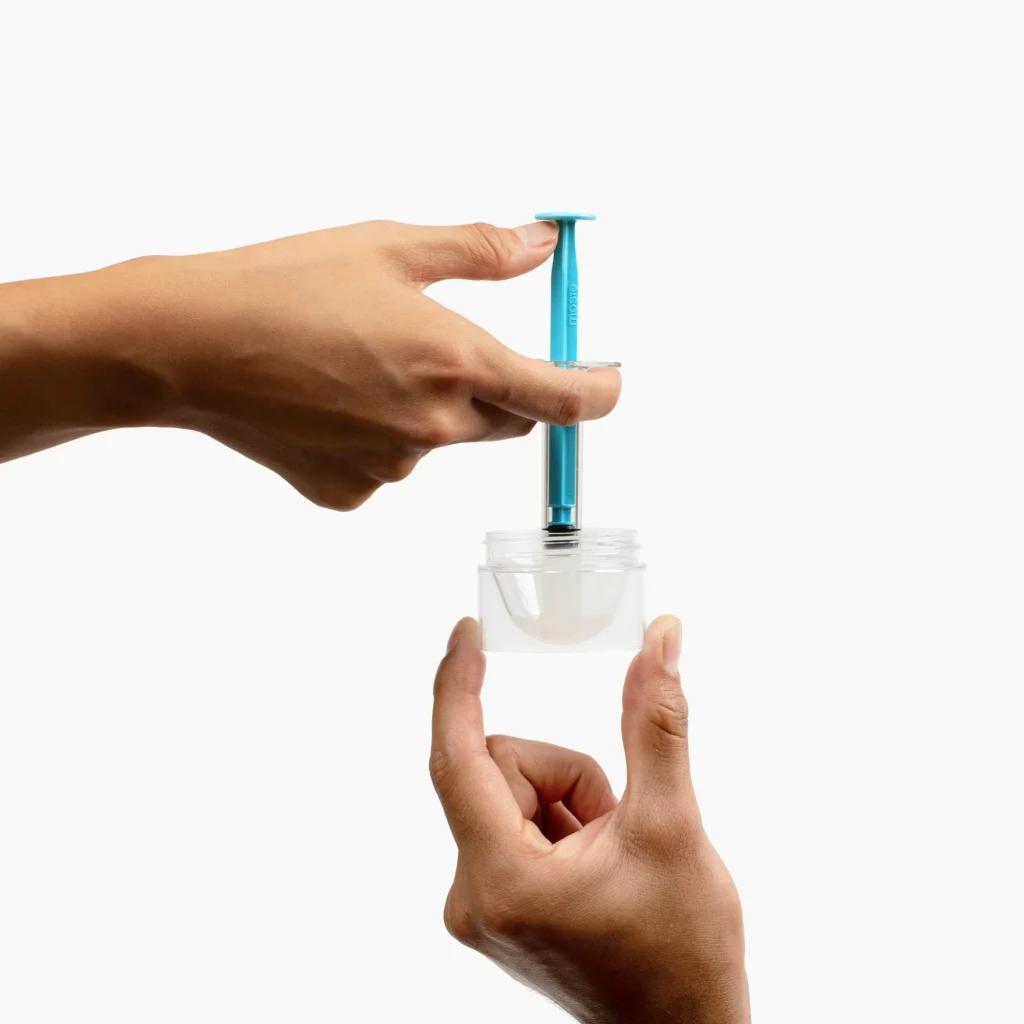
    hands using a blue syringe to extract contents from a clear container for a home insemination kit

    and Struggling with Fertility? Non-Invasive Insemination Could be the Answer

    One of the significant advantages of non-invasive insemination is that it is a minimally invasive and less expensive option compared to other fertility treatments such as in vitro fertilization (IVF). IVF involves retrieving eggs from the woman’s ovaries and fertilizing them with sperm in a laboratory before transferring the embryos into the uterus. IVF is a more complex and costly procedure, making non-invasive insemination a more accessible option for couples struggling with fertility.

    Non-invasive insemination also has a lower risk of multiple pregnancies compared to IVF, where multiple embryos are often transferred to increase the chances of pregnancy. This reduces the risk of complications for both the mother and the babies.

    In addition to being a less invasive and more affordable option, non-invasive insemination also allows couples to use donor sperm if needed. This can be beneficial for same-sex couples or couples where the male partner has a low sperm count or genetic conditions that may be passed on to the child. The use of donor sperm is a personal decision, and couples can choose to use an anonymous donor or someone they know.

    It is essential to note that non-invasive insemination is not a one-time solution. Couples may need to undergo multiple insemination cycles before achieving a successful pregnancy. However, the success rate increases with each cycle, and couples are encouraged to remain patient and hopeful throughout the process.

    In conclusion, struggling with fertility can be a challenging and overwhelming experience for couples. However, non-invasive insemination offers a viable solution for couples with various fertility issues. It is a minimally invasive, affordable, and accessible option that has helped many couples achieve their dream of parenthood. If you are struggling with fertility, do not lose hope – non-invasive insemination could be the answer you have been searching for.