Tag: home insemination

  • From the Comfort of Home: How to Use a Home Insemination Starter Kit

    From the Comfort of Home: How to Use a Home Insemination Starter Kit

    Starting a family is a dream for many couples, but for some, it may not come as easily as they had hoped. In vitro fertilization (IVF) and artificial insemination are common fertility treatments, but they can be costly and invasive. This is where home insemination becomes a popular option for couples looking to conceive from the comfort of their own home. With the rise of technology and advancements in reproductive medicine, home insemination starter kits have become easily accessible and affordable. In this blog post, we will discuss what a home insemination starter kit is, how to use it, and its benefits.

    What is a Home Insemination Starter Kit?

    A home insemination starter kit is a set of tools and supplies that help couples perform insemination at home. These kits are designed to mimic the process of artificial insemination that is commonly performed in a medical setting. They usually include items such as ovulation prediction kits, syringes, sperm-friendly lubricant, and educational materials on how to perform the insemination.

    How to Use a Home Insemination Starter Kit

    Step 1: Track your ovulation
    The first step in using a home insemination starter kit is to track your ovulation. This can be done through ovulation prediction kits or by tracking your basal body temperature. Knowing when you are ovulating is crucial in increasing your chances of conception.

    Step 2: Prepare the sperm
    If you are using a sperm donor, make sure to thoroughly research the donor and ensure that they have been tested for any sexually transmitted infections. If you are using your partner’s sperm, it is recommended to collect it through masturbation and immediately transfer it to the sterile collection cup provided in the kit.

    Step 3: Prepare the insemination kit
    Before beginning the insemination process, make sure to read the instructions provided in the kit thoroughly. Sterilize the syringe and the collection cup with a disinfectant solution. Fill the syringe with the sperm, and make sure there are no air bubbles.

    hand holding a pregnancy test with instructions on a colorful background

    From the Comfort of Home: How to Use a Home Insemination Starter Kit

    Step 4: Perform the insemination
    Using the syringe, gently insert the sperm into the vagina as close to the cervix as possible. It is recommended to use a sperm-friendly lubricant to help with the insertion. Once the syringe is empty, remove it carefully and discard it.

    Step 5: Rest and relax
    After the insemination, it is recommended to lay down for 15-20 minutes to allow the sperm to travel towards the cervix. Relaxing and avoiding strenuous physical activity will also increase your chances of conception.

    Benefits of Using a Home Insemination Starter Kit

    1. Cost-effective
    One of the main benefits of using a home insemination starter kit is its affordability. Compared to costly fertility treatments, home insemination is a much more budget-friendly option.

    2. Convenience
    Performing insemination at home eliminates the need for multiple visits to a medical facility. It also allows couples to have more control over the process and perform it in the comfort and privacy of their own home.

    3. Lower stress levels
    The process of trying to conceive can be stressful, especially when it involves medical procedures. Home insemination allows couples to reduce their stress levels and approach the process in a more relaxed manner.

    4. Increased intimacy
    Insemination at home can be a more intimate experience for couples compared to a medical setting. It allows them to bond and share the experience together, which can strengthen their relationship.

    5. Natural approach
    Home insemination is a natural approach to conception, as it involves the same process as sexual intercourse. This can be appealing to couples who prefer a more natural approach to starting a family.

    In conclusion, home insemination starter kits offer a more affordable, convenient, and intimate approach to conceiving a child. With proper research and understanding of the process, using a home insemination starter kit can be a successful way for couples to start their journey towards parenthood from the comfort of their own home.


  • Home Insemination Made Easy: What You Need in Your Starter Kit

    Summary:

    illustration comparing standard and Mosie syringe openings with text highlighting design benefits for home insemination

    Home Insemination Made Easy: What You Need in Your Starter Kit

    Home insemination, also known as self-insemination, is a procedure that allows individuals or couples to use a donor’s sperm to conceive a child in the comfort of their own home. This method has become increasingly popular as it offers a more private and cost-effective option for those looking to start or expand their family. However, it is essential to have the right equipment and supplies in your starter kit to ensure a safe and successful insemination process. In this blog post, we will discuss the essential items needed in a home insemination starter kit and provide tips for making the process as easy and stress-free as possible.

  • The Ultimate Home Insemination Starter Kit for Couples Trying to Conceive

    Blog Post:

    Trying to conceive is an exciting and emotional journey for any couple. However, for some couples, it may not be as easy as they had hoped. Whether it’s due to fertility issues, financial constraints, or personal reasons, many couples are turning to home insemination as an alternative method for conception. If you and your partner have decided to take this route, then you’ll need the right tools and resources to make the process as smooth and successful as possible. In this blog post, we will discuss the ultimate home insemination starter kit for couples trying to conceive.

    What is Home Insemination?

    Home insemination is a method of assisted reproduction where a couple uses a syringe or turkey baster to insert sperm into the vagina or cervix, mimicking the natural process of conception. This method is commonly used by same-sex couples, single women, and couples with fertility issues. Home insemination can be done at home with the help of a donor, or with the use of frozen or fresh sperm from a sperm bank.

    The Benefits of Home Insemination

    One of the main benefits of home insemination is the privacy and comfort it provides. Many couples may feel uncomfortable or self-conscious about undergoing insemination procedures in a clinical setting. Home insemination allows couples to have more control over the process and can be done in the comfort of their own home.

    Home insemination is also a more affordable option compared to other assisted reproduction methods. It eliminates the cost of medical procedures, which can be a significant barrier for some couples. Additionally, home insemination can be done at a time that is most convenient for the couple, allowing them to work around their schedules.

    The Ultimate Home Insemination Starter Kit

    Now that we understand the basics of home insemination let’s take a look at the essential items you’ll need to get started.

    1. Conception Syringe or Turkey Baster

    The first and most crucial item in your home insemination starter kit is a conception syringe or turkey baster. These tools are used to inject sperm into the vagina or cervix. Ensure that the syringe or baster you choose is sterile and specifically designed for insemination purposes.

    2. Ovulation Predictor Kit

    Timing is crucial when it comes to conception, and an ovulation predictor kit (OPK) can help you determine the best time to inseminate. OPKs work by detecting the surge of luteinizing hormone (LH) in urine, which occurs 12-36 hours before ovulation. This surge indicates that ovulation is about to occur, giving you a window of opportunity for insemination.

    sperm-ready insemination kit with a syringe and container, featuring a screw top lid and non-tip safety wall

    The Ultimate Home Insemination Starter Kit for Couples Trying to Conceive

    3. Basal Body Thermometer

    A basal body thermometer (BBT) is another essential tool for tracking ovulation. It measures your body’s resting temperature, which rises slightly after ovulation. By tracking your BBT, you can pinpoint your most fertile days and increase your chances of conception.

    4. Pre-Seed Fertility-Friendly Lubricant

    During the process of insemination, it’s essential to use a fertility-friendly lubricant to mimic the natural cervical mucus. Pre-Seed is specifically designed for this purpose and is the only lubricant that has been clinically shown to be safe for use when trying to conceive.

    5. Home Ovulation Test Strips

    In addition to an OPK, home ovulation test strips are another helpful tool for tracking ovulation. These strips detect the LH surge in urine and are an affordable alternative to OPKs. They can be used in conjunction with a BBT chart for more accurate ovulation tracking.

    6. Fertility Vitamins and Supplements

    To optimize your chances of conception, it’s essential to ensure that your body is receiving all the necessary nutrients. Taking fertility vitamins and supplements can improve your reproductive health and increase your chances of conceiving. Some recommended supplements for both men and women include folic acid, CoQ10, and omega-3 fatty acids.

    7. Sperm Donor or Sperm Bank Information

    If you’re using donor sperm for home insemination, it’s crucial to have all the necessary information and documentation from the donor or sperm bank. This includes the donor’s medical history, sperm count, and any relevant screening tests.

    In addition to these items, it’s also essential to have a comfortable and private space to perform the insemination process. Having a supportive partner or a trusted friend to assist can also make the experience less stressful.

    Summary:

    Home insemination is a popular option for couples trying to conceive, and with the right tools and resources, it can be a successful method. The ultimate home insemination starter kit should include a conception syringe or turkey baster, ovulation predictor kit, basal body thermometer, fertility-friendly lubricant, home ovulation test strips, fertility vitamins and supplements, and sperm donor or sperm bank information. With these items, couples can take control of their fertility journey and increase their chances of conceiving.

  • Creating Your Own Path to Parenthood: The Home Insemination Starter Kit

    Creating Your Own Path to Parenthood: The Home Insemination Starter Kit

    Parenthood is a journey that many people dream of, but for some, it may not come as easily as they hoped. Whether you are a single individual or a same-sex couple, there are many ways to create your own path to parenthood. One option that has become increasingly popular in recent years is home insemination. This method allows individuals or couples to take control of their own fertility and start their journey to parenthood in the comfort of their own home. In this blog post, we will discuss the basics of home insemination and how to create your own home insemination starter kit to help you on your path to parenthood.

    What is Home Insemination?

    Home insemination, also known as at-home insemination, is a method of artificial insemination that can be done in the privacy of your own home. It involves depositing sperm into the vagina or cervix in order to fertilize an egg and initiate pregnancy. This method is often used by same-sex couples or single individuals who want to become parents, as well as by couples who are struggling with fertility issues. It is a simple and cost-effective option compared to other fertility treatments, and it can be done without the involvement of a medical professional.

    Creating Your Home Insemination Starter Kit

    Before starting the home insemination process, it is important to gather all the necessary supplies. Here is a list of items that should be included in your home insemination starter kit:

    1. Sperm

    The most important component of a home insemination starter kit is, of course, sperm. You can obtain sperm from a sperm bank, a known donor, or a friend. If using a sperm bank, you can choose from a variety of donors based on physical characteristics, medical history, and other criteria. If using a known donor or a friend, it is important to have them tested for sexually transmitted infections and to have a legal agreement in place. It is also recommended to have the sperm frozen and tested for quality before use.

    2. Ovulation Predictor Kit

    In order to increase the chances of a successful insemination, it is important to track ovulation. An ovulation predictor kit can help you determine when you are ovulating by detecting the surge in luteinizing hormone (LH) in your urine. This surge usually occurs 24-36 hours before ovulation, giving you the optimal time frame for insemination.

    3. Syringe or Turkey Baster

    A syringe or turkey baster can be used to deposit the sperm into the vagina or cervix. It is important to use a clean and sterile syringe or turkey baster to avoid any risk of infection. It is also recommended to use a soft-tipped syringe or baster to prevent any damage to the cervix.

    4. Speculum

    A speculum is a tool used to hold open the walls of the vagina in order to access the cervix. It is not necessary for home insemination, but it can make the process easier and more comfortable.

    5. Soft Cup or Instead Softcup

    A soft cup or Instead Softcup is a flexible, disposable cup that is placed in the vagina to collect and hold sperm close to the cervix. It can increase the chances of conception by keeping sperm near the cervix for a longer period of time.

    6. Lubricant

    Using a lubricant during insemination can make the process more comfortable and less painful. However, it is important to choose a fertility-friendly lubricant, as some lubricants can harm sperm and decrease their chances of reaching the egg.

    two teal and clear syringes positioned on a white background

    Creating Your Own Path to Parenthood: The Home Insemination Starter Kit

    7. Pregnancy Test

    After insemination, you will have to wait for about two weeks to take a pregnancy test. It is important to have a pregnancy test on hand to check for pregnancy and to avoid any unnecessary stress or anxiety.

    The Process of Home Insemination

    Now that you have gathered all the necessary supplies, it is time to start the home insemination process. Here are the basic steps to follow:

    1. Determine when you are ovulating using an ovulation predictor kit.

    2. Collect the sperm in a sterile container.

    3. Use a syringe or turkey baster to deposit the sperm into the vagina or cervix. If using a soft cup or Instead Softcup, place it in the vagina after depositing the sperm.

    4. Keep your hips elevated for 15-20 minutes to allow the sperm to reach the cervix.

    5. Remove the soft cup or Instead Softcup after 4-6 hours.

    6. Wait for about two weeks before taking a pregnancy test.

    It is important to note that home insemination may not be successful on the first try. It may take several attempts before achieving pregnancy, so it is important to be patient and keep trying.

    Important Considerations

    Before embarking on the home insemination journey, it is important to consider a few important factors.

    1. Consult with a healthcare professional: It is always a good idea to consult with a healthcare professional before starting any fertility treatments. They can provide valuable advice and make sure that you are physically and emotionally ready for the process.

    2. Have realistic expectations: While home insemination can be a successful method of achieving pregnancy, it is important to have realistic expectations. Pregnancy may not happen right away, and it may take several attempts before achieving success.

    3. Seek support: Starting the journey to parenthood can be an emotionally challenging experience. It is important to seek support from your partner, family, friends, or a support group to help you through the process.

    Summary

    Creating your own path to parenthood through home insemination can be a rewarding and empowering experience. By gathering the necessary supplies and following the basic steps, you can take control of your fertility journey and increase your chances of achieving pregnancy. However, it is important to consider the important factors and seek support along the way.

  • DIY Baby Making: The Benefits of a Home Insemination Starter Kit

    Blog Post Title: DIY Baby Making: The Benefits of a Home Insemination Starter Kit

    Introduction:
    Bringing a new life into this world is a beautiful and exciting journey. For some couples, the process of conceiving a baby is not as easy as they had hoped. This can lead to feelings of frustration and disappointment. However, with advancements in medical technology, there are now various options available for couples to help them achieve their dream of having a baby. One such option is home insemination, which can be done using a home insemination starter kit. In this blog post, we will discuss the benefits of using a home insemination starter kit and how it can make the journey of conceiving a baby a little easier.

    What is a Home Insemination Starter Kit?
    A home insemination starter kit is a set of tools and supplies that are used to perform artificial insemination at home. It typically includes a syringe or bulb, a collection cup, and a sample of sperm. These kits are easily available online and can be purchased without a prescription. They are designed to be user-friendly, convenient, and affordable, making it a popular choice among couples trying to conceive.

    Benefits of Using a Home Insemination Starter Kit:
    1. Cost-Effective:
    One of the major benefits of using a home insemination starter kit is that it is cost-effective. Insemination procedures in a medical setting can be quite expensive, and not all insurance plans cover them. Home insemination kits, on the other hand, are relatively affordable and can save couples a significant amount of money.

    2. Privacy:
    For some couples, the idea of going through a medical procedure can be intimidating and uncomfortable. With a home insemination starter kit, the entire process can be done in the comfort and privacy of one’s home. This allows couples to feel more relaxed and at ease, which can have a positive impact on the success of the insemination.

    3. Convenient:
    Using a home insemination starter kit is also a convenient option for couples trying to conceive. It eliminates the need for repeated visits to a medical facility and allows couples to perform the procedure at their own convenience. This can be especially beneficial for couples with busy schedules or those who live far from a fertility clinic.

    4. Increased Chances of Success:
    Studies have shown that home insemination can be just as effective as medical insemination when done correctly. In fact, some couples have reported a higher success rate with home insemination as it allows them to time the procedure based on ovulation, increasing the chances of conception.

    pregnancy test kit with instructions, test device, and packaging on a white background

    DIY Baby Making: The Benefits of a Home Insemination Starter Kit

    5. Control Over the Process:
    Having control over the insemination process can be empowering for couples. With a home insemination starter kit, couples can take charge of their journey and feel more involved in the process. This can be particularly beneficial for those who have had negative experiences with medical procedures in the past.

    Tips for Using a Home Insemination Starter Kit:
    1. Read the Instructions Carefully:
    Before using a home insemination starter kit, it is crucial to read the instructions carefully. Each kit may have different specifications, and it is important to follow them accurately to ensure the best chances of success.

    2. Time it Right:
    Timing is crucial when it comes to insemination. It is essential to track ovulation and perform the procedure during the most fertile days of the menstrual cycle. This increases the chances of the sperm successfully fertilizing the egg.

    3. Consider Using a Fertility Lubricant:
    Some home insemination kits come with a fertility lubricant, which can help the sperm reach the egg more easily. If the kit does not include one, it is recommended to use a fertility-friendly lubricant to avoid any hindrances in the process.

    4. Seek Medical Advice:
    While home insemination can be a convenient and cost-effective option, it is always advisable to seek medical advice before attempting it. A fertility specialist can provide guidance and answer any questions or concerns that couples may have.

    Conclusion:
    The journey of conceiving a baby can be challenging for some couples. Home insemination starter kits offer a convenient, affordable, and private option for those struggling with fertility. With its numerous benefits and success rates, it is definitely worth considering for couples trying to start a family.

    Summary:
    DIY Baby Making: The Benefits of a Home Insemination Starter Kit
    – Home insemination starter kits are tools and supplies used for artificial insemination at home.
    – They are cost-effective, private, and convenient, making them a popular choice for couples trying to conceive.
    – Using a home insemination kit can increase the chances of success, give couples control over the process, and save them from repeated medical visits.
    – It is important to read the instructions carefully, time the procedure correctly, and consider using a fertility lubricant for better results.
    – Seek medical advice before attempting home insemination.

  • Getting Started with Home Insemination: A Complete Guide

    Have you and your partner been trying to conceive through home insemination? Or perhaps you are a single person looking to start a family on your own? Whatever your situation may be, home insemination can be a viable option for those looking to start or expand their family. In this complete guide, we will walk you through everything you need to know about getting started with home insemination.

    What is Home Insemination?

    Home insemination, also known as artificial insemination, is a process where sperm is placed into the reproductive tract of a woman in order to fertilize an egg. This can be done at home, without the assistance of a medical professional, using a variety of methods.

    Why Choose Home Insemination?

    There are many reasons why someone may choose home insemination over other methods of conception. Some of the most common reasons include:

    – Cost: Home insemination is often much more affordable than other methods such as intrauterine insemination (IUI) or in vitro fertilization (IVF).
    – Convenience: With home insemination, you have the flexibility to do it at home, at a time that is most convenient for you and your partner.
    – Privacy: Some people may feel more comfortable and at ease doing the insemination process in the privacy of their own home rather than at a clinic.
    – Control: With home insemination, you have more control over the process, including choosing the donor and the timing of the insemination.

    How to Get Started with Home Insemination

    1. Understand the Process

    Before starting the home insemination process, it is important to understand how it works. The most common method involves collecting sperm from a donor and then inserting it into the vagina or cervix using a syringe or a cervical cap. This can be done using fresh or frozen sperm, depending on your preference and availability.

    2. Choose a Donor

    The next step is to choose a donor. This can be a known donor, such as a friend or family member, or an anonymous donor from a sperm bank. It is important to consider factors such as genetic history, physical characteristics, and personality traits when choosing a donor.

    3. Gather Supplies

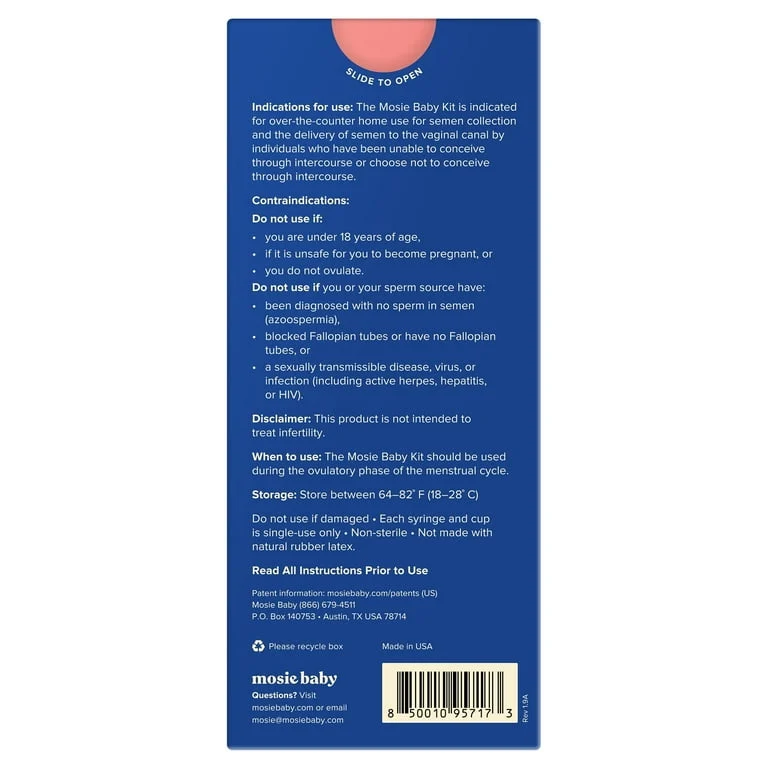
    Mosie Baby At-Home Insemination Kit instructions and storage guidelines on a blue background.

    Getting Started with Home Insemination: A Complete Guide

    Once you have chosen a donor, you will need to gather all the necessary supplies for the home insemination process. This may include a sterile specimen cup, a syringe or cervical cap, and a timer.

    4. Track Your Ovulation

    Timing is crucial when it comes to home insemination. It is important to track your ovulation in order to ensure that the sperm is inseminated during your most fertile window. This can be done using ovulation predictor kits or by tracking your basal body temperature.

    5. Prepare for the Insemination

    On the day of the insemination, make sure to thoroughly wash your hands and any supplies that will come in contact with the sperm. You may also want to use a sperm-friendly lubricant to help with the insertion process.

    6. Complete the Insemination

    The actual insemination process involves inserting the sperm into the vagina or cervix using a syringe or a cervical cap. Make sure to follow the instructions provided by your chosen method and to remain lying down for 15-20 minutes after the insemination to allow the sperm to reach the cervix.

    7. Wait for the Results

    After the insemination, you will need to wait and see if you have successfully conceived. This can be determined by taking a pregnancy test around two weeks after the insemination. If the test is positive, congratulations, you are pregnant!

    Tips for Success with Home Insemination

    – Communicate openly and honestly with your partner about the process and any concerns you may have.
    – Familiarize yourself with your menstrual cycle and track your ovulation accurately.
    – Use high-quality supplies and follow all instructions carefully.
    – Consider seeking advice from a fertility specialist or joining online support groups for additional guidance and support.

    In Summary

    Home insemination can be an affordable, convenient, and private option for those looking to start a family. By understanding the process, choosing a donor, tracking ovulation, and following the necessary steps, you can increase your chances of success with home insemination. Remember to communicate with your partner and seek professional advice if needed. With patience and determination, you can achieve your dream of starting or expanding your family through home insemination.

  • The Impact of Insemination Sets on Fertility: What the Research Says

    Blog Post:

    In today’s world, many couples struggle with fertility issues. For some, the solution may come in the form of insemination sets. These sets, also known as artificial insemination kits, are a popular method of assisted reproduction that can help couples conceive. However, there is often confusion and misinformation surrounding these sets and their impact on fertility. In this blog post, we will take a closer look at the research surrounding insemination sets and their impact on fertility.

    What are Insemination Sets?

    Insemination sets are kits that contain all the necessary tools and materials for artificial insemination. This process involves placing sperm directly into a woman’s reproductive tract to increase the chances of fertilization. Insemination sets typically include a syringe, a speculum, a catheter, and a collection cup for the sperm. These kits are widely available and can be used at home or in a medical setting.

    The Impact of Insemination Sets on Fertility

    The use of insemination sets has been a topic of debate and controversy in the medical community. Some experts argue that these sets can increase the chances of pregnancy, while others suggest that they may not be as effective as other fertility treatments. To better understand the impact of insemination sets on fertility, let’s take a look at some of the recent research on the topic.

    1. Success Rates

    One of the biggest concerns with insemination sets is their success rates. According to recent studies, the success rates of insemination sets vary greatly. Some studies have shown success rates as high as 25%, while others have reported rates as low as 5%. These discrepancies may be due to various factors such as the age and health of the couple, the quality of the sperm, and the timing of the insemination.

    2. Timing of Insemination

    Mosie Baby Kit features a syringe and container, highlighting safety and usability tests on a blue background.

    The Impact of Insemination Sets on Fertility: What the Research Says

    Timing plays a crucial role in the effectiveness of insemination sets. Research suggests that the success rates of insemination sets are higher when performed within 24 hours of ovulation. This is because the egg has a limited lifespan, and if insemination is not done at the right time, the sperm may not have a chance to fertilize the egg. It is important to track ovulation carefully and perform insemination at the optimal time for the best chances of success.

    3. Sperm Quality

    Another important factor that can impact the success of insemination sets is the quality of the sperm. Studies have shown that the use of fresh, washed sperm can significantly increase the chances of pregnancy compared to using frozen or unwashed sperm. This is because fresh sperm is more mobile and has a higher concentration, making it easier for them to reach and fertilize the egg.

    4. Medical vs. Home Insemination

    One of the biggest debates surrounding insemination sets is whether they should be used in a medical setting or at home. Some couples prefer the convenience and privacy of using the kits at home, while others believe that medical insemination is more effective. Research suggests that the success rates of home insemination are comparable to those of medical insemination. However, medical insemination may offer additional benefits such as the use of more advanced techniques and the expertise of medical professionals.

    5. Risks and Side Effects

    Like any medical procedure, there are risks and potential side effects associated with the use of insemination sets. These can include infection, discomfort, and even allergic reactions. It is essential to carefully follow the instructions provided with the kit and consult with a medical professional if you experience any adverse effects.

    In summary, the impact of insemination sets on fertility is a complex and individualized matter. While the success rates may vary, research suggests that when used correctly, these sets can be an effective option for couples struggling with fertility issues. However, it is crucial to carefully consider factors such as timing, sperm quality, and the potential risks before deciding to use insemination sets.

    In conclusion, the use of insemination sets can be a helpful tool for couples trying to conceive. However, it is important to do thorough research and consult with a medical professional before using these kits. Factors such as timing, sperm quality, and the potential risks should be carefully considered. With the right approach and proper use, insemination sets can be a valuable option for couples on their fertility journey.

    SEO Metadata:

  • The Link Between Insemination Sets and Improved Fertility

    The Link Between Insemination Sets and Improved Fertility

    When it comes to trying to conceive, many couples turn to various methods and techniques to increase their chances of success. One method that has gained popularity in recent years is the use of insemination sets. These sets, also known as home insemination kits, provide couples with the tools and materials necessary for at-home insemination, without the need for medical assistance. While these sets have been marketed as a convenient and cost-effective option for couples, there is also evidence to suggest that they may actually improve fertility.

    In this blog post, we will explore the link between insemination sets and improved fertility. We will discuss the benefits of using these sets, how they work, and the research that supports their effectiveness. Whether you are currently trying to conceive or simply curious about the science behind fertility, this post will provide valuable insights into the role of insemination sets in the process.

    Understanding Insemination Sets

    Insemination sets typically contain a variety of materials, such as a syringe or applicator, a collection cup, and instructions for use. Some sets may also include sperm-friendly lubricants or ovulation predictor kits. These sets can be purchased online or in-store without a prescription, making them easily accessible to couples.

    The purpose of an insemination set is to provide couples with the tools necessary for at-home insemination, also known as intracervical insemination (ICI). This method involves placing sperm near the cervix, allowing them to swim towards the egg and fertilize it. ICI is often used as an alternative to intrauterine insemination (IUI), a more invasive and costly procedure that requires medical assistance.

    The Benefits of Using Insemination Sets

    One of the main benefits of using insemination sets is the convenience they offer. Couples can perform the insemination in the comfort and privacy of their own home, without the need for doctor’s appointments or invasive procedures. This also allows for more flexibility in terms of timing, as couples can perform the insemination at the most optimal time for conception.

    Insemination sets are also more cost-effective compared to medical procedures such as IUI or in-vitro fertilization (IVF). These medical procedures can cost thousands of dollars, making them unaffordable for many couples. Insemination sets, on the other hand, typically cost a few hundred dollars, making them a more accessible option.

    two teal and clear syringes positioned on a white background

    The Link Between Insemination Sets and Improved Fertility

    Additionally, using insemination sets can be less emotionally taxing for couples. Trying to conceive can be a stressful and emotional journey, and the use of medical procedures can add to that stress. By using insemination sets, couples can take a more natural and low-stress approach to conception.

    The Science Behind Insemination Sets and Improved Fertility

    While the convenience and cost-effectiveness of insemination sets are appealing, the most significant benefit may be their effectiveness in improving fertility. Several studies have shown that using insemination sets can increase the chances of conception, especially for couples with fertility issues.

    One study published in the International Journal of Women’s Health found that home insemination was a viable option for women with unexplained infertility. The study showed that women who used insemination sets had a 22% chance of achieving pregnancy, compared to a 14% chance for those who did not use the sets.

    Another study published in the Journal of Assisted Reproduction and Genetics found that home insemination was as effective as in-clinic IUI for women with mild male factor infertility. The study showed that the pregnancy rates for both methods were similar, with home insemination having a success rate of 15.3% and in-clinic IUI having a rate of 17.5%.

    These findings suggest that insemination sets can be a viable and effective option for couples struggling with fertility issues. By providing sperm with a direct route to the cervix, these sets may bypass any potential barriers that could prevent fertilization.

    Conclusion

    Insemination sets offer a convenient and cost-effective option for couples trying to conceive. However, they also have the potential to improve fertility and increase the chances of conception. The evidence from various studies supports the effectiveness of these sets, making them a valuable tool for couples on their fertility journey.

    Whether you are considering using an insemination set or simply interested in the science behind fertility, it is clear that there is a strong link between these sets and improved fertility. By providing couples with a more accessible and natural option for conception, insemination sets have the potential to help many couples achieve their dream of starting a family.

    In summary, insemination sets are home insemination kits that provide couples with the necessary tools for at-home insemination. They offer benefits such as convenience, cost-effectiveness, and a less emotionally taxing approach to conception. However, the most significant benefit may be their effectiveness in improving fertility. Studies have shown that insemination sets can increase the chances of conception for couples with fertility issues. This makes them a valuable option for those on their fertility journey.

  • Fertility Boosting Insemination Sets: The Key to Conception?

    Fertility Boosting Insemination Sets: The Key to Conception?

    Trying to conceive can be an emotional and stressful journey for many couples. With the advancements in modern medicine, there are now more options available for those struggling to get pregnant. One of these options is fertility boosting insemination sets, which have become increasingly popular in recent years. In this blog post, we will explore what fertility boosting insemination sets are, how they work, and the potential benefits they offer for those trying to conceive.

    What are Fertility Boosting Insemination Sets?

    Fertility boosting insemination sets, also known as home insemination kits, are designed to help couples increase their chances of getting pregnant. These sets typically include ovulation predictor kits, sperm-friendly lubricants, and a syringe or soft cup for insemination. They are designed to be used at home, making the process of insemination more private and convenient for couples.

    How do Fertility Boosting Insemination Sets Work?

    Fertility boosting insemination sets work by providing couples with the tools they need to time intercourse around ovulation. Ovulation predictor kits help track the woman’s monthly cycle, indicating when she is most likely to be fertile. Sperm-friendly lubricants are also included in these sets to create an optimal environment for sperm to reach and fertilize the egg. The syringe or soft cup allows for a more targeted and effective way of delivering sperm to the cervix, increasing the chances of conception.

    Benefits of Using Fertility Boosting Insemination Sets

    There are several potential benefits of using fertility boosting insemination sets for couples trying to conceive. Firstly, these sets offer a more affordable option compared to other fertility treatments, such as intrauterine insemination (IUI) or in vitro fertilization (IVF). They also provide a more private and intimate way of conceiving, as the process can be done in the comfort of one’s own home.

    blue box with "mosie" logo, syringes, and informational pamphlet on a pink background

    Fertility Boosting Insemination Sets: The Key to Conception?

    Moreover, fertility boosting insemination sets can be beneficial for couples with certain fertility issues. For example, if the male partner has a low sperm count or poor sperm quality, using a syringe or soft cup can help bypass any potential obstacles in the cervix and increase the chances of fertilization. Additionally, these sets can be helpful for same-sex couples or single women who are using donor sperm to conceive.

    Tips for Using Fertility Boosting Insemination Sets

    While fertility boosting insemination sets can be a helpful tool for couples trying to conceive, it is essential to use them correctly to increase their effectiveness. Here are some tips to keep in mind when using these sets:

    1. Understand your ovulation cycle: It is crucial to track your ovulation cycle accurately to ensure that intercourse is timed correctly. Ovulation predictor kits can help with this, but it is also helpful to track other signs of ovulation, such as changes in cervical mucus.

    2. Use sperm-friendly lubricants: Regular lubricants can hinder sperm’s movement and decrease the chances of conception. It is important to use a sperm-friendly lubricant included in the insemination set to create an optimal environment for the sperm to reach the egg.

    3. Follow the instructions carefully: Each fertility boosting insemination set may have slightly different instructions, so it is essential to read and follow them carefully. This will ensure that the process is done correctly and increase the chances of success.

    4. Consider seeking professional advice: While fertility boosting insemination sets can be a convenient option, it is always a good idea to consult a fertility specialist or doctor for personalized advice. They can help determine if this method is suitable for you and offer additional tips for increasing your chances of conception.

    In conclusion, fertility boosting insemination sets can be a helpful tool for couples trying to conceive. They offer a more affordable, private, and convenient option compared to other fertility treatments. By understanding how these sets work and following the tips mentioned above, couples can increase their chances of conception and hopefully bring their long-awaited bundle of joy into the world.

  • DIY Baby-Making: How a Syringe Kit Can Bring Couples Closer Together

    BLOG POST:

    Having a baby is one of the most fulfilling experiences for any couple. However, for some, conceiving a child can be a challenging and expensive journey. In recent years, more and more couples have turned to DIY baby-making methods as an affordable and intimate way to bring a child into their lives. One such method is using a syringe kit, which not only offers a cost-effective option but also allows couples to bond and connect on a deeper level. In this blog post, we will explore the world of DIY baby-making and how a syringe kit can bring couples closer together.

    What is DIY Baby-Making?

    DIY baby-making, also known as home insemination, is a method that involves couples using simple tools and techniques to achieve pregnancy without medical assistance. It is a popular choice for same-sex couples, single parents, and heterosexual couples struggling with infertility. The process usually involves collecting sperm from a donor and manually inserting it into the cervix or vagina using a syringe.

    The Benefits of Using a Syringe Kit

    Syringe kits have become increasingly popular among couples looking to conceive at home. Here are some of the reasons why:

    1. Cost-Effective: One of the biggest advantages of using a syringe kit is its affordability. Medical procedures such as intrauterine insemination (IUI) or in vitro fertilization (IVF) can cost thousands of dollars, making them out of reach for many couples. In contrast, a syringe kit typically costs around $50, making it a much more affordable option.

    2. Intimate and Private: For some couples, the thought of undergoing medical procedures or seeking help from a fertility clinic can be daunting and intrusive. DIY baby-making allows couples to conceive in the comfort and privacy of their own home, away from any external pressures or judgments.

    3. Better Timing: Medical procedures, such as IUI or IVF, require strict timing and coordination with a fertility clinic. With a syringe kit, couples have more control over the timing of insemination, which can increase the chances of successful conception.

    4. Bonding and Connection: Using a syringe kit can bring couples closer together as they navigate the process of trying to conceive. The act of insemination can be a deeply intimate and bonding experience for couples, strengthening their relationship and creating a strong foundation for parenthood.

    How to Use a Syringe Kit for DIY Baby-Making

    Using a syringe kit for home insemination is a relatively simple process. Here are the steps to follow:

    1. Choose a Donor: The first step is to choose a sperm donor. This can be a known donor or an anonymous one. It’s important to ensure that the donor has undergone medical screening and testing to rule out any potential health risks.

    2. Prepare the Sperm: The sperm can be collected through ejaculation or by using a sperm bank. If using a sperm bank, follow their instructions for thawing and preparing the sperm for insemination.

    Mosie Baby kit with two jars, a syringe, and a supportive message card inside a colorful box.

    DIY Baby-Making: How a Syringe Kit Can Bring Couples Closer Together

    3. Prepare the Syringe: The syringe kit usually comes with a syringe, a collection cup, and a sterile tube. Use the sterile tube to transfer the prepared sperm from the collection cup into the syringe.

    4. Insert the Syringe: Once the syringe is filled with the sperm, insert it into the vagina or cervix, depending on the desired method of insemination. Gently squeeze the syringe to release the sperm.

    5. Rest: After insemination, it’s essential to rest for 15-20 minutes to allow the sperm to reach the cervix and increase the chances of conception.

    6. Repeat the Process: For best results, it’s recommended to repeat the process for two to three consecutive days during the ovulation window.

    Important Considerations and Safety Precautions

    While DIY baby-making can be an effective and intimate way to conceive, it’s essential to keep in mind some important considerations and safety precautions:

    1. Consult a Doctor: Before attempting home insemination, it’s crucial to consult with a doctor to rule out any underlying fertility issues or health concerns that may affect the chances of conception.

    2. Use a Sterile Syringe: It’s crucial to ensure that the syringe used for insemination is sterile to avoid any potential infections.

    3. Proper Timing: It’s essential to track ovulation accurately to ensure insemination takes place during the most fertile window.

    4. Follow Instructions: It’s crucial to follow the instructions that come with the syringe kit carefully. Improper use can reduce the chances of successful conception.

    5. Seek Medical Help: If attempts at home insemination are unsuccessful after several tries, it’s essential to seek medical help to rule out any underlying fertility issues.

    In Conclusion

    DIY baby-making using a syringe kit is an affordable, intimate, and effective way for couples to conceive at home. While it may not be the right option for everyone, it can bring couples closer together and create a strong foundation for parenthood. It’s essential to consult with a doctor, follow safety precautions, and track ovulation accurately for the best chances of successful conception.

    SEO metadata: