Tag: inclusivity

  • Eliminating Barriers to Parenthood: The Home Insemination Starter Kit

    Eliminating Barriers to Parenthood: The Home Insemination Starter Kit

    Parenthood is a dream for many individuals and couples, but for some, it can be a difficult journey filled with barriers and challenges. One of the biggest obstacles to parenthood is the high cost of assisted reproductive technology (ART) procedures, such as in vitro fertilization (IVF) or intrauterine insemination (IUI). These procedures can cost thousands of dollars and may not be covered by insurance, making them inaccessible for many people. However, there is a more affordable and convenient option available – home insemination using a starter kit.

    What is a Home Insemination Starter Kit?

    A home insemination starter kit is a package that includes all the necessary tools and supplies for performing the insemination process at home. It typically includes a sterile collection cup, syringe, ovulation predictor kit, and instructions for use. Some kits may also include sperm-friendly lubricant and pregnancy tests.

    The Benefits of Using a Home Insemination Starter Kit

    1. Cost-effective: The most significant advantage of using a home insemination starter kit is its affordability. Compared to ART procedures, which can cost thousands of dollars, a home insemination kit is significantly cheaper, with prices ranging from $50 to $200.

    2. Convenience: Home insemination kits allow individuals and couples to perform the process in the comfort and privacy of their own home. This eliminates the need for multiple visits to a clinic and the associated costs and time commitment.

    3. Increased chances of conception: Home insemination can be just as effective as other ART procedures, with success rates ranging from 10% to 15% per cycle. By following the instructions provided in the kit, the chances of conception can be further increased.

    4. Inclusivity: Home insemination kits are inclusive of all types of families, including same-sex couples and single individuals. It eliminates the need for a sperm donor and allows individuals to start their journey to parenthood on their own terms.

    5. Reusable: Some home insemination kits are reusable, meaning that they can be used for multiple cycles, making it a cost-effective option for those trying to conceive.

    Eliminating Barriers to Parenthood with a Home Insemination Starter Kit

    The high cost of ART procedures is not the only barrier to parenthood. Other factors, such as geographical location, accessibility, and cultural or religious beliefs, can also prevent individuals from seeking medical assistance to conceive. Home insemination kits provide a solution to these barriers by offering a more accessible and discreet option for starting a family.
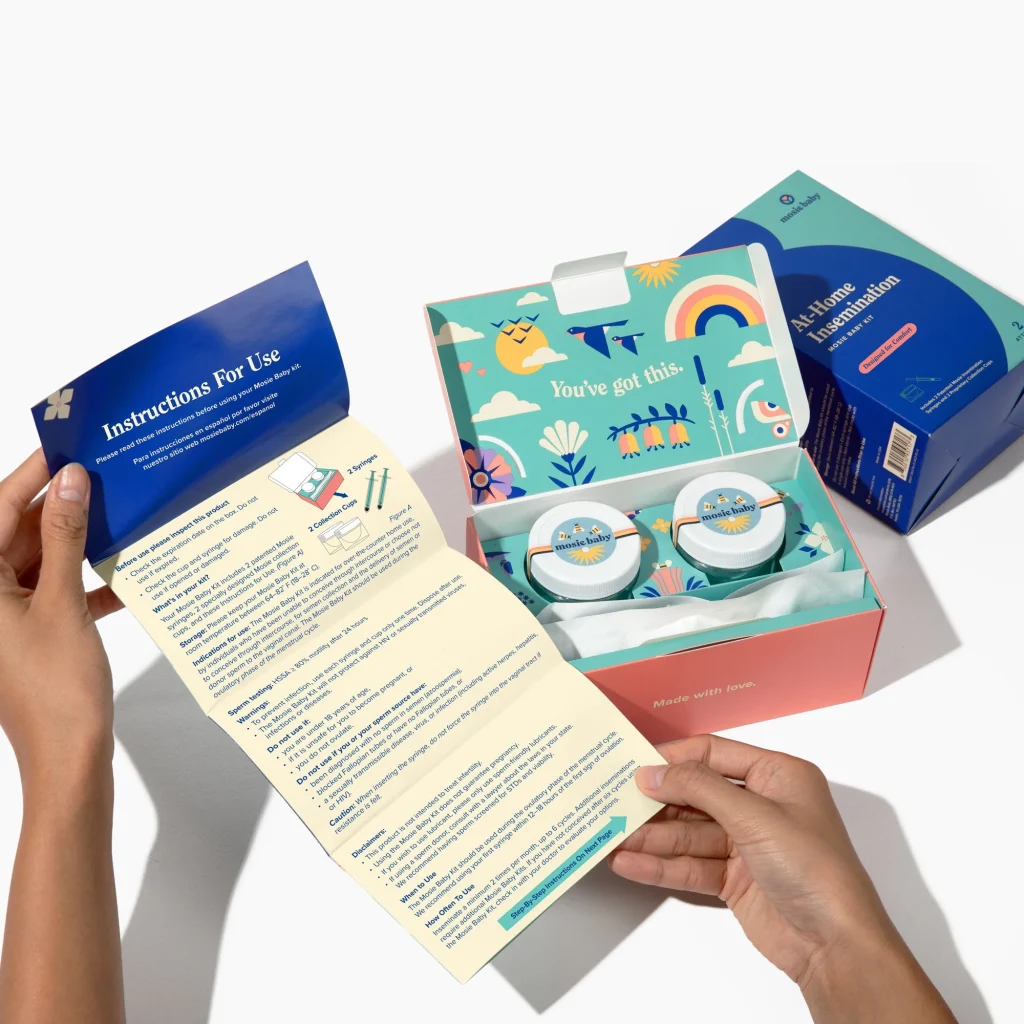
    Home insemination kit by Mosie Baby with instructions and colorful packaging.

    Eliminating Barriers to Parenthood: The Home Insemination Starter Kit

    Moreover, home insemination kits can also be used to overcome other challenges, such as infertility due to male factor issues. In such cases, couples can use a donor sperm sample to perform the process at home, eliminating the need for expensive and invasive procedures.

    How to Use a Home Insemination Starter Kit

    Using a home insemination starter kit is a simple and straightforward process. Here are the general steps to follow:

    1. Track Ovulation: Use an ovulation predictor kit to determine when you are ovulating. This will help you identify the most fertile days for insemination.

    2. Prepare the Sperm: If using a donor sperm sample, make sure it is thawed and at room temperature before using it. If using fresh sperm, collect it in the sterile cup provided in the kit.

    3. Prepare the Syringe: Assemble the syringe according to the instructions provided in the kit. If the kit includes a sperm-friendly lubricant, use it to lubricate the tip of the syringe.

    4. Perform the Insemination: Once ovulation is detected, use the syringe to deposit the sperm into the vagina near the cervix.

    5. Rest: After insemination, it is recommended to lie down and rest for 15-20 minutes to allow the sperm to travel towards the egg.

    6. Test for Pregnancy: After two weeks, use a pregnancy test to determine if the insemination was successful.

    In Conclusion

    Starting a family should not be hindered by financial constraints or other barriers. Home insemination starter kits offer an affordable, convenient, and inclusive option for individuals and couples to begin their journey to parenthood. With the right tools and instructions, home insemination can be a successful and empowering way to conceive.


    Summary:

    Parenthood can be a challenging journey for many individuals and couples due to barriers such as the high cost of ART procedures. However, a more affordable and convenient option is available – home insemination using a starter kit. These kits include all the necessary tools and instructions for performing the process at home. The benefits of using a home insemination starter kit include its cost-effectiveness, convenience, increased chances of conception, inclusivity, and reusability. It also helps to eliminate other barriers, such as male factor infertility and cultural or religious beliefs. The process of using a home insemination starter kit is simple and can be done in the comfort and privacy of one’s home. With the right tools and instructions, home insemination can be a successful and empowering way to conceive.

  • The Syringe Kit Revolution: Redefining Conception and Parenthood

    The Syringe Kit Revolution: Redefining Conception and Parenthood

    Conception and parenthood have traditionally followed a specific path – a couple tries to conceive naturally, and if they are unable to, they may turn to assisted reproductive techniques such as in vitro fertilization (IVF) or adoption. However, in recent years, a new revolutionary method has emerged in the form of at-home insemination using syringe kits. This revolutionary approach has been gaining popularity as an alternative to traditional methods, redefining the way we think about conception and parenthood.

    The concept of at-home insemination using syringe kits is not entirely new, but it has gained a lot of attention and interest in recent years. It involves using a syringe to insert semen into the vagina, mimicking the process of natural intercourse. The kits typically include a syringe, a collection cup, and instructions for use. This method is often used by same-sex couples, single women, and heterosexual couples with fertility issues.

    One of the main reasons for the rise in popularity of syringe kits for at-home insemination is the cost. Traditional assisted reproductive techniques such as IVF can cost tens of thousands of dollars, making it unaffordable for many couples. Adoption can also be a costly and lengthy process. In comparison, syringe kits are much more affordable, with prices ranging from $25 to $150. This accessibility has made it a viable option for individuals and couples who may not have been able to afford traditional methods.

    Syringe kits also offer a more private and intimate experience for couples trying to conceive. Traditional methods often involve medical professionals and procedures, which can be intimidating and uncomfortable for some individuals. With at-home insemination, couples can have more control over the process and can choose to involve a medical professional only if necessary. This allows for a more personal and less clinical approach to conception, creating a more positive experience for many couples.

    Another significant advantage of syringe kits is the convenience and flexibility they offer. In traditional methods, couples often have to schedule appointments and adhere to strict timelines, which can be stressful and time-consuming. With syringe kits, couples have the flexibility to inseminate at home on their own schedule. This can be especially beneficial for couples with busy work or travel schedules. It also eliminates the need to coordinate with a donor’s schedule, as is often the case with traditional methods.

    Mosie Baby At-Home Insemination Kit instructions and storage guidelines on a blue background.

    The Syringe Kit Revolution: Redefining Conception and Parenthood

    But perhaps the most groundbreaking aspect of the syringe kit revolution is the way it challenges traditional notions of conception and parenthood. In the past, the idea of a child being conceived at home using a syringe may have been seen as unconventional or even taboo. However, with the rise of at-home insemination, these preconceived notions are being challenged, and a new, more inclusive definition of parenthood is emerging.

    One of the most significant impacts of this revolution is on same-sex couples and single individuals. Historically, these groups have faced many challenges and barriers when it comes to starting a family. Traditional methods often require a male and female partner, making it difficult for same-sex couples and single individuals to conceive. With syringe kits, these barriers are removed, and these groups have more options and control over their reproductive choices. This is a significant step towards equality and inclusivity in the realm of conception and parenthood.

    Furthermore, at-home insemination using syringe kits also challenges the idea that a child must have a genetic connection to both parents to be considered a family. With traditional methods, there is often an emphasis on genetic ties, and adoption can be a lengthy and complicated process. However, with at-home insemination, couples can choose to use a donor’s sperm, and the child can still be considered part of the family. This opens up the concept of family to include a broader range of possibilities, promoting diversity and inclusivity in the definition of parenthood.

    Of course, like any revolutionary concept, there are some concerns and criticisms surrounding the use of syringe kits for at-home insemination. One of the main concerns is the lack of medical supervision, which can lead to potential health risks. However, many companies offering syringe kits provide thorough instructions and safety precautions to minimize these risks. Additionally, couples can choose to involve a medical professional if they feel more comfortable doing so.

    Another concern is the lack of legal protection for same-sex couples and single individuals using syringe kits. In some countries, laws may not recognize the non-biological parent as the legal guardian of the child, which can lead to complicated legal battles. It is essential for governments to update their policies and laws to reflect the changing landscape of parenthood and ensure that all families have equal rights and protections.

    In conclusion, the syringe kit revolution is redefining the way we think about conception and parenthood. It offers a more affordable, private, and flexible option for couples trying to conceive, while also challenging traditional notions and promoting inclusivity in the definition of family. As with any revolutionary concept, there are concerns and challenges, but the potential benefits and impact on society are undeniable. With continued education, awareness, and support, the syringe kit revolution has the potential to change the landscape of parenthood for the better.

    Summary: The use of syringe kits for at-home insemination is a revolutionary approach to conception and parenthood. This method offers a more affordable, private, and flexible option for couples and challenges traditional notions of family, promoting inclusivity and equality. While there are concerns and challenges, the potential benefits and impact on society are significant.

  • and LGBTQ+: Non-Invasive Insemination for Same-Sex Couples

    Blog Post: Non-Invasive Insemination for Same-Sex Couples: Breaking Barriers in Parenthood

    The LGBTQ+ community has long fought for equal rights and acceptance, including the right to start a family. While adoption and surrogacy have been popular options for same-sex couples, they can be expensive and often come with legal hurdles. However, there is another option that is gaining popularity among LGBTQ+ couples – non-invasive insemination.

    Non-invasive insemination, also known as intrauterine insemination (IUI), is a fertility treatment that involves placing sperm inside the uterus to increase the chances of fertilization. Unlike in vitro fertilization (IVF), which involves extracting eggs and fertilizing them outside the body, IUI is a less invasive and more affordable option for couples who want to conceive. It is a viable option for same-sex couples, as it allows them to use donor sperm to start their family.

    The Process of Non-Invasive Insemination

    The first step in non-invasive insemination is choosing a sperm donor. Same-sex couples can either use a known donor, such as a friend or family member, or they can opt for a sperm bank. Sperm banks have a wide selection of donors, and couples can choose based on characteristics like physical appearance, education, and medical history.

    Once a sperm donor is chosen, the next step is to prepare the sperm sample. The sperm sample is washed and concentrated to remove any non-motile sperm and debris, increasing the chances of fertilization. The sample is then placed in a thin catheter, which is inserted into the uterus through the cervix. This process is usually painless and takes only a few minutes.

    The final step is to wait for fertilization to occur. The sperm can survive in the uterus for up to five days, giving the egg enough time to be released and fertilized. If fertilization does occur, the embryo will travel to the uterus and implant, resulting in pregnancy.

    Benefits of Non-Invasive Insemination for Same-Sex Couples

    Mosie Baby At-Home Insemination Kit instructions and storage guidelines on a blue background.

    and LGBTQ+: Non-Invasive Insemination for Same-Sex Couples

    Non-invasive insemination offers several benefits for same-sex couples who want to start a family. Firstly, it is a less invasive and more affordable option compared to other fertility treatments like IVF. The process is also relatively simple and can be done in a doctor’s office, without the need for hospitalization.

    Moreover, unlike adoption or surrogacy, non-invasive insemination allows both partners to be biologically connected to the child. This can be an essential factor for LGBTQ+ couples who want to have a child that is genetically related to them. It also allows both partners to participate in the pregnancy and childbirth process, creating a stronger bond with the child.

    Breaking Barriers and Challenging Stigmas

    Non-invasive insemination for same-sex couples challenges traditional notions of parenthood and breaks down barriers to starting a family. In the past, same-sex couples faced many legal challenges when it came to adoption and surrogacy. However, with non-invasive insemination, the process is more straightforward and does not require legal intervention.

    Additionally, non-invasive insemination also challenges stigmas surrounding LGBTQ+ parenthood. It shows that same-sex couples can provide a loving and stable home for a child, just like any heterosexual couple. It also allows LGBTQ+ individuals to take control of their reproductive rights and choose to start a family on their terms.

    Final Thoughts

    Non-invasive insemination offers a promising option for same-sex couples who want to start a family. It is a less invasive and more affordable option compared to other fertility treatments, and it allows both partners to be biologically connected to the child. It also breaks down barriers and challenges stigmas surrounding LGBTQ+ parenthood, promoting inclusivity and equality for all.

    In a world where same-sex couples still face discrimination and obstacles, non-invasive insemination is a step towards achieving equal rights and acceptance. It allows them to fulfill their desire to become parents and create a loving home for their child. With advancements in medical technology and a more inclusive society, non-invasive insemination is becoming a viable and accessible option for LGBTQ+ couples, breaking barriers and creating a brighter future for all families.

  • The Future of Non-Invasive Insemination: What’s Next for Fertility Treatment?

    Summary:

    In recent years, advancements in medical technology have allowed for a variety of non-invasive methods for fertility treatment. In particular, non-invasive insemination techniques have become increasingly popular for couples struggling with infertility. However, as technology continues to evolve, the future of non-invasive insemination holds even more promising possibilities.

    This blog post will explore the current state of non-invasive insemination, the potential future developments in this field, and the ethical considerations that come with these advancements. From artificial intelligence and gene editing to inclusivity and accessibility, the future of non-invasive insemination has the potential to change the landscape of fertility treatment.

    The Current State of Non-Invasive Insemination:

    In recent years, non-invasive insemination techniques such as intrauterine insemination (IUI) and in vitro fertilization (IVF) have become increasingly popular. These methods involve collecting sperm and eggs, fertilizing them in a lab, and then transferring the resulting embryo into the uterus. These procedures are minimally invasive and have a high success rate, making them an attractive option for couples struggling with infertility.

    One of the main advantages of non-invasive insemination is that it eliminates the need for surgery. Traditional methods of fertility treatment, such as in vitro fertilization, often require invasive procedures such as egg retrieval. Non-invasive methods, on the other hand, involve simple procedures that can be done in a doctor’s office or fertility clinic.

    However, there are still limitations to non-invasive insemination techniques. For example, they may not be suitable for all individuals or couples. Women with certain medical conditions, such as blocked fallopian tubes, may not be able to undergo IUI or IVF. Additionally, these methods may not be effective for individuals with severe male factor infertility.

    The Future of Non-Invasive Insemination:

    Despite its current limitations, the future of non-invasive insemination looks bright. One of the most exciting developments in this field is the use of artificial intelligence (AI) to improve success rates. By analyzing data from previous fertility treatments, AI algorithms can help doctors make more accurate predictions about the success of a particular procedure for a specific individual or couple. This can help increase the overall success rates of non-invasive insemination techniques.

    Mosie Baby ovulation test kit with packaging and instructions on a pink background.

    The Future of Non-Invasive Insemination: What's Next for Fertility Treatment?

    Another potential future development is the use of gene editing to improve embryo selection. With the advancement of CRISPR technology, scientists are now able to edit specific genes in embryos, potentially eliminating genetic diseases and improving the chances of a successful pregnancy. While this technology is still in its early stages, it has the potential to revolutionize non-invasive insemination and fertility treatment as a whole.

    Inclusivity and Accessibility:

    Another important aspect of the future of non-invasive insemination is inclusivity and accessibility. In the past, fertility treatments have been mainly focused on cisgender, heterosexual couples. However, as society becomes more accepting and inclusive, there is a growing demand for fertility treatments for LGBTQ+ couples and single individuals. Non-invasive insemination techniques can be adapted to cater to these diverse needs, allowing more people to have the opportunity to start a family.

    Additionally, advancements in technology and telemedicine have made it possible for fertility treatments to be more accessible to individuals in rural or remote areas. With the ability to consult with doctors and receive treatment remotely, more people will have access to non-invasive insemination procedures, regardless of their location.

    Ethical Considerations:

    With the potential for significant advancements in non-invasive insemination, there are also ethical considerations that must be taken into account. The use of AI and gene editing raises questions about the potential consequences of manipulating human embryos. It is crucial for ethical guidelines and regulations to be established to ensure the responsible use of these technologies.

    Furthermore, there is a concern that these advancements may widen the gap between those who can afford fertility treatments and those who cannot. As non-invasive insemination techniques become more advanced and potentially more expensive, it is important to consider the impact on accessibility and affordability for all individuals and couples.

    Conclusion:

    The future of non-invasive insemination holds great promise for couples struggling with infertility. With advancements in technology, inclusivity, and accessibility, these methods have the potential to become even more effective and widely available. However, it is essential to consider the ethical implications of these developments and ensure that they are used responsibly and with consideration for all individuals.

    In summary, non-invasive insemination techniques have come a long way, but the future holds even more exciting possibilities. From the use of AI and gene editing to improve success rates to the focus on inclusivity and accessibility, the future of this field has the potential to change the landscape of fertility treatment for the better.

  • Breaking the Silence: Non-Invasive Insemination and the Importance of Open Conversation

    Breaking the Silence: Non-Invasive Insemination and the Importance of Open Conversation

    The topic of non-invasive insemination (NII) has long been a taboo subject, surrounded by stigma and shame. However, with advancements in technology and society becoming more accepting of different family structures, it is time to break the silence and have open conversations about NII. In this blog post, we will explore what NII is, its benefits, and why it is essential to have open discussions about this topic.

    What is Non-Invasive Insemination (NII)?

    Non-invasive insemination, also known as artificial insemination, is a method of conceiving a child without sexual intercourse. It involves placing sperm directly into the uterus using a catheter, bypassing the need for sperm to travel through the cervix. This procedure can be done using a partner’s sperm or donor sperm.

    NII has been around for decades, and it has helped many couples and individuals achieve their dream of starting a family. It is a safe and effective option for those struggling with fertility issues, same-sex couples, and single individuals who want to have a child.

    Benefits of NII

    NII offers many benefits compared to traditional methods of conception. Some of these benefits include:

    1. Increased chance of pregnancy: NII allows for the placement of sperm directly into the uterus, increasing the chances of fertilization.

    2. Non-invasive: As the name suggests, NII is a non-invasive procedure, meaning there are no incisions or surgery involved.

    3. Cost-effective: NII is a more affordable option compared to other fertility treatments, such as in-vitro fertilization (IVF).

    4. Control over timing: With NII, the timing of insemination can be controlled, making it easier to plan around ovulation.

    5. Less stress: For couples struggling with fertility issues, NII can be a less stressful option compared to traditional methods.

    The Importance of Open Conversation about NII

    Despite its many benefits, NII is still not widely talked about, and many people feel uncomfortable discussing it. However, having open conversations about NII is crucial for several reasons.

    at-home insemination kit by Mosie Baby, featuring syringes and containers for comfort and convenience.

    Breaking the Silence: Non-Invasive Insemination and the Importance of Open Conversation

    1. Breaking the Stigma: The silence surrounding NII only adds to the stigma surrounding it. By having open conversations, we can break the stigma and normalize this method of conception.

    2. Education: Many people are not aware of NII and its benefits, and this lack of knowledge can lead to misconceptions and misinformation. By openly discussing NII, we can educate others and raise awareness about this option.

    3. Support: Going through fertility treatments can be emotionally and physically draining. Having open conversations about NII can provide much-needed support for those going through the process.

    4. Inclusivity: NII is an option for same-sex couples and single individuals who want to have a child. By talking about it openly, we can promote inclusivity and acceptance of different family structures.

    5. Empowerment: By breaking the silence and having open conversations about NII, we are empowering individuals and couples to make informed decisions about their reproductive health.

    Tips for Having Open Conversations about NII

    1. Educate yourself: Before having open conversations about NII, it is essential to educate yourself about the procedure, its benefits, and its potential risks.

    2. Choose the right time and place: When discussing NII, it is crucial to choose a private and comfortable setting where everyone involved feels safe and can freely express themselves.

    3. Be open and honest: Encourage open and honest communication by sharing your thoughts and feelings about NII. This will help create a safe space for others to do the same.

    4. Listen without judgment: It is essential to listen to others without judgment and be respectful of their opinions and choices.

    5. Be prepared for different reactions: Some people may be supportive and curious about NII, while others may have negative opinions. Be prepared to handle different reactions and respond calmly and respectfully.

    Let’s Break the Silence

    Non-invasive insemination is a valid and safe option for those looking to start a family. By breaking the silence and having open conversations about NII, we can promote inclusivity, education, and empowerment. Let’s break the silence and create a world where NII is openly discussed and accepted.

    Summary:

    Non-invasive insemination (NII) is a method of conceiving a child without sexual intercourse that has been surrounded by stigma and shame. However, it offers many benefits, such as increased chances of pregnancy, cost-effectiveness, and less stress. Having open conversations about NII is crucial to break the stigma, educate others, provide support, promote inclusivity, and empower individuals and couples to make informed decisions about their reproductive health.

  • The Power of Choice: Why Non-Invasive Insemination is Empowering for Women

    Blog Post Title: The Power of Choice: Why Non-Invasive Insemination is Empowering for Women

    Summary:

    In today’s society, women are constantly faced with societal pressures and expectations surrounding their reproductive choices. However, advancements in medical technology have given women more options when it comes to conceiving a child, one of which is non-invasive insemination. This method allows women to have control over their reproductive choices and makes the process of conceiving a child less invasive and more empowering. In this blog post, we will explore the power of choice that non-invasive insemination offers to women and why it is a game-changer in the world of reproductive health.

    Firstly, let’s define what non-invasive insemination is. Also known as artificial insemination, it is a procedure where sperm is inserted directly into the woman’s reproductive tract in order to facilitate fertilization. Unlike traditional methods of insemination, such as intercourse or intrauterine insemination, non-invasive insemination does not require any medical intervention or invasive procedures. Instead, it can be done at home with the use of a kit or in a doctor’s office. This makes it a more accessible and comfortable option for women who may not be comfortable with more invasive procedures.

    One of the biggest advantages of non-invasive insemination is the control it gives women over their reproductive choices. Many women face societal pressure to conceive at a certain age or within a certain timeframe, but with non-invasive insemination, they can take their time and choose when they are ready to have a child. This empowers women to make decisions about their own bodies and their own future, without feeling pressured by external factors.

    sperm-ready insemination kit with a syringe and container, featuring a screw top lid and non-tip safety wall

    The Power of Choice: Why Non-Invasive Insemination is Empowering for Women

    Another empowering aspect of non-invasive insemination is that it allows women to become single mothers by choice. In the past, women who wanted to have a child without a partner may have faced judgment and stigma, but with non-invasive insemination, they can become mothers on their own terms. This is especially beneficial for LGBTQ+ couples who may not have access to traditional methods of insemination. By giving women the option to conceive without a partner, non-invasive insemination promotes inclusivity and breaks down societal barriers.

    Moreover, non-invasive insemination also offers women a sense of privacy and autonomy. Traditional methods of insemination may require the involvement of a medical professional, which can be intimidating and invasive for some women. Non-invasive insemination, on the other hand, allows women to perform the procedure in the comfort and privacy of their own home. This can be a huge relief for women who may feel uncomfortable with the idea of being examined by a doctor or who simply prefer to handle the process on their own.

    Additionally, non-invasive insemination can also be a more cost-effective option for women. Traditional methods of insemination, such as in vitro fertilization, can be costly and may not be covered by insurance. Non-invasive insemination, on the other hand, is a more affordable option and can be done without the need for expensive medical procedures. This makes it a viable choice for women who may not have the financial means to pursue other methods of conceiving.

    It is also worth noting that non-invasive insemination has a high success rate, making it a reliable option for women who are trying to conceive. While there are no guarantees when it comes to fertility, non-invasive insemination has been shown to have a success rate of up to 25% per cycle. This can give women hope and reassurance that their journey to motherhood is possible.

    In the end, the power of choice that non-invasive insemination offers to women cannot be understated. It allows women to take control of their reproductive choices, promotes inclusivity and autonomy, and offers a more accessible and affordable option for conceiving a child. But most importantly, it empowers women to make decisions about their own bodies and their own future, free from societal pressures and expectations.

    In conclusion, non-invasive insemination is a game-changer in the world of reproductive health. It gives women the power to choose when and how they want to have a child, and promotes inclusivity and autonomy in the process. As advancements in medical technology continue to evolve, it is important to recognize and celebrate the empowering effects of non-invasive insemination for women everywhere.

  • Breaking the Stigma: Non-Invasive Insemination and LGBTQ+ Families

    Breaking the Stigma: Non-Invasive Insemination and LGBTQ+ Families

    In recent years, there has been a significant increase in visibility and acceptance of the LGBTQ+ community. However, there are still many stigmas and challenges that members of this community face, particularly when it comes to starting a family. In the past, the only option for LGBTQ+ couples to have children was through adoption or expensive and invasive fertility treatments. But now, with the advancement of technology and medical procedures, non-invasive insemination has become a viable and accessible option for LGBTQ+ families.

    Non-invasive insemination, also known as intrauterine insemination (IUI), is a fertility treatment that involves placing sperm directly into the uterus during the ovulation period. Unlike traditional insemination methods, IUI does not require any surgical procedures or medications, making it a less invasive and more affordable option for couples and individuals who want to conceive.

    One of the biggest benefits of non-invasive insemination for LGBTQ+ families is that it allows same-sex couples and individuals to have a biological connection to their child. For decades, same-sex couples have faced barriers when it comes to starting a family, and many have been forced to navigate through complex and often discriminatory adoption processes. Non-invasive insemination offers a more accessible and inclusive option for LGBTQ+ families to have children that are genetically related to one or both parents.

    Another stigma that surrounds non-invasive insemination and LGBTQ+ families is the misconception that it is only for same-sex couples. While it is an excellent option for same-sex couples, non-invasive insemination is also a viable option for single individuals and heterosexual couples struggling with infertility. This procedure provides hope and an alternative to traditional methods that may not be suitable for all individuals or couples.

    mosie baby logo featuring a heart and leaves in blue, pink, and green colors.

    Breaking the Stigma: Non-Invasive Insemination and LGBTQ+ Families

    In addition to breaking down barriers for LGBTQ+ families, non-invasive insemination also challenges the notion that a traditional nuclear family is the only acceptable family structure. With this procedure, families can be created in various forms, including two mothers, two fathers, single parents, or any other combination that individuals or couples identify with. It allows for diverse and inclusive family structures, breaking the stigma that a family must consist of a mother, father, and child.

    Despite the many benefits of non-invasive insemination, there is still a stigma surrounding this procedure and the LGBTQ+ community. Many individuals and couples may face judgment and discrimination from their families, friends, and society as a whole. It is essential to educate and raise awareness about non-invasive insemination and the LGBTQ+ community to break down these stigmas and promote inclusivity and acceptance.

    It is also crucial to note that non-invasive insemination is not a guarantee for pregnancy, and it may not be the right option for everyone. As with any medical procedure, there are risks and limitations, and it is essential to consult with a healthcare professional to determine if it is the best option for an individual or couple.

    In conclusion, non-invasive insemination is a groundbreaking and inclusive option for LGBTQ+ families to conceive and have children. It allows for a biological connection and challenges traditional family structures, promoting diversity and inclusivity. However, there is still a stigma surrounding this procedure and the LGBTQ+ community, and it is crucial to continue raising awareness and educating others to break down these barriers and promote acceptance.

    Summary:

    Non-invasive insemination, also known as intrauterine insemination (IUI), is a fertility treatment that has become a viable and accessible option for LGBTQ+ families. It offers a less invasive and more affordable option for same-sex couples, single individuals, and heterosexual couples struggling with infertility to have children that are genetically related to one or both parents. It also challenges traditional family structures and promotes diversity and inclusivity. However, there is still a stigma surrounding this procedure and the LGBTQ+ community, and it is crucial to continue raising awareness and educating others to break down these barriers and promote acceptance.

  • Breaking the Stigma: How the 27 Syringe Kit is Changing the Conversation Around Fertility

    Summary:

    Fertility is a topic that has long been surrounded by stigma and shame, making it difficult for individuals and couples struggling with infertility to seek help or even talk about their experiences. However, with the introduction of the 27 Syringe Kit, there has been a significant shift in the conversation around fertility. This innovative kit is not only making fertility treatments more accessible and affordable, but it is also breaking down the stigma and opening up discussions about fertility in a more positive and inclusive way.

    The 27 Syringe Kit was created by fertility nurse and entrepreneur, Caroline Chitwood, after her own personal struggles with fertility. She noticed that the high costs of fertility treatments and the overwhelming number of syringes needed for these treatments were major barriers for many people seeking help. With the 27 Syringe Kit, Chitwood has not only created a practical solution for these issues, but she has also sparked a larger conversation about the importance of breaking the stigma surrounding fertility.

    The stigma surrounding fertility often stems from societal pressure and expectations of traditional family structures. This can make it difficult for individuals and couples who are struggling with infertility to seek help or even talk about their experiences. Many people feel embarrassed or ashamed, leading them to suffer in silence and often delaying or avoiding treatment altogether. This can have serious consequences, as fertility issues can have a significant impact on one’s mental, emotional, and physical well-being.

    However, with the 27 Syringe Kit, there has been a significant shift in the conversation around fertility. The kit comes with all the necessary syringes for a typical IVF cycle, eliminating the need for multiple trips to the pharmacy and reducing the overall cost of fertility treatments. This has made fertility treatments more accessible to a wider range of individuals and couples, breaking down one of the major barriers for seeking help.

    logo of mosie baby featuring a heart and leaf design in blue, pink, and green colors

    Breaking the Stigma: How the 27 Syringe Kit is Changing the Conversation Around Fertility

    Moreover, the 27 Syringe Kit has also opened up discussions about fertility in a more positive and inclusive way. By providing a practical solution for the high costs and numerous syringes needed for fertility treatments, the kit has helped to remove some of the shame and stigma surrounding fertility. It has also brought attention to the fact that many people struggle with fertility and that it is nothing to be ashamed of.

    The 27 Syringe Kit has also sparked important conversations about the various methods and options available for fertility treatments. It has highlighted the fact that there is no one-size-fits-all approach to fertility and that individuals and couples have the right to choose the method that works best for them without feeling judged or stigmatized. This has helped to break down the narrow and often harmful societal expectations surrounding fertility and has created a more inclusive and supportive environment for those seeking help.

    Furthermore, the 27 Syringe Kit has also brought attention to the importance of mental health in the fertility journey. The emotional toll of struggling with infertility is often overlooked, but the 27 Syringe Kit has helped to shine a light on this aspect of fertility. By reducing the stress and burden of the high costs and numerous syringes needed for treatments, the kit has helped to alleviate some of the mental and emotional strain that individuals and couples face during this challenging time.

    In addition to all these positive changes, the 27 Syringe Kit has also been a game-changer for those struggling with fertility during the COVID-19 pandemic. With many fertility clinics closing or reducing their services, the kit has provided a much-needed solution for those who are unable to access their usual treatments. It has also helped to ease the financial strain that many people are facing during this difficult time.

    In conclusion, the 27 Syringe Kit is not just a practical solution for the high costs and numerous syringes needed for fertility treatments, but it is also a powerful tool in breaking the stigma surrounding fertility. By making treatments more accessible and affordable, sparking important conversations, and promoting inclusivity and support, the kit is changing the conversation around fertility in a positive and meaningful way. It is helping individuals and couples to feel less alone and more empowered in their fertility journey, and that is something worth celebrating.

  • Conceiving Naturally: The Benefits of the Syringe Method

    Conceiving Naturally: The Benefits of the Syringe Method

    Conceiving a child is a beautiful experience that many couples dream of. However, for some, it can be a challenging and stressful journey. With the advancements in technology, there are various fertility treatments available, but they can be expensive and invasive. For those looking for a more natural approach, the syringe method can be a great option. In this blog post, we will discuss what the syringe method is, how it works, and the benefits it offers for conceiving naturally.

    What is the Syringe Method?

    The syringe method, also known as the “turkey baster” method, is a simple and natural way of conceiving without the use of medical procedures or fertility treatments. It involves inserting semen into the vagina using a syringe or a baster, similar to the ones used for cooking. This method has been used for centuries and has gained popularity in recent years as a natural and effective way to conceive.

    How Does it Work?

    The syringe method works by mimicking the natural process of sperm reaching the egg during intercourse. The sperm is collected from the male partner and then inserted into the vagina near the cervix using a syringe or baster. This increases the chances of the sperm reaching the egg and fertilizing it. The method is usually done around the time of ovulation when the chances of pregnancy are highest.

    Benefits of the Syringe Method

    1. Cost-effective

    One of the primary benefits of the syringe method is its affordability. Fertility treatments can cost thousands of dollars, making it inaccessible for many couples. On the other hand, the syringe method only requires a syringe or a baster, which can be purchased at a low cost. This makes it a more accessible option for couples who are trying to conceive on a budget.

    2. Non-invasive

    Unlike medical procedures, the syringe method is non-invasive, meaning it does not involve any medical interventions or medications. This can be a relief for couples who are hesitant about undergoing invasive procedures or taking medications. It also eliminates the risk of side effects that may come with fertility treatments.

    3. Natural and Intimate

    at-home insemination kit by Mosie Baby, featuring syringes and containers for comfort and convenience.

    Conceiving Naturally: The Benefits of the Syringe Method

    The syringe method is a natural and intimate way of conceiving for couples. It allows them to take control of their journey and eliminates the need for medical professionals. This can be empowering for couples who want to conceive without any external help.

    4. Can be done at home

    One of the biggest advantages of the syringe method is that it can be done in the comfort of one’s home. This eliminates the need for frequent visits to a doctor’s office, making it a more convenient option for couples with busy schedules. It also allows for a more relaxed and stress-free environment, which can increase the chances of conception.

    5. No fertility issues required

    Fertility treatments are usually recommended for couples who have been struggling to conceive for a long time or have underlying fertility issues. However, the syringe method can be used by any couple, regardless of their fertility status. This makes it a great option for couples who are just starting their journey to parenthood.

    6. Can be used for same-sex couples

    The syringe method is not limited to heterosexual couples and can also be used by same-sex couples who are trying to conceive. It offers an inclusive and natural way for same-sex couples to start a family, without the need for donor sperm or expensive fertility treatments.

    7. Can be used with natural fertility methods

    Many couples who want to conceive naturally also use natural fertility methods, such as tracking ovulation or using fertility-friendly lubricants. The syringe method can be easily incorporated into these methods, making it a holistic approach to conception.

    Conclusion

    While the syringe method may not be for everyone, it offers many benefits for couples looking to conceive naturally. It is a cost-effective, non-invasive, and intimate way of conceiving that can be done at home. It also allows for more control and inclusivity in the journey to parenthood. If you are considering the syringe method, make sure to speak with your doctor and do thorough research before trying it.

    Summary:

    The syringe method, also known as the “turkey baster” method, is a natural and affordable way of conceiving without the use of medical procedures or fertility treatments. It involves inserting semen into the vagina using a syringe or baster, mimicking the natural process of sperm reaching the egg during intercourse. This method offers benefits such as affordability, non-invasiveness, intimacy, convenience, inclusivity, and compatibility with natural fertility methods. While it may not be for everyone, the syringe method can be a great option for couples looking to conceive naturally.

  • The New Frontier: Exploring the Boundaries of Conception with the Conception on Your Own Terms Kit

    The New Frontier: Exploring the Boundaries of Conception with the Conception on Your Own Terms Kit

    Conception, or the process of becoming pregnant, is a deeply personal and complex experience. For many people, the journey towards parenthood can be filled with obstacles, frustrations, and societal pressures. However, a new kit, aptly named the Conception on Your Own Terms Kit, aims to revolutionize the way we approach conception and empower individuals to take control of their own fertility journey. In this blog post, we will explore the concept of conception and how this innovative kit is changing the game for those seeking to start a family on their own terms.

    The traditional idea of conception often involves a heterosexual couple engaging in sexual intercourse in order to conceive. However, this narrow view of conception fails to acknowledge the wide range of experiences and circumstances that can lead to pregnancy. The Conception on Your Own Terms Kit recognizes and embraces this diversity by providing a comprehensive and inclusive approach to conception.

    One of the key components of the Conception on Your Own Terms Kit is the at-home fertility test. This test allows individuals to track their ovulation cycles and identify their most fertile days, giving them the information and control they need to make informed decisions about when to try for pregnancy. This is particularly beneficial for those with irregular cycles or those who may not have a partner to assist in the conception process.

    In addition to the at-home fertility test, the kit also includes a variety of resources and tools to help individuals navigate their fertility journey. This includes educational materials on conception and fertility, as well as self-care items such as relaxation techniques, nutritional supplements, and stress-management strategies. By addressing the physical, emotional, and psychological aspects of conception, the kit aims to provide a holistic approach to fertility and empower individuals to take charge of their own reproductive health.

    at-home insemination kit by Mosie Baby, featuring syringes, collection cups, and instructions on a pink background.

    The New Frontier: Exploring the Boundaries of Conception with the Conception on Your Own Terms Kit

    But perhaps the most groundbreaking aspect of the Conception on Your Own Terms Kit is its inclusion of options for non-traditional forms of conception. This includes the use of assisted reproductive technologies such as intrauterine insemination and in vitro fertilization, as well as the option to use donor sperm or eggs for those who may not have a partner or who are in same-sex relationships. By offering these options, the kit challenges the traditional notion of what it means to conceive and expands the possibilities for individuals to start a family on their own terms.

    The Conception on Your Own Terms Kit also addresses the societal pressures and stigmas surrounding conception. For many individuals, the pressure to conceive and start a family can be overwhelming, and the societal expectation that this can only be achieved through traditional means can be limiting and damaging. This kit seeks to break down these barriers and empower individuals to make their own choices about their reproductive journey, free from judgment or societal norms.

    Furthermore, the Conception on Your Own Terms Kit is not just for those who are seeking to start a family, but also for those who may not be ready for parenthood or do not wish to have children. The kit provides resources and options for birth control and family planning, allowing individuals to make informed decisions about their reproductive health and future.

    The impact of the Conception on Your Own Terms Kit goes beyond just individual empowerment and choice, but also has the potential to shift societal attitudes towards conception and parenthood. By challenging traditional norms and offering a more inclusive and comprehensive approach to conception, this kit has the power to break down barriers and promote a more open and accepting view of conception and family-building.

    In conclusion, the Conception on Your Own Terms Kit is a game-changer in the world of conception and fertility. It not only provides individuals with the tools and resources they need to take control of their reproductive journey, but also challenges traditional notions of what it means to conceive and start a family. By embracing diversity, inclusivity, and individual choice, this kit is paving the way for a new frontier in the world of conception.